

US healthcare providers carry $195 billion in unpaid patient debt—and that figure grows 8% annually. The average hospital now waits 52 days to collect payment on patient-responsible balances, compared to 38 days five years ago. For a 200-bed hospital, every additional week in accounts receivable ties up $1.2 million in working capital.
Internal billing teams face an impossible equation: rising self-pay balances (up 35% since 2019), stricter compliance rules (HIPAA violations now cost $50,000+ per incident), and chronic staffing shortages in revenue cycle departments. Medical debt recovery outsourcing addresses this by transferring late-stage collections to specialized firms—improving cash flow by 25-40% while reducing compliance exposure and freeing internal teams to focus on front-end revenue optimization.
Основные выводы

- Medical debt recovery outsourcing helps stabilize cash flow without overloading internal teams.
-
Specialized vendors improve recovery rates by 30-45% compared to in-house efforts. Healthcare-focused collection firms achieve 60-70% recovery on accounts aged 120+ days, versus 35-45% typical for hospital billing departments handling collections alongside other duties. This happens through three mechanisms:
- Dedicated focus: Collection specialists contact 80-120 accounts daily versus 20-30 for general billing staff
- Operational scale: Multi-channel outreach (phone, text, email, portal) with automated follow-up sequences that maintain patient engagement
- Pattern recognition: Experience across thousands of healthcare accounts reveals which communication timing, messaging, and payment structures work best for different patient demographics
- Outsourcing reduces compliance risk tied to HIPAA and FDCPA requirements.
- Ethical, patient-first communication protects long-term patient relationships.
- Costs are more predictable than in-house collections when using contingency models.
- The right partner acts as an extension of your revenue cycle, not a replacement.
- Clear metrics and reporting are essential to measure success.
Why Medical Debt Recovery Is a Growing Challenge
Medical debt is rising across the US healthcare system. Higher deductibles and copays mean more self-pay balances. More patients struggle to pay in full or on time.
Internal billing teams face limits. Staffing shortages, growing compliance rules, and manual follow-ups slow collections. Every unpaid balance ties up cash and staff time.
Common pressure points include:
- More self-pay patients with complex financial needs.
- Longer days in accounts receivable (the average number of days it takes to collect payment).
- Increased compliance exposure when staff handle sensitive patient data.
- Tension between collecting payment and preserving patient relationships.
Outsourcing is no longer a last resort. Many providers now use it as a strategic response to protect revenue while keeping care teams focused on patients.
What Is Medical Debt Recovery Outsourcing?

Medical debt recovery outsourcing means partnering with a third-party firm that specializes in collecting unpaid patient balances on behalf of healthcare providers. These firms focus on post-billing accounts that remain unpaid after internal efforts.
Outsourcing fits into the later stages of the revenue cycle (the end-to-end process of billing, collecting, and managing patient payments). It does not replace your billing team or front-end financial counseling. It supports them when accounts become overdue.
What outsourcing typically includes:
- Managing overdue self-pay and patient-responsible balances.
- Communicating with patients using regulated, ethical methods.
- Reporting recovery results back to your finance team.
What it does not replace:
- Insurance billing and coding.
- Front-desk collections or payment plans set at the time of care.
- Internal financial assistance policies.
Outsourced vs In-House Collections
| Аспект | In-House Collection | Outsourced Recovery |
|---|---|---|
| Фокус | Shared with other billing tasks | Dedicated to recovery only |
| Масштабируемость | Ограничено численностью персонала | Scales with account volume |
| Compliance support | Internal training required | Built-in audits and controls |
| Структура затрат | Фиксированная заработная плата и накладные расходы | Variable, often contingency-based |
| Patient communication | Familiar but time-constrained | Structured and specialized |
How the Outsourcing Process Works Step by Step
- Account Placement
Unpaid accounts are identified after internal billing efforts. These accounts are securely prepared for placement with the outsourcing partner. - Secure Data Transfer
Account data is transferred using HIPAA-safe systems (HIPAA protects patient health information). Access is limited and logged. - Patient Outreach
The vendor contacts patients using compliant, respectful communication. Options like payment plans or clarification of balances are offered. - Escalation Paths
Accounts may move from early-stage reminders to late-stage recovery if needed. Legal escalation is used only when appropriate and approved. - Reporting and Feedback Loop
Recovery results, patient responses, and trends are reported back to your revenue cycle team for ongoing improvement.
Пример из реальной жизни:
A regional clinic places 120-day overdue self-pay accounts with an outsourcing partner. Within 90 days, the clinic sees faster payments on older balances and fewer inbound billing complaints.
Typical timeline:
Initial outreach begins within days of placement. Most recoveries happen within the first 60–120 days.
Why In-House Medical Debt Collection Often Falls Short
In-house teams work hard, but structural limits reduce effectiveness. This is not a staff issue. It is a capacity issue.
Key challenges include:
-
Scalability limits create cash flow bottlenecks during volume spikes. Consider a regional health system that launches a new orthopedic service line in Q3. Patient volume increases 40%, generating 800 additional self-pay accounts monthly. The existing 12-person billing team already operates at 95% capacity handling routine insurance claims and early-stage patient collections.
Without adding staff (which takes 8-12 weeks to recruit and train), these new accounts sit untouched for 60-90 days before anyone contacts the patient. By that point, payment likelihood drops from 65% to 28% based on industry data. The health system either:
- Hires more staff (adding $65,000 annual cost per FTE, plus benefits and overhead), creating fixed costs that persist after the volume spike ends
- Accepts lower recovery on 800 accounts × $1,200 average balance = $960,000 monthly at-risk revenue
- Outsources overflow accounts to a contingency partner who scales instantly without long-term commitment
Most in-house teams face this same constraint whenever volume fluctuates—seasonal illnesses, new service launches, merger integration, or staff turnover all create recovery gaps.
- Higher administrative costs: Salaries, training, and systems remain fixed costs.
- Compliance exposure: Mistakes in communication or data handling carry legal risk.
- Patient tension: Patients may feel uncomfortable discussing debt with care providers.
- Lower recovery rates: Split focus leads to slower follow-up and missed opportunities.
Over time, these issues impact both cash flow and patient satisfaction.
Key Benefits of Outsourcing Medical Debt Recovery
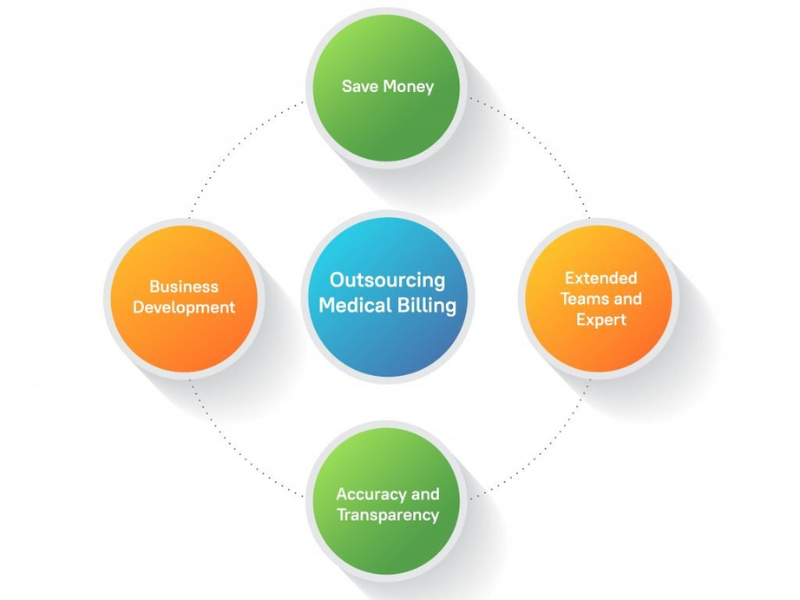
Improved Cash Flow and Recovery Rates
Specialized recovery firms focus only on unpaid balances. This focus improves consistency and follow-up.
Преимущества включают:
- Faster action on overdue accounts.
- Better segmentation of early vs late-stage balances.
- Higher recovery on accounts often written off internally.
Most providers see measurable improvement without increasing patient complaints.
Cost-Effective Medical Debt Collection Strategies
Outsourcing shifts costs from fixed to variable.
| Модель ценообразования | Как это работает | Лучшее для |
|---|---|---|
| Contingency-based | Vendor is paid a portion of recovered funds | Most providers |
| Гибрид | Lower contingency plus small fixed fee | High-volume systems |
This structure improves cost predictability and reduces financial risk compared to maintaining internal staff.
Compliance and Risk Reduction
Healthcare collections are highly regulated. HIPAA and FDCPA (rules governing fair debt collection) apply to patient outreach.
Reputable vendors provide:
- Regular compliance training.
- Documented call scripts and communication standards.
- Internal audits and monitoring.
- Clear accountability and reporting.
This shared responsibility reduces legal and reputational risk.
Preserving Patient Relationships
Professional recovery firms use empathy and clarity. This often lowers tension compared to internal follow-ups.
Key practices include:
- Clear explanations of balances owed.
- Respectful tone and flexible options.
- Separation between care delivery and payment discussions.
Patients feel heard, not pressured.
Operational Focus for Healthcare Providers
Outsourcing frees internal teams to focus on:
- Patient care and access.
- Front-end billing accuracy.
- Financial counseling and prevention of future debt.
This supports long-term stability.
Potential Risks and Common Misconceptions About Outsourcing
| Misconception | Reality | Смягчение последствий |
|---|---|---|
| Outsourcing harms patient trust | Poor practices do, not outsourcing itself | Choose healthcare-specialized vendors |
| Compliance risk increases | Risk often decreases with experts | Demand audit proof |
| Loss of control | Providers set rules and oversight | Clear SLAs and reporting |
| Only for large systems | Scales to many provider sizes | Начните с пилотных программ |
[Ảnh: Risk vs mitigation matrix]
When Does Outsourcing Medical Debt Recovery Make Sense?
Practical Decision Signals
- Days in accounts receivable continue to rise.
- Self-pay balances grow faster than staff capacity.
- Internal teams spend excessive time on follow-ups.
- Compliance audits raise concerns.
- Patient complaints about billing increase.
Situations Where Outsourcing May Not Be Ideal
- Very low patient volume.
- Early-stage billing is still inconsistent.
- Strong internal recovery with proven compliance controls.
How to Choose the Right Medical Debt Recovery Outsourcing Partner
Evaluation Criteria That Matter
- Proven healthcare-specific experience.
- Documented HIPAA and FDCPA compliance.
- Transparent reporting and recovery analytics.
- Patient-first communication standards.
- Clear escalation policies and approvals.
Questions Healthcare Providers Should Ask Vendors
- How do you train staff on healthcare compliance?
- What recovery metrics do you report?
- How do you handle patient disputes?
- What data security controls are in place?
- Can we start with a limited account segment?
Costs, Performance Metrics, and What to Expect
Common KPIs include:
- Net recovery rate.
- Time to first payment.
- Patient complaint volume.
- Cost per dollar recovered.
| Метрика | Почему это важно |
|---|---|
| Recovery rate | Measures financial impact |
| Cycle time | Shows speed of cash flow |
| Complaints | Reflects patient experience |
Expect gradual improvement, not instant fixes.
The Role of Technology and Data in Medical Debt Recovery
Modern vendors use:
- Secure data exchange with billing systems.
- Analytics to prioritize accounts.
- Automated reporting dashboards.
- Feedback loops to improve upstream billing.
Technology supports decisions, not replaces human judgment.
Conclusion: Balancing Financial Health and Patient Care
Medical debt recovery outsourcing helps providers regain control of unpaid balances without sacrificing patient trust. When done well, it strengthens financial health and reduces internal strain.
Outsourcing works best as a support function. Clear rules, strong oversight, and the right partner matter.
Assess your accounts receivable, review compliance risk, and plan deliberately. The goal is not just recovery, but sustainable, patient-centered operations.
FAQs: Medical Debt Recovery Outsourcing

Is medical debt recovery outsourcing compliant with healthcare regulations?
Yes. Reputable vendors follow HIPAA and FDCPA requirements and provide documented safeguards.
Сколько времени требуется, чтобы увидеть результаты?
Most recoveries occur within 60–120 days after account placement, depending on balance age.
Will outsourcing affect patient satisfaction?
When done ethically, it often reduces friction by separating care from payment discussions.
How much does outsourcing cost?
Costs usually follow contingency models, meaning you pay only on recovered amounts.
Call to Action:
Review your aging accounts and internal capacity. If unpaid balances strain your team or compliance posture, consider speaking with specialized medical debt recovery partners to evaluate next steps.
FAQs: Medical Debt Recovery Outsourcing
What is medical debt recovery outsourcing?
Medical debt recovery outsourcing refers to hiring a specialized third-party agency to manage the collection of unpaid patient bills. This service helps healthcare providers recover outstanding balances while focusing on their core operations, ensuring compliance with healthcare-specific regulations.
Why should healthcare providers outsource debt recovery?
Outsourcing improves recovery rates, ensures compliance with regulations such as HIPAA and FDCPA, reduces the burden on internal staff, and preserves patient relationships through professional and empathetic communication. It is a cost-effective way to enhance financial stability.
How does an outsourced debt recovery process work?
An outsourced process typically involves secure account placement from healthcare providers, patient outreach using ethical practices, escalation when needed, and consistent reporting. Agencies follow strict compliance standards, ensuring patient data protection and legal adherence.
Will outsourcing debt recovery harm patient relationships?
No, reputable debt recovery firms prioritize preserving patient relationships by using respectful and empathetic communication strategies. Their approach ensures patients are treated fairly while recovering outstanding balances.
Is outsourcing medical debt recovery compliant with healthcare regulations?
Yes, outsourcing is compliant as long as you partner with agencies that follow legal standards like HIPAA and FDCPA. They ensure data security, proper patient communication, and adherence to industry guidelines.
What does outsourcing medical debt recovery cost?
Outsourcing costs typically depend on the agency’s pricing model, which may include contingency-based fees or flat rates. Costs are often offset by improved recovery rates and reduced internal overhead.
When should healthcare providers consider outsourcing medical debt recovery?
Healthcare providers should consider outsourcing when late payments are increasing, internal teams are overburdened, recovery rates are low, or compliance with regulations is a challenge. It is also effective for managing high volumes of self-pay accounts.
How do I choose the right medical debt recovery outsourcing partner?
Look for firms specializing in healthcare debt recovery with proven compliance adherence, robust reporting capabilities, patient-friendly communication approaches, and transparent pricing. Request references and evaluate their experience in the healthcare sector.
Can outsourcing help improve recovery rates for self-pay patients?
Yes, outsourcing agencies use data-backed strategies and tailored approaches to address payment challenges for self-pay patients, often resulting in higher recovery rates while protecting the provider’s reputation.
Is outsourcing suitable for both small clinics and large hospitals?
Yes, outsourcing can be customized to fit the needs of small medical practices as well as large hospital systems. It is scalable and designed to adapt to any organization’s specific financial and operational challenges.
Читать далее:
Customer Privacy Compliance Checklist for Small US Businesses
Customer Service Best Practices: 12 Proven Ways to Improve CX



 English
  Russian
  Chinese