

Интеллектуальная маршрутизация звонков: что это такое, как она работает и почему это важно
Долгое ожидание ответа на звонок вызывает раздражение, однако это редко является основной проблемой. Во многих контакт-центрах более серьёзная проблема заключается в том, что звонящие попадают не в ту команду, их многократно переводят или им приходится повторно объяснять одну и ту же проблему. Это приводит к потерям как для клиентов, так и для операционных команд. Интеллектуальная маршрутизация вызовов решает эту проблему, улучшая путь к решению, а не просто скорость ответа. Вместо того чтобы направлять каждого звонящего по одному и тому же жёсткому сценарию, система использует контекст для более эффективного управления каждым взаимодействием. В этой статье объясняется, что такое интеллектуальная маршрутизация звонков, как она работает и чем отличается от IVR, ACD, и маршрутизация на основе навыкови когда его стоит оценивать для растущего бизнеса.
Что такое интеллектуальная маршрутизация звонков?
По своей сути интеллектуальная маршрутизация звонков заключается в принятии более обоснованного решения о маршрутизации до начала живого разговора. Вместо того чтобы полагаться исключительно на статические меню или распределение по принципу «первый доступный», она использует дополнительный контекст для определения того, куда следует направить звонок дальше.
Простое определение интеллектуальной маршрутизации звонков
Интеллектуальная маршрутизация звонков — это возможность контакт-центра, которая направляет входящие звонки в наилучшее следующее место назначения на основе цель звонка, контекст клиента, бизнес-правила и Доступность агента или навыков. Его цель — сократить количество переводов звонков, снизить нагрузку на клиента и повысить вероятность более быстрого решения вопроса.
На практике это означает, что система задаёт не только вопрос: «Кто свободен?», но и вопросы: «В чём нуждается данный звонящий, что нам уже известно и кто или что лучше всего подходит для решения его запроса?»
Вот почему интеллектуальную маршрутизацию звонков часто называют маршрутизация звонков на основе намерений или маршрутизация с учётом контекстаОн использует не только древовидное меню. Он учитывает ситуацию, связанную с звонком.
Также важно сохранять реалистичные ожидания. «Интеллектуальность» не означает безупречности или полной автономности. Это просто означает, что решение о маршрутизации принимается с учётом более точных сигналов по сравнению с базовым потоком вызовов.
Какую информацию может использовать интеллектуальная маршрутизация
- IVR выбор с помощью клавиатуры или голосового меню
- Устный запрос, интерпретированный с помощью NLP (обработка естественного языка)
- Идентификатор абонента
- Данные CRM например, статус учетной записи или история взаимоотношений
- Предпочтительный язык
- Регион или местоположение
- Предыдущие взаимодействия
- Срочность обращения или приоритет клиента
- Навыки оператора или специализация команды
- В режиме реального времени Доступность агента
- Условия очереди в этот момент
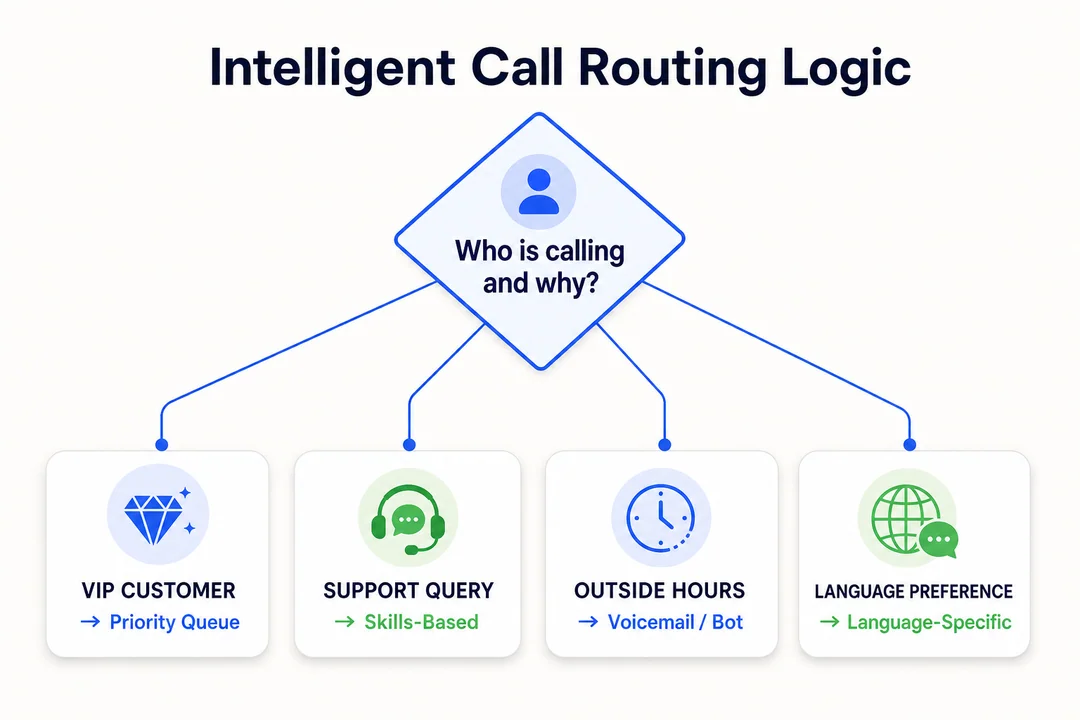
Как работает интеллектуальная маршрутизация звонков
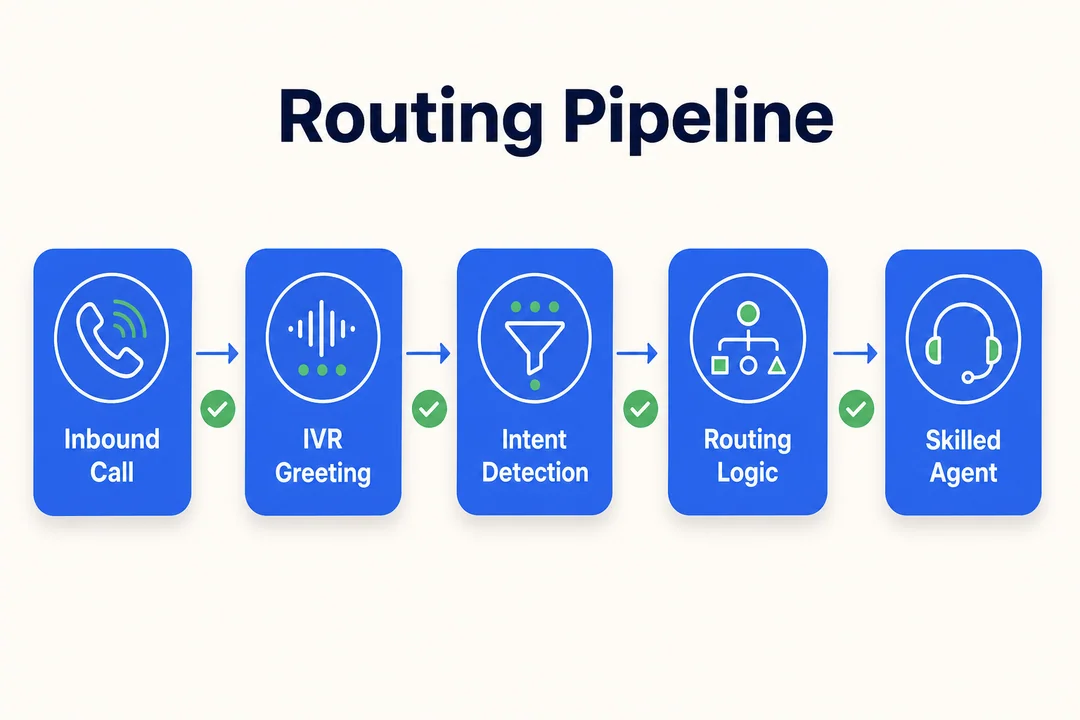
На высоком уровне интеллектуальная маршрутизация звонков работает путем сбора сигналов, применения логики маршрутизации и выбора наилучшего следующего пути.
Процесс обычно проще, чем кажется. Ценность заключается в объединении нужной информации с четкими правилами принятия решений.
Шаг 1. Сбор данных звонящего и системы
Когда поступает звонок, система собирает соответствующие данные звонящегоЭто может включать Выбор IVR, идентификатор звонящего, предпочтительный язык, регион, время суток и история аккаунта, полученные из интегрированных систем.
Если система поддерживает распознавание речи, она также может интерпретировать устный запрос с помощью NLP, что помогает определить, что именно пытается сделать звонящий, простым языком.
Этот первый шаг имеет решающее значение, поскольку качество маршрутизации зависит от качества сигнала. Если система знает только о поступлении звонка, она может сделать не намного больше, чем поместить его в общий список ожидания.
Шаг 2. Сопоставление запроса с логикой маршрутизации
Далее платформа применяет логика маршрутизацииЗдесь звонок оценивается в соответствии с бизнес-правилами и текущими условиями работы.
Логика может учитывать:
- Вероятная цель звонка или тип проблемы
- Уровень клиента, статус аккаунта или срочность
- Требования к обработке языков и региональных настроек
- Сопоставление на основе навыков для нужной команды или агента
- Рабочая нагрузка и доступность операторов в режиме реального времени
Это не случайно Автоматическое распределение звонковЭто процесс принятия решений, основанный на предопределённых правилах и текущем контексте в реальном времени.
Например, вопрос о выставлении счёта от существующего клиента может требовать другого маршрута, чем новый запрос о продажах. VIP-звонок может требовать приоритетной обработки. В многоязычной службе поддержки может потребоваться маршрутизация по языку и часовому поясу.
Шаг 3. Перенаправьте звонок на следующее наиболее подходящее место назначения
После установления соответствия система направляет звонок на Лучшее следующее направлениеЭтот пункт назначения не всегда должен быть живым оператором.
Распространённые результаты включают:
- Конкретный агент
- Очередь специалистов
- Поток самообслуживания
- Путь эскалации
- A опция обратного вызова
Слово «лучший» здесь имеет важное значение. Лучший маршрут зависит как от потребностей клиента, так и от текущих операционных условий. В теории идеальным может быть ведущий специалист, однако если очередь к нему перегружена, чётко определённый альтернативный путь может обеспечить лучший общий результат.
Качество маршрутизации также зависит от технического обслуживания. Даже самая продуманная логика может работать неэффективно, если данные о клиентах неполные или правила устарели.
Почему интеллектуальная маршрутизация звонков важна для эффективности контакт-центра
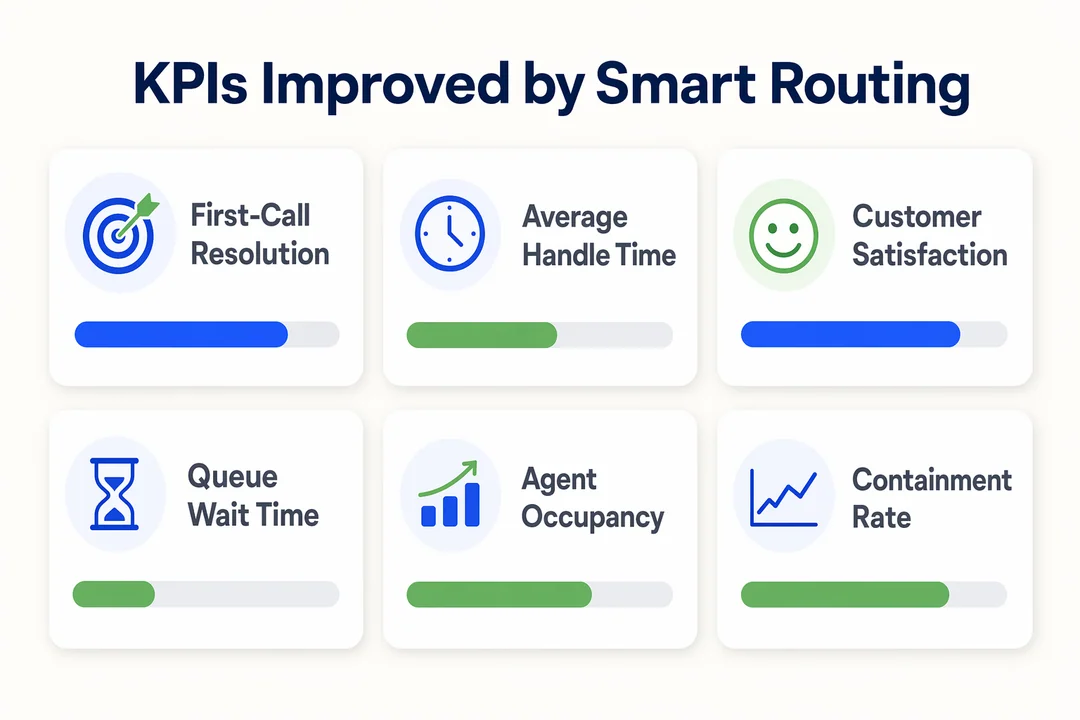
Руководители контакт-центров обычно оценивают маршрутизацию по результатам работы, а не по технологическим ярлыкам. Если решения по маршрутизации улучшаются, это быстро отражается на операционных показателях.
Ключевые показатели эффективности (KPI), на которые следует обратить внимание:
- FCR (разрешение первого контакта)
- Среднее время ожидания
- Скорость передачи данных
- Показатель оставления
Меньше переводов звонков и повторных объяснений
Один из самых очевидных преимуществ — это более точное соответствие звонящего оператору. Когда клиенты с первого раза попадают в нужную команду, им реже приходится перенаправляться или проходить повторную сортировку.
Это обычно поддерживает более высокие значения решение вопроса при первом контакте и более низкую скорость передачи. Кроме того, это устраняет распространённую причину разочарования: необходимость неоднократно объяснять одну и ту же проблему нескольким сотрудникам.
Во многих операциях проблемы маршрутизации возникают задолго до того, как качество обслуживания заметно ухудшится. Звонок отвечается, но начинается в неправильном месте.
Сокращение времени ожидания и умное управление очередью
Не каждый звонок должен попадать в одну и ту же очередь. Интеллектуальная маршрутизация позволяет заранее разделить звонки по разным потребностям, что сокращает потери в очереди и улучшает её работу в периоды высокой нагрузки.
Это может помочь сократить время ожидания, снижает количество отказов и обеспечивает соблюдение уровней обслуживания. Особенно полезно при неравномерном спросе на звонки по продуктам, регионам или типам проблем.
Это не устраняет необходимость в достаточном штате сотрудников. Однако это может предотвратить усугубление нагрузки на очередь из-за элементарных неэффективностей маршрутизации.
Более эффективное использование навыков операторов и их рабочей нагрузки
Звонки становятся более эффективными, когда их принимают сотрудники, готовые к их обработке. Интеллектуальная маршрутизация повышает эффективность за счёт соответствия типа обращения специализации команды, знанию языка или ответственности за учётную запись.
Это часто улучшает Эффективность агента и способствует более здоровому распределению рабочей нагрузки. Также снижаются скрытые издержки, связанные с неправильно направленными звонками, когда агенты тратят время на диагностику и перенаправление вместо решения вопросов.
Для менеджеров это важно, поскольку маршрутизация влияет как на результаты взаимодействия с клиентами, так и на планирование внутренних ресурсов.
Улучшение клиентского опыта за счёт маршрутизации с учётом контекста
Клиенты действительно ценят скорость, однако не менее важна и релевантность. Быстрый ответ в неправильной очереди всё равно создаёт дополнительные усилия.
Маршрутизация с учётом контекста улучшает клиентский опыт повышая вероятность того, что взаимодействие начнётся в нужном месте, с нужным контекстом и с меньшим количеством ненужных шагов.
Тем не менее, маршрутизация — это не панацея. Она не способна устранить недостатки в обучении персонала, неэффективные модели штатного расписания или сбои в процессах обслуживания. Маршрутизация улучшает уровень принятия решений на «переднем крае», что важно, однако это лишь одна из составляющих эффективности колл-центра.
Интеллектуальная маршрутизация звонков по сравнению с IVR, ACD и маршрутизацией на основе навыков
Многие команды используют эти термины как синонимы, однако они решают разные задачи в рамках процесса обработки звонков. Понимание различий между ними помогает избежать завышенных ожиданий.
Практическое сравнение
| Срок | Что он делает | Основное ограничение | Там, где интеллектуальная маршрутизация звонков выходит на новый уровень |
|---|---|---|---|
| IVR | Собирает ввод абонента через меню или голосовые подсказки | Часто жесткие и основанные на меню | Использует входные данные, контекст клиента и логику маршрутизации |
| ACD | Распределяет звонки между доступными операторами или очередями | Фокусируется на эффективности дистрибуции | Отдает приоритет наилучшему решению, а не просто доступности |
| Маршрутизация на основе профессиональных навыков | Сопоставление звонков с агентами с заданными навыками | Обычно зависит от фиксированных правил | Добавляет контекст в реальном времени, приоритезацию и более адаптивную логику |
| Интеллектуальная маршрутизация вызовов | Выбирает оптимальный следующий путь с использованием намерения, контекста и бизнес-правил | Зависит от качественных данных и продуманной настройки | Позволяет принимать более точные решения о маршрутизации |
IVR в основном является входным слоем. Он помогает системе собирать информацию.
ACD (автоматический распределитель вызовов) сосредоточен на эффективном распределении звонков.
Маршрутизация на основе профессиональных навыков улучшает соответствие, сопоставляя звонки с заранее определённой экспертизой.
Интеллектуальная маршрутизация звонков против IVR на самом деле не является выбором «либо-либо». Во многих средах интеллектуальная маршрутизация реализуется поверх IVR, ACDи логику на основе навыков. Он использует их в качестве строительных блоков, а затем добавляет контекст, приоритизацию и улучшает принятие решений на всем протяжении звонка.
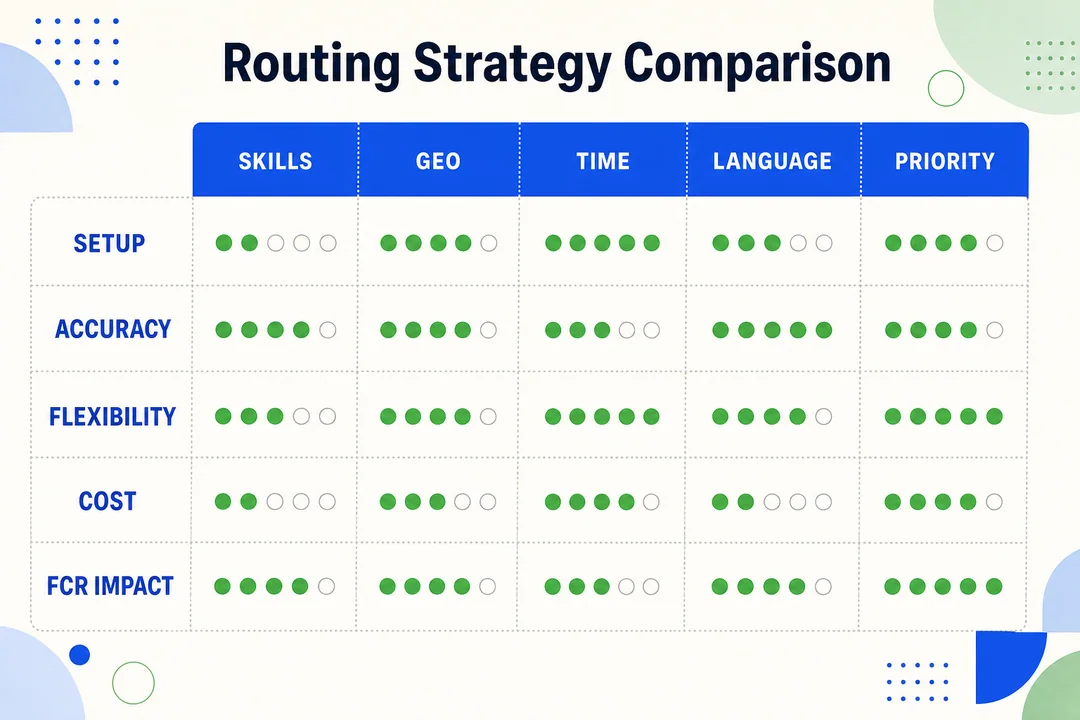
Распространённые примеры интеллектуальной маршрутизации звонков в реальных операциях
Самый простой способ понять интеллектуальную маршрутизацию — это рассмотреть, как она применяется в обычных сценариях работы контакт-центра. Разные типы звонков требуют различной логики маршрутизации.
Пример поддержки: направление вопроса по выставлению счетов в соответствующую команду
Возвращающийся клиент звонит с вопросом по выставлению счетов. Система идентифицирует учётную запись, распознаёт наиболее вероятный тип проблемы и направляет звонок в очередь команды, прошедшей подготовку по вопросам выставления счетов, или к специалисту.
Вместо того чтобы сначала звонить на общий номер поддержки, звонящий сразу попадает к команде, которая лучше подготовлена для решения вопроса. Агент также может заранее получить соответствующий контекст.
Пример продаж: направление высокоприоритетного клиента нужному менеджеру
Входящий продажный звонок поступает от перспективного клиента с высокой ценностью. На основе источника, размера аккаунта, региона или правил распределения звонок приоритизируется и направляется соответствующей команде продаж или ответственному менеджеру по аккаунту.
Этот тип Маршрутизация звонков отдела продаж может сократить упущенные возможности, вызванные общим распределением или неправильным региональным назначением.
Глобальный пример: маршрутизация по языку и часовому поясу
Многоязычный клиент звонит вне рабочих часов одной из команд. Система определяет предпочтительный язык, проверяет доступность и перенаправляет звонок другой квалифицированной команде в активном часовом поясе.
Для глобальной деятельности Мультиязычная маршрутизация обеспечивает непрерывность взаимодействия, не заставляя клиентов проходить через запутанные тупиковые ситуации или логику, ограниченную рабочими часами.
Признаки того, что вашему бизнесу может понадобиться интеллектуальная маршрутизация звонков
Если ваша команда регулярно сталкивается со следующими симптомами, стоит рассмотреть возможность внедрения интеллектуальной маршрутизации.
Распространённые признаки, на которые следует обратить внимание
- Частые переводы между командами
- Клиентам приходится неоднократно повторять свою проблему
- Длительное ожидание в очереди резко возрастать в периоды пиковой нагрузки
- Агенты часто получают звонки вне своей компетенции
- Разные регионы, языки или уровни клиентов требуют различного подхода
- Существующий IVR потоки выглядят слишком жёсткими
- Низкий показатель FCR становится повторяющейся проблемой
- Сложность маршрутизации приводит к заметным узким местам в контакт-центре
Эти признаки не означают автоматически, что бизнесу требуется кардинальная перестройка. Однако они зачастую свидетельствуют о том, что базовая логика маршрутизации больше не соответствует текущему масштабу или сложности операции.
На что обратить внимание перед внедрением интеллектуальной маршрутизации звонков
Лучшая маршрутизация начинается с более точной логики. Даже мощная автоматизация будет работать неэффективно, если рабочие процессы неясны или базовые данные противоречивы.
Несколько практических основ
- Выравнивание правила маршрутизации с реальными намерениями клиентов, а не только с внутренними организационными структурами
- Использовать чисто Данные CRM и текущая информация о навыках оператора, где это возможно
- Обзор FCR, время ожидания, коэффициент передачи и показатель отказов регулярно с помощью Контроль качества на основе искусственного интеллекта
- Обновляйте правила маршрутизации по мере изменения моделей звонков со временем
- Помните, что автоматизация не способна исправить плохой дизайн процессов или недостаточную численность персонала.
- Современный облачный колл-центр платформенные среды, такие как Flyfone может централизовать правила маршрутизации, доступность операторов и отчёты в одном месте
Ключевой момент — это постоянный анализ. Точность маршрутизации — это не то, чем команды могут пренебречь. Её необходимо измерять и корректировать по мере развития операций.
Заключение
Интеллектуальная маршрутизация вызовов повышает качество маршрутизации звонков, помогая абонентам быстрее попадать в нужное место с меньшими усилиями. Его ценность возрастает по мере роста объёма звонков, степени специализации, количества поддерживаемых языков, уровней клиентов и операционной сложности.
Наиболее впечатляющие результаты обычно достигаются при простом сочетании: чётких правил маршрутизации, удобных в использовании данных и регулярного анализа KPI. Если ваша команда рассматривает возможность более интеллектуальной обработки входящих звонков, следующим практическим шагом может стать использование контрольного списка маршрутизации для облачного колл-центра или ознакомление с руководством по потоку входящих звонков, чтобы выявить участки текущей логики маршрутизации, создающие излишнее трение. Если вам нужна структурированная оценка соответствия вашему рабочему процессу маршрутизации входящих звонков, Забронировать персонализированную демонстрацию с командой FlyFone.
Часто задаваемые вопросы
Что такое интеллектуальная маршрутизация звонков?
Интеллектуальная маршрутизация звонков — это функция контакт-центра, которая направляет звонки на основе контекста, а не статических меню. Она использует данные о клиентах, цель звонка, бизнес-правила и текущий статус операторов в режиме реального времени, чтобы соединить каждого звонящего с наиболее подходящим получателем с целью повышения показателя разрешения обращения при первом контакте (FCR).
Чем отличается IVR от интеллектуальной маршрутизации вызовов (ICR)?
IVR (интерактивное голосовое меню) — это уровень меню, который собирает ввод от звонящего с помощью клавиатуры или голосовых подсказок. ICR — это интеллектуальный уровень, который объединяет ввод IVR с данными CRM и историей взаимодействий, чтобы определить, кто лучше всего подходит для обработки звонка, и затем перенаправляет его соответствующим образом.
Зачем бизнесу нужна интеллектуальная маршрутизация звонков?
Бизнесу обычно требуется ICR, когда наблюдается перегрузка очереди, высокий процент переводов звонков или клиенты повторяют одну и ту же информацию нескольким операторам. ICR сокращает время ожидания, повышает производительность операторов и улучшает клиентский опыт, соединяя звонящего с нужным специалистом с первого раза.
Какая информация используется для принятия решения об интеллектуальной маршрутизации?
Система ICR получает сигналы из нескольких источников, включая: выбор опций в IVR, устные запросы, интерпретируемые с помощью NLP, историю покупок из CRM, язык, географический регион, приоритетный уровень клиента (например, VIP) и навыки агентов, а также их текущую доступность.
Заменяет ли интеллектуальная маршрутизация звонков навыки живых операторов?
Нет. ICR не заменяет операторов; он выступает в роли координационного «мозга». ICR помогает операторам работать более эффективно, направляя звонки тем из них, чьи компетенции лучше всего соответствуют запросу клиента. Окончательные результаты по-прежнему зависят от качества обучения, процессов обработки обращений и навыков команды в решении проблем.
Какие KPI улучшаются при корректной реализации интеллектуальной маршрутизации звонков?
Команды, которые эффективно внедряют технологию ICR, как правило, отмечают измеримое улучшение показателей первого контакта (FCR), среднего времени ожидания, процента отказов и частоты передачи звонков между операторами.
С чего бизнесу следует начать настройку интеллектуальной маршрутизации звонков?
Начните со стандартизации рабочего процесса обработки входящих звонков, интеграции телефонной системы с данными CRM и определения правил маршрутизации на основе реальных навыков операторов. Современные облачные платформы, такие как FlyFone, позволяют централизовать эти правила и отслеживать показатели эффективности в режиме реального времени.
Подробнее Оптимизация операций и CX
Смотреть все →
Трансформация клиентского опыта: концептуальная основа и этапы
Клиент телекоммуникационной компании звонит в службу поддержки по поводу ошибки при выставлении счета. Он объясняет проблему системе IVR. Затем первому агенту. Затем их переводят и снова объясняют. Затем их перевели и объяснили в третий раз. Через сорок минут они выдохлись, а проблема так и не была решена. Вот как выглядит некачественное обслуживание клиентов. И это стоит вам клиентов. Клиентский опыт...


Значение термина «Web Caller»: вызывающая сторона в JavaScript, инструменты или порталы для совершения вызовов
“Web caller” — это одно из тех выражений, при поиске которых результаты и запрос часто не совпадают. Им пользуются три не связанные между собой группы пользователей: разработчики, сталкивающиеся с ошибкой, связанной с устаревшим свойством caller в JavaScript; покупатели, оценивающие программное обеспечение для звонков через браузер; а также люди, пытающиеся перейти на конкретный портал или страницу с учебными материалами, точное название которых они не могут вспомнить. Такая фрагментация….

Стратегия клиентского опыта: как разработать эффективную стратегию
Качество обслуживания клиентов ухудшается, а не улучшается. Согласно данным «Глобального индекса клиентского опыта» (Global CX Index) компании Forrester за 2025 год, качество клиентского опыта у 21% брендов ухудшилось, тогда как улучшилось лишь у 6% — при этом в США показатели ухудшились у 25% брендов, а улучшились — у 7%, и такая тенденция наблюдается уже второй год подряд. Большинство этих брендов не пренебрегали качеством обслуживания клиентов. Они работали над этим, но без четкой стратегии...


 English
  Russian
  Chinese