
Every month, your business spends thousands on acquiring new customers—but how many of them are still around 90 days later? For most businesses, the answer is uncomfortable: 40-60% of new customers churn before their first renewal.
Customer acquisition costs continue rising (up 60% across industries since 2020), while retention economics stay consistent: existing customers cost 5-7x less to engage and generate 3-5x more revenue over their lifetime.
Customer retention services solve this imbalance. These are specialized tools, teams, and managed solutions that keep existing customers engaged, reduce churn, and maximize lifetime value—not through generic ‘stay in touch’ campaigns, but through systematic execution across support, loyalty programs, personalization, and proactive engagement.
If you’re seeing repeat customers drop off, subscriptions fail to renew, or support issues bleeding into churn rates, retention services address the problem at its root: the gap between acquisition and long-term engagement.
Основные выводы
Customer retention services focus on execution, not just planning: they deploy the actual teams, tools, and workflows that keep customers engaged day-to-day—managing 24/7 support operations, running loyalty programs, personalizing communications at scale, and proactively intervening before customers churn.
Retention is 5-7x cheaper than acquisition and generates 3-5x more revenue per customer: a $500/month SaaS subscriber who stays 36 months (CLV: $18,000) far exceeds the $2,000 acquisition cost, while constantly replacing churned customers burns marketing budget just to stay flat.
The right retention services improve measurable business outcomes: 10-20% increases in customer lifetime value, 30-50% reductions in support resolution time, 5-10 percentage point improvements in renewal rates, and predictable recurring revenue that compounds quarter over quarter.
What Are Customer Retention Services?
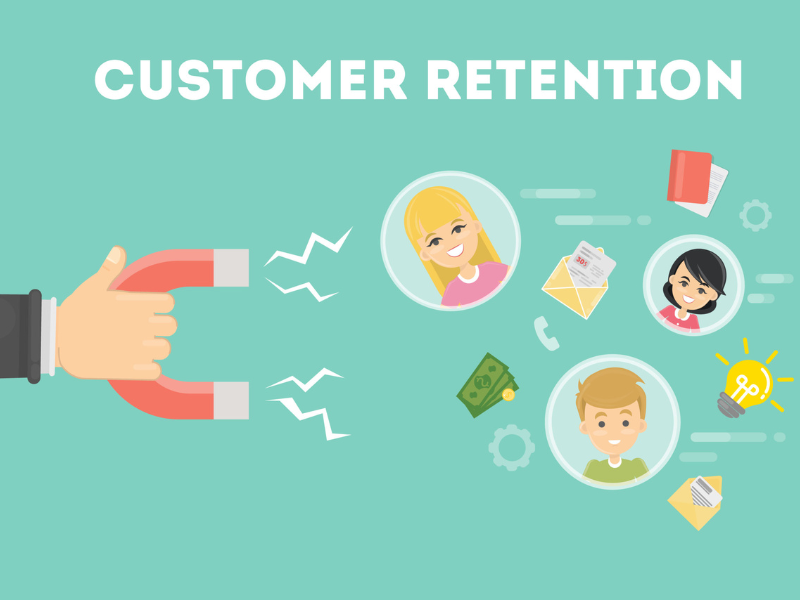
Customer retention services are tools, teams, and managed solutions designed to keep existing customers engaged, satisfied, and likely to return or renew.
They focus on execution. That’s the key difference.
Retention strategies define что you want to do. Retention services handle how it gets done, day to day.
In practice, customer retention services may include:
- Managed customer support teams
- Customer success programs
- Loyalty program platforms
- CRM-based personalization services
- Feedback and experience optimization tools
- Subscription renewal and churn prevention services
These services operate across the customer lifecycle, from onboarding to repeat purchase to renewal.
Services vs. Strategies
| Retention Strategies | Retention Services |
|---|---|
| High-level plans and frameworks | Execution, tools, and teams |
| Define goals and priorities | Implement and manage actions |
| Usually internal planning | Can be internal or outsourced |
A common mistake is having a solid strategy but no system to run it consistently. Retention services close that gap.
How Retention Services Work in Real Businesses
Retention services integrate into your existing operations through connected systems that turn customer data into retention actions:
CRM (Customer Relationship Management): Centralizes purchase history, support interactions, and engagement patterns. When a customer who normally logs in daily suddenly stops for 7 days, the CRM flags this as an at-risk signal.
Support platforms: Connect to omnichannel communication (email, chat, phone, WhatsApp, Telegram) so agents see full conversation history across every touchpoint—no repeated explanations, faster resolutions.
Automation tools: Trigger personalized messages based on customer behavior: abandoned cart reminders, win-back campaigns for inactive users, renewal reminders with usage statistics, loyalty rewards for repeat purchases.
Analytics dashboards: Surface actionable insights: which customer segments have highest churn risk, which support issues correlate with cancellations, which products drive repeat purchases, which agents have highest satisfaction scores.
Real-world workflow example:
A subscription business uses retention services to prevent cancellations:
- Day 0-30: New subscriber onboarding campaign (automated email sequence + in-app guidance)
- Day 15: CRM detects user hasn’t activated key feature → trigger personalized tutorial
- Day 45: Usage drops below baseline → customer success team receives alert, schedules check-in call
- Day 60: Support ticket filed about confusing interface → agent resolves + logs feedback for product team
- Day 90: Renewal approaching, CRM shows high engagement → send renewal reminder with annual discount offer
Without retention services, this becomes manual guesswork. With them, it’s systematic and scalable.
Например:
- An eCommerce brand may outsource post-purchase support and loyalty management.
- A SaaS company may use a customer success service to onboard users and monitor renewal risk.
The goal is simple: make customers feel supported, understood, and valued after the sale.
Why Customer Retention Services Matter for Business Growth
Growth built only on acquisition is fragile. Retention makes growth durable.
Retention vs. Acquisition Reality
Customer acquisition is expensive and unpredictable—average CAC (Customer Acquisition Cost) has increased 60% across industries since 2020. Retaining existing customers flips the economics entirely.
The math is straightforward:
Acquisition economics:
- Average CAC: $200-500 (varies by industry)
- Conversion rates: 2-5% for cold traffic
- Time to first purchase: 30-90 days
- Payback period: 6-18 months
Retention economics:
- Cost to re-engage existing customer: $30-70 (5-7x cheaper)
- Conversion rates: 20-40% for existing customers (10x higher)
- Time to repeat purchase: 7-30 days
- Immediate positive ROI
Compound effect example:
A SaaS company with 10,000 customers paying $100/month has $12M annual recurring revenue. With 5% monthly churn, they lose 500 customers every month—requiring 500 new acquisitions just to stay flat.
At $400 CAC, that’s $200,000/month ($2.4M/year) spent on acquisition just to replace churned customers—not to grow.
Reducing churn from 5% to 3% means:
- 200 fewer lost customers monthly
- $240,000 annual saved revenue (200 customers × $100/month × 12 months)
- $800,000 annual acquisition savings (200 × $400 CAC × 12 months)
- $1.04M total annual impact without spending a dollar more on marketing
This is why retention compounds: every percentage point improvement saves acquisition spend AND increases revenue.
Retention services directly impact:
- CLV (Customer Lifetime Value): total revenue from one customer over time
- Churn rate: how many customers leave
- Cash flow stability: repeat revenue smooths revenue spikes
Cost and ROI Perspective
Retention services usually cost less than ongoing acquisition campaigns because:
- Support issues are cheaper to fix than lost customers to replace.
- Upsells to existing customers require less persuasion.
- Loyal customers generate referrals organically.
From experience, businesses that invest early in retention scale with fewer emergencies. Those that delay often chase growth while leaking revenue silently.
Key Benefits of Using Customer Retention Services

Stronger Customer Loyalty
Retention services create consistent, positive interactions that build trust.
- Fast support responses reduce frustration.
- Loyalty rewards reinforce emotional attachment.
More Repeat Purchases
Customers return when the experience feels easy and personal.
- Personalized offers increase relevance.
- Timely follow-ups drive re-engagement.
Personalized Customer Experience
CRM-driven services adapt to behavior, not assumptions.
- Messages reflect past actions.
- Recommendations feel helpful, not generic.
Higher Referral Rates
Satisfied customers talk.
- Loyalty programs encourage sharing.
- Strong support creates advocates.
Predictable Revenue
Retention smooths revenue cycles.
- Subscriptions renew more reliably.
- Forecasting becomes more accurate.
Customer Support and Customer Success Services
Customer support and customer success services sit at the core of retention.
Поддержка всех каналов
Omnichannel support unifies every customer communication channel—email, live chat, phone, WhatsApp, Telegram, social media—so customers never repeat themselves and agents always have full context.
Why this matters in practice:
Traditional siloed support creates frustrating loops:
Without omnichannel (typical experience):
- Customer emails support about billing issue → ticket #1234 created
- 24 hours later, no response, customer calls → agent has no visibility into email ticket, asks customer to re-explain
- Agent creates new ticket #1235, promises callback in 24 hours
- Customer frustrated, sends message via company Twitter → social team sees it as new issue, asks customer to DM account details
- Customer has now explained the same problem three times across three channels, waited 72 hours, still unresolved
With omnichannel support:
- Customer emails support → ticket #1234 created with customer profile (past purchases, support history, account status)
- Customer calls same day → agent sees email ticket instantly: “I see you emailed about billing issue #1234 this morning. Let me pull that up—no need to re-explain.”
- Agent resolves issue on the call, updates ticket, closes case
- Customer receives follow-up email confirming resolution with reference to both email and phone conversation
- Total resolution time: 45 minutes vs 72+ hours
Measurable outcomes:
Companies implementing omnichannel support typically see:
- 30-50% faster resolution times (fewer handoffs, no repeated explanations)
- 15-25% higher CSAT scores (customers feel understood, not frustrated)
- 20-30% reduction in repeat contact rates (issues resolved first time)
For high-volume operations (call centers, e-commerce, subscription services), this translates directly to retention: customers whose issues are resolved quickly on first contact churn 40-60% less than those who experience support loops.
Proactive Customer Success
Proactive customer success prevents churn by identifying at-risk customers before they leave—transforming retention from reactive firefighting into predictable process.
How early warning detection works:
Customer success teams monitor behavioral signals that predict churn:
Usage pattern changes:
- Login frequency drops (daily user → once weekly)
- Feature abandonment (stopped using core workflow)
- Support ticket surge (3+ tickets in one week after months of zero contact)
- Product adoption stalling (trial features not activated within first 14 days)
Engagement red flags:
- Email open rates dropping (60% → 15%)
- In-app notifications ignored
- Renewal date approaching with declining usage
- Account champion left company (based on email domain changes)
Each signal triggers graduated interventions:
Tier 1 (Low risk): Automated email with helpful resources
- “We noticed you haven’t used [Feature X] yet—here’s a 3-minute tutorial”
Tier 2 (Medium risk): Personal outreach from customer success manager
- “Your usage dropped 40% this month. Quick 15-minute call to discuss any blockers?”
Tier 3 (High risk): Executive involvement + special retention offer
- CEO/VP email + discount/feature upgrade to re-engage
Real example: SaaS subscription business
A project management SaaS platform noticed customers who completed onboarding checklist had 85% 12-month retention vs 45% for those who didn’t.
Intervention implemented:
- Day 3: Automated email if checklist incomplete → checklist completion increased from 30% to 55%
- Day 7: Personal call from customer success if still incomplete → additional 15% completion
- Day 14: Final automated reminder with video tutorial
Результат: Overall 12-month retention improved from 58% to 71%—adding $1.8M in retained annual recurring revenue for a company with $15M ARR.
This level of proactive intervention is impossible manually at scale—retention services automate the monitoring, triggering, and coordination.
This directly improves:
- CSAT (оценка удовлетворенности клиентов)
- NPS (Net Promoter Score)
In practice, SaaS companies using proactive success teams see fewer surprise cancellations and higher renewal rates.
Loyalty Program Management Services
Loyalty program services design, manage, and optimize reward systems that encourage repeat behavior.
How Loyalty Programs Drive Retention
Effective programs reward behavior that matters:
- Repeat purchases
- Higher order values
- Referrals
Common incentives include:
- Points and credits
- Member-only discounts
- Early access to products
Gamification and Reciprocity
Gamification adds progress and milestones. Reciprocity rewards customers for staying engaged.
Retail and eCommerce brands benefit most when rewards feel attainable and valuable.
Personalization and CRM-Based Retention Services
CRM-based retention services use customer data to personalize interactions at scale.
Как это работает
- Collect behavior and purchase data.
- Segment customers by intent and value.
- Trigger personalized messages and offers.
- Measure response and adjust.
Почему это важно
Personalization improves:
- Open and conversion rates
- Cross-sell and upsell success
Customers respond when communication reflects their real needs, not generic campaigns.
Customer Feedback and Experience Optimization Services
Feedback services capture customer sentiment and turn it into action.
Common Feedback Tools
- Post-interaction surveys
- Product reviews
- In-app feedback prompts
Closing the Feedback Loop
The real value comes from acting on feedback:
- Fix recurring issues.
- Сообщайте об улучшениях клиентам.
This reduces churn by showing customers they are heard.
Subscription and Renewal Retention Services
Subscription businesses depend on renewals.
Retention services here focus on early warning signals.
Key Retention Tactics
- Monitor usage drops.
- Flag at-risk accounts.
- Trigger outreach before renewal dates.
Customer success models help align product value with customer goals, reducing last-minute cancellations.
Customer Retention Services by Business Type
SMBs
- Outsourced support for cost control
- Simple loyalty programs
- Basic CRM personalization
E-commerce
- Post-purchase engagement services
- Loyalty and rewards management
- Review and feedback optimization
SaaS & Subscription
- Customer success teams
- Renewal and churn analytics
- Usage-based personalization
Real-World Examples of Customer Retention Services in Action
Amazon
Amazon uses personalization and seamless support to remove friction.
- Retention services: recommendation systems, fast support, Prime benefits
- Result: high repeat purchase frequency
[Ảnh: Amazon personalized recommendations UI]
CVS ExtraCare
CVS uses a managed loyalty program tied to purchase behavior.
- Retention services: loyalty management, personalized offers
- Result: consistent in-store and online repeat visits
Zendesk-Powered Businesses
Many companies use Zendesk-powered support services.
- Retention services: omnichannel support, automation, analytics
- Result: faster resolutions and higher satisfaction
How to Choose the Right Customer Retention Services
Step-by-Step Decision Guide
- Identify where customers drop off.
- Define what retention means for your business.
- Decide what to build in-house vs outsource.
- Evaluate providers based on experience and scalability.
Контрольный список для оценки
- Proven experience in your industry
- Clear reporting and metrics
- Ability to scale with growth
- Integration with existing tools
Outsourced services work well for speed. In-house teams work best for deep product knowledge. Many businesses use a hybrid approach.
Simple Metrics Used in Customer Retention Services
- Customer retention rate: Shows how many customers stay over time.
- Churn rate: Highlights customer loss trends.
- Customer lifetime value: Helps prioritize high-value customers.
- Repeat purchase rate: Measures buying behavior consistency.
These metrics guide decisions, not complexity.
When Should a Business Invest in Customer Retention Services?
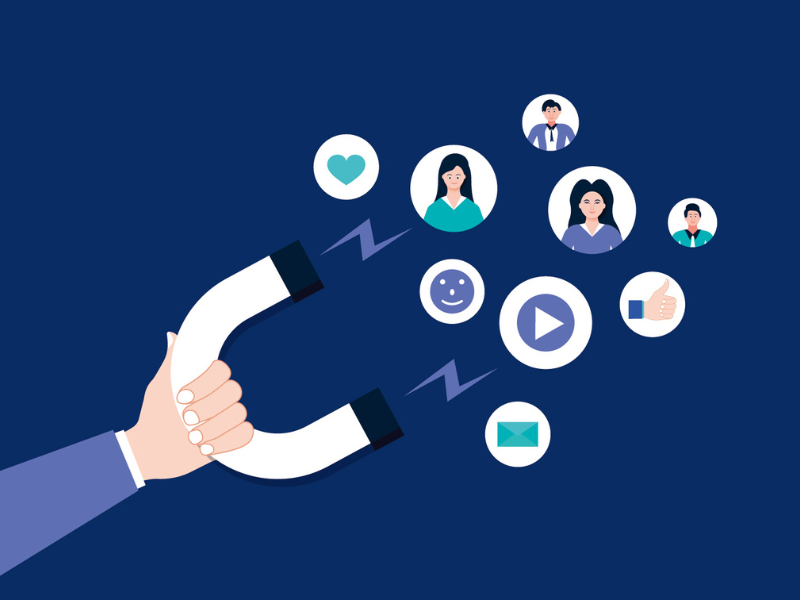
Clear signals include:
- Rising churn despite steady acquisition
- High support volume overwhelming internal teams
- Revenue growth flattening
- Subscription renewals becoming unpredictable
Early-stage companies use retention to stabilize. Growth-stage companies use it to scale without leaks.
Customer Retention Services vs. Customer Acquisition Efforts
| Retention Services | Acquisition Efforts |
|---|---|
| Focus on existing customers | Focus on new leads |
| Lower long-term cost | Higher ongoing spend |
| Compounding revenue impact | Linear growth impact |
The strongest businesses invest in both, but retention protects what acquisition builds.
Вопросы и ответы

Are customer retention services only for large companies?
No. Many services are designed for SMBs and scale as the business grows.
What is a good customer retention rate?
It depends on the industry, but improvement over time matters more than benchmarks.
Can retention services replace marketing?
No. They complement marketing by maximizing value from acquired customers.
Заключение и призыв к действию
Customer retention services turn one-time buyers into long-term customers. They reduce churn, stabilize revenue, and make growth sustainable.
Retention isn’t a side project. It’s a system.
If you want predictable growth, start by evaluating where customers disengage today. Then choose retention services that match your business model, scale, and goals.
The fastest path to growth is often keeping the customers you already earned.
Читать далее:
Чат-боты Тенденции обслуживания клиентов Современная поддержка
Call Center QA Scorecard Template: Simple Guide to Better Calls


 English
  Russian
  Chinese