
Introduction & Context
Your top-performing agent handles 45 calls daily with a perfect 3.2-minute average handle time. The numbers look great—until you notice the same customers calling back three times about unresolved issues, and that “star performer” just accepted an offer from a competitor.
This scenario plays out across BPO operations worldwide, especially in high-pressure industries like iGaming, crypto exchanges, and fintech platforms where contact volume can spike 500% during major events or market volatility.
The problem isn’t lazy agents or unreasonable customers—it’s measuring performance through the wrong lens.
Agent performance metrics should answer three critical questions: What’s actually working? Where are systems failing? Where should you invest coaching time? When implemented correctly, they reduce agent turnover by 30-40%, improve customer loyalty, and cut operating costs by 20-25%. When implemented poorly, they create toxic cultures where agents game numbers instead of solving problems.
Based on performance data from 200+ contact centers handling 10-500 agent operations across iGaming, crypto, fintech, and BPO sectors, this guide explains which metrics actually drive profitability—and which ones just look good in spreadsheets.
Основные выводы с первого взгляда
- What This Guide Covers:
- Why industry benchmarks fail: Standard AHT targets vary 200-300% between simple account verification and complex dispute resolution—applying universal targets guarantees poor decisions
- The resolution-efficiency paradox: Cutting average handle time from 6 to 4 minutes often increases total contact center costs by 15-20% through repeat calls and customer churn
- Measurement gaps in high-volume operations: iGaming and crypto contact centers face 5-10x volume spikes during events—traditional metrics break down when call patterns shift this dramatically
- What AI can measure that humans can’t: Analyzing 100% of call transcripts reveals coaching opportunities invisible in 2-5% manual QA sampling
- Real-time vs. retrospective tracking: Why weekly performance reports identify problems after they’ve cost you customers—and what modern dashboards do differently
What Are Call Center Agent Performance Metrics?
Call center agent performance metrics are measurable indicators used to evaluate how individual agents perform during customer interactions.
- They focus on agent-level behavior, not overall center performance.
- They measure speed, accuracy, reliability, and customer perception.
- Managers use them for coaching, staffing decisions, and service improvement.
Agent-level vs. contact center-level metrics:
- Agent-level metrics evaluate individual performance, like handle time or resolution rate.
- Center-level metrics evaluate the system, like total call volume or service level.
Why Call Center Agent Performance Metrics Matter
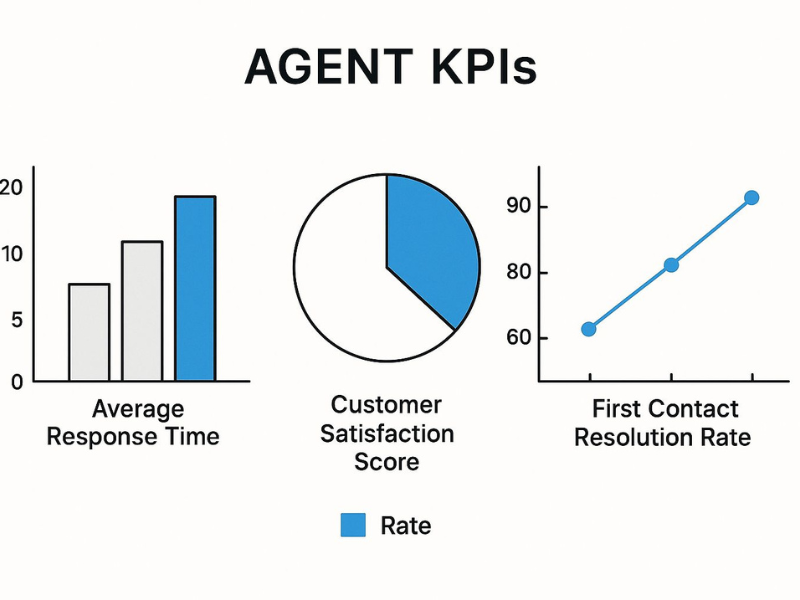
For a broader understanding of how performance metrics connect to overall customer outcomes, explore this call center KPIs guide, which breaks down the most important metrics for measuring customer experience across your entire contact center.
Call volume alone never tells the full story. Two agents can handle the same number of calls and deliver completely different customer experiences.
Performance metrics reveal what actually happens during calls. They show whether issues are resolved, how much effort customers expend, and how consistently agents follow schedules. This insight directly impacts loyalty, costs, and operational stability.
For example, improving First-Call Resolution (the percentage of issues solved without follow-up) reduces repeat contacts. Fewer repeat calls lower workload, shorten queues, and reduce frustration for both customers and agents.
Metrics also protect agents. When managers rely only on speed-based metrics, agents rush calls, miss details, and absorb blame for system gaps. Balanced metrics expose root causes like poor tools, unclear processes, or weak training.
What strong metrics enable:
- Data-driven coaching instead of subjective reviews.
- Early detection of burnout and overload.
- Smarter staffing during peak demand.
- Consistent service quality across agents and shifts.
The Modern Performance Measurement Challenge
Traditional contact center platforms—Genesys, Five9, Talkdesk—were built for enterprise stability: predictable call volumes, fixed agent counts, quarterly reviews. Their performance tracking reflects this: weekly reports, manual data exports, and metrics aggregated across all call types.
This approach fails for operations that need agility:
iGaming platforms handling 8x normal volume during championship games can’t wait for weekly reports to identify which agents struggle under pressure.
Криптовалютные биржи supporting users through market crashes need real-time visibility into which knowledge gaps cause repeat contacts when every minute of agent time costs $3-5 in lost trading volume.
Fintech BPOs managing campaigns for 5-8 different clients simultaneously can’t use single-metric targets—each client defines “good performance” differently.
The shift to real-time, context-aware measurement:
Modern contact centers—particularly those in compliance-sensitive, high-variability industries—require performance systems that:
- Track metrics by call type, campaign, time of day, and agent experience level
- Surface anomalies within hours, not weeks
- Separate agent skill issues from system failures automatically
- Scale measurement infrastructure as agent count fluctuates 50-200% seasonally
This guide focuses on metrics that work for operations handling 10-500 agents with variable volume—where measurement precision directly determines profitability.
Main Types of Call Center Agent Performance Metrics
Efficiency & Productivity Metrics
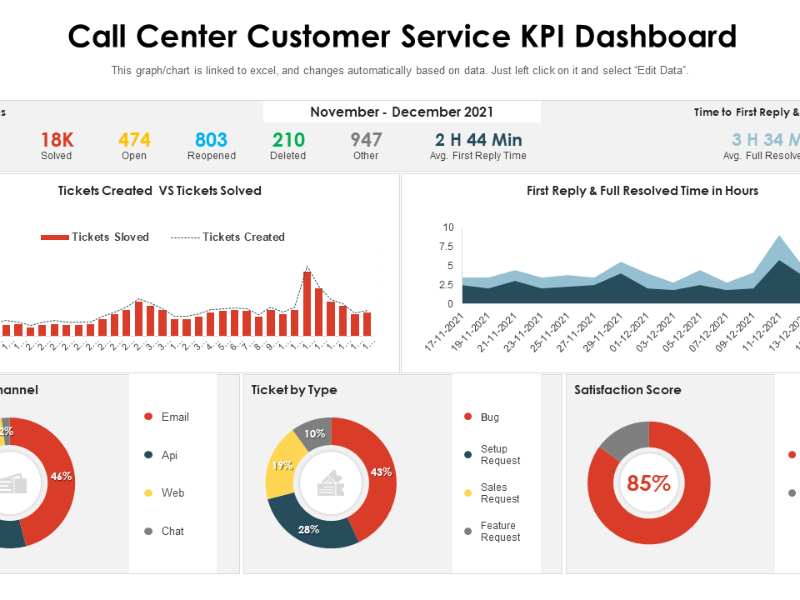
Efficiency metrics measure how quickly and consistently agents handle work.
They answer questions like: How long does a call take? How busy are agents? Are we staffed correctly?
In outbound-heavy operations, tools like an исходящий дозвон can significantly improve these metrics by reducing idle time between calls and increasing the number of live conversations agents handle per hour.
Common examples include:
Average Handle Time (AHT). Calls handled per hour. Occupancy rate (time spent actively working).
Efficiency metrics measure how quickly and consistently agents handle work.
They answer questions like: How long does a call take? How busy are agents? Are we staffed correctly?
Common examples include:
- Average Handle Time (AHT).
- Calls handled per hour.
- Occupancy rate (time spent actively working).
Managers use these metrics to forecast demand, plan schedules, and identify bottlenecks.
Риск: Optimizing only for speed encourages rushed calls and repeat contacts. Efficiency must be paired with quality metrics.
Why AHT is the most misused metric in contact centers:
AHT drives capacity planning—if average AHT is 6 minutes and you receive 1,000 daily calls, you need roughly 100 agent-hours. Lower AHT theoretically means fewer agents required, which is why finance teams love aggressive AHT targets.
This logic collapses under real-world conditions.
Real example from a crypto exchange BPO:
The operations team ran a 90-day controlled experiment comparing two 50-agent teams handling identical call types:
Team A – Aggressive AHT targets (4 minutes maximum):
- Agents rushed explanations, used templates heavily, transferred complex questions immediately
- Result: AHT 3.8 min, FCR 58%, repeat contact rate 41%, CSAT 6.2/10
Team B – No AHT target (resolution focus):
- Agents encouraged to fully resolve issues, longer explanations allowed
- Result: AHT 5.9 min, FCR 82%, repeat contact rate 19%, CSAT 8.7/10
Cost analysis: Team A handled 237 more initial calls but generated 312 additional repeat contacts, requiring 2.1 extra FTEs to manage callback volume. Total operating cost was 18% higher despite “better” efficiency metrics.
What healthy AHT looks like varies dramatically by call type:
- Account verification: 2-4 minutes (simple, scripted, system-driven)
- KYC document issues: 6-9 minutes (requires document review, explanation of requirements)
- Platform technical bugs: 8-15 minutes (diagnosis, screen sharing, escalation, follow-up confirmation)
- Bonus/promotion disputes (iGaming): 10-18 minutes (policy explanation, account history review, negotiation)
Track AHT by interaction type, never center-wide. Monitor for sudden changes (±20% shifts) without corresponding campaign or process changes—this signals training gaps, tool failures, or undocumented process changes.
How Flyfone customers track AHT correctly:
BPOs managing multiple fintech clients use Flyfone’s automatic call categorization to segment AHT by:
- Call type (verification vs. dispute vs. technical support)
- Agent experience level (0-3 months vs. 3-12 months vs. 12+ months)
- Time of day (higher AHT during overnight shifts often signals fatigue)
- Campaign/client (different SLAs require different handling approaches)
When a 200-agent BPO noticed AHT creeping up 23% over two weeks for “password reset” calls, Flyfone’s AI transcript analysis revealed the actual cause: a client’s new authentication system was failing 40% of the time, forcing agents to manually reset credentials. The issue wasn’t agent performance—it was a backend system bug the client didn’t know existed.
Instead of coaching agents to “work faster,” the operations director shared AI-generated evidence with the client’s IT team. System fixed within 48 hours, AHT returned to normal.
Quality & Resolution Metrics
Quality metrics measure how accurately and completely issues are resolved.
They focus on ownership and outcomes, not speed.
Key examples:
- First-Call Resolution (FCR).
- Quality assurance scores.
- Repeat contact rate.
A low FCR often signals training gaps, unclear policies, or broken handoffs—not lazy agents.
Пример: A team with falling FCR improved results by updating knowledge articles and coaching agents on diagnosis skills instead of pushing faster calls.
Метрики клиентского опыта
Customer experience metrics capture perception, not behavior.
They reflect how customers feel after interacting with an agent.
Common CX metrics include:
- Customer Satisfaction Score (CSAT).
- Customer Effort Score (how easy the interaction felt).
These metrics highlight emotional intelligence, clarity, and empathy. Surveys alone are limited, so they work best when paired with call reviews.
Reliability & Adherence Metrics
Reliability metrics track whether agents are available when scheduled.
They matter most during peak hours and high-volume periods.
Примеры включают:
- Schedule adherence.
- Attendance consistency.
Used correctly, these metrics support staffing accuracy. Used poorly, they damage morale.
Essential Call Center Agent Performance Metrics to Track
Среднее время обработки (AHT)
AHT measures the average time an agent spends handling a customer interaction, including talk time, hold time, and after-call work.
Basic formula:
AHT = (Talk time + Hold time + After-call work) ÷ Number of calls
What influences AHT:
- Call complexity.
- Tool usability.
- Knowledge access.
- After-call documentation requirements.
Healthy AHT varies by industry and call type. Shorter is not always better.
Common misuse: Penalizing agents for long AHT without checking resolution quality.
Correct use: Monitor trends and outliers, then fix process issues before coaching agents.
First-Call Resolution (FCR)
FCR measures the percentage of issues resolved without follow-up contact.
It is one of the strongest predictors of loyalty and cost control.
High FCR means:
- Fewer repeat calls.
- Lower workload.
- Higher customer trust.
Why FCR is the most cost-impactful metric:
Every repeat contact represents triple damage:
- Direct cost: Agent time handling the same issue twice (6-12 minutes wasted)
- Customer friction: 40% of repeat callers report considering switching providers (measured across fintech and crypto platforms)
- Queue spillover: Repeat calls extend wait times for new customers during peak hours
A fintech lending BPO calculated that improving FCR from 68% to 81% eliminated 2,100 monthly repeat contacts—equivalent to recovering 6 FTEs without hiring.
Why FCR is difficult to measure accurately:
Most contact centers discover their FCR tracking is broken before they can fix actual resolution rates:
Common measurement failures:
- 30-day attribution windows too long: Customer calls back day 35 about the same issue—not flagged as repeat contact
- Cross-channel gaps: Customer calls, then emails about same issue—systems don’t link interactions
- Agent self-reporting: Agents mark calls “resolved” to hit targets, but customer still has open issue
- Call type mixing: Aggregating FCR across simple verification calls (95% FCR) and complex disputes (55% FCR) produces meaningless average
What actually drives FCR improvement:
❌ DON’T: Force agents to ask “Is your issue fully resolved?” at call end (customers say yes to escape)
✅ DO: Track 7-day same-customer, same-issue contact rate through automated call transcript analysis
❌ DON’T: Penalize agents for low FCR without investigating root causes
✅ DO: Categorize unresolved calls by failure type—knowledge gap, policy barrier, tool limitation, transfer error
Industry-specific FCR variance (iGaming example):
A 300-agent iGaming BPO tracked FCR by interaction type for 6 months:
- Payment deposits: 89% FCR (system-based, straightforward)
- Withdrawal delays: 71% FCR (requires backend review, 24-48hr resolution time)
- Bonus disputes: 52% FCR (complex terms, manual review, multi-step approval)
- Responsible gaming inquiries: 67% FCR (regulatory documentation, follow-up required by law)
Tracking single FCR number across all types masked where improvement was possible. After segmenting, they identified that “withdrawal delays” could improve—the issue was agents lacking read-only access to payment processor status. Giving agents visibility increased withdrawal FCR from 71% to 84% without any process changes.
How Flyfone customers improve FCR systematically:
A crypto exchange BPO used Flyfone’s AI transcript analysis to automatically tag why calls weren’t resolved:
Month 1 diagnostic results (analyzing 18,000 calls):
- 23% failed resolution: Missing knowledge base article for common issue
- 19% failed resolution: Required access to system agents couldn’t see
- 16% failed resolution: Multi-department coordination needed (trading + compliance)
- 12% failed resolution: Customer disconnected before resolution completed
Actions taken based on AI insights:
- Created 17 new KB articles covering the most common gaps (addressed 23%)
- Gave agents read-only access to transaction database (addressed 19%)
- Implemented warm transfer protocol to compliance team (addressed 16%)
- Added automatic callback scheduling when customers disconnect (addressed 12%)
Results after 6 months:
- FCR improved from 71% to 86%
- AHT remained stable at 5.2 minutes (efficiency didn’t suffer)
- Repeat contact rate dropped 34%
- Agent satisfaction improved (less frustration from unresolvable issues)
The key: AI analyzed 100% of transcripts to identify patterns invisible in traditional 2-5% QA sampling.
Оценка удовлетворенности клиентов (CSAT)
CSAT measures how satisfied customers feel after an interaction, usually via short surveys.
Сильные стороны:
- Simple and intuitive.
- Direct customer feedback.
Ограничения:
- Influenced by mood and expectations.
- Low response rates skew results.
CSAT works best when combined with quality reviews to explain почему scores change.
Средняя скорость ответа (ASA)
ASA measures how long customers wait before speaking to an agent.
It directly affects abandonment rate (the percentage of callers who hang up).
Typical targets vary, but many centers aim for under 30 seconds.
Важно: ASA is mostly a system and staffing responsibility. Agents should not be blamed for long queues.
Соблюдение расписания
Schedule adherence tracks how closely agents follow assigned work times.
It affects service levels, queue length, and fairness across shifts.
Лучшие практики:
- Allow reasonable flexibility.
- Investigate patterns, not single misses.
- Coach behavior instead of punishing deviations.
Optional Metrics for Deeper Performance Insights
- Customer Effort Score: Useful when reducing friction is a priority.
- Net Promoter Score: Better for brand loyalty than agent coaching.
- Occupancy Rate: Helpful for workload balance, risky if pushed too high.
- After-Call Work (ACW): Valuable for spotting documentation inefficiencies.
Metrics to Use with Caution

Over-optimizing a single metric often creates new problems.
A common example is aggressively lowering AHT. Calls get shorter, but repeat contacts rise, CSAT drops, and agents burn out.
Warning signs:
- Metrics used as quotas instead of signals.
- Agents gaming numbers to avoid penalties.
- Quality reviews ignored when numbers look good.
Metrics need context. Always ask what behavior a metric encourages.
How to Choose the Right Metrics for Your Call Center
- Define your primary goal: speed, resolution, or experience.
- Match metrics to call types and complexity.
- Combine efficiency, quality, and CX metrics.
- Set benchmarks as ranges, not fixed targets.
- Review trends over time, not single days.
- Use metrics for coaching conversations, not rankings.
How Flyfone Simplifies Multi-Metric Performance Tracking
Traditional contact center platforms require operations managers to export data from separate systems—call recordings (one platform), QA scores (spreadsheets), schedule adherence (workforce management tool), customer surveys (third-party tool)—then manually correlate everything in Excel.
Затраты времени: 4-6 hours per week for a 100-agent operation.
Accuracy cost: Human error in data joining, delayed insights, inability to track intra-day patterns.
Flyfone consolidates performance data automatically:
✅ Unified real-time dashboard
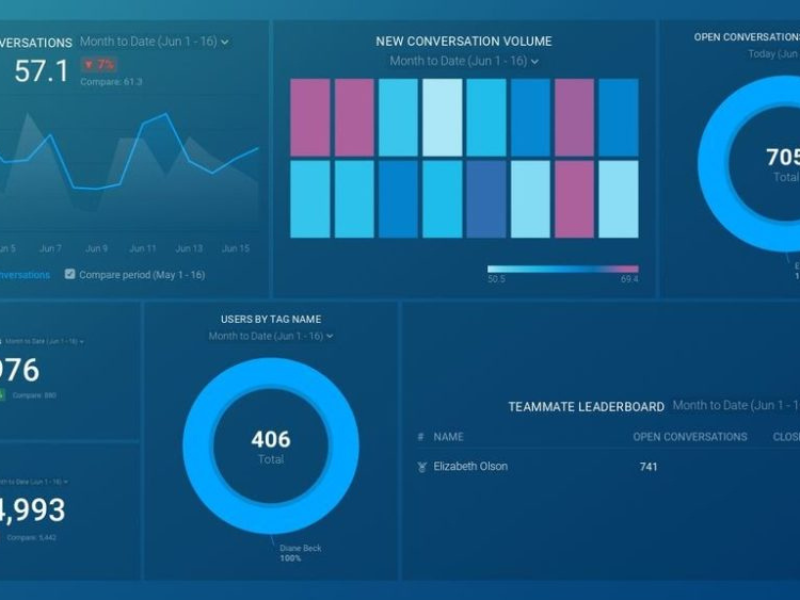
- Track AHT, FCR, CSAT, occupancy, schedule adherence, transfer rate, and quality scores in single view
- No manual exports, no data reconciliation, no Excel formulas
✅ Customizable balanced scorecards
- Build weighted scorecards in minutes (e.g., 30% efficiency + 35% quality + 25% CX + 10% reliability)
- Prevents single-metric optimization that damages other outcomes
- Different scorecards for different teams/campaigns/clients
✅ AI-powered coaching insights
- Analyzes 100% of call transcripts automatically (not 2-5% manual sampling)
- Identifies specific coaching opportunities per agent: “interrupted customer 6 times,” “used jargon customer didn’t understand,” “missed upsell opportunity”
- Surfaces root causes: knowledge gaps vs. system limitations vs. process barriers
✅ Call-type intelligence
- Automatic categorization of interactions (verification vs. technical support vs. disputes)
- Compare AHT, FCR, quality scores by call type—not meaningless center-wide averages
- Identify which interaction types need process improvements vs. which need better training
✅ Anomaly detection
- Real-time alerts when performance patterns shift (e.g., “AHT for password reset calls up 28% in last 4 hours”)
- Early detection of system bugs, process changes, or training gaps—before they impact CSAT
- Predictive indicators flag agents at burnout/attrition risk based on schedule adherence and performance volatility
Сравнение стоимости:
| Platform Type | Monthly Cost (100 agents) | Время установки | Data Integration |
|---|---|---|---|
| Enterprise (Genesys, Five9) | $15,000-22,000 | 4-8 недель | Requires IT team, custom APIs |
| Flyfone | $3,800-4,500 | Менее 1 часа | Automatic, no technical setup |
Common Mistakes When Measuring Agent Performance

- Measuring speed without resolution context.
- Comparing agents handling different call types.
- Using metrics only during performance reviews.
- Ignoring agent feedback on metric fairness.
- Treating benchmarks as universal rules.
Each mistake weakens trust and distorts behavior.
Key Takeaways for Call Center Managers

- Balanced metrics protect both customers and agents.
- Resolution and experience matter as much as speed.
- Trends reveal more than daily numbers.
- Metrics should guide coaching, not punishment.
- Regular reviews keep metrics aligned with reality.
ЧАСТО ЗАДАВАЕМЫЕ ВОПРОСЫ

What is the most important call center agent performance metric?
First-Call Resolution is often the most impactful because it affects cost, workload, and customer loyalty.
How many metrics should I track per agent?
Five to seven well-chosen metrics are usually enough. More creates confusion.
Are benchmarks the same for every call center?
No. Benchmarks vary by industry, call complexity, and customer expectations.
Should agents see their own metrics?
Yes. Transparency helps agents self-correct and reduces anxiety.
Can metrics replace call monitoring?
No. Metrics show что happened. Call reviews explain почему.
How can contact centers track metrics in real-time instead of weekly reports?
Modern cloud platforms like Flyfone provide live performance dashboards that update every 30 seconds. Operations managers see current AHT, queue length, occupancy rate, and active calls by agent—eliminating the 4-6 hour weekly data compilation process. Real-time tracking is essential for contact centers handling variable volume (iGaming during tournaments, crypto during market events) where waiting for weekly reports means missing critical intervention opportunities.
What’s the difference between enterprise platforms and pay-per-minute platforms for performance tracking?
Enterprise platforms (Genesys, Five9, Talkdesk) charge per agent seat ($150-220/month) and require 4-8 weeks for deployment with dedicated IT resources. They excel for 1,000+ agent operations with stable volume. Pay-per-minute platforms like Flyfone charge only for usage ($0.02/minute, averaging $38-45/agent/month) and deploy in under 1 hour. This model works better for 10-500 agent operations with seasonal volume fluctuations—common in iGaming, crypto, fintech, and BPO industries where agent count varies 50-200% throughout the year.
From Metrics to Action: Moving Beyond Spreadsheet-Based Performance Management
The metrics covered in this guide work—when implemented correctly. But most contact centers choose good metrics and implement them poorly.
The implementation gap:
Operations directors spend 4-6 hours weekly manually compiling data from call recordings, QA scorecards, schedule adherence reports, and customer surveys. By the time patterns appear in weekly reviews, damage is already done.
An agent struggling with a specific call type goes unnoticed for 3 weeks. A system bug inflating handle times gets blamed on “agent inefficiency” for an entire month. Customer satisfaction drops 8% before anyone investigates why.
What modern performance measurement looks like:
Contact centers handling 50-500 agents in industries with variable volume—iGaming platforms during tournament seasons, crypto exchanges during market volatility, fintech BPOs managing seasonal campaigns—require performance systems built for agility:
✅ Информационные панели в реальном времени tracking 12+ metrics simultaneously (not weekly Excel exports) ✅ AI-powered anomaly detection surfacing performance shifts within hours (not monthly reviews) ✅ Automated coaching triggers identifying specific skill gaps per agent (not quarterly evaluations) ✅ Call-type segmentation comparing AHT, FCR, and CSAT by interaction category (not center-wide averages) ✅ Predictive burnout indicators flagging agents at attrition risk based on schedule adherence patterns, sentiment shifts, and performance volatility
How Flyfone supports balanced performance measurement:
Operations directors at 200+ BPOs and contact centers use Flyfone to eliminate the manual work of performance tracking:
Instead of manual data compilation:
- Unified dashboard consolidates AHT, FCR, CSAT, occupancy, schedule adherence, and quality scores in real-time
- Custom scorecards with weighted metrics (e.g., 30% efficiency, 35% quality, 25% CX, 10% reliability)
- Automatic segmentation by call type, agent experience level, time of day, and campaign
Instead of delayed problem detection:
- AI analyzes 100% of call transcripts—not 2-5% manual samples
- Automatic alerts when metrics deviate from expected ranges (e.g., AHT up 15% for specific call types)
- Root cause tagging identifies whether issues stem from agent skill gaps, system failures, or process barriers
Instead of subjective coaching:
- AI-generated coaching suggestions based on transcript analysis (e.g., “Agent interrupted customer 7 times during explanation—provide active listening training”)
- Performance benchmarking against similar agents handling identical call types
- Trend tracking shows improvement over 30/60/90-day periods
Real outcome example:
A 150-agent BPO managing crypto exchange support implemented Flyfone’s performance analytics:
- Time savings: Eliminated 5 hours/week of manual data compilation
- Faster issue detection: Identified system bugs causing AHT inflation within 24 hours (previously took 2-3 weeks)
- Improved FCR: Rose from 73% to 84% over 4 months by addressing root causes AI identified
- Reduced attrition: Agent turnover dropped from 28% to 19% annually (better coaching, less unfair blame)
Total cost per agent dropped from $62/month (previous enterprise platform) to $38/month with Flyfone’s pay-per-minute model.
Ready to move beyond weekly spreadsheets?
[Start Free Trial →] Set up your first real-time performance dashboard in under 60 minutes. No credit card required, no technical setup needed.
[See Flyfone in Action →] Book a 15-minute demo. We’ll show you how operations teams use AI-powered analytics to improve FCR, reduce costs, and retain agents.
[Chat with Our Team →] Questions about implementing balanced scorecards for your BPO or contact center? Our operations specialists are available via WhatsApp for immediate consultation.
Related Resources:

 English
  Russian
  Chinese