
A telecom customer calls support about a billing error. They explain the problem to the IVR system. Then to the first agent. Then get transferred and explain again. Then escalated—and explain a third time. Forty minutes later, they’re exhausted and the problem still isn’t solved.
This is what broken customer experience looks like. And it’s costing you customers.
Customer experience transformation fixes this at the root—not by training better agents, but by redesigning how your entire organization delivers value. When done right, that same customer never needs to call because the billing error gets caught and corrected automatically. When they do call, the agent already has full context and solves it in three minutes.
The business impact is measurable, and the direction of travel makes the case sharper than it was a few years ago. Forrester’s 2025 Global CX Index found that 21% of brands declined in CX quality while only 6% improved — in the US, 25% declined against 7% that improved, the second consecutive year of that pattern. On the upside, McKinsey puts the return from customer-experience programmes at 5-10% revenue growth and 15-25% cost reduction within two to three years. Most companies are not neglecting CX; they are working on it without a transformation holding the work together.
This guide shows you how to plan, execute, and scale customer experience transformation without overcomplicating it—with clear frameworks, real numbers, and practical steps you can start this quarter.
Key Takeaways
- Customer experience transformation is a business-wide change, not a CX team initiative.
- CX transformation focuses on long-term value, while CX optimization improves isolated touchpoints.
- Culture, data, technology, and processes must move together to create impact.
- Omnichannel consistency matters more than adding new channels.
- AI improves CX only when built on clear customer needs and quality data.
- Measuring CX without linking it to revenue leads to stalled transformation.
- Starting small with clear priorities delivers faster results than big-bang programs.
What Is Customer Experience Transformation?
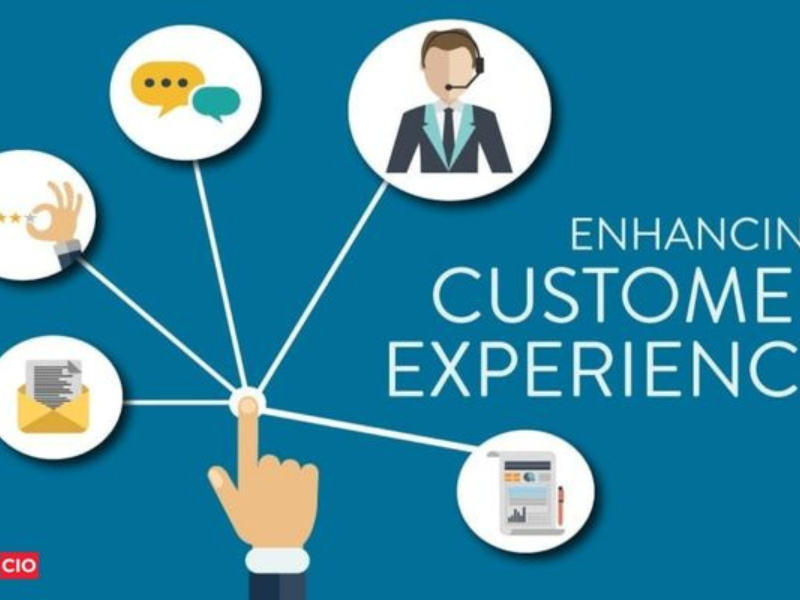
Customer experience transformation is a business-wide change that redesigns how customers experience your brand across every interaction—marketing, sales, onboarding, support, renewals.
It’s the difference between:
- A customer repeating their account number five times across three departments
- vs. Being recognized instantly across every channel with full context
Or:
- Learning about a product issue from angry social media posts
- vs. Detecting usage patterns that predict problems and fixing them proactively
This requires four elements working together: people (aligned incentives), processes (journey-based workflows), data (unified customer view), and technology (platforms that connect everything). Change one without the others, and transformation fails.
It is not about adding tools or improving one channel. It is about changing how the organization thinks, decides, and acts around customers—with every team using the same customer data to deliver consistent experiences
The distinction that decides scope:
| Aspect | CX Optimization | CX Transformation |
|---|---|---|
| Scope | Individual touchpoints | End-to-end customer journey |
| Time horizon | Short-term improvements | Long-term business change |
| Ownership | CX or support teams | Executive leadership |
| Impact | Incremental gains | Revenue, loyalty, differentiation |
Optimization fixes friction. Transformation changes outcomes.
And the distinction people confuse most often:
| Area | Customer Service Transformation | CX Transformation |
|---|---|---|
| Focus | Support interactions | Entire customer lifecycle |
| Trigger | Issues and complaints | Needs, expectations, emotions |
| Success metric | Resolution speed | Lifetime value and loyalty |
| Role | Reactive | Proactive and predictive |
Customer service is one part of CX, not the whole system.
What CX Transformation Actually Includes
-
Successful CX transformation requires four foundational elements working together:
People: Leadership must model customer-first decisions and align incentives to customer outcomes, not just departmental efficiency. Example: A SaaS company shifted sales compensation from “deals closed” to “customers active after 90 days.” Result: Reps started selling to better-fit prospects, reducing churn by 23% within six months.
Processes: Replace department-based handoffs with journey-based workflows. When a customer upgrades, does marketing know? Does support have context? Journey-based processes ensure every team sees the full customer story—eliminating the “let me transfer you” experience that erodes trust.
Data: Build a unified customer view across channels and time. This means a support agent sees the customer’s last purchase, recent website activity, and previous tickets in one screen—not five different tools. Without this, personalization is impossible and customers repeat themselves constantly.
Technology: Platforms enable personalization, automation, and insight—but only when guided by clear strategy. The right tech stack connects your data, orchestrates journeys, and automates routine interactions while keeping humans available for complex needs. Start with integration capabilities, not feature lists.
How it fits into business transformation.
CX transformation sits at the intersection of digital transformation and growth strategy. It turns technology investments into customer value and makes strategy visible to customers.
Example:
A B2B SaaS company moves from siloed sales, onboarding, and support teams to a shared journey model. Customers get faster onboarding, proactive guidance, and consistent messaging. Churn drops. Expansion revenue grows.
Why Customer Experience Transformation Matters Today
The commercial argument is well evidenced, and the uncomfortable part is that most organisations already accept it and are still going backwards. Forrester attributes the multi-year decline to four causes — weaker employee experience, waning customer obsession, disappointing technology implementations, and economic volatility. Three of those four are organisational rather than technical, which is precisely why incremental fixes stop working and structural change becomes the only option left.
The three sections below cover what customers now expect, why experience has become the defensible differentiator when features and pricing are copied within months, and what the revenue mechanics actually look like when you strip out the figures that circulate without a source behind them.

Customers Expect More, Faster
Customers Expect More, Faster—And They’re Comparing You to Everyone
Digital-first customers don’t compare your checkout experience to your competitors. They compare it to Amazon’s one-click ordering, Uber’s real-time tracking, and Netflix’s instant personalization.
This creates impossible standards for traditional businesses. A B2B software buyer who expects instant chat support at 11 PM won’t wait until your 9-5 support team is online. A retail customer who gets same-day delivery from one brand will abandon carts elsewhere when shipping takes a week.
The numbers prove it:
- 32% of consumers would walk away from a brand they love after a single bad experience — PwC, Experience Is Everything, 15,000 respondents
- 73% say a good experience is a key influence on their brand loyalty (same study)
- The price premium consumers will pay for good experience runs up to 16%, and Qualtrics XM Institute found 72% of US consumers would pay more for a premium experience
The asymmetry in those figures is the argument for transformation rather than incremental repair: experience is bought slowly and lost suddenly. A programme that improves nine touchpoints and leaves the tenth broken does not deliver nine-tenths of the benefit.
Speed, clarity, and relevance aren’t competitive advantages anymore—they’re survival requirements. When experiences feel slow or fragmented, customers don’t complain. They switch silently.
Experience is the real differentiator.
Products are copied. Prices converge. Experience is harder to replicate.
Strong CX creates emotional trust, reduces switching, and justifies premium pricing.
CX Directly Impacts Revenue
-
Strong customer experiences create three compounding revenue effects:
1. Retention multiplies customer value The familiar Bain figure — a 5% increase in retention lifting profits by 25-95%, popularised through Harvard Business Review — traces back to Reichheld and Sasser’s 1990 research, which measured 25-85% across the companies studied. Treat it as an order of magnitude rather than a forecast for your business. The mechanism is straightforward: a retained customer carries no acquisition cost, so the same revenue arrives with a different margin.
Real example: A subscription business with 80% annual retention and $100 average customer value generates $500 lifetime value. Improve retention to 85%, and lifetime value jumps to $667—a 33% increase from just 5 percentage points.
2. Lower friction cuts operational costs Every customer who solves issues via self-service instead of calling support saves $6-8 per interaction. For a company handling 100,000 support contacts annually, better CX design could eliminate 30,000 avoidable contacts—saving $180,000-$240,000/year while improving satisfaction.
3. Low-effort experiences drive repurchase The most robust evidence here is not about delight but about effort. CEB’s research, now part of Gartner, found that 94% of customers who had a low-effort experience intended to repurchase and 88% said they would increase their spending, while 96% of those with a high-effort experience became less loyal — against just 9% of low-effort customers. That is the clearest available case for removing steps rather than adding gestures.
The cumulative effect: the three mechanisms compound rather than add. This isn’t just correlation. Better experiences create measurable business outcomes.
What happens when CX is ignored:
A common scenario:
- Teams optimize their own KPIs.
- Customers repeat information across channels.
- Issues are solved late, not prevented.
- Marketing promises more than delivery can support.
The result is lost trust and rising costs.
Core Pillars of a Successful CX Transformation
Four pillars carry the weight, and the reason they are listed together is that moving one without the others is the most common way a transformation stalls. Culture without data produces conviction with no evidence. Data without technology produces insight nobody can act on at scale. Technology without culture produces an expensive platform that documents the same problems every quarter.
They also fail in a predictable order. Culture change is slowest and gets abandoned first when quarterly pressure arrives; the data work is unglamorous and gets deferred; the technology purchase is the easiest to approve, which is why so many programmes consist of it alone. Sequence the work so the cheap, slow pillars start early rather than last.
Customer-Centric Mindset and Culture
Customer-centric culture means decisions are made based on customer impact, not internal convenience. This sounds simple but requires deliberate organizational change.
Leaders must model customer-first behavior: When an executive prioritizes shipping a feature on time over fixing a known customer pain point, teams notice. When leadership reviews customer feedback in every strategy meeting, teams prioritize accordingly. Culture is built through consistent actions, not values posters.
Incentives must reward customer outcomes, not just efficiency: A contact center that measures agents solely on call handle time will create rushed, unsatisfying experiences. Shift metrics to resolution rate and customer satisfaction, and behavior changes immediately.
Teams must understand how their work affects real customers: Engineers should hear support calls. Product managers should shadow customer success teams. Marketing should see which campaigns drive happy customers vs. ones who churn in 30 days. This visibility creates empathy and better decisions.
Why this matters: Customers remember how interactions made them feel, not just what was delivered. A delayed shipment handled with proactive communication and genuine care builds more loyalty than an on-time delivery with zero personality. Emotional resonance drives repeat business.
Failure example:
A retailer invests heavily in personalization tools but keeps store staff targets focused only on speed. Experiences feel rushed and impersonal. Satisfaction drops.
Data, Insights, and Customer Understanding
Transformation requires a unified customer view, not more dashboards.
Transformation requires a unified customer view, not more dashboards. Here’s what that actually means:
Customer Data Platforms (CDPs) unify data from every source—website behavior, purchase history, support tickets, email engagement—into a single customer profile. This eliminates the fragmented view where marketing sees one customer, sales sees another, and support sees a third. Without a CDP or similar integration, personalization is guesswork.
Predictive behavior analytics uses historical data to forecast future actions. Example: If a customer’s usage drops 40% and they haven’t logged in for 15 days, predictive models flag them for retention intervention before they cancel. This shifts you from reactive (responding to cancellations) to proactive (preventing them).
Feedback loops continuously capture customer sentiment through surveys, reviews, support interactions, and social media. The key is closing the loop—not just collecting feedback, but showing customers how their input drives changes. This builds trust and increases future response rates.
Start simple: Define the key customer questions you need answered (Who’s likely to churn? Who’s ready to upgrade? Where do journeys break?), then identify data sources that matter. Improve data quality before adding volume—clean data about 1,000 customers beats messy data about 100,000.
Start simple:
- Define key customer questions you need answered.
- Identify data sources that matter.
- Improve data quality before adding volume.
Do:
- Align data to journeys.
- Share insights across teams.
Don’t:
- Collect data without action plans.
- Build reports no one uses.
Technology Enablement Without Overcomplication
Technology enables CX transformation, but it does not create strategy. Tools without clear customer needs create expensive noise.
High-impact AI use cases with real ROI:
Personalizing content and offers: Instead of showing every customer the same homepage, AI analyzes behavior to surface relevant products. Example: An e-commerce site using AI personalization saw 35% higher conversion on recommended products compared to generic merchandising.
Automating routine support: AI chatbots handle password resets, order tracking, and FAQs—freeing agents for complex issues. One telecom reduced support volume by 40% while improving satisfaction because customers got instant answers for simple questions and faster human help for hard ones.
Assisting agents with real-time guidance: AI monitors calls and suggests responses, relevant knowledge articles, or next-best actions. This is especially powerful for new agents—reducing ramp time from 12 weeks to 6 weeks in some contact centers.
Generative AI (AI that creates original responses, not pre-written scripts) works best when guided by clear rules and brand context. Without governance, it can produce responses that sound helpful but contradict company policy or brand voice. Treat it like a smart intern: capable but needs oversight.
Common mistakes:
- Buying tools before defining journeys.
- Adding AI without governance.
- Replacing human empathy with automation.
Seamless Omnichannel Experiences
Omnichannel means customers move across channels without losing context—and without repeating themselves.
What this looks like in practice: A customer browses products on your mobile app, adds items to cart, then switches to desktop to complete purchase. In an omnichannel experience, the cart is already there with personalized recommendations based on mobile browsing. After purchase, they get order updates via SMS with links that open the app. When they call support about delivery, the agent sees the entire journey—app browsing, desktop purchase, SMS clicks—without asking questions.
Key principles that make this work:
Shared customer history across touchpoints: Every system—web, mobile, support, in-store—writes to and reads from the same customer profile in real time. No data silos.
Consistent tone and policies: Return policies, pricing, promotions, and brand voice stay consistent whether customers interact via email, chat, phone, or in person. Inconsistency destroys trust faster than almost anything else.
Real-time personalization based on behavior: If a customer abandons a cart at 2 PM, the 6 PM email should reference those exact products—not generic promotions. If they complained on social media, the next support interaction should acknowledge it proactively.
Most omnichannel failures happen at handoffs. Map where customers switch channels (web to phone, email to chat, online to store) and ensure context transfers completely at those moments.
Journey mapping steps:
- Identify key moments that matter.
- Map channels used at each step.
- Remove friction between transitions.
Example:
A customer starts a return online and completes it in-store without repeating information.
Platforms like unified CX systems support this consistency.
A Step-by-Step CX Transformation Framework
Five steps, in order, and the order matters more than the sophistication of any single step. Most failed programmes executed step three well without ever completing step one, then could not explain to a finance director why the work deserved another year.
Expect the first cycle to be smaller than the framework implies: one journey, one named owner, two metrics agreed in advance, and a review date. That produces a measurable result within a quarter. A full-scope programme launched at once produces a steering committee within a quarter, which is not the same thing.
Step 1 – Assess the Current Customer Experience
-
Start by understanding what customers actually experience today—not what you think they experience.
Map core journeys from the customer perspective: Pick 2-3 high-impact journeys (e.g., first purchase, onboarding, support request, renewal). Walk through each step as a customer would. Where do they wait? Where do they repeat information? Where do they get confused or frustrated?
Identify friction, delays, and emotional pain points: Friction = extra steps, unclear instructions, slow load times. Delays = waiting for responses, approval bottlenecks, unclear timelines. Emotional pain points = feeling ignored, not valued, or treated like a number. These emotional moments matter more than operational ones.
Combine quantitative metrics with qualitative insights: Metrics show where customers drop off. Interviews and feedback explain why. You need both. A 60% cart abandonment rate is a metric. Learning that customers abandon because shipping costs appear too late is an insight.
Practical approach: Shadow 5-10 customers through a journey. Record every step, every wait, every handoff. Ask them to narrate their thoughts. You’ll find more issues in 2 hours of shadowing than in 20 hours of reviewing dashboards.
Avoid over-analysis. Look for patterns, not perfection. If 7 out of 10 customers complain about the same friction point, that’s your priority—even if your process map says it should work fine.
Step 2 – Redesign Customer Journeys Around Real Needs
-
Don’t try to fix everything at once. Prioritize ruthlessly.
Prioritize journeys with the highest business impact: Use this framework:
- Which journeys affect the most customers? (volume)
- Which journeys drive the most revenue? (value)
- Which journeys have the most friction? (opportunity)
Example: A SaaS company identified three critical journeys—onboarding, upgrade, renewal. Onboarding had highest volume (100% of customers), upgrade had highest value ($50K ARR per success), and renewal had highest friction (40% churn rate). They started with onboarding because fixing it improved both upgrade and renewal success.
Focus on moments that influence trust and decisions: Not every step matters equally. The moment a customer realizes your product solves their problem? Critical. The moment they decide whether to renew? Critical. The moment they fill out a secondary profile field? Less critical. Invest design effort proportionally.
Design for simplicity first, personalization second: Remove unnecessary steps before adding smart features. If onboarding has 12 steps, can you eliminate 4 entirely? Can you pre-fill fields using existing data? Simplicity always beats clever complexity.
Reality check: Hyper-personalization works only when basics are solid. If your website is slow, navigation is confusing, and forms are broken, AI-powered product recommendations won’t save you. Fix fundamentals first.
Step 3 – Enable With the Right Tools and Platforms
Focus on categories, not brands:
- Data unification
- Journey orchestration
- Analytics and insights
- Automation and AI
Integration matters more than feature count.
The sequencing rule is what most programmes get wrong: fix the process, then buy what scales it. Reversing that order is how a technology implementation ends up on the list of reasons CX scores fell. Before any purchase, be able to state the question you cannot currently answer — “we cannot see a customer’s history across channels” is a requirement, while “we need better CX technology” is a purchase waiting to disappoint.
Two checks decide whether a tool helps or adds a silo. First, what does it write back into your own customer record? Anything that only reports inside its own interface recreates the fragmentation it was bought to remove. Second, can you export raw data in a standard format? That answer determines how expensive it is to change your mind, and it is far cheaper to ask before signing than after.
Step 4 – Align Teams, Processes, and Governance
Break silos by:
- Assigning journey owners.
- Creating shared KPIs.
- Establishing clear decision rights.
Governance ensures CX stays consistent as the business scales.
Shared outcome metrics do more here than any reorganisation. When marketing, product, and support are each measured on their own number — signups, uptime, handle time — the composite experience degrades while every dashboard looks healthy and nobody is accountable for the composite. Measuring all three on the same downstream result is the only mechanism that reliably survives the next quarter.
Decision rights matter as much as metrics. Name who signs off when teams disagree, and name it before the first disagreement rather than during it. Governance that exists only as a recurring meeting is not governance; the test is whether someone can make a call that costs another department something and have it stick.
Step 5 – Measure, Learn, and Continuously Improve
CX transformation doesn’t end at launch. Build a closed loop that continuously improves:
1. Measure outcomes at journey level: Track metrics for each journey, not just overall satisfaction. Example metrics:
- Onboarding: Time to first value, activation rate, D30 retention
- Purchase: Cart abandonment rate, checkout completion time, order accuracy
- Support: First contact resolution, handle time, follow-up ticket rate
2. Learn from feedback and behavior: Combine what customers say (surveys, interviews) with what they do (analytics, drop-off points). Often these tell different stories. Customers might say they want more features, but data shows they don’t use existing ones.
3. Adjust journeys based on insights: Run small tests, measure impact, roll out winners. Example: A retailer discovered customers abandoned carts when shipping costs appeared at checkout. They tested showing shipping estimates earlier in the browse experience. Cart abandonment dropped 18%.
4. Repeat the loop weekly or monthly: Set a regular cadence for reviewing journey performance, discussing insights, and implementing improvements. This prevents CX from becoming a one-time project.
Critical success factor: Link CX metrics to revenue and retention to sustain executive support. Show that improving onboarding activation from 40% to 55% increased annual revenue by $2M. Satisfaction scores alone won’t maintain transformation momentum—business impact will.
Common Challenges That Cause CX Transformations to Fail
- Lack of executive ownership: CX becomes a side project.
- Tech-first mindset: Tools without strategy create noise.
- Siloed teams: Journeys break at handoffs.
- Too many metrics: No focus on what drives growth.
- Ignoring culture: Behaviors stay unchanged.
- Overambition: Large programs stall without early wins.
Mitigation starts with clear priorities and leadership alignment.
Two of the six deserve expanding, because they cause failures that look like something else. Lack of executive ownership rarely announces itself as opposition — it shows up as a sponsor who agrees in principle and never arbitrates when marketing, product, and support want different things. A transformation spanning departments needs someone who can settle those trade-offs; without that person the programme quietly reverts to whatever each team was already doing.
Overambition is the failure mode that looks most like diligence. A programme covering every journey, every channel, and every team is easier to approve than a narrow one, because nobody has to say no to anything. It is also the version that produces no measurable result inside a budget year, and unmeasured programmes are the first cut. The antidote is uncomfortable and simple: pick two priorities, rank them, and write down what you have decided not to do this year.
The pattern behind all six is that none is a technology limitation. Buying a better platform resolves none of them, which is why technology-first transformations tend to reappear on this list two years later.
Key Metrics to Measure CX Transformation Success
Four metrics cover most of what a transformation needs to know, and the trap is treating them as a scorecard where higher is better across the board. Each answers a different question on a different timescale, and any one read alone will mislead you.
| Metric | What It Measures | Why It Matters |
|---|---|---|
| NPS | Loyalty and advocacy | Predicts growth |
| CSAT | Satisfaction with interactions | Signals experience quality |
| CES | Effort required | Links to retention |
| CLV | Long-term value | Connects CX to revenue |
CX Transformation Trends to Watch in 2026
- AI-driven personalization at scale.
- Proactive support using predictive signals.
- Deeper integration of digital and physical journeys.
- Real-time CX analytics for faster decisions.
Trends should support strategy, not replace it.
A caution on all four: trend lists are written by vendors who sell the trend, so read them as a description of where investment is going rather than of where returns are. The test for any of them is whether it removes a step from a journey you have already mapped. AI-driven personalisation applied to a journey nobody has mapped produces faster delivery of the wrong message; real-time analytics on data nobody owns produces a dashboard that updates more often and changes nothing.
The trend that matters most is the least discussed — the shift from measuring satisfaction to measuring effort. It requires no new technology, and it changes which fixes get prioritised more than any platform on the list.
Real-World Examples of Successful CX Transformation
Two patterns are worth examining, and both illustrate that the difficulty is coordination rather than intent. Neither is presented as a template — the transferable part is the mechanism, not the tooling or the sector.
Read them for what had to change internally rather than for the outcome. In both cases the customer-facing capability was the easy part to describe and the hard part to deliver, because it required systems that had never exchanged data to do so reliably, and teams measured on different numbers to agree on one. That is the recurring shape of transformation work, and it is why programmes that begin with a technology decision rather than an ownership decision tend to stall at the integration stage.
Hugo Boss – Omnichannel Acceleration
Hugo Boss connected in-store and digital experiences through unified customer profiles and inventory visibility across all channels.
What they did:
- Integrated legacy POS systems with modern e-commerce platforms
- Trained 14,000 retail staff on new omnichannel workflows
- Redesigned physical stores to support digital fulfillment (buy online, pick up in store; return anywhere)
- Created single customer view accessible to both store associates and digital teams
Business results:
- 40% reduction in product launch cycles
- 2.5x increase in digital engagement
- 18% increase in cross-channel purchase rates (customers buying both online and in-store)
- Improved inventory efficiency—fewer stockouts and less overstock
Timeline: 18 months for full implementation across global operations.
Key insight: The technology was important, but the harder work was change management—getting store staff comfortable with tablets, aligning metrics between digital and retail teams, and redesigning processes for a truly unified experience.
Proactive Support Inside Regulated Constraints
The second pattern is contacting a customer before they notice a problem — a payment that will fail, a service degradation, a document about to expire. It builds trust faster than any recovery does, because the customer never experiences the failure at all.
What makes it hard is not the detection but the permission. In regulated sectors, what can be said, through which channel, and with what record-keeping is constrained, so proactive programmes have to be designed with compliance from the start rather than retrofitted past it. Teams that treat that as a blocker build nothing; teams that treat it as a design input usually find a narrower version that is still worth doing.
The transferable lesson from both examples is the same: the capability is rarely the constraint. Coordination across systems and teams is.
How to Get Started With Customer Experience Transformation
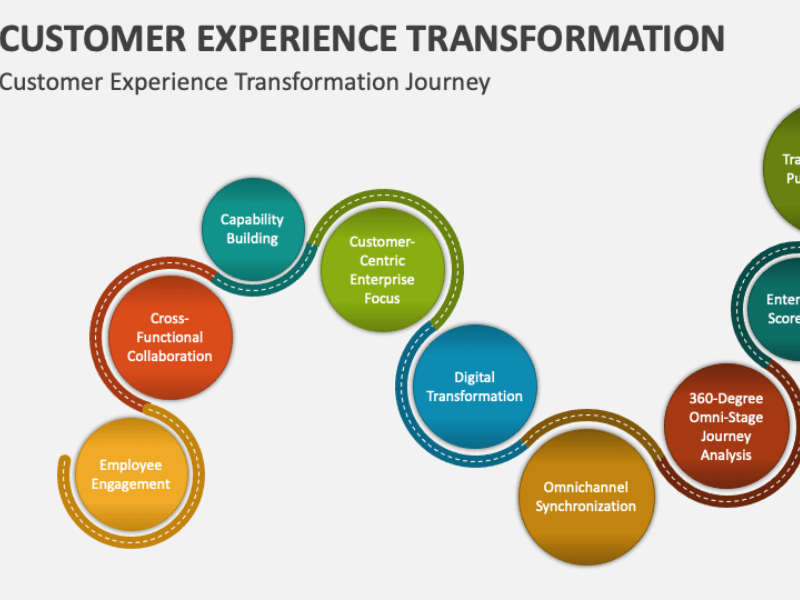
Start with focus, not scale. The most reliable predictor of whether a transformation survives its first year is not budget or tooling — it is whether the first cycle was small enough to finish and specific enough to measure.
Practical first steps:
- Align leadership on what is being transformed. Not “improve CX” but a named journey and a named outcome. Without that, every team optimises the part nearest its own targets.
- Select one or two high-impact journeys. Onboarding and issue resolution carry disproportionate weight in most businesses, because problems there rarely produce complaints — they produce quiet non-renewal months later.
- Define success metrics tied to revenue, not to a satisfaction average. Second-month retention or repeat contact rate will survive a budget review; a two-point CSAT movement will not.
- Fix data basics before adding tools. If you cannot currently join a support ticket to the customer who raised it, no platform purchase will produce the unified view it promises.
- Pilot, learn, then expand. Sixty to ninety days on a defined slice, measured against your own baseline rather than a vendor dashboard.
Two things are worth settling before the first step. Decide who arbitrates: transformation decisions involve trade-offs between departmental targets, and appointing a referee after the first disagreement never works. Then agree the time horizon — touchpoint fixes move within a quarter while retention effects take two or three, so a programme judged on the wrong clock gets cancelled before its main result arrives.
Quick checklist:
- Clear CX vision
- Executive sponsor
- Priority journeys
- Unified data plan
- Measurement framework
Conclusion

Customer experience transformation is a growth engine when done with focus and discipline. Start with real customer needs. Align leadership and teams. Use technology to enable, not distract.
Assess your journeys, choose where to act, and move forward with clarity. That is how CX transformation creates lasting advantage. For the measurement layer that shows whether it worked, see our guide to customer experience analytics; for the operating model that turns findings into assigned work, see customer experience management.
Frequently Asked Questions
The questions below come up most often when a CX transformation is being scoped, defended in a budget meeting, or restarted after a first attempt stalled. Figures quoted here are sourced in the relevant sections above rather than repeated inline.
What is customer experience transformation?
Customer experience transformation is a structural change to how a business designs and delivers experiences across the whole customer lifecycle — not a set of fixes to individual touchpoints. It usually involves three things at once: redesigning the journeys that matter most, changing who owns them, and building the measurement that shows whether the change worked. The defining feature is scope. If the work can be completed by one department without anyone else changing what they do, it is improvement rather than transformation.
What is the difference between CX transformation and CX improvement?
Improvement fixes a specific problem inside an existing structure: a slow response time, a confusing form, a help article nobody could find. Transformation changes the structure itself — which journeys the business invests in, who is accountable across departmental boundaries, and how success is measured. Improvement is faster, cheaper, and should usually come first. Transformation becomes necessary when repeated improvements keep failing for the same reason, which is normally that experience is produced by several teams and owned by none.
How does CX transformation differ from traditional customer service?
Customer service is reactive by design and owned mainly by a support team: something goes wrong, and the team resolves it. CX transformation is proactive and cross-functional, covering the clarity of your marketing, the honesty of the sales conversation, how quickly onboarding delivers value, and whether the product behaves as promised. The practical consequence is that a support team can post excellent satisfaction scores while churn holds steady, because the reasons customers leave never generated a ticket in the first place.
How long does a customer experience transformation take?
Focused pilots on a single journey typically show movement within three to six months — contact volume for a specific reason falls, or a drop-off point shrinks. Relationship-level effects such as retention and referral respond across quarters, because customers make those decisions slowly. McKinsey frames the full commercial return as landing within two to three years, which is why agreeing the time horizon before starting matters: a programme judged on the wrong clock gets cancelled before its main result arrives.
Why is CX transformation critical for businesses today?
Because experience now carries measurable commercial weight and is getting harder to deliver at the same time. PwC found consumers will pay up to a 16% premium for good experience, and that 32% would leave a brand they love after one bad interaction. Meanwhile Forrester’s 2025 index recorded 21% of brands declining in CX quality against 6% improving. Most of those brands were not neglecting customer experience — they were working on it without a structure holding the effort together.
What are the key steps to start a CX transformation?
Five, in order. Assess the current experience using behavioural data and tagged contact reasons rather than opinion. Redesign the two or three journeys that most influence whether customers stay. Enable those journeys with tooling chosen against a defined problem, not a feature list. Align teams and governance so someone owns each journey by name. Then measure, learn, and repeat on a fixed cadence. Doing step three first is the most common and most expensive sequencing error.
Does CX transformation require AI?
No. AI accelerates personalisation, analysis, and some support workflows, but strong customer experience predates it and does not depend on it. Clear journeys, context that follows the customer between channels, and aligned team incentives matter more than any model. Forrester names disappointing technology implementations among the causes of falling CX scores, which is a precise way of saying that most CX technology fails at the process stage rather than the product stage. Fix the process, then buy what scales it.
Which technologies are essential for CX transformation?
Four categories cover the practical stack: a CRM or unified customer record so every channel sees the same history; feedback tooling to collect solicited input at defined moments; a support or contact centre platform that generates most of the behavioural data worth reading; and analytics that connect experience metrics to revenue outcomes. A customer data platform becomes worth considering only once several systems hold different identifiers for the same person and reconciling them by hand has become the bottleneck.
What metrics help measure the success of CX transformation?
Customer Effort Score is the earliest warning of the common set, since rising effort precedes falling retention by roughly a quarter. CSAT diagnoses a specific interaction and is fast enough to act on. NPS works as a quarterly relationship trend but is unreliable month to month at typical response volumes. Retention and customer lifetime value are the hardest to argue with and the slowest to move, so they confirm rather than warn. Read them in pairs — satisfaction steady while effort worsens is the classic pre-churn pattern.
What are the challenges of CX transformation, and how can they be addressed?
Four recur: siloed data that makes a single customer view impossible, resistance to change from teams whose targets are unaffected by the programme, leadership alignment that is verbal rather than budgeted, and technology implemented ahead of process. The mitigations are structural rather than cultural — one executive sponsor with authority to settle cross-team trade-offs, shared outcome metrics so departments are measured on the same result, a data join achieved imperfectly and early, and tooling bought against a named problem.
Read more:
Call Center KPIs for Customer Experience: What to Track
BPO Market Trends UK: Growth, AI, and Outsourcing Shifts
More in Operations & CX Optimization
View all →
Web Caller Meaning: JavaScript caller, Calling Tools or Portals
“Web caller” is one of those phrases where the search results and the searcher are frequently talking about different things. Three unrelated audiences use it: developers hitting an error on the legacy JavaScript caller property, buyers evaluating browser-based calling software, and people trying to reach a specific portal or training page whose exact name they cannot recall. That fragmentation is…

Customer Experience Strategy: How to Build One That Works
Customer experience is getting worse, not better. Forrester's 2025 Global CX Index found that 21% of brands declined in CX quality while only 6% improved — and in the US, 25% declined against 7% that improved, the second consecutive year of that pattern. Most of those brands were not neglecting customer experience. They were working on it without a strategy…

Predictive Dialer vs Auto Dialer: Key Differences and How to Choose
If you need faster outbound calling but are not sure which dialer fits, this guide gives you a clear answer fast. You and I will compare predictive dialer vs auto dialer in plain English, including how each one works, where each fits best, the trade-offs around call volume, personalization, and TCPA compliance, plus a simple framework to help you choose…


 English
  Russian
  Chinese