能源 RFP 模板:更快的供应商比较和更好的结果

Energy procurement teams waste 40-60 hours per RFP cycle comparing vendor proposals that arrive in completely different formats.

When your utility needs to source renewable capacity or outsource customer billing, inconsistent vendor responses make fair comparison nearly impossible. One vendor quotes per kWh, another per seat, a third bundles everything. Critical details like integration timelines or compliance certifications are buried in separate documents or missing entirely.

The result: procurement cycles stretch from 6 weeks to 4+ months. Selection decisions rely on gut feel instead of objective criteria. And costly gaps—hidden integration fees, compliance failures, unplanned change orders—surface only after contract signature.

An energy RFP template eliminates this chaos. By standardizing requirements, pricing formats, and evaluation criteria, you cut sourcing time in half while improving vendor fit. This guide provides a practical framework and customizable template you can deploy on your next energy procurement project.

主要收获

  • Standardization cuts procurement cycles by 30-50%: When vendors respond in the same format, comparison takes days instead of weeks. Procurement teams evaluate 8-10 proposals objectively rather than struggle through incompatible documents.

    Transparent pricing reveals total cost of ownership: By requiring vendors to break down implementation fees, integration costs, and ongoing support separately, you avoid the classic trap where a “low” bid balloons 40% during deployment.

    One template serves multiple energy use cases: The same modular framework works whether you’re sourcing electricity supply, renewable generation capacity, grid operations, or customer billing services. Customize scope and technical depth per project without rewriting from scratch.

    Upfront compliance requirements prevent contract delays: When PCI DSS certification or SOC 2 audit readiness is specified in the RFP, vendors arrive prepared. This eliminates the 4-8 week compliance scramble that typically happens post-award.

What Is an Energy RFP and When Do You Need One?

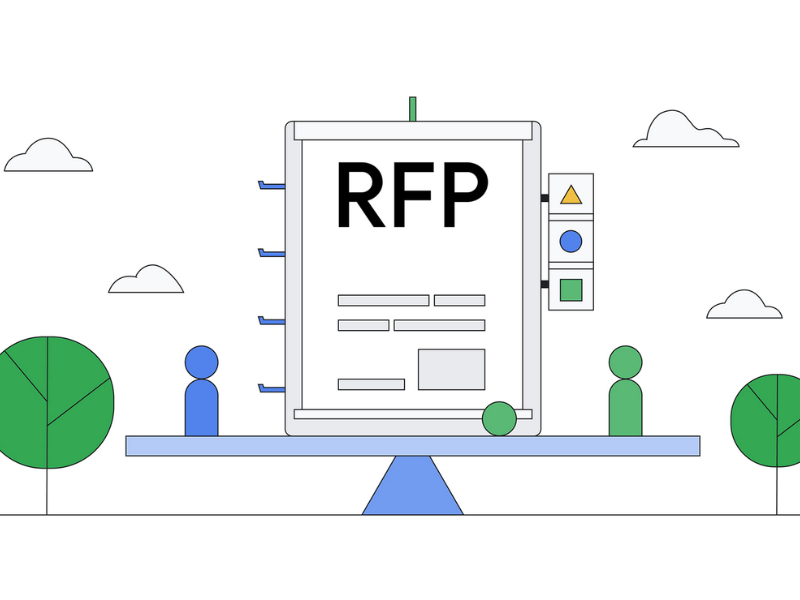
一个 Energy RFP (Request for Proposal) is a structured document that defines your energy procurement requirements and invites vendors to submit comparable proposals. Unlike informal quotes or vendor conversations, an RFP forces standardization—same pricing format, same technical specs, same evaluation timeline—so you can make objective decisions instead of subjective ones.

When Energy Teams Deploy RFPs

Large-scale energy procurement: When your utility or industrial operation needs to contract electricity, natural gas, or renewable energy supply for 12-36 months, an RFP ensures you’re comparing true apples-to-apples pricing. Without it, one vendor quotes per kWh with demand charges separate, another bundles everything, and a third adds mystery “delivery fees.”

Grid operations and emergency response: Selecting vendors for outage management, grid maintenance, or emergency dispatch requires more than cost comparison. An RFP lets you evaluate response time commitments, crew availability during peak storm seasons, and coordination protocols with your existing systems.

Outsourcing customer-facing services: When outsourcing billing, payment processing, or customer support to a third party, the wrong vendor damages your brand. An RFP uncovers how vendors handle disputes, integrate with your CRM, and maintain service quality during volume spikes.

Multi-vendor comparison where cost ≠ value: If three vendors quote $0.08/kWh, $0.075/kWh, and $0.09/kWh, which is cheapest? The answer depends on contract terms, demand charges, integration costs, and penalty clauses. An RFP surfaces these hidden variables so total cost of ownership becomes visible.

Real Cost of Skipping the RFP

Procurement teams that compare informal quotes often discover problems post-signature:

  • Assumption mismatch: Vendor assumed your billing system had API access. It doesn’t. Now integration takes 8 weeks instead of 2.
  • Hidden fees: Setup, training, and monthly platform fees weren’t in the quote. Your $200K project just became $340K.
  • Compliance gaps: Vendor claimed PCI DSS compliance but hasn’t completed certification. Your audit fails and contract pauses 90 days.

A structured RFP forces these issues into the open before you commit.


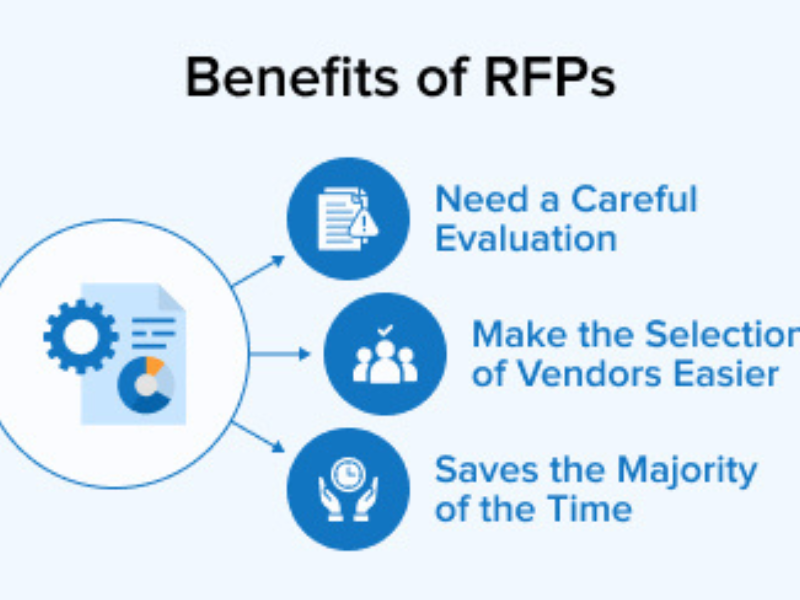
Why Using an Energy RFP Template Saves Time and Improves Results

Using a template is faster and safer than writing an RFP from scratch.

主要优势

  • Ensures no critical section is missed, even under time pressure.
  • Forces vendors to respond in a comparable format.
  • Improves pricing transparency and total cost visibility.
  • Aligns internal stakeholders around clear objectives.

Risk of not using a template:

  • Vague scopes lead to change orders and budget overruns.
  • Inconsistent responses make vendor comparison subjective.
  • Compliance gaps surface late, delaying contracts.

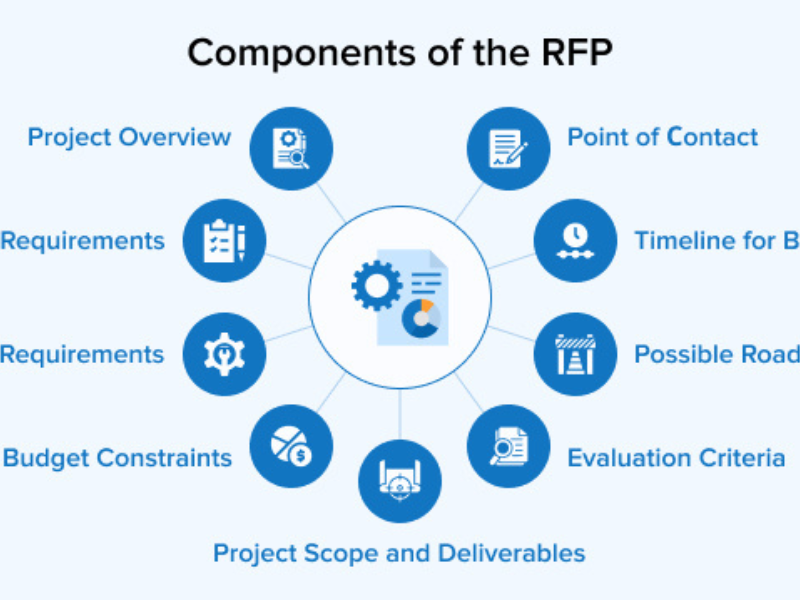
Core Sections of an Effective Energy RFP Template

Project Overview and Objectives

Start with a clear description of your organization and the problem you are solving.

包括

  • Organization type and size (utility, renewable developer, service provider).
  • Current state and key challenges.
  • Project timeline and high-level constraints.

Objectives must be measurable. Avoid vague language.

Strong objectives:

  • Reduce energy procurement costs by 8–12% within 12 months.
  • Improve outage response time to under 30 minutes.
  • Increase renewable energy share to 40% by 2027.

Weak objectives:

  • Improve efficiency.
  • Enhance customer experience.

Clear objectives help vendors tailor solutions instead of guessing.


Scope of Work

The scope defines exactly what vendors must deliver.

List services in plain language and link them to outcomes.

Typical scope elements:

  1. Energy supply or generation services.
  2. Outage management and emergency response.
  3. Billing, metering, or customer support services.
  4. Reporting and performance management.

Define deliverables and KPIs (key performance indicators).

Deliverable KPI
Outage notification Customer alerts sent within 5 minutes
Monthly billing 99.9% billing accuracy
Energy reporting Delivered within 10 business days

Case insight: teams with vague scopes often receive low bids that later expand through change requests.

Vendor Requirements and Qualifications

This section filters vendors without excluding strong smaller players.

Include requirements for:

  • Proven experience in the energy sector.
  • Relevant project references from the last 3–5 years.
  • Financial stability appropriate to project size.
  • Ability to scale during peak demand.

Avoid rigid thresholds that eliminate innovative vendors.

最佳做法: allow equivalent experience instead of naming only large utilities.

Ask vendors to explain 如何 they handled similar challenges, not just list clients.

System Integration and Technical Requirements

Keep requirements outcome-focused, not tool-specific.

Cover integrations at a high level:

  • CRM systems (customer data and interactions).
  • Billing and payment platforms.
  • IoT and smart meters (connected devices collecting usage data).
  • Outage or asset management systems.

Example requirement text:

The vendor must support secure, real-time data exchange with existing billing and outage systems using standard APIs.

This approach encourages better solutions and avoids locking into outdated technology.


Pricing Structure and Total Cost of Ownership

Price alone is misleading without full cost visibility.

Compare pricing models:

模型 最适合 风险
Fixed fee Predictable demand Overpay during low usage
Usage-based Variable demand Cost spikes during peaks
混合动力 Balanced scenarios More complex to evaluate

Ask vendors to disclose:

  • Implementation and onboarding fees.
  • Integration and customization costs.
  • Ongoing support and upgrade fees.

Include a simple TCO (total cost of ownership) table covering 3–5 years.

Proposal Submission Guidelines

Set clear rules to reduce confusion.

  • Submission format and file type.
  • Deadline and time zone.
  • Single contact for vendor questions.
  • Timeline for evaluation and decision.

Clarity here improves proposal quality.

Evaluation Criteria and Vendor Scoring

Define how proposals will be scored before reviewing them.

Common criteria:

标准 重量
Technical fit 30%
Pricing and TCO 25%
Experience and references 20%
Compliance and security 15%
Service and support 10%

Weighted scoring reduces personal bias.

Mini case: teams using scoring matrices identify top vendors faster and defend decisions internally.


Customizable Energy RFP Template Structure

A strong energy RFP template is modular and fill‑in‑the‑blank.

建议的结构:

  • Company background
  • Project overview and objectives
  • Scope of work
  • Technical and integration requirements
  • Pricing and TCO
  • 合规要求
  • Evaluation criteria
  • Submission guidelines

You can remove or simplify sections for smaller projects.

Checklist before sending:

  • Objectives are measurable.
  • Scope matches internal expectations.
  • Pricing format is consistent.
  • Evaluation weights are approved.


How to Customize an Energy RFP for Different Use Cases

Utility Companies and Grid Operators

Focus on reliability and peak demand.

包括

  • Peak load scenarios and stress testing.
  • Outage response SLAs.
  • Regulatory and reporting obligations.

Weight reliability higher than price to avoid service risk.

Renewable Energy Projects

Emphasize scalability and reporting.

包括

  • Solar or wind generation specifics.
  • Interconnection and grid constraints.
  • Sustainability and performance reporting.

Ask vendors how they scale as capacity grows.

Energy Service Providers and Call Centers

Prioritize customer experience.

包括

  • Billing accuracy and dispute handling.
  • CRM integration and data security.
  • 24/7 support and AI chatbot options (automated customer interactions).

Measure success through response time and resolution rate.

Compliance and Regulatory Considerations to Include

Energy RFPs must address compliance early.

Common requirements:

  • ISO standards for quality and security.
  • SOC and SOC 2 for controls and data handling.
  • PCI DSS for payment data protection.

Require vendors to clearly state responsibilities and audit readiness.

Common Mistakes to Avoid in Energy RFPs

  • Writing vague objectives that vendors interpret differently.
  • Mixing mandatory and optional requirements without clarity.
  • Ignoring integration and data ownership issues.
  • Evaluating price without full TCO.
  • Changing criteria after proposals are received.

Best Practices for Comparing Energy Vendor Proposals

  • Use the same scoring matrix for all vendors.
  • Normalize pricing to a common scenario.
  • Check references on similar project size and complexity.
  • Validate assumptions before final selection.
Step Purpose
Score independently Reduce group bias
Review gaps Identify hidden risks
Re-score Align final decision

常见问题

What should an energy RFP template always include?

It should always include objectives, scope of work, pricing structure, compliance requirements, and evaluation criteria. These sections ensure fair comparison and reduce post-award risk.

Can I use one energy RFP template for different projects?

Yes. A modular template works across utilities, renewables, and services. You customize scope, technical depth, and evaluation weights per use case.

How detailed should technical requirements be?

They should focus on outcomes and integrations, not specific tools, unless mandatory. This encourages better vendor solutions and avoids limiting competition.

结论和行动呼吁

A well-built energy RFP template saves time, improves vendor responses, and lowers procurement risk. By standardizing scope, pricing, and evaluation, you make better decisions with less effort. Use this framework to build or customize your own energy RFP template and start sourcing with confidence. Download, adapt, and put it to work on your next energy project.

常见问题

What is an energy RFP template?

An energy RFP template is a pre-designed framework for crafting requests for proposals specific to energy procurement or service needs. It ensures standardized requirements and simplifies vendor evaluation processes.

Why is using an energy RFP template beneficial?

Using an energy RFP template saves time, ensures clarity in vendor requirements, and reduces the risk of overlooking critical elements such as compliance and technical specifications.

Can I customize an energy RFP template for my project’s needs?

Yes, energy RFP templates are fully customizable. Whether you’re managing utility operations, renewable energy projects, or call center services, the template can be tailored to fit your objectives.

What sections should be included in an energy RFP?

Key sections include project overview, scope of work, vendor qualifications, technical requirements, pricing structure, proposal guidelines, and evaluation criteria. These ensure comprehensive coverage for vendor proposals.

How does the template ensure compliance and regulatory standards?

The energy RFP template incorporates essential regulations like ISO standards, SOC compliance, and PCI DSS, ensuring vendors meet necessary legal and security requirements.

Can the template help with peak energy demand scenarios?

Absolutely. The template includes evaluation criteria for addressing peak demand, such as outage management capabilities, scalability, and maintaining service reliability during energy surges.

更多信息 

航空公司征求建议书模板指南 企业旅行买家

英国业务流程外包市场趋势:增长、人工智能和外包转变

索引