

Teams researching five9 alternatives are usually not looking for a random vendor list. They are trying to solve a practical buying problem: Five9 may be powerful, but the pricing model, rollout effort, feature complexity, or operational fit may not match the team they actually run. This guide compares realistic Five9 competitors across the dimensions that matter most in shortlist-stage evaluation: pricing structure, implementation time, AI usefulness, omnichannel coverage, integration fit, support responsiveness, and business use case. The goal is not to crown a universal winner. It is to help you narrow the right platform type for your environment, budget, and growth model.
Why Teams Start Looking for Five9 Alternatives
In practical terms, Five9 alternatives are other cloud-based call center platforms or CCaaS alternatives that can replace or compete with Five9 for inbound, outbound, omnichannel, or blended contact center operations.
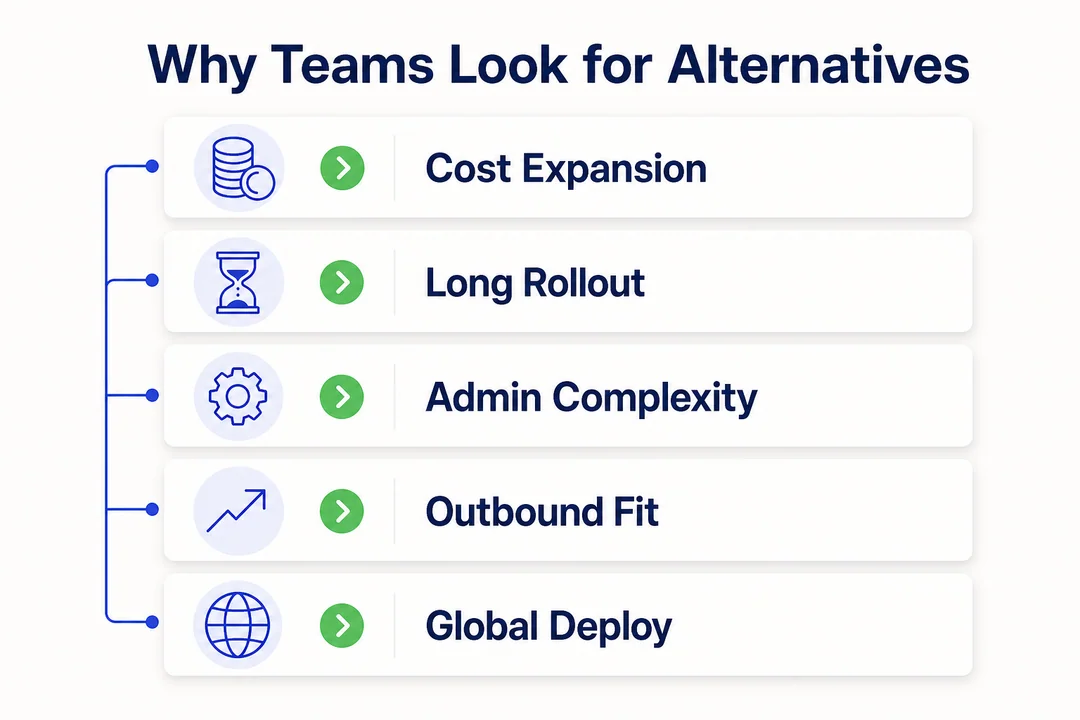
Most companies do not start this search because Five9 is a poor product. They start because the platform may no longer fit their cost structure, deployment urgency, admin capacity, or operating model.
Cost, urgency, and operational fit are the main triggers
- Rising total cost: Base pricing can expand quickly once AI, digital channels, QA, or advanced management features are layered in.
- Longer implementation time: Some teams need faster rollout than a traditional enterprise buying and onboarding cycle allows.
- Too much feature complexity: Broad platforms can create admin overhead if the team only uses part of the suite.
- Weak fit for outbound-heavy workflows: Revenue teams may want more dialing flexibility and lower commitment overhead.
- Need for faster global deployment: International teams often prioritize quick number activation, routing flexibility, and simpler scaling.
When staying with Five9 still makes sense vs. when it does not
| Staying with Five9 makes sense when… | Evaluating alternatives makes sense when… |
|---|---|
| You run a larger enterprise CX program | You need faster rollout with less procurement friction |
| You have admin capacity for a broad suite | You want simpler day-to-day operations |
| You can absorb quote-based expansion costs | You need more predictable spend |
| You value enterprise depth over speed | You value agility and lower commitment overhead |
| Your environment is already built around Five9 workflows | Your team is reassessing fit before scaling further |
Five9 can still be a strong fit for enterprise environments that need depth, mature vendor governance, and broader platform breadth. But for leaner teams, fast-growth operations, or buyers seeking pay-as-you-go pricing, other vendors may align better.
What to Look for in a Five9 Alternative
The best replacement is rarely the vendor with the longest feature list. In most evaluations, buyers over-focus on features and under-focus on operating model fit.
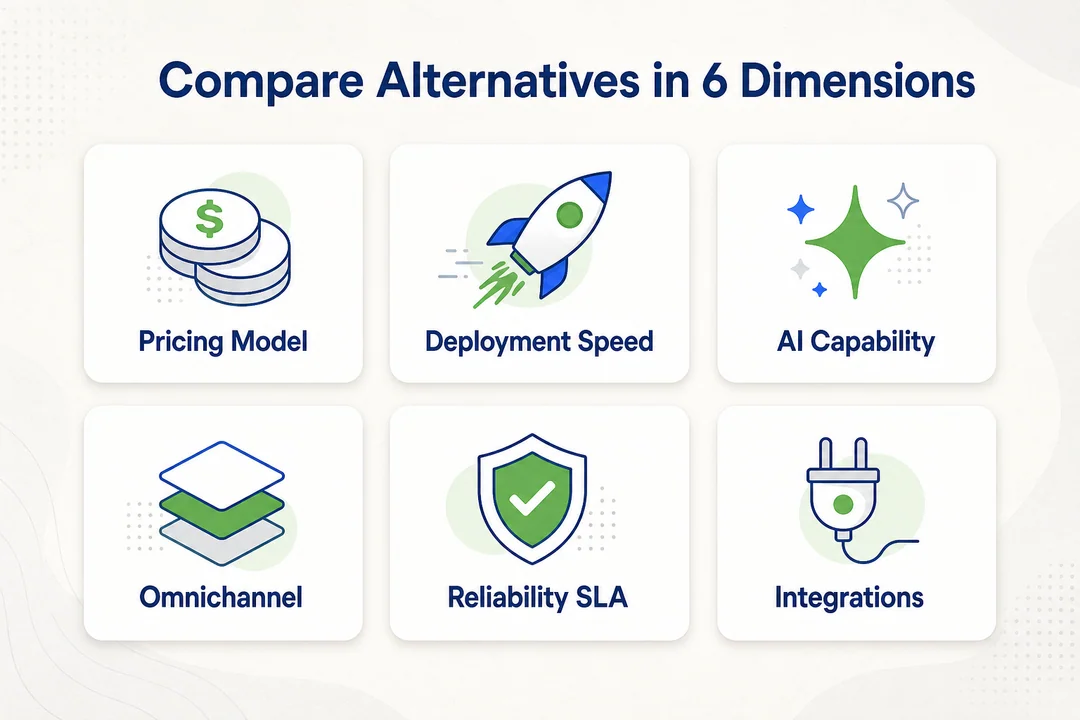
A cleaner framework is to compare vendors across six dimensions:
- Pricing model and cost predictability
- Implementation time and deployment burden
- AI maturity tied to actual outcomes
- Omnichannel coverage
- Routing, reliability, and support
- CRM integrations and ecosystem fit
Pricing model matters more than sticker price
In CCaaS, pricing transparency means you can understand what you will actually pay as usage, channels, seats, and support needs grow.
Key pricing models include:
- Seat-based pricing: Pay per user or agent, often in tiers
- Usage-based pricing: Pay by minutes, activity, or actual consumption
- Quote-based packaging: Custom pricing based on scope, features, and contract terms
What matters is Total Cost of Ownership (TCO – total cost over time), not just the entry number. Buyers should check:
- Add-on fees for AI, digital channels, QA, or analytics
- Minimum seat commitments
- Support tier charges
- Contract length and expansion terms
AI and omnichannel maturity should be tied to outcomes
Useful AI-powered call center software should improve operations, not just add marketing language.
Look for outcomes such as:
- Transcription for searchable records and faster review
- Interaction summaries to reduce after-call work
- QA automation to lower manual scoring effort
- Sentiment tracking for coaching and escalation visibility
- Agent assist for faster responses and more consistent service
- Voice, SMS, email, chat, or WhatsApp support where your customers actually engage
These features matter when they reduce workload, improve visibility, and help teams coach faster.
Reliability, support, routing, and integrations are non-negotiable
A feature existing on a checklist is not the same as that feature working well in production.
Buyers should validate:
- SLA (Service Level Agreement – service performance commitment) clarity
- Support responsiveness during rollout and daily operations
- Global call routing quality for target regions
- SIP trunking compatibility where telecom flexibility matters
- CRM and helpdesk integrations
- API fit for reporting, automation, or custom workflows
If the vendor cannot support your routing model, support expectations, or reporting workflow, the rest of the feature set matters much less.
Best Five9 Alternatives in 2026
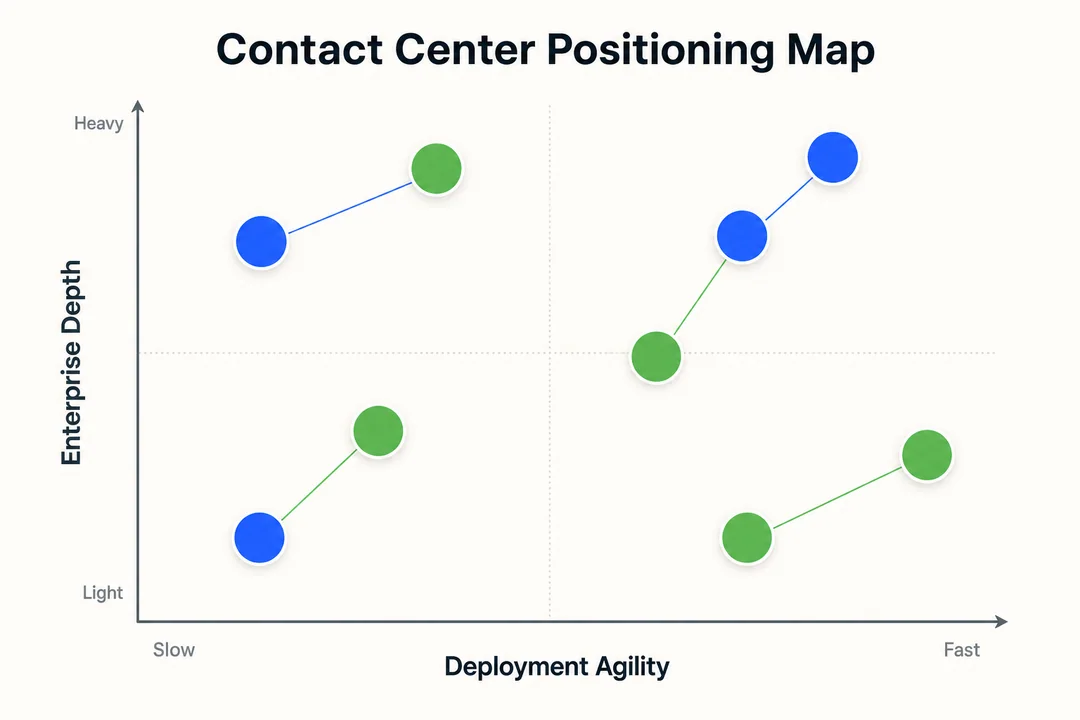
The best Five9 alternatives depend on what your team is optimizing for. Some platforms win on enterprise breadth, some on AI-led administration, some on AWS-native flexibility, and others on quick deployment or outbound agility.
Below is a practical shortlist of vendors buyers most often compare by business fit, not hype.
Flyfone
Best for: Fast-moving teams, outbound-heavy operations, and businesses that need quick setup with flexible scaling.
Strengths:
Under-1-hour deployment, no seat fees, pay-as-you-go pricing, customizable routing, global communication routes, a built-in auto-dialer, AI-powered quality assurance, and the ability to scale from small teams to 500+ seats without heavy setup overhead.
Watch-outs:
Not positioned as a heavyweight, bureaucracy-heavy enterprise suite for organizations that want deep enterprise administration layers across every function.
Pricing model:
Usage-based / pay-as-you-go.
Why teams may choose it over Five9:
Flyfone can be a better fit when deployment speed, lower commitment overhead, outbound flexibility, and international routing agility matter more than traditional enterprise-suite depth. This is especially relevant for dynamic operations in BPO, fintech, cross-border support, or high-volume outbound environments.
Genesys Cloud CX
Best for: Enterprise omnichannel environments with broad CX requirements.
Strengths:
Strong market credibility, broad ecosystem, mature omnichannel capabilities, deep functionality, and a wide app marketplace. Genesys is also frequently recognized by analysts as a leading enterprise contact center option.
Watch-outs:
Complexity can increase with scope. Cost can also expand as more modules, users, and advanced capabilities are added.
Pricing model:
Tiered per-user pricing.
Why teams may choose it over Five9:
Organizations may prefer Genesys when they want enterprise breadth, mature ecosystem depth, and a platform that supports larger, more layered customer experience programs.
NICE CXone
Best for: Compliance-heavy, governance-intensive customer service environments.
Strengths:
Strong Workforce Optimization, analytics, governance controls, and enterprise operating discipline. NICE CXone is often shortlisted by teams that care about oversight, quality management, and regulated-process rigor.
Watch-outs:
Premium pricing and potentially longer rollout cycles can make it heavier for mid-market buyers or lean teams.
Pricing model:
Tiered / per-agent pricing.
Why teams may choose it over Five9:
For organizations where governance, workforce controls, analytics, and compliance process matter as much as channel handling, NICE CXone can be a better operational fit.
Talkdesk
Best for: AI-forward service teams that want automation without excessive technical overhead.
Strengths:
Strong automation positioning, visual workflow tools, industry templates, and a more approachable administration model for some teams. Talkdesk often appeals to buyers that want AI-driven automation tied to service operations.
Watch-outs:
Pricing can rise by tier, and some advanced functionality may depend on package level or expansion modules.
Pricing model:
Per-user tiered pricing.
Why teams may choose it over Five9:
Talkdesk may feel easier for teams that want AI-led workflows and visual administration without adopting the heaviest enterprise operating model.
Amazon Connect
Best for: Technically capable teams already aligned with Amazon Web Services.
Strengths:
Flexible, scalable, usage-based, and built on cloud-native architecture. Amazon Connect is often attractive to businesses that want to shape flows, integrations, and scaling around AWS-native infrastructure and economics.
Watch-outs:
It typically requires more internal technical ownership than packaged enterprise suites. Non-technical teams may find it less turnkey.
Pricing model:
Pay-per-use.
Why teams may choose it over Five9:
Amazon Connect can be a better fit for organizations that value AWS flexibility, variable-cost economics, and deeper customization over a more packaged vendor experience.
Dialpad
Best for: Smaller teams that want ease of use and accessible AI features.
Strengths:
Simple setup, intuitive interface, real-time transcription, and practical AI value without a long ramp. Dialpad is often favored by teams that want quick adoption and lightweight administration.
Watch-outs:
It may offer less orchestration depth than more complex enterprise call center solutions.
Pricing model:
Per-user pricing with usage elements.
Why teams may choose it over Five9:
Teams may prefer Dialpad when they want faster rollout, simpler adoption, and useful AI capabilities without taking on the weight of a broader enterprise platform.
RingCentral Contact Center
Best for: Organizations that want Unified Communications and contact center capability under one broader ecosystem.
Strengths:
Strong brand recognition, UCaaS + contact center alignment, and a familiar option for businesses trying to unify internal and external communications.
Watch-outs:
Bundle logic and pricing transparency can vary depending on how the solution is packaged and sold.
Pricing model:
Quote-based or bundled pricing.
Why teams may choose it over Five9:
Companies may select RingCentral when they want a one-vendor communications strategy spanning calling, messaging, meetings, and customer interactions.
Aircall, CloudTalk, and Nextiva
These are lighter-weight contact center software alternatives that often suit SMBs, sales-led teams, or buyers prioritizing faster deployment over enterprise depth.
| Platform | Best for | Strengths | Watch-outs | Pricing model | Why choose over Five9 |
|---|---|---|---|---|---|
| Aircall | SMB sales and support teams | Fast setup, strong CRM integrations, simple admin | Less enterprise depth | Per-user | Easier rollout for smaller teams |
| CloudTalk | Sales-led and international calling teams | Strong calling workflows, global number coverage | Lighter omnichannel depth | Per-user | Simpler voice-first option |
| Nextiva | Businesses combining UCaaS and CX | Broader communications suite, accessible adoption | May not match heavy enterprise complexity | Quote-based / tiered | Good for all-in-one communications buyers |
These platforms can work well for smaller or mid-sized operations, but they may fall short against Five9 in advanced governance, compliance maturity, or routing complexity.
Quick Comparison Table: Five9 Alternatives by Business Fit
Buyers looking for Five9 alternatives with transparent pricing or faster deployment usually benefit from comparing by business fit first, then validating feature depth second.
| Platform | Best For | Deployment Speed | Pricing Model | Key Strength | Watch-Out | Best Choice If You Need |
|---|---|---|---|---|---|---|
| Flyfone | Outbound, agile teams | Very fast | Usage-based | Routing flexibility | Less enterprise-heavy depth | Speed and low commitment |
| Genesys Cloud CX | Large CX programs | Moderate | Tiered per-user | Enterprise breadth | Complexity and cost growth | Deep omnichannel scale |
| NICE CXone | Governance-heavy operations | Moderate to slower | Tiered per-agent | WFO and compliance | Premium pricing | Strong controls and oversight |
| Talkdesk | AI-forward service teams | Moderate | Tiered per-user | Workflow automation | Tier-based expansion | AI-led service operations |
| Amazon Connect | AWS-aligned teams | Flexible, depends on setup | Pay-per-use | AWS-native flexibility | More technical ownership | Usage-based scalability |
| Dialpad | Smaller, simple teams | Fast | Per-user + usage | Easy adoption | Less orchestration depth | Quick rollout with core AI |
| RingCentral Contact Center | UCaaS + CCaaS buyers | Moderate | Quote-based / bundled | Unified communications | Pricing clarity varies | One-vendor comms strategy |
| Aircall / CloudTalk / Nextiva | SMB and sales-led teams | Fast | Per-user / tiered | Simplicity | Lighter enterprise depth | Best cloud call center software for mid-market |
In broad terms, Genesys and NICE fit larger enterprise programs, Amazon Connect fits technically capable AWS-aligned teams, and Flyfone, Dialpad, or lighter SMB-focused tools fit buyers that need agility, simpler deployment, or more transparent operating economics.
Which Five9 Alternative Is Right for Your Team?
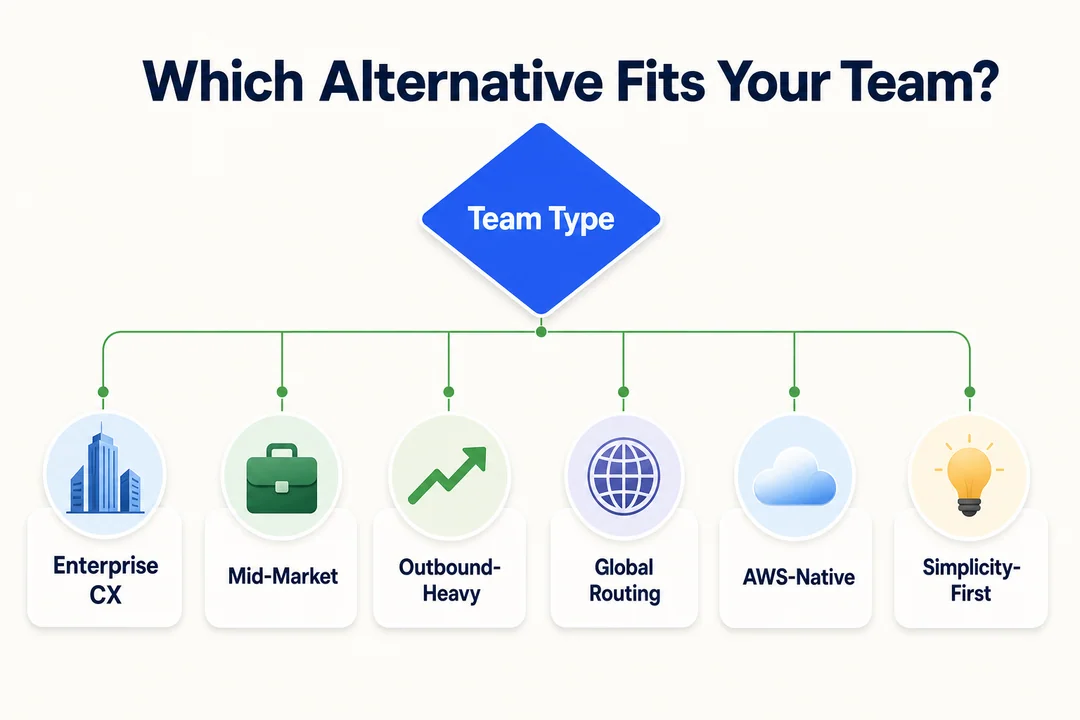
You do not need a universal winner. You need a better fit for your operating model.
-
Best for enterprise-scale CX programs: Genesys Cloud CX or NICE CXone. Stronger fit when your organization can support broader administration, deeper governance, and longer evaluation cycles. Trade-off: more complexity and higher cost exposure.
-
Best for mid-market teams balancing cost and capability: Talkdesk, Dialpad, or Flyfone depending priorities. Talkdesk fits AI-forward service operations, Dialpad fits simplicity-first teams, and Flyfone fits fast-moving teams needing agility. Trade-off: each optimizes different strengths rather than maximum platform breadth.
-
Best for outbound-heavy revenue operations: Flyfone. Strong fit when dialing flexibility, quick setup, and usage-based pricing matter more than enterprise-suite administration. Trade-off: not the most layered enterprise governance option.
-
Best for global teams needing routing flexibility: Flyfone or RingCentral Contact Center. Flyfone fits teams prioritizing global communication routes and agility, while RingCentral fits broader communications consolidation. Trade-off: choose between routing flexibility and one-vendor ecosystem strategy.
-
Best for AWS-native technical teams: Amazon Connect. Best when your internal team is comfortable owning more configuration and integration work. Trade-off: more internal responsibility.
-
Best for teams prioritizing simple deployment: Dialpad or Aircall-class tools. Good fit when quick adoption and low admin friction are more important than advanced orchestration. Trade-off: lighter enterprise depth.
Before You Switch: A Simple Evaluation Checklist
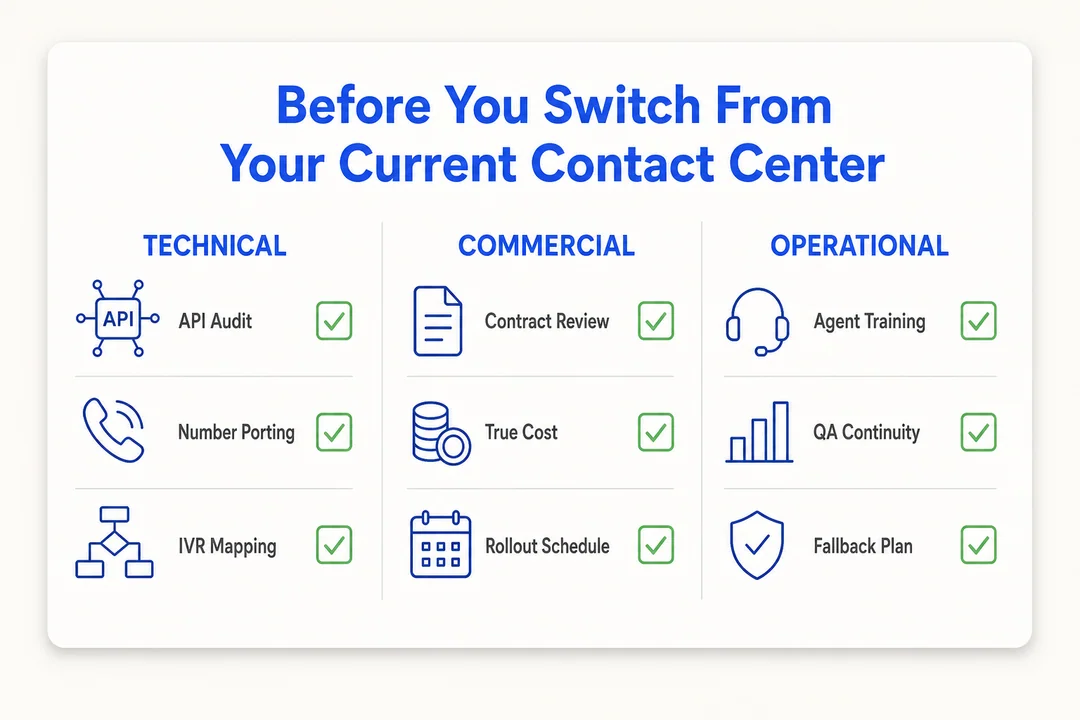
If you are planning how to switch from Five9 to a flexible CCaaS, validate dependencies before you get attached to a demo. A strong shortlist can still fail during rollout if technical, commercial, and operational fit are not checked early.
Technical
- Confirm CRM integrations and helpdesk dependencies
- Map IVR flows and routing logic
- Validate SIP trunking and phone number requirements
- Check API needs for automation and reporting
- Review QA workflows, recordings, and analytics migration needs
Commercial
- Compare real pricing structure, not just entry packages
- Check contract flexibility and minimum commitments
- Confirm realistic implementation time
- Review support model and escalation paths
- Validate SLA terms and migration support scope
Operational
- Estimate onboarding effort for admins and agents
- Assess admin complexity after go-live
- Review training requirements
- Confirm call center compliance and data retention needs
- Protect reporting continuity during the transition
A common mistake is overbuying platform complexity before confirming whether your team can operate it efficiently.
Conclusion
The strongest five9 alternatives are not interchangeable. Genesys Cloud CX and NICE CXone fit organizations that need enterprise depth, governance, and broader operational control. Amazon Connect fits teams that want AWS-native flexibility and are comfortable with more technical ownership. Dialpad and other lighter tools fit teams prioritizing simplicity and faster adoption. Flyfone stands out when the best Five9 alternative for your team means fast deployment, outbound agility, global routing flexibility, and usage-based pricing.
The right next step is not another generic demo. It is a fit review based on your routing model, channel mix, admin capacity, support expectations, and budget structure. If you want a clearer shortlist and lower switching risk, request a migration assessment to compare your current setup against the most realistic alternatives for your team.
Frequently Asked Questions
Why do businesses look for Five9 alternatives?
Businesses consider alternatives when Five9 no longer matches their operating model, typically due to unpredictable cost expansion, long deployment timelines, complex administration, or the need for more flexible outbound call flows.
What criteria matter most when comparing CCaaS providers?
When evaluating alternatives, prioritize pricing model (seat-based vs usage-based), realistic deployment time, CRM integration depth, scalability, SLA transparency, and the maturity of AI agent-assist features.
Is Flyfone a good fit as a Five9 alternative?
Flyfone fits businesses that need fast deployment (under 1 hour), flexible outbound workflows, and usage-based pricing transparency. It is a strong alternative for teams that prioritize agility and operational efficiency over heavy administrative structure.
How do I estimate deployment time for a new contact center?
Deployment time depends on IVR flow complexity, data integrations, and agent count. Ask vendors for realistic timelines and prioritize platforms with no-code or drag-and-drop configuration to shorten setup.
What is the difference between per-seat and pay-as-you-go pricing?
Per-seat pricing charges a fixed monthly fee regardless of usage, which suits stable headcount. Pay-as-you-go bills by actual consumption, which works better for fluctuating volume, seasonal campaigns, or outbound-heavy operations.
What should I prepare before switching from Five9?
Conduct a technical audit covering current API and CRM integrations, IVR call flow structure, call recording retention requirements, QA processes, and a plan to migrate phone numbers and routing logic to the new platform.
More in Operations & CX Optimization
View all →
Customer Experience Transformation: Framework and Steps
A telecom customer calls support about a billing error. They explain the problem to the IVR system. Then to the first agent. Then get transferred and explain again. Then escalated—and explain a third time. Forty minutes later, they're exhausted and the problem still isn't solved. This is what broken customer experience looks like. And it's costing you customers. Customer experience…


Web Caller Meaning: JavaScript caller, Calling Tools or Portals
“Web caller” is one of those phrases where the search results and the searcher are frequently talking about different things. Three unrelated audiences use it: developers hitting an error on the legacy JavaScript caller property, buyers evaluating browser-based calling software, and people trying to reach a specific portal or training page whose exact name they cannot recall. That fragmentation is…
Customer Experience Strategy: How to Build One That Works
Customer experience is getting worse, not better. Forrester's 2025 Global CX Index found that 21% of brands declined in CX quality while only 6% improved — and in the US, 25% declined against 7% that improved, the second consecutive year of that pattern. Most of those brands were not neglecting customer experience. They were working on it without a strategy…



 English
  Russian
  Chinese