

If you’re researching aircall alternatives, you’re usually not looking for a random vendor roundup. You’re trying to find a better fit fast. Aircall is still a well-known option, but it does not fit every team forever, especially when pricing, feature depth, scaling needs, or workflow requirements start to change. This curated buyer guide focuses on the questions real teams ask during evaluation: why businesses switch, which alternatives are worth shortlisting, how pricing actually works, which platform fits your use case, and how to replace a business phone system without creating migration problems.
Why Businesses Look for Aircall Alternatives
Aircall alternatives are cloud phone systems, VoIP platforms, and contact center tools that buyers compare when Aircall no longer fits their pricing, feature, or scaling needs. Most teams do not switch because one platform is “bad.” They switch because the operating model changes and the original choice no longer fits as well.
Aircall remains a reasonable option for many SMBs. But as usage grows, pricing details, workflow limits, and day-to-day operational friction become more visible. That is why searches for aircall competitors usually come from teams that already know what they need to improve.
Cost and Feature Fit Issues
- Teams with growing headcount often feel the pressure of seat-based pricing more than they did at the start.
- The advertised entry price may not reflect the real monthly bill once AI add-ons, analytics, or extra storage are included.
- Some businesses outgrow voice-first workflows and need stronger omnichannel support, messaging, or broader collaboration tools.
- Smaller teams may dislike minimum seat requirements if they end up paying for unused licenses.
- Feature gaps matter more when the phone platform becomes central to sales, support, or customer operations.
Operational Issues That Matter More as Teams Grow
Operational pain usually shows up after adoption, not during the demo. A five-person team may tolerate occasional admin friction, but a 25-seat support team or outbound sales floor feels those issues immediately. Common triggers include concerns around international calling, inconsistent support responsiveness, setup complexity as routing grows, and call quality problems that directly affect customer experience. In voice-heavy operations, dropped calls, lag, or uneven routing are not minor annoyances, they are workflow blockers.
That said, some businesses with stable needs, acceptable costs, and simple workflows may still be better off staying on Aircall.
Best Aircall Alternatives at a Glance
A focused shortlist is usually more useful than a bloated “top 20” article. The best aircall alternatives span different categories: VoIP business phone systems for small teams, broader cloud call center software, UCaaS platforms with video and chat, and global voice solutions built for outbound scale. The goal is not to find one universal winner. It is to identify the best-fit 2–3 vendors for your operating model.
Pricing below is indicative only. It can vary by market, usage, plan tier, add-ons, and contract terms.
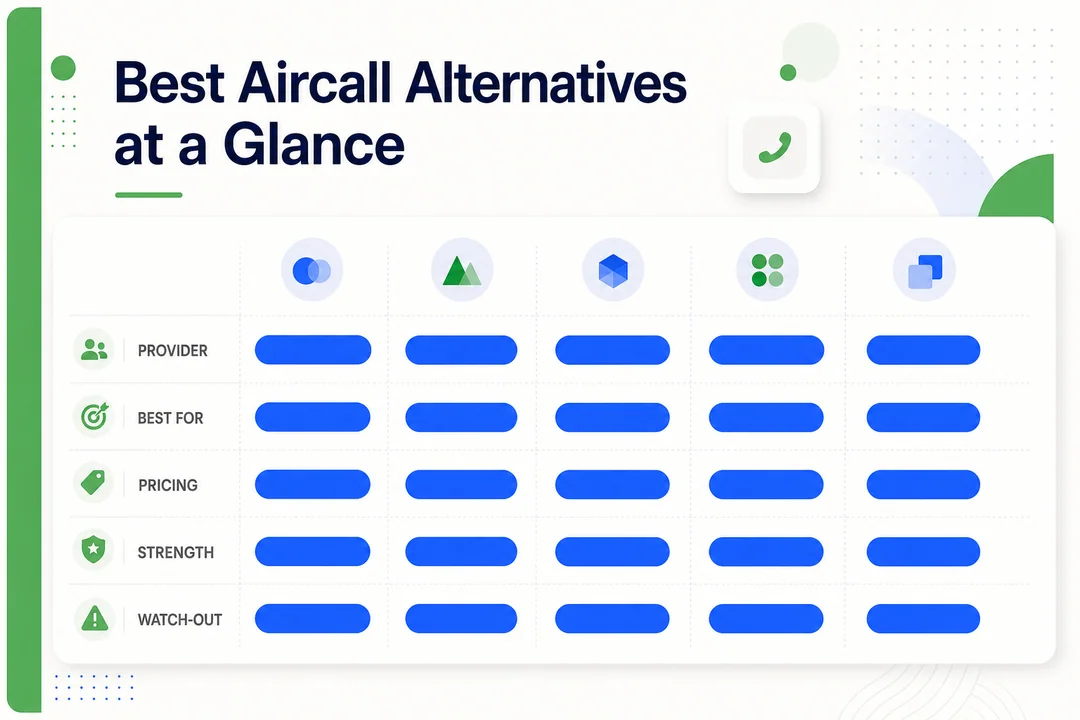
| Provider | Best for | Starting price / pricing model | Key strength | Main watch-out |
|---|---|---|---|---|
| Flyfone | High-volume outbound and global operations | Pay-as-you-go pricing / custom usage-based | No seat fees, fast deployment, global routing | Less ideal for chat-first internal collaboration |
| Nextiva | SMBs wanting broader UCaaS | Starting from entry SMB plans | Voice, messaging, video in one stack | Value depends on plan tier |
| Dialpad | Sales teams wanting AI-led coaching | Starting from SMB plans | Strong transcription and coaching tools | Packaging can get confusing |
| RingCentral | Mid-market and enterprise standardization | Starting from business plans | Mature admin controls and broad stack | Can get heavier and pricier over time |
| OpenPhone / Quo | Startups and remote teams | Starting from lower-cost SMB plans | Clean UX and shared inbox collaboration | Not built for larger contact center complexity |
| JustCall | CRM-connected sales and support teams | Starting from per-user plans | Campaign-friendly workflows and integrations | Higher tiers can add up |
| 8×8 | International enterprises | Contact sales | Global footprint and contact center depth | Lower pricing transparency |
| Zoom Phone | Zoom-centric companies | Starting from metered or base plans | Familiar interface inside Zoom | Add-ons affect total value |
| GoTo Connect | SMBs prioritizing simplicity | Starting from SMB bundles | Straightforward phone + meetings bundle | Less differentiated for advanced AI needs |
| Phone.com | Budget-sensitive small teams | Starting from low-cost plans | Affordable entry point | Limited depth for analytics and scale |
Aircall alternative for small business buyers usually lean toward OpenPhone/Quo or Phone.com. Teams evaluating more advanced cloud call center software should look closer at Flyfone, 8×8, JustCall, or broader suites like RingCentral and Nextiva.
10 Best Aircall Alternatives by Use Case
These Aircall competitors are not all in the same category. Some are lightweight SMB tools. Others are broader UCaaS platforms, outbound-focused systems, or international-grade contact center solution options. The right comparison starts with use case, not brand recognition.
Flyfone, Best for High-Volume Outbound Teams and Global Operations
Best for: BPOs, outbound sales teams, fintech, iGaming, cross-border operations, and companies scaling voice-heavy teams quickly.
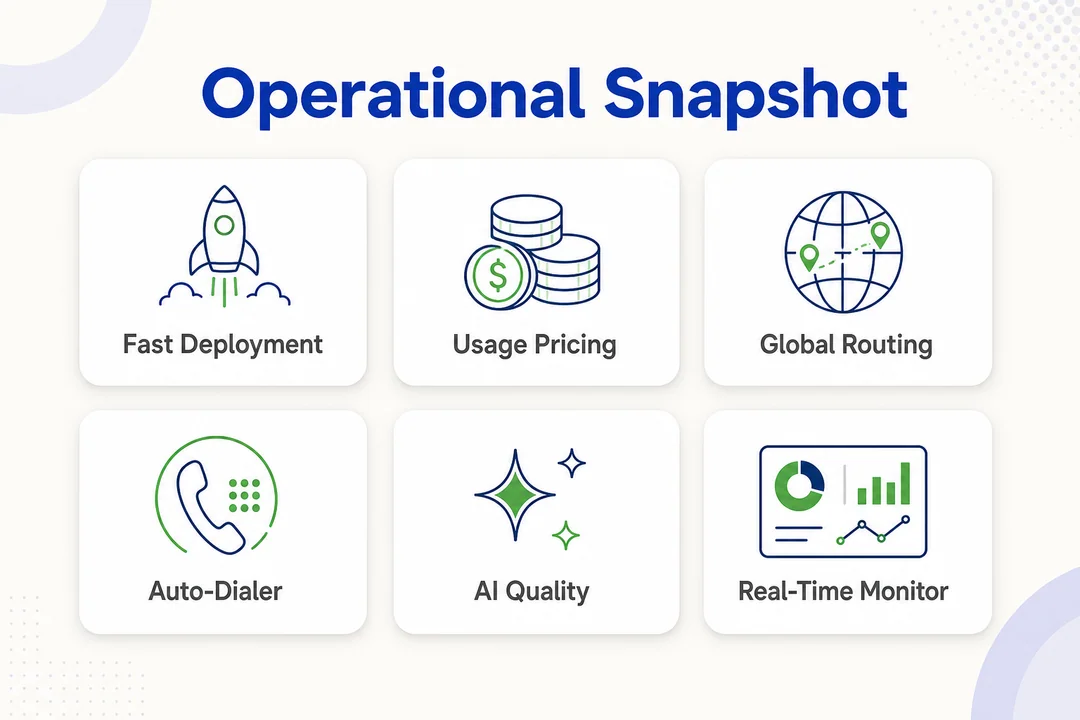
Strengths: Flyfone stands out when teams care more about outbound scale and voice operations than internal chat or meetings. It offers under-1-hour deployment, pay-as-you-go pricing, no seat fees, global routing, a built-in auto-dialer, AI-powered QA, and real-time monitoring. That combination is especially relevant for teams with fluctuating agent counts, high call throughput, or international traffic patterns where route stability matters.
Trade-off: It is less ideal for companies mainly looking for a chat-first UCaaS suite centered on internal collaboration, meetings, and file sharing.
Fit note: Flyfone is strongest when usage fluctuates, outbound scale matters, or global voice reliability is a bigger priority than bundled collaboration tools.
Nextiva, Best for SMBs Wanting a Broader UCaaS Platform
Best for: Small and mid-sized businesses that want one vendor for voice, messaging, and video.
Strengths: Nextiva has broad UCaaS appeal. It is often shortlisted by companies that want to replace Aircall with a more all-in-one communications stack rather than another voice-first tool. Admin simplicity and overall reliability are part of its appeal.
Trade-off: The value equation depends on plan tier. Some businesses may end up paying for breadth they do not fully use.
Fit note: A better choice if you want one communications vendor, not just a voice replacement.
Dialpad, Best for AI-Assisted Sales Conversations
Best for: Sales teams that rely on coaching, talk analysis, and conversation visibility.
Strengths: Dialpad is well known for AI coaching, transcription, and conversation insights. If managers actively coach reps based on live or post-call data, it often makes a stronger case than simpler VoIP alternatives.
Trade-off: Plan packaging and feature access can feel less straightforward than buyers expect.
Fit note: Best when conversation intelligence is central to your workflow, not just a nice-to-have.
RingCentral, Best for Established Mid-Market and Enterprise Environments
Best for: Larger organizations that want standardization and broader communications coverage.
Strengths: RingCentral is a mature enterprise communication platform with extensive admin controls, voice, messaging, meetings, and strong organizational depth. It fits companies that prefer established governance and broad capabilities under one roof.
Trade-off: It can become heavier, more expensive, and more complex than smaller teams need.
Fit note: Strongest for structured environments where standardization matters more than lean simplicity.
OpenPhone / Quo, Best for Startups and Lightweight Remote Teams
Best for: Startups, founders, and small remote teams that want a simple, modern setup.
Strengths: OpenPhone, now associated with Quo branding in some market references, offers a clean user experience, easy onboarding, and useful shared inbox collaboration. For many buyers, it feels closer to a modern small business phone system than a traditional office phone replacement.
Trade-off: It is not designed for larger contact center complexity or global outbound operations.
Fit note: A smart shortlist choice when ease of use matters more than advanced routing or heavy call center features.
JustCall, Best for Outbound and CRM-Connected Sales Workflows
Best for: Sales and support teams that live inside CRM-led workflows.
Strengths: JustCall is often shortlisted for stronger CRM integration, campaign-friendly outbound features, and tools aimed at sales and support operations. It can make sense for teams that need call activity tightly connected to pipeline motion.
Trade-off: Higher tiers can raise cost meaningfully as teams scale or need more advanced features.
Fit note: Best if your buying logic centers on workflow integration and outbound productivity.
8×8, Best for International Enterprises
Best for: Larger organizations with distributed teams and global calling requirements.
Strengths: 8×8 is a credible international calling solution with enterprise communication breadth and deeper contact center capabilities. It is often considered when global reach and broader organizational needs outweigh pure SMB simplicity.
Trade-off: Pricing transparency is typically lower than buyers prefer during early research.
Fit note: Worth shortlisting if international footprint and enterprise-scale support are major evaluation factors.
Zoom Phone, Best for Zoom-Centric Companies
Best for: Companies already standardized on Zoom meetings and collaboration.
Strengths: Zoom Phone benefits from familiarity. If your teams already work inside the Zoom ecosystem, adoption can be simpler and training lighter. That can reduce switching friction compared with moving to a completely different interface.
Trade-off: The overall value depends on how much of the broader Zoom stack you already use and which add-ons you need.
Fit note: Most attractive for businesses that want to extend an existing Zoom-first environment.
GoTo Connect, Best for SMBs Prioritizing Simplicity
Best for: SMBs that want a practical phone and meetings bundle without too much complexity.
Strengths: GoTo Connect is a straightforward unified communications option for buyers who want familiar functionality and manageable setup. It often appeals to teams that need breadth but do not want an enterprise-heavy platform.
Trade-off: It is less differentiated if advanced AI, complex contact center workflows, or deeper analytics are top priorities.
Fit note: Good for practical SMB buyers who value simplicity over cutting-edge specialization.
Phone.com, Best for Budget-Sensitive Small Teams
Best for: Very small teams, solo operators, and cost-conscious businesses with basic needs.
Strengths: Phone.com is a reasonable budget business phone system option when affordability matters more than advanced capability. It gives smaller teams a lower barrier to entry.
Trade-off: It lacks the depth many growing teams want in analytics, AI, and scale-heavy workflows.
Fit note: Best for simple use cases, not for businesses planning rapid growth or heavy call operations.
How to Compare Aircall Alternatives Without Getting Misled by Starting Prices
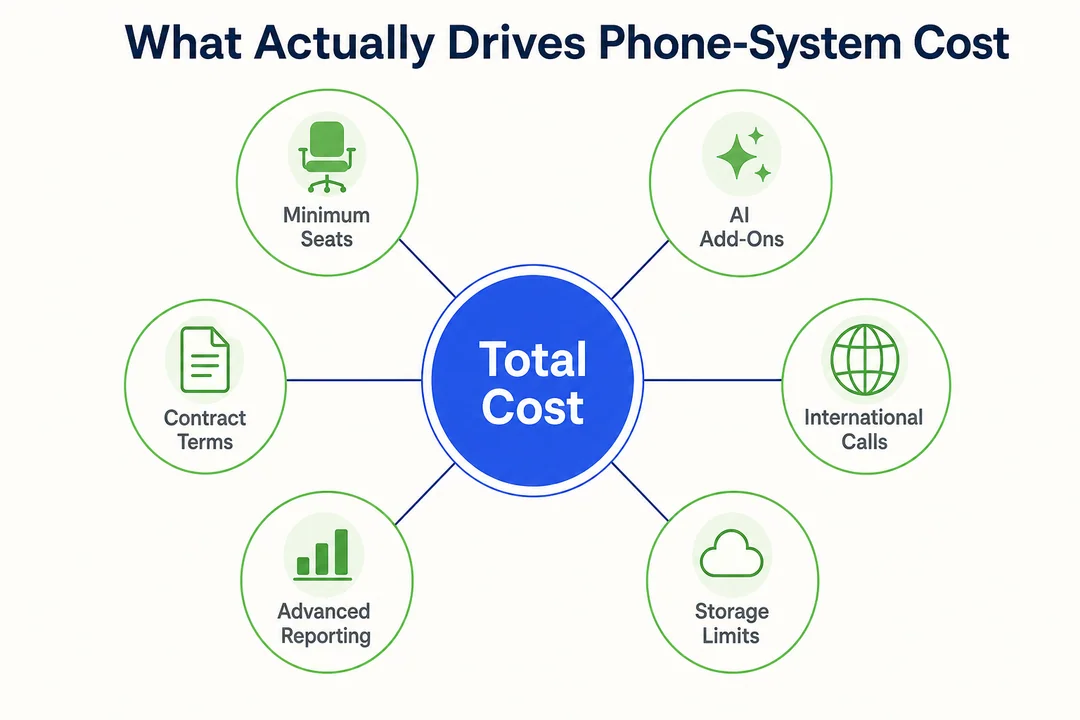
A useful pricing comparison looks beyond the advertised monthly rate. To compare VoIP pricing properly, buyers need to evaluate the full operating model: users, usage volume, add-ons, international traffic, storage, support terms, and contract structure. In practice, business phone software cost is often shaped more by billing logic than by the headline number on a pricing page.
Cost Drivers Buyers Often Miss
- Minimum seats and unused licenses: A low per-user price can still be expensive if your team must buy more seats than it needs.
- AI add-ons and reporting: Transcription, coaching, analytics, and summaries may sit outside the base plan.
- Toll-free and international calling charges: Usage costs can rise fast for teams with customer traffic across regions.
- Recording storage limits: Included storage may be capped, with extra charges for longer retention.
- Advanced analytics or admin tiers: The reporting and controls you actually need may require a higher plan.
- Onboarding terms or contract commitments: Discounts can come with annual lock-ins or service terms that reduce flexibility.
A Better Way to Evaluate Pricing
Start with your team model, not the sticker price. A 5-user team with simple inbound needs may benefit from a low-cost seat plan. A 25-user sales floor may care more about coaching, reporting, and CRM workflow depth. A seasonal outbound team with changing agent counts may do better with pay-as-you-go pricing than rigid seat-based pricing. The lowest starting price is not always the lowest total cost. Better fit usually comes from matching billing structure to usage pattern, not from chasing the cheapest headline number.
Which Aircall Alternative Is Best for Your Team?
The best choice depends on your operating context, not on which brand appears most often in comparison articles. A smart buying process usually means shortlisting two or three vendors based on team size, workflow, and growth pattern. That is more reliable than looking for one universal winner.
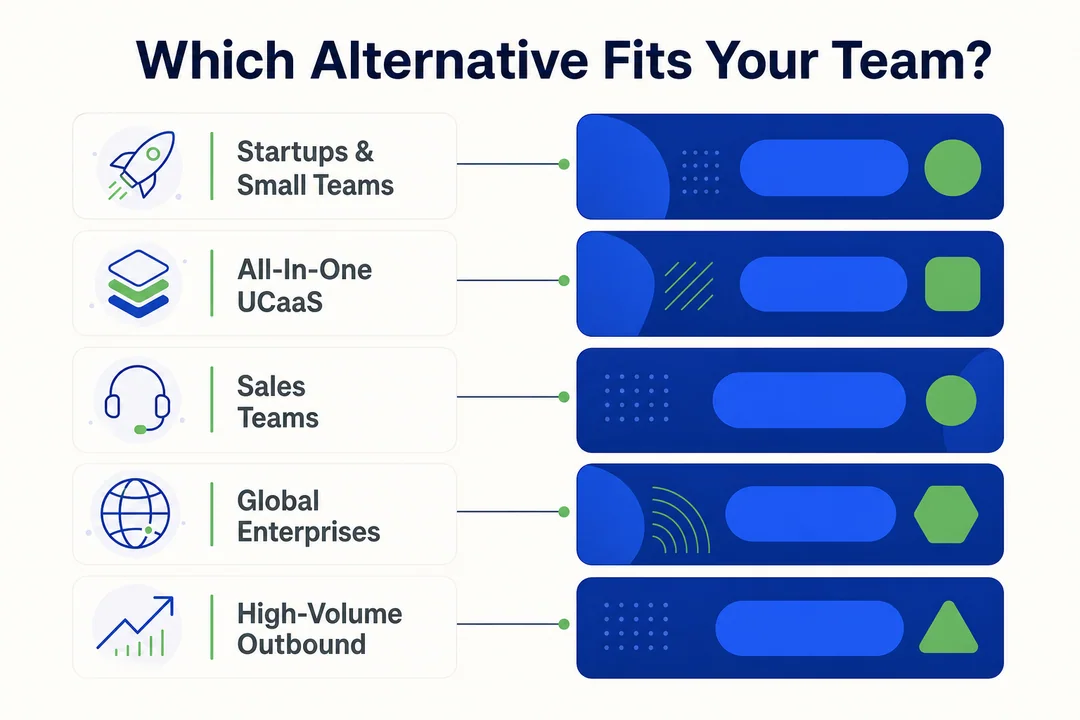
Scenario-Based Recommendations
- Startups or very small teams: Shortlist OpenPhone / Quo or Phone.com if you want a simple best aircall alternative for small business option with lower complexity.
- All-in-one communications: Look at Nextiva, RingCentral, or GoTo Connect if you want voice, messaging, and meetings in one stack.
- Sales teams needing coaching or CRM workflows: Shortlist Dialpad and JustCall for a stronger cloud phone system for sales teams approach.
- Global or enterprise communication needs: Consider 8×8 and RingCentral if your priority is broader reach and a stronger international calling solution.
- High-volume outbound, BPO, or scaling global voice operations: Include Flyfone if you need AI call center software, fast deployment, no seat fees, and outbound-heavy operational fit.
If You Are Switching Mainly Because of Aircall Pricing
Stable, simple teams may benefit from lower-headline-price vendors. But dynamic teams, seasonal programs, and outbound environments often do better with flexible usage pricing than with fixed licenses. Real savings depend on total usage, add-ons, international traffic, storage needs, and support expectations. Pricing fit should be evaluated as an operating decision, not just a discount decision.
A Practical 5-Point Checklist Before You Switch
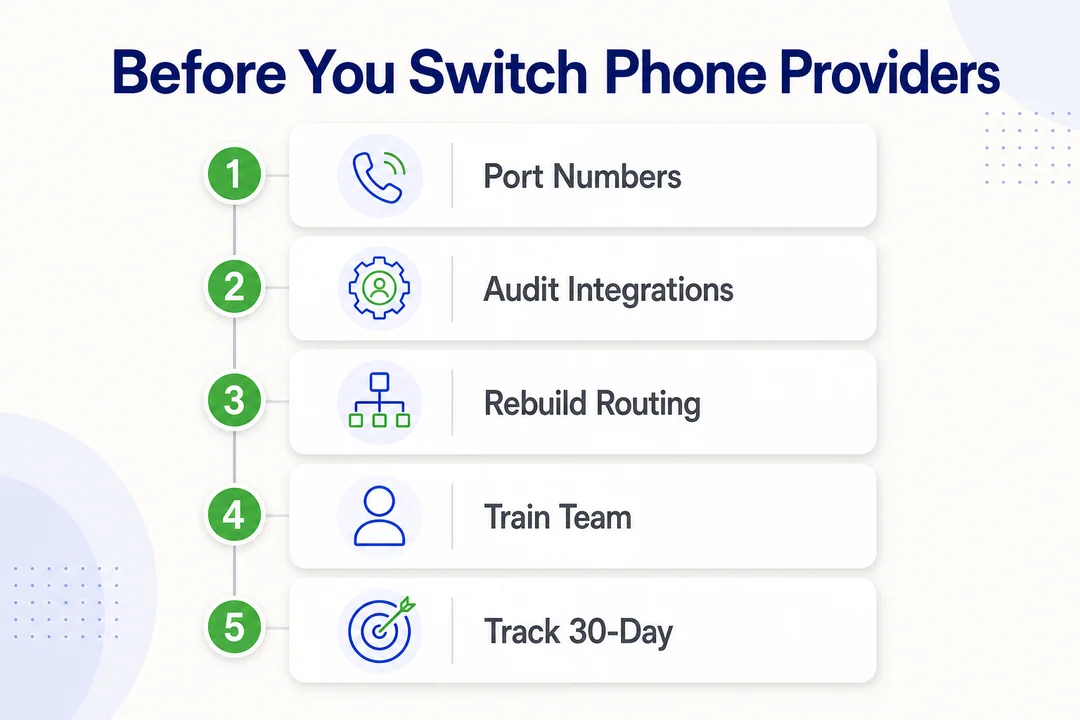
If you plan to switch from Aircall, treat it like a controlled call center migration, not a simple account replacement. The biggest issues usually come from number transfer timing, missed workflow dependencies, and underestimating admin setup.
Do not cancel your old provider before porting is fully complete.
- Confirm the number porting timeline and required documents before signing off on your migration plan.
- Audit every CRM integration and workflow dependency, including automations, call logging, tags, and reporting fields.
- Rebuild and test IVR, routing, voicemail, business hours, and key call flows in the new platform.
- Train admins and end users, then test real use cases before launch instead of relying only on sandbox checks.
- Define first-30-day success metrics and keep an overlap period until porting, routing, and adoption are stable.
This is also where deployment speed needs context. Fast setup is useful, but safe migration depends on workflow validation, not just how quickly an account can be activated.
Conclusion
The right aircall alternatives depend on what your team values most: simplicity, broader UCaaS coverage, AI assistance, international reach, outbound scale, or a pricing model that matches real usage. There is no single best option for every buyer, which is why the safest approach is to compare two or three vendors based on operating fit rather than marketing claims.
If your team mainly needs a straightforward SMB phone tool, smaller-platform options may be enough. If you need broader communications, enterprise controls, or global reach, other suites will make more sense. Flyfone is worth including in your shortlist when fast deployment, outbound-heavy workflows, global routing, AI-powered QA, and usage-based pricing matter more than bundled internal collaboration. If you want a tighter shortlist based on your team model, request a tailored walkthrough and compare fit before you commit.
Frequently Asked Questions
What are the best Aircall alternatives for growing businesses?
The best Aircall alternatives depend on your team’s specific operating model. For unified communications, Nextiva and RingCentral are top choices. For sales-heavy teams, Dialpad and JustCall offer deep CRM integration. For scaling outbound operations with flexible pricing, Flyfone is a high-performance alternative.
Why do companies switch from Aircall?
Businesses typically switch due to rising costs from seat-based pricing, expensive add-ons for AI and analytics, or feature limitations when scaling to international markets. Others seek more reliable call quality or native features like video conferencing that Aircall lacks.
Is there a free version of Aircall?
No, Aircall does not offer a free version. For businesses seeking lower entry costs, platforms like OpenPhone or Phone.com offer competitive starting plans. However, always evaluate total monthly costs including usage and required add-ons rather than just the base seat price.
Is Aircall HIPAA compliant?
Aircall provides HIPAA compliance, but it is often restricted to higher-tier or Enterprise plans. If HIPAA compliance is a core requirement for your healthcare organization, consider providers like Nextiva or Phone.com, which may offer compliance across more plan tiers.
How do I switch phone providers without losing service?
To switch safely, sign up for your new provider and initiate a number porting request. Crucially, never cancel your Aircall account until the porting process is 100% complete. Test your new call flows and integrations thoroughly during the overlap period before decommissioning the old system.
When should I choose Flyfone over other alternatives?
Choose Flyfone if your business requires high-volume outbound calling, flexible usage-based pricing, or rapid, under-1-hour deployment. It is particularly effective for BPOs, iGaming, Fintech, and global teams that need advanced AI-powered QA and real-time monitoring without paying per-seat fees.
More in Operations & CX Optimization
View all →
Customer Experience Transformation: Framework and Steps
A telecom customer calls support about a billing error. They explain the problem to the IVR system. Then to the first agent. Then get transferred and explain again. Then escalated—and explain a third time. Forty minutes later, they're exhausted and the problem still isn't solved. This is what broken customer experience looks like. And it's costing you customers. Customer experience…


Web Caller Meaning: JavaScript caller, Calling Tools or Portals
“Web caller” is one of those phrases where the search results and the searcher are frequently talking about different things. Three unrelated audiences use it: developers hitting an error on the legacy JavaScript caller property, buyers evaluating browser-based calling software, and people trying to reach a specific portal or training page whose exact name they cannot recall. That fragmentation is…

Customer Experience Strategy: How to Build One That Works
Customer experience is getting worse, not better. Forrester's 2025 Global CX Index found that 21% of brands declined in CX quality while only 6% improved — and in the US, 25% declined against 7% that improved, the second consecutive year of that pattern. Most of those brands were not neglecting customer experience. They were working on it without a strategy…



 English
  Russian
  Chinese