
Sales Call Tracking Software: 7 Best Tools to Compare in 2026

Sales Call Tracking Software: 7 Best Tools to Compare in 2026


Sales Call Tracking Software: 7 Best Tools to Compare in 2026

If your team is generating calls but still cannot clearly tie them to lead quality, rep follow-up, or revenue, you likely need the right sales call tracking software rather than just another dashboard. That is where many buyers get stuck: some tools are built for marketing attribution, others for sales workflow, and a few are designed for more complex call operations. This guide is for sales leaders, RevOps teams, founders, and agency operators who need to compare options without overbuying or missing hidden costs. Below, we break down the top tools, what features actually matter, what pricing really looks like, and how to choose based on workflow fit rather than feature count alone.

Quick comparison: best sales call tracking software at a glance

The best sales call tracking software depends less on headline features and more on how your team handles inbound calls, follow-up, and reporting.

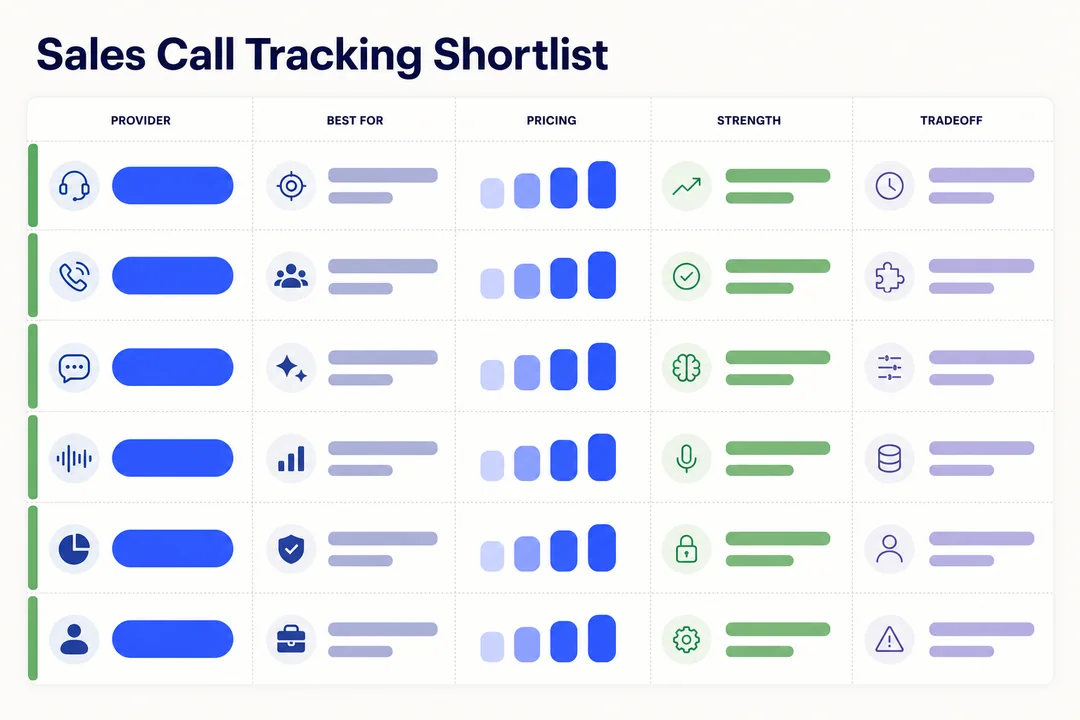
Sales Call Tracking Shortlist, editorial infographic supporting the article body.
Sales Call Tracking Shortlist
供应商 最适合 Key strengths 局限性 Pricing guidance
CallRail SMBs that want straightforward attribution Easy setup, strong call attribution, solid reporting, broad integrations Can feel more marketing-led than sales-led; advanced features raise cost SMB-friendly entry pricing, usage-based add-ons
WhatConverts Agencies and ROI-focused teams Strong lead attribution, multi-lead tracking, clear ROI reporting Less ideal for outbound-heavy teams or rep coaching Entry-level pricing, usage-based structure
CallTrackingMetrics Sales-heavy teams that need workflow tools Dialing, routing, softphone, stronger operational fit UI can feel busy; pricing gets more complex with add-ons Mid-market starting point, usage and feature-based pricing
Invoca Enterprises needing advanced analytics Enterprise integrations, AI-driven insights, scalable analytics Likely overkill for many SMBs; quote-based pricing Enterprise pricing, custom quote
Ringba Pay-per-call and routing-heavy models Deep routing flexibility, monetization support, optimization controls Too specialized for standard B2B sales teams 按使用量定价
Convirza Lower-cost teams wanting modular analytics Affordable entry point, conversation analytics options Lighter ecosystem and fewer enterprise-grade capabilities Low-cost starting point, add-ons for analytics
AvidTrak Teams wanting simple attribution and predictable bundles Straightforward setup, clear pricing bundles, practical basics Lighter feature depth than premium tools Budget-friendly bundled pricing

This is not a pure ranking. It is a shortlist based on category fit, reporting depth, workflow needs, and pricing tolerance.

Quick picks by use case

  • Best for SMB all-around use: CallRail
  • Best for ROI-focused attribution: WhatConverts
  • Best for sales-heavy teams: CallTrackingMetrics
  • Best for enterprise analytics: Invoca
  • Best for pay-per-call or routing-heavy models: Ringba
  • Best for low-cost entry: ConvirzaAvidTrak

What this shortlist is really comparing

Some tools are attribution-first.
Some are workflow-first.
Others are built for specialized routing or enterprise conversation analytics.

That distinction matters because feature count alone is misleading. Many teams buy a marketing-first tool for a sales operations problem, then discover the data does not improve rep follow-up or pipeline visibility.

What to look for in sales call tracking software

Sales call tracking software helps teams track inbound or outbound calls, connect them to campaigns or lead sources, and carry that data into CRM records, reporting, and follow-up workflows. The best tools do more than count calls. They help you understand which calls are qualified, what happened on the call, and whether the interaction moved toward pipeline or revenue.

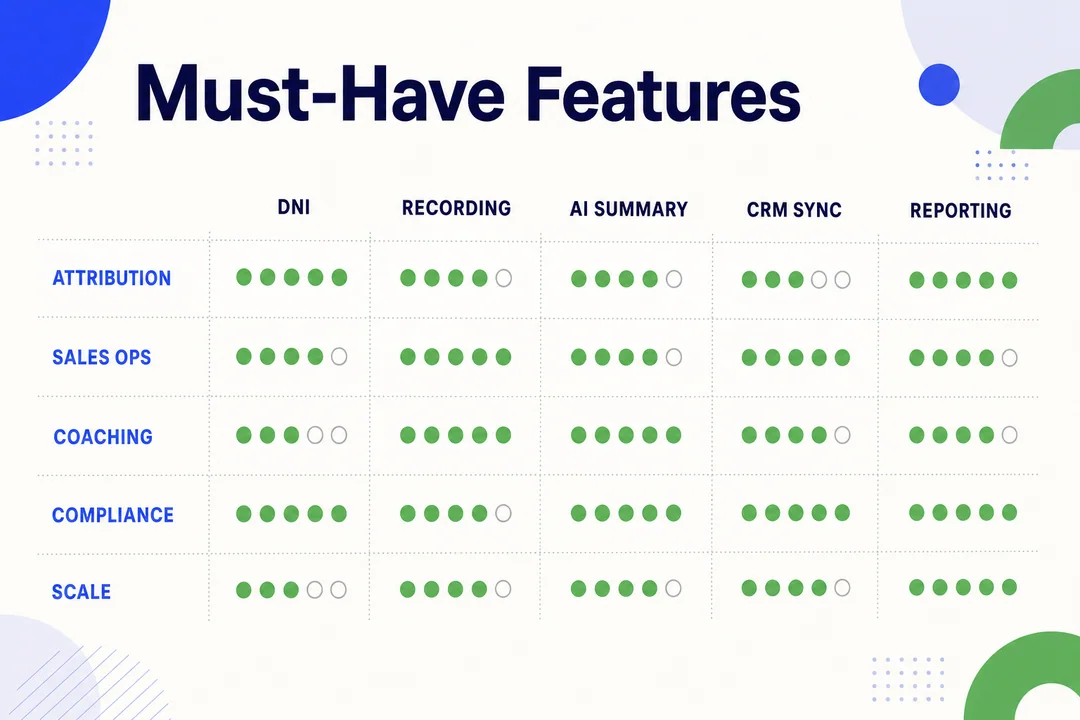
The must-have features

  1. Attribution and dynamic number insertion (DNI)
    Dynamic number insertion (DNI) swaps phone numbers based on traffic source so you can see which campaigns, channels, or sessions drove the call. This matters because call volume without lead attribution does not tell you which spend is working.

  2. 通话录音和转录
    通话录音 gives managers a way to review conversations for quality, coaching, and compliance. Call transcription makes those reviews faster by turning recordings into searchable text instead of forcing teams to listen to every call.

  3. CRM integration with HubSpot or Salesforce
    客户关系管理集成 matters because call data should not live in isolation. If your reps cannot see source data, call outcomes, and follow-up status in the same system, reporting continuity breaks down quickly.

  4. Reporting tied to qualified leads, pipeline, or revenue
    Basic dashboards often show calls by source. Better tools show whether those calls became qualified leads, opportunities, or closed revenue. That is the difference between interesting data and usable decision support.

  5. AI summaries or conversation intelligence
    对话智能 can be useful when it helps teams review calls faster, spot patterns, or identify coaching moments. It is less useful when it only adds surface-level transcripts and generic keyword tags.

  6. Usable dashboards for managers
    报告仪表板 should help managers act quickly. If a dashboard looks impressive but makes it hard to answer simple questions about follow-up, source quality, or rep performance, it is not doing its job.

Must-Have Features, editorial infographic supporting the article body.
必备功能

Secondary buying criteria that still matter

  • Onboarding speed: A tool that takes too long to launch delays value.
  • 定价模式: Many teams underestimate how fast usage-based billing grows.
  • Support responsiveness: Especially important when numbers, routing, or integrations break.
  • Compliance and recording policy fit: Important for regulated industries and multi-state recording rules.
  • 可扩展性: A low-cost entry tool may become limiting as teams, campaigns, or locations expand.

Pricing warning: base pricing often understates the real monthly cost. Watch for per-minute billing, tracking number fees, AI transcription charges, integration limits, and add-on pricing for reporting or onboarding.

The 7 best sales call tracking software options

These are among the strongest options on the market, but the right shortlist depends on your business model, attribution needs, workflow complexity, AI requirements, and budget tolerance.

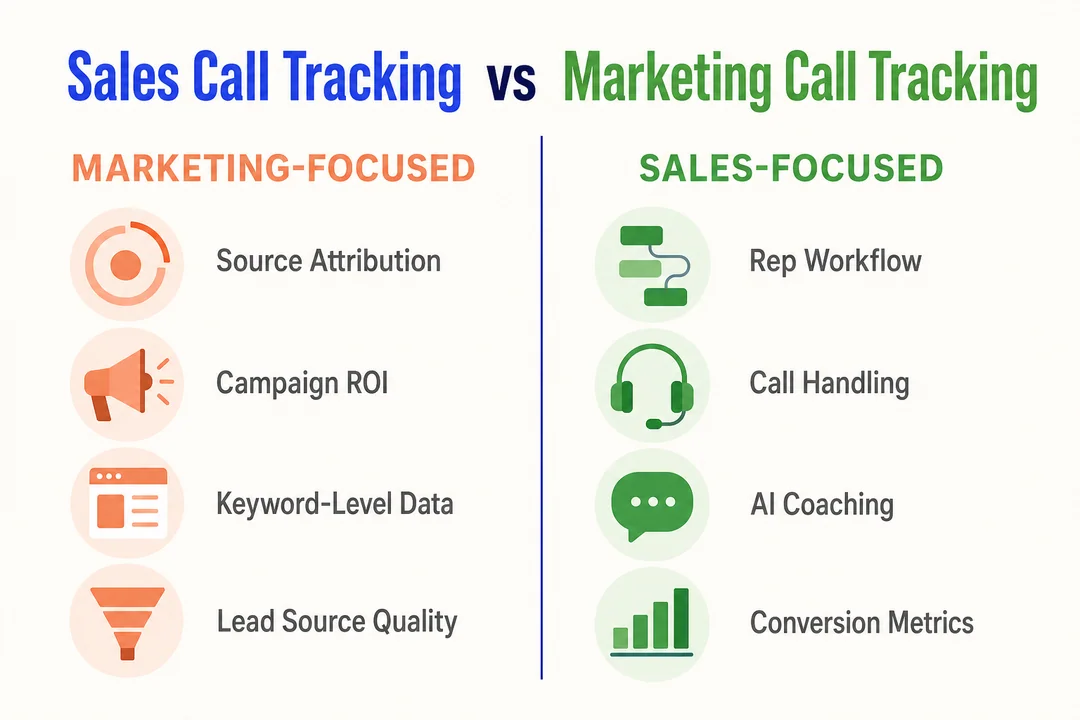
Sales Call Tracking vs Marketing Call Tracking, editorial infographic supporting the article body.
Sales Call Tracking vs Marketing Call Tracking

CallRail

最适合
SMBs that want a reliable, easy-to-deploy call tracking solution with strong attribution.

优势

  • Strong fit for inbound call attribution from ads and web traffic
  • Easy setup for smaller teams
  • Good integration coverage across CRM and ad platforms
  • Useful for teams that need call recording, transcription, and reporting in one place

局限性

  • More marketing-led than sales workflow-led
  • Advanced features can raise monthly cost quickly
  • Less ideal if your priority is routing-heavy operations or rep workflow management

Pricing guidance

  • SMB-friendly starting point
  • Pricing becomes more complex with usage, conversation tools, and add-ons

Selection note

  • Worth shortlisting if your priority is seeing which campaigns make the phone ring without moving into a larger sales operations platform.

WhatConverts

最适合
Agencies and performance-focused teams that care about lead attribution and ROI visibility.

优势

  • 强大 lead attribution and campaign-to-lead reporting
  • Tracks more than just calls, which helps teams compare calls with forms and other lead sources
  • Useful for teams that need clearer reporting around lead quality and marketing return
  • Good fit for agency reporting and multi-client visibility

局限性

  • Weaker fit for outbound-heavy sales teams
  • Less ideal if rep coaching, dialing workflow, or live call handling is your main need
  • May be more attribution-centric than operations-centric

Pricing guidance

  • Accessible starting point
  • Usage-based costs still matter depending on volume and feature mix

Selection note

  • Strong fit if your main question is which campaigns or channels are driving qualified calls and revenue, not how to run a larger call workflow.

CallTrackingMetrics

最适合
Sales-heavy teams that need call tracking plus broader workflow, dialing, and routing capabilities.

优势

  • Better fit for sales operations than attribution-only tools
  • Includes softphone, dialing, routing, and broader call handling features
  • Useful when teams need both marketing source data and rep workflow visibility
  • Stronger operational flexibility than simpler SMB tools

局限性

  • Interface can feel complex for lighter-use teams
  • Pricing gets more complex when advanced features or add-ons stack up
  • May be more than smaller teams need

Pricing guidance

  • Mid-market entry point
  • Costs can rise with minutes, numbers, AI, and advanced workflow features

Selection note

  • Choose this if your priority is call handling and sales workflow, not just attribution.

Invoca

最适合
Enterprises needing advanced conversation analytics, deep integrations, and large-scale reporting.

优势

  • Strong enterprise-grade reporting and AI analysis
  • Robust integration capabilities
  • Good fit for large teams with mature marketing and sales operations
  • Useful when phone calls are a major conversion channel at scale

局限性

  • Likely too heavy and expensive for many SMBs
  • Quote-based buying process can slow evaluation
  • More platform than many mid-market teams need

Pricing guidance

  • Enterprise pricing
  • Typically quote-based with custom scoping

Selection note

  • Best for organizations that need sophisticated analytics and can justify enterprise complexity.

Ringba

最适合
Pay-per-call businesses and teams that need specialized routing and monetization flexibility.

优势

  • Deep routing control
  • Strong for call distribution and performance marketing models
  • Useful where real-time optimization and routing logic matter
  • Flexible for high-volume, specialized inbound models

局限性

  • Overkill for standard B2B sales teams
  • Less ideal if your main need is basic attribution plus CRM visibility
  • Can require more operational sophistication than SMB teams want

Pricing guidance

  • 按使用量定价
  • Costs depend heavily on numbers, minutes, and routing setup

Selection note

  • Shortlist this only if your business model is routing-heavy or pay-per-call oriented.

Convirza

最适合
Smaller teams that want low-cost call tracking with optional analytics upgrades.

优势

  • Lower-cost entry point
  • Modular analytics can make adoption easier
  • Useful for teams that want basic tracking first, then conversation review later
  • Practical for budget-conscious operators

局限性

  • Lighter ecosystem than larger competitors
  • Fewer enterprise-grade capabilities
  • Not the right fit if you need deep workflow or integration maturity

Pricing guidance

  • Low-cost starting point
  • Add-on pricing may apply for analytics and advanced features

Selection note

  • Strong fit if your priority is affordability and you do not need a broader operating system for sales calls.

AvidTrak

最适合
Teams that want straightforward attribution with predictable bundled pricing.

优势

  • Easy to understand
  • Bundled pricing can improve budget predictability
  • Practical for simple inbound attribution use cases
  • Good for smaller businesses that want clarity over complexity

局限性

  • Lighter functionality than premium platforms
  • Less ideal for advanced coaching, AI analysis, or deeper workflow needs
  • May feel limiting as team complexity grows

Pricing guidance

  • Budget-friendly bundle model
  • Usually easier to forecast than highly variable enterprise tools

Selection note

  • Choose this if your priority is simple call attribution and cost control, not advanced analytics.

Sales call tracking vs marketing call tracking: choose the right category first

Many buyers do not actually have a vendor problem. They have a category problem. Marketing-focused tools prioritize source attribution and campaign ROI, while sales-focused tools prioritize rep workflow, call handling, coaching, and pipeline visibility. That is why many teams end up disappointed: they buy the wrong type of software, not necessarily the wrong brand.

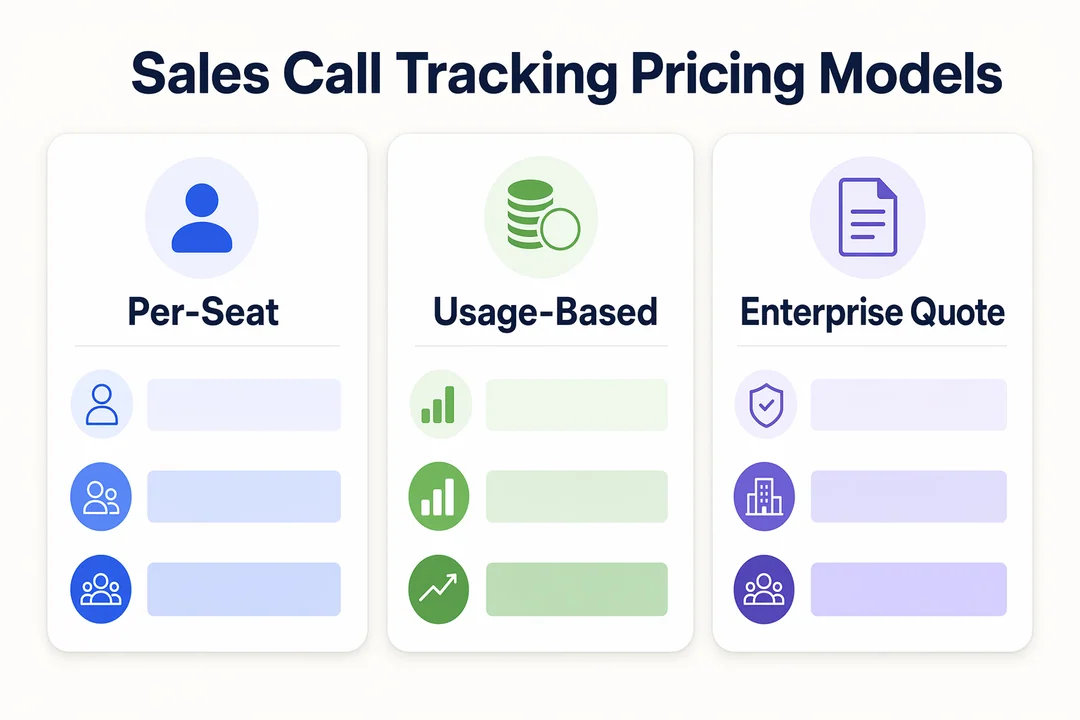
Sales Call Tracking Pricing Models, editorial infographic supporting the article body.
Sales Call Tracking Pricing Models
Priority / Use case Marketing call tracking Sales call tracking / sales workflow focus
首要目标 Measure which campaigns drive calls Improve call handling, follow-up, and sales visibility
报告重点 Source, campaign, keyword, channel ROI Rep activity, call outcomes, lead progression
CRM / lifecycle depth Often lighter Usually deeper and more workflow-oriented
Coaching / call handling relevance Limited to moderate Higher priority
Routing / operations need Usually lighter Often more important
Best-fit team Marketing, agencies, performance teams Sales leaders, RevOps, operations teams

Side-by-side category comparison

Marketing call measurement is about proving which ad, keyword, or channel drove the call.
Sales operations is about what happened next.
Lead lifecycle management connects the call to follow-up, qualification, and pipeline movement.
Inbound call intelligence adds review, QA, and conversation insights.

When a broader cloud communications platform makes more sense

Basic tracking software may not be enough when your team also needs global routing, scalable agent operations, real-time monitoring, 人工智能驱动的质量保证, or broader cloud telephony workflows. In those cases, a 云呼叫中心 such as Flyfone becomes more relevant because the problem is no longer just attribution. It is about running communication infrastructure that supports sales, support, and quality management at scale.

How to choose the right software for your team

The fastest way to narrow the market is to match the tool to the workflow. Many teams waste weeks in demos because they compare feature lists without deciding what problem they are actually trying to solve.

Match the tool to the job

  • If your priority is attribution-first inbound calls from ads, shortlist CallRailWhatConverts.
  • If your priority is sales workflow plus call handling, shortlist CallTrackingMetrics.
  • If your priority is enterprise analytics and AI, shortlist Invoca.
  • If your priority is routing-heavy or pay-per-call models, shortlist Ringba.
  • If your priority is simple, low-cost attribution, shortlist ConvirzaAvidTrak.

This approach works better than trying to compare every feature across every platform. Best fit depends on workflow, not feature count.

What to test during a free trial or demo

A trial should show whether the tool improves decisions, not just whether it can technically track calls.

  • 安装时间 How quickly can your team launch and validate data?
  • Number provisioning: Is it easy to get numbers live without support delays?
  • CRM sync quality: Does call data land cleanly in HubSpot or Salesforce?
  • Reporting clarity: Can a manager quickly see source, quality, and follow-up status?
  • AI summary usefulness: Does it save time, or just create more data to skim?
  • Session-level tracking accuracy: Can you confidently tie calls back to campaigns or visits?
  • Pricing predictability under real usage: What happens when call volume rises?
  • Lead qualification impact: Does the tool improve how reps prioritize and follow up?

A good trial should answer one practical question: will this data make our team better at qualifying, following up, and reporting on calls?

Pricing expectations and common buying mistakes

Pricing varies widely across this category. SMB tools may look inexpensive at first, but the real cost depends on minutes, phone numbers, transcription volume, AI features, integrations, and support tiers. Enterprise platforms are usually quote-based, and their value often comes with heavier onboarding and more complex contracts.

这就是 TCO (Total Cost of Ownership) matters. Plan price is only one part of cost. Real monthly spend may also include usage, add-ons, implementation effort, and reporting limitations that force workarounds elsewhere.

Common buying mistakes include:

  • Choosing by feature volume instead of workflow fit
  • Ignoring CRM or integration costs
  • Underestimating usage-based billing
  • Paying extra for AI features with limited decision value
  • Buying a marketing-only tool for a sales ops problem
  • Committing annually before validating reporting quality and operational fit

Many teams underestimate how much “low-cost” software can expand once transcription, numbers, and integrations are added.

结论

The best sales call tracking software depends on whether your team needs attribution-first visibility, stronger sales workflow support, or broader communication infrastructure. That is the simplest decision path: start by identifying whether your problem is campaign attribution, rep workflow, or call operations at scale.

If your need is mostly attribution, tools like CallRail or WhatConverts are strong places to start. If you need broader sales workflow support, CallTrackingMetrics may be the better fit. If your requirements extend into routing flexibility, AI QA, real-time monitoring, or scalable cloud telephony, the conversation moves beyond basic tracking.

For teams evaluating that broader next step, Flyfone is worth considering as part of a wider cloud communications strategy rather than a simple call tracking purchase. Explore your shortlist carefully, validate pricing under real usage, and choose based on operational fit, not feature volume alone. If you want a structured comparison against your routing model, CRM stack, and outbound workflow, book a tailored consultation 与 Flyfone 团队一起。

常见问题

What is sales call tracking software and why does a business need it?

Sales call tracking software records and analyzes inbound calls so a business can tie each call back to a specific marketing campaign, source, or rep. It gives sales and marketing teams a shared view of which calls drive conversion, where leads come from, and how reps handle follow-up, the inputs needed to improve ROI and pipeline health.

What is the main difference between marketing call tracking and sales call tracking?

Marketing call tracking focuses on attribution: which ad, keyword, or channel drove the call. Sales call tracking focuses on what happens after the call connects, rep handling, coaching, pipeline movement, and actual conversion performance. Many teams need both, but the priority depends on whether the gap is "where do calls come from?" or "what do reps do with them?"

How do I choose the right call tracking software?

Start by naming the priority. If you mainly need ad ROI measurement, pick an attribution-first tool like CallRail or WhatConverts. If you need rep workflow and pipeline management, look for platforms with deep CRM integration, call recording, AI-based scoring, and flexible routing. Workflow fit matters more than feature count.

What hidden costs should a business watch for when buying call tracking software?

Beyond the monthly subscription, real cost usually moves with virtual numbers in use, total minutes (inbound and outbound), AI add-ons (transcription, sentiment analysis), advanced integrations, and onboarding fees. Ask vendors for a usage-based estimate that reflects your real call volume before committing to an annual plan.

When should a business switch from tracking software to a cloud call center?

When the need moves from "where do calls come from?" to "how do we run the calling operation?" If you need smart routing, 人工智能驱动的质量保证 on every call, fast agent scaling, or globally distributed infrastructure, a 云呼叫中心 such as Flyfone delivers a more integrated answer than stacking tracking, dialer, and reporting tools separately.

Can the software record and automatically analyze calls?

Yes. Most modern platforms record calls and use AI to transcribe them, summarize the conversation, and surface sentiment or keyword patterns. That cuts the time managers spend on manual QA review and helps coaches focus on the calls that actually matter.