

For contact center managers, First Call Resolution (FCR) isn’t just another metric—it’s the single clearest indicator of whether your operation is working. When customers need multiple calls to solve one issue, they leave. When agents resolve problems completely the first time, satisfaction scores rise and costs drop.
This guide explains what drives FCR in modern contact centers, how first call resolution software actually works, and when you need it versus when process improvements alone are enough. Whether you’re managing 20 agents or 200, you’ll learn how to evaluate FCR tools based on real operational impact, not vendor promises.
您将了解到的主要收获
-
Why FCR is your most actionable metric: Unlike CSAT surveys that measure feelings, FCR tracks actual outcomes. When 70% of issues are resolved on first contact, you know exactly how many customers needed callbacks—and what that’s costing you.
How FCR software differs from basic call tracking: Real-time repeat-call detection, AI-driven agent prompts, and unified customer history turn FCR from a backward-looking report into something supervisors can act on during the shift, not weeks later.
When you actually need FCR tools versus process fixes: Small teams (under 20 agents) with simple call types often improve FCR through better training and knowledge bases. Larger operations handling complex, multi-system inquiries need software to sustain gains as they scale.
What drives sustainable FCR improvement: Post-call analytics and speech detection matter less than whether your agents can actually access customer data, route calls intelligently, and resolve issues without transferring. The best FCR software removes these barriers—it doesn’t just measure them.
What Is First Call Resolution (FCR)?
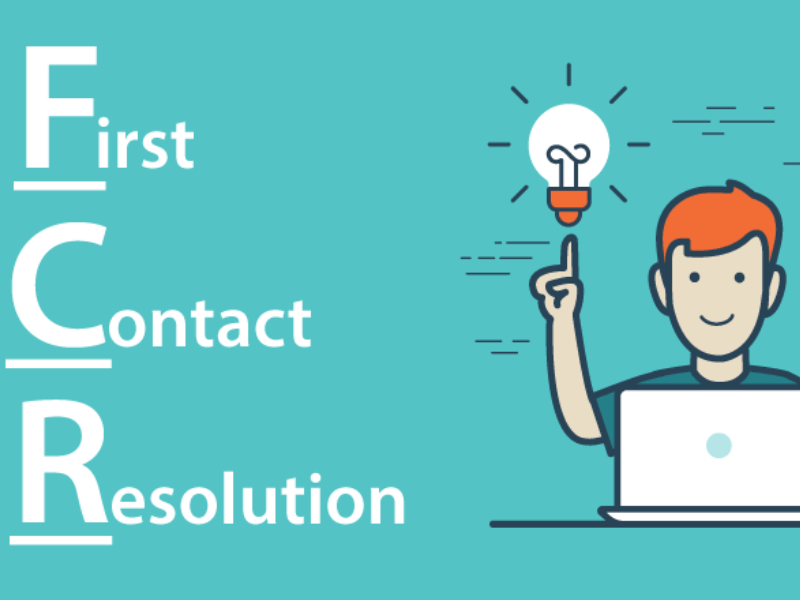
First Call Resolution (FCR) measures the percentage of customer issues fully resolved during the first phone interaction—no callback, transfer, or follow-up needed within a defined window (typically 7 days).
What resolution actually looks like in practice:
A customer calls about a billing error. The agent pulls up their account, identifies the incorrect charge, processes a refund, and confirms via email—all while the customer is still on the line. That’s resolution.
The same customer calls, and the agent says “I’ll create a ticket and someone will call you back in 24-48 hours.” That’s not resolution—even if the issue eventually gets fixed. From the customer’s perspective, they’re still waiting, still uncertain, and might need to follow up again.
This distinction matters because FCR reflects the customer’s experience, not just internal efficiency. The problem is either solved or it isn’t. Everything between those two outcomes is a repeat call waiting to happen.
Why First Call Resolution Is a Critical Customer Service Metric

FCR is one of the strongest predictors of customer satisfaction and loyalty. When issues are solved on the first call, customers feel heard, respected, and valued.
Multiple industry studies, including long-term research by SQM Group, show a direct correlation between higher FCR and higher CSAT and NPS scores.
Why operations directors care about FCR:
Cost impact is immediate and measurable. Industry research from SQM Group shows each repeat contact costs $5-15 in agent time. For a 100-agent operation handling 100,000 monthly calls at 65% FCR, those 35,000 unresolved issues generate roughly 12,000 repeat calls (assuming 35% callback rate). At $10 per call, that’s $120,000 monthly in avoidable costs—$1.4 million annually.
Customer satisfaction follows FCR almost perfectly. The same SQM research found a 1% improvement in FCR correlates with a 1% increase in CSAT. More importantly, customers requiring 2+ contacts to resolve an issue are 3x more likely to churn (Gartner). For businesses where customer lifetime value is high, this churn impact often exceeds the direct cost of repeat calls.
Agent productivity compounds over time. Repeat calls increase Average Handle Time (AHT) by 20-30% because agents must review prior interactions and rebuild context. When FCR improves from 65% to 75%, you’re not just eliminating 10,000 repeat calls—you’re also reducing handle time on the remaining calls, creating a compounding efficiency gain.
Compliance exposure increases with unresolved issues. In regulated industries (fintech, healthcare, gaming), incomplete resolutions often mean missing documentation or unclear audit trails. A single compliance penalty can cost more than a year’s worth of repeat calls.
How First Call Resolution Is Measured
Standard FCR Formula and Calculation
The standard FCR formula is simple:
FCR = (Issues resolved on first call ÷ Total issues) × 100
例如
If 700 out of 1,000 customer issues are resolved on the first call, your FCR is 70%.
常见错误
- Counting transfers as resolved calls.
- Ignoring callbacks within a short time window.
- Measuring only internal resolution without customer confirmation.
Common Measurement Methods
Accurate FCR measurement requires combining what customers say with what your systems show. Here’s how both methods work in practice:
Survey-based measurement: The customer’s truth
Post-call IVR or SMS surveys ask a simple question: “Was your issue completely resolved?” (Yes/No/Partially). This captures the customer’s perception, which is ultimately what matters—an agent marking a ticket “closed” doesn’t mean the customer agrees.
The challenge: Response rates typically run 5-15%. Customers satisfied with resolution are less likely to respond, which can bias results toward negative experiences. To compensate, most teams sample 20-30% of calls rather than surveying everyone, balancing statistical significance with response fatigue.
When to use it: Operations where resolution accuracy matters more than speed—fintech account disputes, healthcare scheduling, technical support for complex products. Anywhere a false positive (claiming resolution when the issue persists) creates downstream problems.
System-based measurement: Automated repeat-call detection
This method analyzes call logs, CRM tickets, and contact history to identify repeat contacts within 7 days on the same issue. If a customer calls Monday about a billing error and calls again Thursday asking for an update, the system flags both contacts as a failed FCR.
The challenge: Accuracy depends entirely on data quality. If agents don’t categorize calls correctly, or customers use different phone numbers, repeat calls go undetected. You’re also making assumptions—just because someone calls twice doesn’t always mean the first call failed. Maybe they had a new question.
When to use it: High-volume operations (100+ agents) where manual surveying doesn’t scale, or when you need real-time FCR dashboards for supervisor intervention. System-based tracking runs automatically 24/7 without depending on customer response rates.
Hybrid approach: Best of both worlds
Most mature teams use system-based tracking for daily operations (real-time dashboards, agent coaching, queue management) and layer in surveys (10-15% sample) to validate accuracy and catch edge cases where customers perceive issues as unresolved despite system closure.
Example: Your system shows 73% FCR, but surveys show 68%. That 5-point gap reveals agents are closing tickets before customers confirm the issue is actually fixed—a process problem you’d miss with system data alone.
- System-based measurement:
- Uses CRM and call analytics to detect repeat contacts.
- Scales well and runs automatically.
- Can miss context if customers switch channels.
Most mature teams use both methods together.
FCR Benchmarks by Industry
FCR benchmarks vary by industry and call complexity.
- Retail and consumer services: 75–85%
- Financial services: 70–80%
- Telecom and utilities: 65–75%
- Technical support: 60–70%
Benchmarks are directional, not absolute. The goal is consistent improvement, not chasing a number that ignores call type or customer expectations.
Common Causes of Low First Call Resolution

Low FCR rarely comes from agent performance alone. It’s usually structural—the systems and processes make resolution harder than it should be. Here are the patterns we see most often:
1. Fragmented customer data across multiple systems
Agents toggle between CRM for customer profile, billing platform for transactions, ticketing tool for history, and knowledge base for procedures. Each system switch adds 15-30 seconds and increases the chance of missing critical context.
Real impact: An agent helping with an account issue must check three systems to see if the customer already called yesterday about the same problem. Without that visibility, they start from scratch, ask the customer to repeat information, and potentially give conflicting answers. Even if they eventually resolve the issue, the customer experience was poor.
2. Poor routing sends customers to agents who can’t help
IVR systems route by language or availability, not expertise. A technical support issue requiring product knowledge lands with a billing specialist. The agent has two choices: spend 8-10 minutes figuring it out (killing handle time) or transfer to the right team (killing FCR).
Real impact: Each transfer reduces FCR by 15-25% because every handoff introduces delay, forces customers to repeat information, and creates risk that the second agent doesn’t have context from the first interaction.
3. Knowledge bases are outdated or incomplete
Policies change, products update, and procedures evolve—but knowledge articles don’t keep pace. Agents search for answers mid-call, find outdated information, and either give incorrect guidance (forcing a callback to correct it) or escalate unnecessarily because they don’t trust the available documentation.
Real impact: When knowledge accuracy drops below 85%, agents stop using it entirely and rely on memory or asking colleagues. This works for experienced agents but fails completely during onboarding or when handling unfamiliar issues.
4. No visibility into omnichannel history
A customer emails first, then calls when they don’t hear back. The agent answering the call can’t see the email thread. From the customer’s perspective, they’re starting over. From the agent’s perspective, this looks like a new inquiry, not a follow-up.
Real impact: The agent asks questions the customer already answered via email. Trust erodes (“don’t you people talk to each other?”), handle time increases, and even when the issue gets resolved, the experience was frustrating enough to hurt CSAT.
5. Agents lack empowerment to resolve issues
Frontline agents can’t process refunds, waive fees, or override system decisions without supervisor approval. Every exception requires escalation, adding 10-20 minutes per call or forcing a callback after manager review.
Real impact: Empowerment matters more than training in many cases. An agent who can resolve issues within defined limits (refunds up to $100, fee waivers for customers 90+ days tenure) achieves 10-15 points higher FCR than equally skilled agents who must escalate every exception.
What Is First Call Resolution Software?
First call resolution software automates FCR measurement, identifies resolution failure patterns, and provides real-time guidance to help agents resolve issues faster. It’s the difference between knowing your FCR was 68% last month and being able to do something about it during today’s shift.
What makes FCR software different from basic call tracking:
Basic call center platforms track call volume, handle time, and agent availability. They’ll tell you how many calls you handled and how long each one took, but they won’t automatically detect when the same customer called three times about the same billing issue.
FCR-specific software adds three capabilities that basic platforms don’t provide:
Intelligent repeat-call detection: Automatically identifies when a customer contacts support multiple times about the same issue within a defined window (typically 7 days). This requires matching customer identifiers across phone numbers, email addresses, and account IDs—not just counting how many times someone called.
Resolution outcome tracking: Links each contact to its final status (resolved, escalated, pending, unresolved) by analyzing post-call surveys, ticket closures, CRM updates, and agent disposition codes. You get a complete resolution journey, not just individual call records.
Root cause analytics: Shows you why FCR fails, not just that it’s failing. Instead of “FCR dropped to 65%,” you see “42% of billing inquiries require callbacks because agents can’t process refunds without supervisor approval.” Now you know what to fix.
When you actually need FCR software versus basic metrics:
You can probably manage with basic call tracking if your operation handles simple, repetitive inquiries (order status, appointment scheduling) with a small team (under 20 agents) where manual call sampling provides enough visibility.
You likely need FCR-specific software when:
- Managing 50+ agents across multiple teams or locations
- Handling complex inquiries requiring data from multiple systems
- Repeat calls make up 15-25%+ of your total volume
- You’re scaling rapidly and manual FCR tracking doesn’t keep pace
- Your team handles multiple channels (phone, email, chat) and you need unified resolution tracking
The inflection point usually hits around 30-50 agents. Below that, process improvements and better training move the needle. Above that, you need automation to maintain visibility and sustain gains.
How First Call Resolution Software Improves FCR Rates

Real-Time Call Analytics and Resolution Tracking
Modern FCR software provides live dashboards that show resolution performance as calls happen.
Key capabilities include:
- Real-time FCR tracking by queue, agent, and call reason.
- Automatic detection of repeat callers within defined timeframes.
- Supervisor alerts when resolution rates drop.
This visibility allows managers to intervene immediately instead of reacting weeks later.
CRM and System Integrations
Integration is where most FCR gains happen.
When FCR software connects with CRM, billing, order management, and IVR systems, agents see a unified customer profile instantly.
实际影响:
- Shorter handle times.
- Fewer transfers between departments.
- Higher confidence in resolution accuracy.
Example: An agent sees past calls, open tickets, and recent transactions before answering, enabling faster and more complete resolutions.
AI-Powered Agent Assistance
AI-powered agent assistance uses machine learning (systems that learn patterns from data) to guide agents during live calls.
常见用例
- Real-time prompts suggesting next best actions.
- Knowledge base recommendations based on call context.
- Predictive alerts when a call is likely to result in a repeat contact.
This support reduces guesswork and helps newer agents perform like experienced ones.
Post-Call Analytics and Voice of the Customer (VoC)
Post-call analytics turn feedback into action.
- Automated surveys capture resolution confirmation.
- Speech and text analysis identify recurring failure points.
- Insights feed directly into coaching and training plans.
This creates a closed loop where customer feedback continuously improves FCR.
Key Features to Look for in First Call Resolution Software
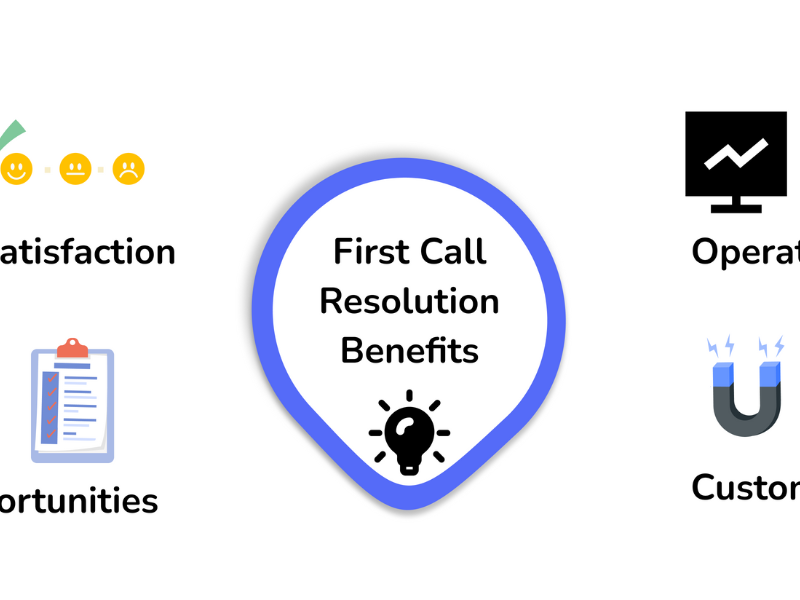
Must-Have Features
- Accurate repeat-call detection.
- Real-time FCR dashboards.
- CRM and telephony integrations.
- Post-call survey automation.
- Agent- and queue-level reporting.
Advanced Features for Scaling Teams
- AI-driven agent assistance.
- Speech and sentiment analytics.
- Benchmarking across teams or locations.
- Customizable resolution definitions.
When Do You Actually Need First Call Resolution Software?
You likely need FCR software if:
- Repeat calls make up a noticeable share of call volume.
- CSAT is flat despite training investments.
- Agents rely on multiple disconnected systems.
- Supervisors lack real-time visibility into resolution issues.
- Call volume is growing faster than headcount.
For small teams, process fixes may be enough. At scale, software becomes necessary to sustain improvement.
First Call Resolution Software vs Process-Only Improvements
| Approach | 优势 | 局限性 |
|---|---|---|
| Process-only improvements | Low cost, fast to start | Hard to sustain, limited visibility |
| FCR software + process | Scalable, data-driven, repeatable | Requires investment and adoption |
Practical Examples of Using FCR Software in Call Centers
- Identifying top repeat-call drivers and fixing policies.
- Coaching agents based on real resolution outcomes.
- Routing complex calls to high-FCR agents.
- Detecting product or billing issues early through VoC data.
常见问题(FAQ)

What is a good First Call Resolution rate?
Most industries target 70–75% as good performance. Rates above 80% are considered excellent, depending on call complexity.
How do you track FCR accurately?
The most reliable approach combines post-call customer surveys with system-based repeat-call tracking.
Can FCR be improved without software?
Yes, but gains are usually limited and hard to maintain as call volume and complexity increase.
Does high FCR always mean better service?
Only if resolution is correct. Forcing resolution without accuracy can reduce trust and satisfaction.
结论和 CTA
Most contact center managers underestimate their repeat call rate by 30-50% because they’re not tracking it systematically. Before evaluating any software, calculate your current FCR:
- Pull call logs for the last 30 days and identify customers who contacted you 2+ times
- Review a sample of repeat calls (50-100) to confirm they’re about the same issue, not new questions
- Calculate cost impact: Repeat calls × $10 average handling cost = monthly waste
- Identify top 3 repeat-call drivers: billing issues, account access problems, product questions, etc.
If your repeat call rate is above 20%, or if the top 3 drivers account for 50%+ of repeats, you have clear improvement opportunities.
Next steps depend on your operation size:
For teams under 30 agents: Start with process improvements. Fix the top repeat-call driver (usually knowledge gaps or routing issues), measure for 30 days, then reassess. You might not need software yet.
For teams 30-100 agents: Evaluate cloud contact center platforms with built-in FCR tracking. Look for real-time dashboards, CRM integration, and automated repeat-call detection. Pilot with one team before rolling out company-wide.
For teams 100+ agents: FCR software isn’t optional at this scale. Focus on platforms offering AI-driven agent assistance, omnichannel tracking, and post-call analytics. Deployment speed matters—legacy vendors requiring 8-12 weeks of implementation will delay improvements you could be seeing this quarter.
The best FCR improvement strategies pair the right software with clear process changes. Technology shows you where resolution fails. Process changes fix the root causes. Together, they turn FCR from a lagging indicator into something you can actually manage.
常见问题
What is first call resolution software?
First call resolution software assists contact centers in resolving customer inquiries during the first interaction. It integrates real-time analytics, CRM systems, and AI tools to enhance FCR rates.
How does first call resolution software improve customer satisfaction?
By increasing FCR rates, it reduces repeat call volume, streamlines resolutions, and boosts customer satisfaction scores. Efficient service leads to happier customers and improved retention.
What are the key features to look for in FCR software?
Key features include omnichannel support, real-time call analytics, CRM integration, AI-driven agent assistance, and post-call analytics for Voice of the Customer (VoC) insights.
How can I calculate my call center’s FCR rate?
Use the formula: FCR = (Total Resolved Cases ÷ Total Number of Cases) x 100. This helps track the efficiency of your customer service resolutions.
Why is a high FCR rate important?
A high FCR rate minimizes operational costs, enhances customer satisfaction, and reduces employee burnout by decreasing call volumes and repeat interactions.
When should a business invest in FCR software?
Businesses experiencing high repeat call rates, growing call volumes, or struggling with customer satisfaction should consider investing in FCR software for improved efficiency.
更多信息
Chatbots Customer Service Trends Powering Modern Support
Chatbots Future Customer Service: What to Expect

 English
  Russian
  Chinese