
Chatbots are reshaping customer service by delivering faster responses, always-on availability, and scalable support. This guide helps business leaders understand what chatbots can realistically do today, where they fall short, and how to prepare for a future where AI and humans work together.
主要收获
Most call centers face a scaling problem: Support volume grows 30-40% annually, but hiring scales linearly and costs $35,000-$50,000 per agent per year. Chatbots solve this by automating 60-70% of routine inquiries while maintaining 24/7 availability.
Here’s what business leaders need to know:
-
- Chatbots handle high-volume, repetitive tasks (order tracking, password resets, FAQs) that consume 40-60% of agent time in traditional contact centers.
- AI-human collaboration delivers the best outcomes—chatbots handle volume and speed, humans handle complexity and empathy.
- Successful chatbot adoption requires clear use cases, phased rollout, and continuous optimization—not plug-and-play automation.
- Cloud call center platforms with built-in chatbot integration deploy 70% faster and reduce handoff friction compared to bolted-on third-party tools.
Why Chatbots Are Central to the Future of Customer Service
Customer expectations have shifted dramatically in the past five years. According to Salesforce research, 83% of customers expect immediate engagement when they contact a company. Meanwhile, 76% expect consistent experiences across web, mobile, phone, and social channels.
Traditional call center models can’t meet these expectations without breaking the budget. Here’s the math:
- A 100-agent call center handling 50,000 monthly interactions costs approximately $350,000-$500,000 per month in agent salaries alone (at $35-$50k annual per agent).
- When support volume increases by 30% (common during product launches or seasonal peaks), most teams face two options:
- Hire more agents: Add 30 FTEs at $1.05M-$1.5M annual cost
- Let service quality degrade: Longer wait times, lower CSAT scores
Chatbots break this trade-off. They handle routine inquiries at scale without proportional cost increases. A well-designed chatbot can automate 60-70% of tier-1 interactions—password resets, order tracking, FAQ responses—freeing human agents to focus on complex issues that require judgment and empathy.
The biggest operational shift happens when chatbots integrate directly into your call center infrastructure. Instead of managing separate systems for voice calls, live chat, and bot interactions, unified platforms allow seamless handoffs: a customer starts with a bot, escalates to live chat when needed, and escalates to voice if the issue requires deeper troubleshooting—all while maintaining conversation history.
What Are AI Chatbots and Virtual Agents in Customer Service?
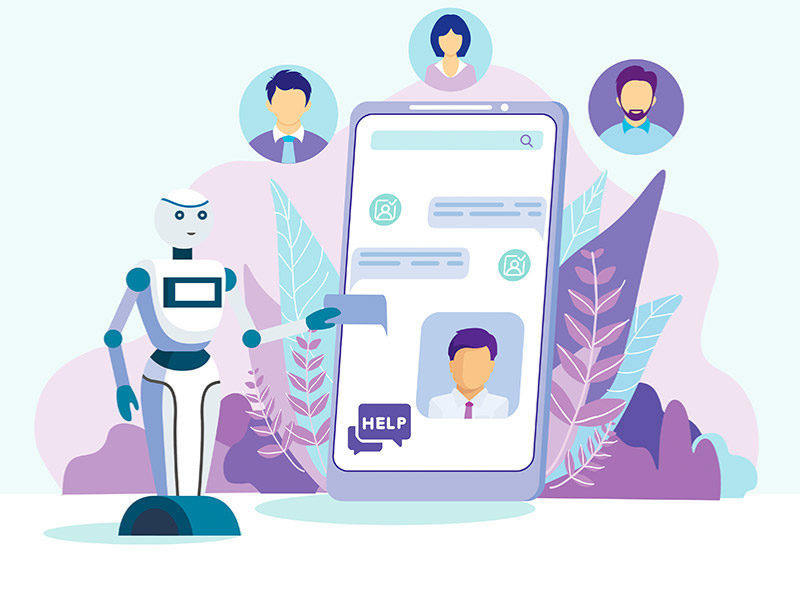
AI chatbots are software systems that interact with customers through text or voice using natural language. Virtual agents are more advanced versions capable of handling multi-step tasks and integrating with backend systems (CRM, ticketing, databases).
Two main types:
Rule-based chatbots follow predefined scripts and decision trees. Think “Press 1 for billing, Press 2 for support” in text form. They’re predictable and cheap to deploy, but brittle—they fail when customers ask questions outside the script.
AI-driven chatbots use natural language processing (NLP)—the technology that allows systems to understand everyday human language, not just keywords. When a customer types “I still haven’t received my refund from last week,” an AI chatbot can:
- Identify intent: This is a refund inquiry
- Extract entities: Timeframe = “last week”
- Check account status: Pull transaction history from backend
- Respond contextually: “I see your refund for $127.50 was processed on March 3rd. It typically takes 5-7 business days. You should see it by March 10th.”
The key difference: AI chatbots handle variations in phrasing and context. Customers don’t have to use exact keywords or follow rigid menus.
In modern call centers, chatbots typically operate across:
- Website live chat widgets
- In-app support messaging
- SMS and WhatsApp (common in iGaming, crypto, fintech where customers prefer encrypted channels)
- Voice IVR systems (though voice bots require additional speech-to-text infrastructure)
How Chatbots Are Changing Customer Service Today

Instant Response and 24/7 Availability
Instant Response and 24/7 Availability
Chatbots eliminate wait time from customer service entirely.
如何使用
- Customer sends a message through website chat, mobile app, or messaging platform
- Chatbot analyzes the message and identifies intent (order status, refund request, technical support)
- System retrieves relevant data from backend systems (order database, CRM, knowledge base)
- Response delivered in 1-3 seconds
This speed is consistent regardless of time, day, or volume. During a Black Friday sale when support requests spike 300%, chatbots maintain the same response time while human-only teams face 15-30 minute queue times.
Real-world impact for a 100-agent BPO operation:
| 公制 | Human-Only Model | With Chatbots |
|---|---|---|
| Average response time | 8-12 minutes (peak hours) | 2-5 seconds |
| 可用性 | 16 hours/day (two 8-hour shifts) | 24/7 |
| After-hours queries | Queue until morning (customer frustration) | Instant resolution or escalation |
| Agent capacity | 50,000 monthly interactions (500 per agent) | 120,000+ monthly interactions (chatbot handles 70k, agents handle 50k) |
| Cost per interaction | $7-$10 (fully-loaded agent cost) | $0.50-$1.50 (automated interaction) |
For industries like iGaming, crypto exchanges, and fintech where customers operate globally across time zones, 24/7 coverage isn’t optional—it’s mandatory. A crypto trader in Singapore experiencing a withdrawal issue at 2 AM EST can’t wait 6 hours for US business hours.
Before chatbots, companies had two choices:
- Hire expensive night shifts: 2x-3x wage premium for overnight coverage
- Let customers wait: Risk churn and negative reviews
Chatbots remove this trade-off entirely.
Handling High-Volume, Repetitive Requests
Inefficiency in call centers often comes from repetition, not complexity.
Gartner research shows that 40-60% of customer support interactions are routine, repetitive queries that don’t require human judgment:
- Order tracking: “Where is my order?” (15-20% of tickets)
- Password resets: “I can’t log in” (10-15% of tickets)
- Refund policy questions: “How long until I get my refund?” (8-12% of tickets)
- Account status checks: “Is my account active?” (5-10% of tickets)
- FAQ responses: Pricing, shipping, returns, features (20-25% of tickets)
These queries are straightforward—but human agents spend 3-5 minutes per interaction due to system lookups, typing responses, and logging notes. For a 50-agent team handling 25,000 monthly tickets, this means:
- 12,500 repetitive tickets (50% of volume)
- 62,500 minutes of agent time (3-5 min per ticket)
- ~1,040 hours monthly spent on work that could be automated
Chatbots eliminate this waste. They resolve routine queries in seconds by:
- Identifying the request type automatically
- Pulling data from backend systems (order database, knowledge base, CRM)
- Delivering a structured, consistent response
- Logging the interaction without manual data entry
The operational shift: When chatbots handle 60-70% of tier-1 volume, human agents focus on:
- Complex troubleshooting that requires multi-system debugging
- Escalations involving refunds, disputes, or policy exceptions
- High-value accounts where personalized service drives retention
- Emotionally charged interactions where empathy builds trust
Agent morale improves significantly. Support reps consistently report higher job satisfaction when freed from repetitive tasks. Burnout decreases, tenure increases, and training costs drop because agents focus on problem-solving rather than copy-paste responses.
This shift also changes staffing economics. Instead of scaling agent headcount linearly with ticket volume, you scale automation. A well-implemented chatbot system can absorb 30-50% volume increases without adding FTEs—critical during product launches, seasonal peaks, or unexpected viral growth.
Omnichannel Customer Support Experiences
Omnichannel Customer Support Experiences
Modern customers don’t think in channels—they think in conversations. A typical interaction might look like this:
Monday 9 AM: Customer visits your website, asks chatbot about product availability Monday 11 AM: Receives order confirmation email, clicks “Track order” link, lands on mobile app Tuesday 3 PM: Notices delivery delay, messages support via WhatsApp Tuesday 6 PM: Escalates to phone call when issue isn’t resolved
In a siloed system, this becomes four separate interactions:
- Website chatbot has no record of the order
- Mobile app shows tracking info but doesn’t know about the WhatsApp inquiry
- WhatsApp agent asks customer to repeat order number and issue
- Phone agent asks customer to explain everything again from the beginning
Result: Customer repeats themselves four times. Frustration compounds. CSAT score drops.
In an omnichannel system powered by unified chatbot infrastructure:
- Website chatbot logs the initial inquiry and order number in CRM
- Mobile app pulls order status and displays previous chatbot conversation
- WhatsApp bot sees full interaction history and proactively offers phone escalation
- Phone agent opens ticket with complete context: “I see you’ve been tracking order #4721 since Monday, and there was a delay notification this morning. Let me check with logistics right now.”
The technical difference: Omnichannel systems store conversation state in a central database. Every touchpoint (web chat, mobile, WhatsApp, phone) reads from and writes to the same customer record. When a chatbot escalates to a human, the agent sees the full transcript plus metadata (customer sentiment, number of previous contacts, VIP status).
Business impact for a 200-agent contact center:
| 公制 | Siloed Channels | 全渠道 |
|---|---|---|
| 平均处理时间 | 6-8 minutes (customer repeats context) | 3-5 minutes (agent has context) |
| Customer effort score | 3.2/5 (high effort) | 4.1/5 (low effort) |
| Escalation resolution rate | 65% (agents lack info) | 85% (full context available) |
| Agent efficiency | 400-500 interactions/month per agent | 600-800 interactions/month per agent |
For industries like BPO, iGaming, and crypto exchanges where customers interact across multiple channels daily (web support for account setup, Telegram for quick questions, phone for urgent issues), omnichannel infrastructure isn’t a nice-to-have—it’s mandatory for operational efficiency.
Key Benefits of Chatbots for Businesses and Customers
Improved Customer Experience and Satisfaction
Speed and consistency directly impact satisfaction.
Chatbots respond instantly and deliver the same quality of information every time. This reduces frustration caused by waiting or conflicting answers.
In real scenarios, customers value:
- Immediate acknowledgment of their issue
- Clear, predictable responses
- Easy escalation when needed
These factors often lead to higher satisfaction scores and better retention.
Operational Efficiency and Cost Optimization
Chatbots change how support teams allocate resources.
Instead of scaling headcount linearly with demand, businesses scale automation. Human agents focus on complex or sensitive cases.
高水平:
- Chatbots handle volume.
- Humans handle nuance.
This model improves efficiency without sacrificing service quality.
| 方面 | Chatbot | Human Agent |
|---|---|---|
| Cost per interaction | 低 | 更高 |
| 可扩展性 | 高 | 有限公司 |
| Emotional handling | 有限公司 | 强大 |
Personalization at Scale
Modern chatbots use customer data to tailor responses.
例子包括
- Greeting returning customers by name
- Referencing past orders or tickets
- Adjusting tone to match brand voice
A simple example:
Bot: Hi Alex, I see your last order was delivered yesterday. How can I help Common Customer Service Use Cases Where Chatbots Work Best
today?
This level of personalization was previously impossible at scale without large teams.
Order and Delivery Support
Chatbots handle order-related questions efficiently.
Typical flows include:
- 检查订单状态
- Providing delivery timelines
- Notifying delays
Customers get instant updates, and teams reduce inbound volume.
Account and Billing Inquiries
Account tasks are structured and repeatable.
Chatbots assist with:
- Billing explanations
- Invoice retrieval
- Subscription changes
Sensitive cases escalate to humans to ensure security and trust.
Lead Qualification and Pre-Sales Support
Chatbots support sales teams by qualifying leads.
A common process:
- Ask basic qualifying questions.
- Identify intent and readiness.
- Route high-value leads to sales reps.
This shortens response time and improves conversion rates.
Will Chatbots Replace Human Customer Service Agents?
The AI-Human Collaboration Model
Chatbots are not replacements. They are support systems.
The collaboration model works by dividing responsibilities:
| Task Type | 业主 |
|---|---|
| FAQs and routine requests | Chatbot |
| Multi-step or emotional issues | Human agent |
| Data gathering | Chatbot |
| Final resolution | Human agent |
This approach delivers speed without losing empathy.
Why Human Empathy Still Matters
AI struggles with emotional nuance.
When customers are upset, confused, or dealing with sensitive issues, human empathy builds trust. Humans can read tone, adapt language, and negotiate outcomes.
Chatbots should recognize these moments and escalate early.
Real-World Collaboration Examples
- IBM: Uses virtual agents to handle routine IT and customer queries, escalating complex cases to specialists.
- SiriusXM: Deploys AI to guide customers through setup while humans handle account-specific issues.
The common outcome is faster service and better customer experience.
Limitations and Risks of AI Chatbots in Customer Service
Accuracy, Context, and Misunderstandings
Chatbots depend on training data.
Poorly trained systems misunderstand intent, leading to wrong answers or loops. This damages trust quickly.
Regular review and updates are essential.
Escalation and Seamless Human Handoffs
Effective escalation follows clear steps:
- Detect uncertainty or frustration.
- Offer human assistance early.
- Transfer full conversation history.
Customers should never repeat themselves.
Data Privacy and Customer Trust Concerns
Trust depends on transparency.
Key principles include:
- Clear disclosure of data usage
- Secure data handling
- Minimal data collection
Customers must feel safe interacting with automated systems.
Future Trends in AI-Driven Customer Service
As chatbot capabilities continue to evolve, they are becoming a core component of broader customer experience strategies. To stay competitive, businesses should also understand the bigger picture shaping modern support operations. These global contact center trends provide deeper insights into how organizations are scaling support, integrating AI, and delivering consistent experiences across regions and channels.
Proactive and Predictive Customer Support
Chatbots will increasingly reach out before issues occur, such as alerting customers to delays or potential problems.
Hyper-Personalization and Emotional Context Processing
Future systems will better adapt tone and responses based on customer behavior and sentiment, without overstepping boundaries.
Deeper Integration Across Customer Communication Systems
Chatbots will connect more deeply with CRM, support tools, and analytics to deliver consistent experiences everywhere.
How Businesses Can Prepare for the Future of Customer Service with Chatbots
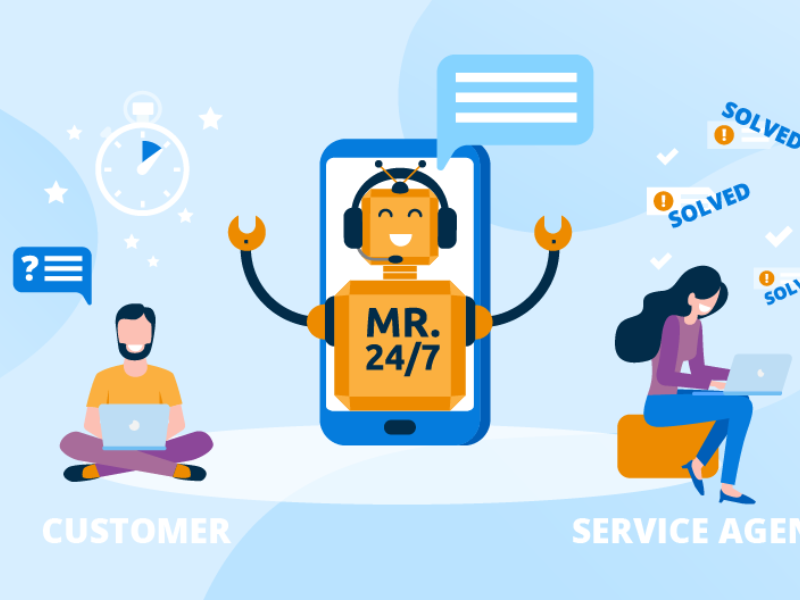
Identifying the Right Use Cases for Automation
Start with tasks that are:
- High-volume
- Low complexity
- Clearly defined
Avoid automating emotionally sensitive interactions too early.
Designing Effective AI Chatbot Implementation Strategies
A practical rollout looks like this:
- Define clear goals and success criteria.
- Launch with limited use cases.
- Train bots using real conversations.
- Monitor performance and adjust.
- Align tone with brand voice.
Gradual expansion reduces risk.
Measuring Success and Customer Experience Impact
Track metrics that reflect experience and efficiency, such as:
- Resolution rates
- Escalation frequency
- Customer feedback
Use insights to refine flows continuously.
FAQ – Chatbots and the Future of Customer Service
Are chatbots suitable for small businesses?
Yes. Many platforms offer scalable solutions that fit SMB budgets and needs.
Do customers prefer chatbots over humans?
Customers prefer fast resolution. Chatbots work well when combined with easy access to humans.
How long does it take to implement a chatbot?
Basic implementations can take weeks, while advanced systems require ongoing optimization.
Chatbots are shaping the future of customer service by augmenting human teams, not replacing them. Businesses that start small, focus on collaboration, and iterate based on feedback will be best positioned to deliver faster, better customer experiences.
常见问题

What are chatbots and virtual agents in customer service?
Chatbots and virtual agents are AI-powered tools designed to automate customer interactions by interpreting user queries and providing instant responses. They use technologies like natural language processing (NLP) to understand and respond conversationally.
How do chatbots improve customer service?
Chatbots enhance customer service by offering 24/7 availability, reducing response times, and handling high-volume repetitive requests. They improve customer satisfaction by delivering accurate and personalized support experiences.
Can chatbots completely replace human customer service agents?
No, chatbots cannot fully replace human agents. While they excel at handling repetitive tasks and instant responses, human agents are essential for emotional intelligence, complex problem-solving, and conflict resolution.
What are the main challenges of using chatbots in customer service?
Chatbots may struggle with understanding context, providing accurate responses in ambiguous situations, seamless escalation to human agents, and maintaining customer trust due to data privacy concerns.
How do businesses integrate chatbots into their customer service?
To integrate chatbots, businesses start by identifying use cases suited for automation, implementing phased rollouts, training chatbot algorithms on customer data, and ensuring smooth human-agent handoffs for complicated queries.
What future trends in AI-driven customer service should businesses watch for?
Emerging trends include hyper-personalization, predictive customer support, improved emotional intelligence in AI, and deeper integration of chatbots across omnichannel communication systems.
Are chatbots cost-effective for businesses?
Yes, chatbots are cost-effective as they automate routine queries, reduce the workload on human agents, and scale operations efficiently, saving costs and increasing operational productivity over time.
How can businesses measure the success of chatbot implementation?
Businesses can track chatbot effectiveness using metrics like resolution rates, average response times, customer satisfaction scores (CSAT), and the reduction in support ticket volumes. Regular performance reviews and customer feedback loops are essential.
更多信息
What Is a Customer Success Manager? Role and Responsibilities



 English
  Russian
  Chinese