
Call Center Outsourcing UAE: Costs, Benefits, How to Choose

This guide helps US-based founders and operations teams understand call center outsourcing in the UAE, compare providers, and make confident decisions based on cost, quality, and real-world fit.

目录

Key Takeaways You Should Know

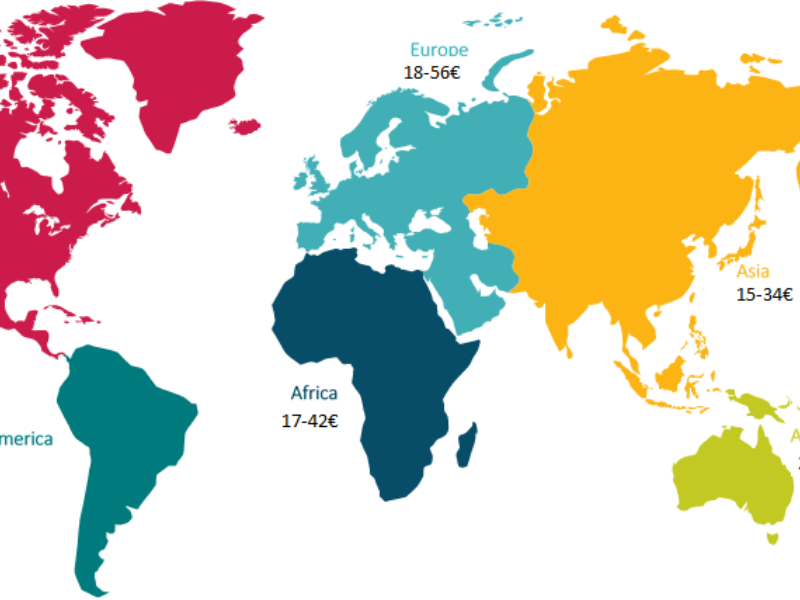
  • Pricing and positioning: Call center outsourcing in the UAE targets mid-market and enterprise companies with average rates of $18–35 per agent per hour. This positions UAE providers between low-cost offshore markets like India and the Philippines ($8–15/hour) and fully onshore US operations ($45–75/hour).

    Primary value proposition: UAE outsourcing emphasizes service quality, regulatory compliance, and bilingual English-Arabic support rather than pure cost minimization. This makes it suitable for companies serving Middle Eastern customers or operating in regulated industries like banking, fintech, and insurance.

    Service scope: Most UAE providers deliver integrated omnichannel support—voice calls, live chat, email, and messaging platforms like WhatsApp—under unified contracts rather than separate agreements per channel.

    Typical engagement model: Contracts usually require minimum commitments of 10–20 agent seats with 6–12 month terms. Transition timelines average 4–8 weeks from contract signing to full operational launch.

    Geographic coverage: UAE’s timezone position (GMT+4) enables efficient coverage of European morning hours, Middle Eastern business hours, and US East Coast afternoon overlap—supporting near-24/7 service with fewer shift rotations than purely US-based operations.

    When to evaluate alternatives: If your customer base is primarily English-speaking and geographically distributed without Arabic language requirements, consider comparing UAE outsourcing economics against other models including nearshore options or cloud-based contact center platforms that support remote agent hiring globally.

  • Vendor quality varies widely, making evaluation criteria critical.
  • Onshore UAE and regional offshore models serve different business needs.
  • Chat and digital channels are growing faster than voice services.
  • Structured transition planning reduces operational risk.

What Is Call Center Outsourcing in the UAE?

Call center outsourcing in the UAE means contracting a third-party service provider located in the United Arab Emirates to handle customer interactions on your company’s behalf. These providers operate contact center facilities staffed with trained agents who represent your brand during customer conversations.

Core Service Components

1. Multilingual agent teams

UAE providers specialize in bilingual English-Arabic support—critical for companies serving Middle Eastern markets where approximately 60% of customers prefer Arabic-language service, particularly in finance, e-commerce, and telecommunications sectors.

Beyond language proficiency, UAE-based agents typically have cross-cultural experience from the country’s international business environment and tourism economy, reducing friction when handling customers from diverse geographic regions.

Example application: A Dubai-based cryptocurrency exchange needs customer support for both international traders (English) and local investors (Arabic). UAE agents can handle account verification, transaction disputes, and compliance questions in both languages without requiring separate teams or complex routing logic.

2. Omnichannel service delivery

Rather than separate teams for phone, email, and chat support, UAE providers integrate multiple communication channels into unified agent workstations. This means one agent can handle:

  • Inbound voice calls during business hours
  • Live chat inquiries from your website
  • Email support tickets
  • Messaging app conversations (WhatsApp, Telegram)
  • Social media responses (Instagram, Facebook)

Why this matters: When a customer emails a question on Monday, then calls about the same issue on Tuesday, the phone agent immediately sees the email thread without asking the customer to repeat their problem. This reduces average handle time by 25–35% and eliminates the customer frustration of re-explaining issues to multiple representatives.

3. CRM and workflow integration

UAE providers connect their contact center systems to your existing business tools—Salesforce, HubSpot, Zendesk, or custom platforms—so agents access complete customer context during interactions.

What agents see in real-time:

  • Customer profile and account history
  • Previous support tickets and resolutions
  • Purchase history and current orders
  • Outstanding issues or escalations
  • Custom fields specific to your business (loyalty tier, account value, risk flags)

This integration eliminates the need for agents to switch between multiple systems or ask customers for basic account information that should already be available.

Market Positioning

Compared to high-volume offshore hubs like India and the Philippines, the UAE positions itself as a premium outsourcing destination focused on service quality and specialized industry expertise rather than absolute lowest cost.

Typical client profile: Mid-market and enterprise companies ($10M–500M revenue) requiring:

  • Bilingual Arabic-English support
  • Regulatory compliance for financial services
  • Premium customer experience for high-value clients
  • Sophisticated technical support requiring product expertise
  • Cross-border operations across Middle East, Europe, and Asia


Why Call Center Outsourcing in the UAE Is Growing

The UAE call center outsourcing market has grown at an estimated 15–18% annually over the past five years, driven by companies prioritizing customer experience quality and operational flexibility over absolute lowest cost.

Digital Transformation Creates Operational Complexity

The business problem: As companies transition from traditional retail and in-person service to digital-first business models, customer inquiries fragment across multiple touchpoints—phone calls during business hours, WhatsApp messages at midnight, Instagram DMs on weekends, email tickets on holidays.

This fragmentation creates a staffing challenge: how do you maintain consistent 18–24 hour coverage across 4–5 communication channels without tripling headcount or creating unsustainable shift schedules that burn out your team?

UAE providers address this through three mechanisms:

1. Multi-shift timezone optimization

UAE’s geographic position (GMT+4) creates natural coverage advantages:

  • 6 AM–2 PM UAE time = 3 AM–11 AM UK / 10 PM–6 AM US East Coast (covers European morning rush)
  • 2 PM–10 PM UAE time = 11 AM–7 PM UK / 6 AM–2 PM US East Coast (covers European afternoon + US morning)
  • 10 PM–6 AM UAE time = 7 PM–3 AM UK / 2 PM–10 PM US East Coast (covers US afternoon + early evening)

Practical example: A London-based fintech company needs customer support from 6 AM–11 PM UK time (17-hour coverage window). Using UAE-based agents, they achieve this with just two shifts instead of requiring three shifts with UK-based staff—reducing management complexity and shift premium costs.

2. Unified agent desktops for channel consolidation

Instead of separate teams handling phone vs email vs chat (traditional model), UAE providers deploy omnichannel platforms where individual agents handle all channel types from one interface.

Impact on efficiency:

  • Reduced context switching: Agents stay in one system rather than toggling between phone queue software, email ticketing tools, and chat platforms
  • Better utilization: Agents handle chat messages during gaps between phone calls instead of sitting idle
  • Faster first response: Incoming inquiries route to any available agent rather than waiting for channel-specific specialists

Industry benchmarks show this approach improves first-response time by 30–40% compared to siloed channel teams.

3. Cloud infrastructure enabling rapid scaling

UAE providers invested heavily in cloud-based contact center platforms (hosted on AWS, Azure, Google Cloud) rather than traditional on-premise PBX systems. This enables:

  • Elastic capacity: Add 50 agents in 48 hours during demand spikes (e-commerce Black Friday, crypto exchange volume during market volatility, tax season for fintech)
  • Work-from-home capability: Agents operate securely from distributed locations without VPN bottlenecks
  • Disaster recovery: Automatic failover to backup data centers during infrastructure issues

Business scenario: A European e-commerce platform normally runs 30 support agents but needs 120 agents during November–December holiday shopping. UAE providers can staff this 4x seasonal surge through temporary agent hiring and training pipelines, then scale back down in January—something difficult to execute with purely in-house teams.

Regulatory and Compliance Drivers

Data localization requirements: Several Middle Eastern countries now require customer data (especially financial and health records) to be stored and processed within regional data centers. UAE providers offer compliant infrastructure that meets these mandates while serving multinational operations.

Industry-specific compliance: UAE providers serving financial services, healthcare, and telecommunications build expertise in sector-specific regulations:

  • Banking: KYC (Know Your Customer) verification, AML (Anti-Money Laundering) procedures
  • Healthcare: Patient privacy, appointment scheduling with medical context
  • Telecom: Port-out procedures, SIM card activation with identity verification

This regulatory expertise reduces compliance risk for companies entering Middle Eastern markets or serving regional customers from global operations.

Industry Demand Patterns

Strongest growth sectors:

1. BFSI and Fintech – Banks, cryptocurrency exchanges, payment processors, and lending platforms need:

  • High-trust customer interactions for account disputes and fraud claims
  • Multilingual support for international customer bases
  • Strict compliance with financial regulations

2. Telecom and Technology – Mobile carriers, ISPs, and SaaS platforms require:

  • High-volume support (thousands of daily interactions)
  • Technical troubleshooting capability
  • 24/7 availability for business-critical services

3. E-commerce and Travel – Online retailers and booking platforms need:

  • Seasonal scaling capability (holiday shopping, summer travel)
  • Multilingual support for cross-border sales
  • Omnichannel support (customers research on web, purchase on mobile, follow up via chat)

Regulation and data security are another factor. Many UAE providers operate under strict data protection rules and industry-specific compliance, which is critical for BFSI (banking, financial services, and insurance) and healthcare clients.

Industry demand is strongest in:

  • BFSI and fintech, where trust and compliance matter.
  • Telecom and technology, with high-volume, multilingual support needs.
  • E-commerce and travel, serving Middle East and global customers.

Light market data supports this trend. The UAE leads the Middle East in call and contact center outsourcing revenue and continues to outpace regional peers in service maturity.


Types of Call Center Services Available in the UAE

Inbound vs Outbound Call Center Services

Inbound services focus on handling incoming customer requests:

  • Customer support and complaints.
  • Technical helpdesk.
  • Order and booking assistance.

Outbound services focus on proactive outreach:

  • Sales and lead generation.
  • Customer follow-ups and renewals.
  • Surveys and feedback collection.

Most UAE providers offer blended teams that handle both.

Voice, Chat, Email, and Omnichannel Support

Voice support remains the largest service type, especially for complex or sensitive issues. However, chat and messaging channels are growing faster because customers expect quick, low-effort interactions.

常见的渠道包括

  • Voice: Best for high-complexity and trust-based conversations.
  • Chat: Faster resolution and lower cost per interaction.
  • 电子邮件: Suitable for non-urgent, documented communication.
  • 全渠道 (all channels connected in one system): Agents see full customer history across channels, reducing repeat explanations and improving resolution time.

In practice, companies that adopt omnichannel support see fewer escalations and higher customer satisfaction because conversations stay consistent across touchpoints.


Onshore vs Offshore Call Center Outsourcing Models

模型 What It Means 最适合
Onshore UAE Agents based entirely in the UAE Regulated industries, premium CX
Regional offshore Delivery from nearby lower-cost markets managed by UAE firms Cost-sensitive, high-volume support

Onshore UAE offers better compliance, cultural alignment, and service control.
Regional offshore lowers costs but may introduce language or quality trade-offs.

The right choice depends on your risk tolerance and customer expectations.

Benefits of Outsourcing Call Centers to the UAE

  • 1. Multilingual Talent with Cultural Competency

    Language capability: UAE-based agents offer strong English-Arabic bilingual proficiency—critical for companies serving Gulf Cooperation Council (GCC) markets where customers expect native-level Arabic support.

    Why this matters: Regional data shows that Arabic-language support significantly impacts conversion and retention in Middle Eastern markets:

    • E-commerce platforms report 40–60% higher cart completion rates when Arabic support is available during checkout issues
    • Banking and fintech companies see 25–35% lower account abandonment when Arabic-speaking agents handle onboarding and verification
    • Insurance providers report fewer policy cancellations when claims support is available in the customer’s preferred language

    Cultural competency advantage: Beyond language proficiency, UAE agents typically have exposure to international business practices through the country’s tourism and expatriate economy. This reduces cultural friction when handling customers from diverse regions—European business communication styles, American directness, Asian preference for formal protocols.

    Business scenario: A Dubai-based cryptocurrency exchange needs KYC (Know Your Customer) verification support for both international traders and local investors. UAE agents handle:

    • English interactions: Technical troubleshooting for international users, explaining blockchain confirmations and wallet transfers
    • Arabic interactions: Culturally appropriate financial discussions with local investors, navigating religious considerations around certain transaction types
    • 遵守规定: Understanding both international AML standards and local UAE/Saudi regulatory requirements

    2. Service Quality Infrastructure

    Training investment: UAE providers typically maintain structured training programs:

    • Initial training: 2–4 weeks product knowledge, systems training, soft skills development
    • Ongoing development: Weekly coaching sessions, monthly product updates, quarterly performance reviews
    • Specialization tracks: Advanced training for complex products (technical support, financial services, medical device troubleshooting)

    Quality assurance processes: Most UAE providers implement systematic QA monitoring:

    Traditional QA approach:

    • Call monitoring: Supervisors review 2–5% of recorded calls per agent monthly
    • Scoring rubrics: Standardized evaluation on greeting quality, problem resolution, compliance adherence, customer satisfaction
    • Feedback loops: Weekly 1-on-1 coaching sessions addressing identified gaps

    Cost of quality: Maintaining manual QA typically requires 1 QA specialist per 25–30 agents, adding approximately 4% to total operational cost. Companies view this as necessary investment to maintain consistent customer experience and catch compliance violations before they become regulatory issues.

    Performance metrics: UAE contracts typically include specific SLA (Service Level Agreement) commitments:

    • Answer rate: 80–90% of calls answered within 30 seconds
    • Average handle time: Target benchmarks by interaction type (simple inquiry: 3–5 minutes, technical issue: 8–12 minutes)
    • First-call resolution: 70–85% of issues resolved without follow-up contact
    • Customer satisfaction: CSAT scores of 80–90% positive ratings

    Penalty mechanisms: Most contracts include financial penalties if SLAs aren’t met (typically 5–10% of monthly fees), creating financial incentive for performance maintenance.

    3. Compliance Readiness for Regulated Industries

    Why compliance matters operationally: Companies in banking, fintech, healthcare, and insurance face strict regulations governing customer data handling, conversation recording, consent management, and agent training requirements. Compliance failures result in:

    • Regulatory fines ($10,000–100,000+ per violation)
    • Mandatory audits and remediation plans
    • Reputational damage affecting customer trust

    UAE provider compliance advantages:

    Data protection frameworks:

    • Regional data center hosting (Dubai, Abu Dhabi) meeting data localization requirements
    • SOC 2 Type II certifications for security controls
    • GDPR-compliant data handling for European customers
    • PCI-DSS compliance for payment card data

    Industry-specific expertise:

    Banking and fintech:

    • KYC/AML procedures aligned with UAE Central Bank and international FATF standards
    • Agent training on fraud detection and suspicious activity reporting
    • Secure handling of account credentials and transaction data

    Healthcare:

    • Understanding of patient privacy requirements (similar to HIPAA in US)
    • Secure handling of medical records and appointment information
    • Agent training on medical terminology and sensitive health discussions

    Telecommunications:

    • Number portability procedures and customer authentication
    • SIM card activation with identity verification
    • Service cancellation with proper consent documentation

    Business scenario: A European neobank expanding to Middle Eastern markets needs customer support that handles:

    • Account opening with identity verification (passports, Emirates IDs, residency documents)
    • Transaction disputes requiring investigation (fraud claims, unauthorized charges)
    • Regulatory reporting when suspicious activity is detected

    UAE providers train agents on these specific workflows and maintain documentation standards required during regulatory audits.

    4. Modern Infrastructure and Integration Capability

    Cloud-based architecture: Most UAE providers migrated from traditional on-premise PBX systems to cloud contact center platforms:

    Operational advantages:

    • Elastic scaling: Add agent capacity in hours rather than weeks
    • Geographic distribution: Support work-from-home agents across multiple UAE cities
    • Disaster recovery: Automatic failover to backup systems during outages
    • API integration: Connect to external systems (CRM, ticketing, payment platforms) without custom development

    Standard integrations available:

    CRM platforms:

    • Salesforce: Screen pop with customer records, automatic activity logging, case creation
    • HubSpot: Contact history display, ticket creation, deal pipeline updates
    • Zendesk: Unified ticket view, multi-channel conversation threading
    • Custom CRMs: REST API integration for data exchange

    Communication channels:

    • Voice: Inbound/outbound calling with IVR (Interactive Voice Response) menus
    • Email: Ticketing systems with automatic routing and prioritization
    • Chat: Website live chat with proactive engagement triggers
    • Messaging: WhatsApp Business API, Telegram, Facebook Messenger
    • SMS: Two-way text messaging for notifications and quick responses

    Analytics and reporting:

    • Real-time dashboards: Live view of agent availability, queue wait times, call volumes
    • Historical reporting: Daily/weekly/monthly performance summaries
    • Custom reports: Tailored analysis for specific business metrics
    • 数据导出: CSV/Excel exports for external analysis

    Business scenario: A European e-commerce company integrates UAE support with their Shopify store and Zendesk helpdesk:

    • Customer calls about order status → agent sees real-time Shopify order details
    • Chat inquiry about return policy → agent creates Zendesk ticket automatically
    • Email about damaged product → agent views order history, processes refund, updates shipping system
    • All interactions logged automatically without manual


Potential Drawbacks to Consider

  • Higher costs than offshore markets: UAE rates exceed India or the Philippines. Mitigation: use hybrid models.
  • Scalability limits: Rapid volume spikes may strain smaller providers. Mitigation: check staffing plans.
  • Vendor inconsistency: Service maturity varies widely. Mitigation: audit references and KPIs.
  • Contract rigidity: Some providers require longer commitments. Mitigation: negotiate pilot phases.

Balanced expectations reduce surprises.

How to Evaluate a Call Center Outsourcing Provider in the UAE

Top 10 Vendor Evaluation Criteria

  1. Industry experience: Proven work in your sector reduces onboarding time.
  2. Language capability: Verify real fluency, not just listed languages.
  3. Quality assurance process: Ask how calls are monitored and improved.
  4. Technology stack: Ensure CRM and ticketing integrations are standard.
  5. Reporting transparency: Daily and weekly performance dashboards matter.
  6. Data security: Confirm policies for data access and storage.
  7. Training programs: Ongoing agent training signals long-term quality.
  8. Scalability plan: Understand how headcount grows during peak demand.
  9. Transition methodology: Look for phased onboarding, not big-bang launches.
  10. Client references: Speak directly with similar companies if possible.


Cost Comparison: UAE vs Other Outsourcing Destinations

Location Relative Cost Quality Focus
UAE Medium–High Quality, compliance
Philippines Low Voice-centric
India Low Scale and flexibility
US onshore Very High Full control
  • UAE sits in the middle for cost but high on reliability.
  • Best for companies valuing experience over raw savings.

Who Should Consider Call Center Outsourcing in the UAE?

  • US companies serving Middle East or global customers.
  • Businesses needing English-Arabic support.
  • Regulated industries prioritizing data protection.
  • Brands positioning on premium customer experience.
  • SMEs wanting managed solutions without building in-house teams.

From experience, UAE outsourcing works best when customer trust and brand perception matter.

Key Trends Shaping Call Center Outsourcing in the UAE

  • AI-assisted chat and call routing.
  • Growth of digital-first support channels.
  • Strong competition with Saudi Arabia as a regional hub.
  • Increased demand for analytics-driven CX improvement.

FAQ: Call Center Outsourcing UAE

How much does call center outsourcing in the UAE cost?

Costs are mid-range globally and depend on language, volume, and service hours.

Is the UAE suitable for small businesses?

Yes, especially for SMEs needing multilingual or compliant support.

How long does transition usually take?

Most projects take 4–8 weeks with a phased rollout.

Are UAE providers compliant with data protection standards?

Many follow strict internal and regional compliance frameworks, but verification is essential.

Can I start with a pilot project?

Reputable providers usually offer pilot or trial phases.

Closing Guidance

Call center outsourcing in the UAE is a quality-first decision. It suits companies that value reliability, multilingual service, and compliance over the lowest price. Shortlist providers carefully, use clear evaluation criteria, and start with a pilot before scaling. The right partner can improve customer experience without adding operational complexity.

常见问题

What is call center outsourcing in the UAE?

Call center outsourcing in the UAE refers to hiring external service providers to handle customer interactions. These providers offer solutions like voice, chat, email, and omnichannel support, leveraging the UAE’s multilingual workforce, advanced infrastructure, and favorable business environment.

Why should you consider outsourcing call center services in the UAE?

Outsourcing to the UAE offers high-quality customer service, multilingual capabilities, robust legal compliance, and cutting-edge technology. Additionally, the UAE provides a balance of cost-effectiveness and service quality compared to other global outsourcing markets.

How to evaluate call center outsourcing providers in the UAE?

When evaluating providers, consider their industry expertise, service quality, access to technologies, cost-effectiveness, training practices, global exposure, and references. Ensure their transition methodology aligns with your business needs for a smooth onboarding process.

What are the common types of call center services available in the UAE?

Common services include inbound (customer support, queries), outbound (sales, lead generation), and omnichannel support (voice, chat, email). Omnichannel solutions help enhance customer experience by offering seamless communication across platforms.

What is the cost of outsourcing call center services in the UAE?

Costs vary depending on service complexity, business size, and provider. UAE outsourcing tends to be higher-priced than offshore destinations like India but offers better compliance, infrastructure, and multilingual capabilities, ensuring value for money.

Can UAE call center outsourcing providers accommodate businesses of any size?

Yes, the UAE offers tailored solutions for SMEs and large enterprises across industries like BFSI, telecom, healthcare, and retail. Providers offer flexible packages to meet specific scalability and service requirements.

What are the potential challenges of outsourcing to the UAE?

Challenges include higher costs compared to some offshore markets, limited scalability for niche industries, and quality variance among vendors. Careful evaluation and pilot testing can mitigate these issues.

How long does it take to transition to an outsourced call center provider?

The transition timeline depends on the provider and service requirements, typically ranging from 30–90 days. A clear transition methodology ensures seamless integration with minimal disruptions.

更多信息 

现收现付呼叫中心解决方案 灵活支持

Call Center Metrics and KPI: Guide to Performance Measurement

目录

索引