
主要收获
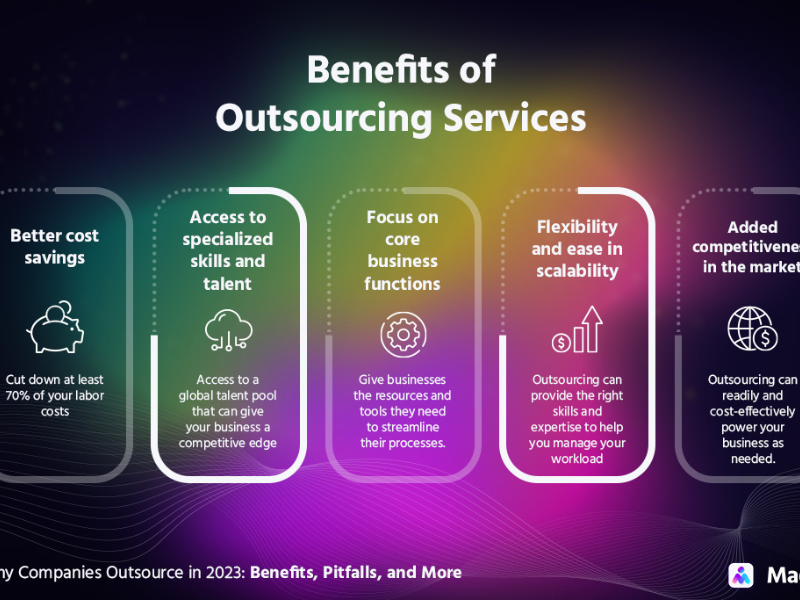
- You’re growing fast, but your team is drowning in operational work. Business process outsourcing (BPO) lets you hand off time-consuming processes to specialists—so your team can focus on what actually drives revenue.What you need to know:
- 成本控制: BPO typically reduces operational costs by 30-50% through specialized labor, shared infrastructure, and economies of scale.
- Speed to scale: Add capacity in days or weeks, not months—critical during growth phases or seasonal spikes.
- Focus on core business: When experts handle payroll, support tickets, or data entry, your leadership team spends more time on strategy and less time on admin.
- Best-fit processes: BPO works best for high-volume, repeatable tasks like customer support, accounting, or HR administration—not for core competitive advantages.
- Provider selection matters: The right BPO partner has proven industry expertise, transparent pricing, strong security practices, and clear performance guarantees (SLAs).
谁最受益 Small and mid-sized businesses gain the biggest advantage—accessing enterprise-grade operations without enterprise-scale overhead.
What Are Business Process Outsourcing Services?
Simple Definition of Business Process Outsourcing (BPO)
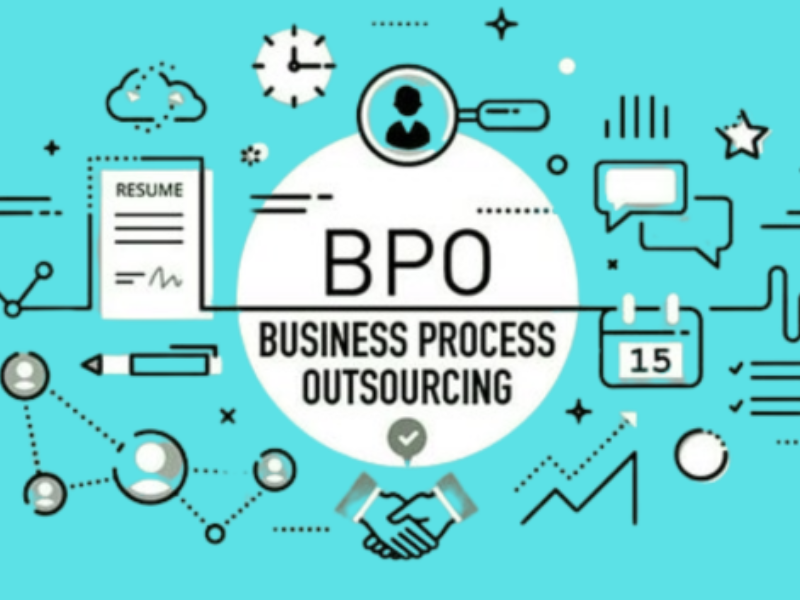
Business process outsourcing means contracting specific business operations—like customer support, payroll, or data entry—to a specialized provider. Instead of hiring, training, and managing internal teams for these functions, you define the standards and let experts handle the execution.
Think of it this way: You wouldn’t hire an in-house legal team for occasional contract reviews—you use a law firm. BPO applies the same logic to operational processes.
How BPO Differs From Other Outsourcing Models
BPO vs IT Outsourcing:
- IT outsourcing manages your technology infrastructure—servers, networks, software development
- 业务流程外包 handles business operations—customer service, accounting, HR administration, procurement
BPO vs Staff Augmentation:
- Staff augmentation provides contractors who work under your direction (you manage the process, they provide labor)
- 业务流程外包 delivers outcomes (you define success metrics like “95% of tickets resolved in 24 hours,” they own the entire process)
Key distinction: BPO providers are accountable for results, not just hours worked. You measure output (calls answered, invoices processed, tickets resolved), not input (hours logged, people assigned).
How Business Process Outsourcing Services Work in Practice
BPO isn’t just “hire a vendor and hope for the best.” Successful implementations follow a structured approach that minimizes risk and ensures measurable results.
The BPO Implementation Lifecycle
Step 1: Identify Processes for Outsourcing
Start with business functions that meet these criteria:
- Non-core: Important for operations but not your competitive advantage
- High-volume: Enough work to justify external management (e.g., 500+ support tickets per week, 200+ invoices per month)
- Rules-based: Can be documented in standard operating procedures (SOPs)
- Time-consuming: Currently taking 20+ hours per week of internal resources
Common candidates: Payroll processing, accounts payable, customer support, data entry, recruiting coordination.
Step 2: Select a BPO Provider
Look beyond price—evaluate operational maturity:
- 行业经验: Have they served companies in your vertical? Ask for 3-5 references.
- Process documentation: Do they have proven SOPs, or will they “figure it out” with your data?
- 技术堆栈: What tools do they use for workflow management, reporting, and quality control?
- Case studies: Request specific examples showing measurable outcomes (cost reduction, error rates, turnaround time).
Step 3: Define SLAs and KPIs
Service Level Agreements (SLAs) are contracts that define performance expectations. Key metrics include:
- 速度 “95% of support tickets resolved within 24 hours”
- Accuracy: “99.5% error-free invoice processing”
- Availability: “24/7 coverage with max 2-minute response time”
KPIs (Key Performance Indicators) track these metrics over time. Without clear SLAs, you have no basis for accountability.
Step 4: Transition and Integration
This is where most BPO relationships fail or succeed. A strong transition includes:
- Process documentation: Every workflow mapped in detail before handoff
- 知识转让: 2-4 weeks of shadowing, training, and Q&A
- System integration: Connect the BPO provider’s tools to your CRM, ERP, or internal platforms
- Pilot phase: Run a small volume (10-20% of work) for 2-4 weeks to identify issues before full rollout
Step 5: Ongoing Execution and Optimization
Once live, the provider handles daily operations while you monitor performance:
- Weekly reporting: Review KPI dashboards (speed, accuracy, volume)
- Monthly business reviews: Discuss trends, bottlenecks, and improvement opportunities
- Continuous optimization: Providers should propose process improvements based on data (e.g., “We can reduce ticket resolution time by 20% if we add a self-service FAQ”)
Real-World Example: SaaS Company Outsources Customer Support
The situation: A 50-person SaaS company was handling 1,200 support tickets per week with 3 internal agents. Average response time: 6 hours. Ticket backlog during product launches: 48+ hours.
The BPO implementation:
- Provider: Specialized in SaaS customer support with experience in CRM integrations
- 设置: 2-week transition period to document ticket types, integrate with Zendesk, and train BPO agents on the product
- Structure: BPO provides 6 agents covering 24/7 (US, EU, APAC time zones)
- 定价 Pay-per-ticket model with tiered SLA (standard vs priority)
3 个月后的结果
- Response time: Dropped from 6 hours to 45 minutes (87% improvement)
- Resolution rate: First-contact resolution increased from 60% to 78%
- 费用 $7,500/month (BPO) vs $15,000/month (3 internal agents + overhead)
- 可扩展性: During a major product launch, BPO scaled to 10 agents for 2 weeks, then back to 6—no hiring/firing needed
Key success factors:
- Clear SLAs tied to customer satisfaction scores
- Weekly performance reviews with dashboard access
- Continuous optimization (BPO suggested adding chatbot for common queries, reducing ticket volume 15%)
Why Businesses Use Business Process Outsourcing Services
Cost Reduction and Cost-Effective Business Solutions
Cost savings drive most BPO decisions—but not for the reasons you might think. It’s not just about “cheaper labor overseas.” The real savings come from three structural advantages BPO providers have over in-house operations.
How BPO Reduces Costs (With Real Numbers)
1. Labor Cost Optimization
BPO providers access global talent markets, which creates immediate arbitrage opportunities:
- Customer support agent: $45,000/year (US-based in-house) vs $18,000/year (offshore BPO) vs $28,000/year (nearshore BPO)
- Accounting specialist: $65,000/year (in-house) vs $25,000/year (offshore) vs $38,000/year (nearshore)
But it’s not just salary—BPO providers also eliminate recruiting costs ($5,000-$8,000 per hire), training overhead (2-4 weeks of internal time), and benefits (health insurance, 401k, paid leave).
2. Shared Infrastructure
When you hire an in-house team, you pay for:
- Office space, equipment, software licenses
- Management overhead (supervisors, HR support)
- Technology infrastructure (phones, CRM, workforce management tools)
BPO providers amortize these costs across dozens or hundreds of clients. A 100-agent call center serving 20 clients pays 1/20th per client for infrastructure vs a company building a 5-agent internal team.
3. Scalability Without Fixed Costs
In-house teams carry fixed costs regardless of volume. BPO pricing flexes with usage:
- Slow month: 800 support tickets → pay for 800 tickets
- Busy month: 1,500 tickets → pay for 1,500 tickets
- In-house: Pay for 3 full-time agents whether you have 500 tickets or 2,000
Cost Comparison: In-House vs BPO (100-Agent Contact Center)
| 费用类别 | In-House (Annual) | BPO (Annual) | 节约 |
|---|---|---|---|
| Salaries (100 agents × $45k) | $4,500,000 | $1,800,000 | 60% |
| 益处 (30% of salary) | $1,350,000 | 包括 | 100% |
| Office space (100 seats × $8k) | $800,000 | 包括 | 100% |
| 技术 (phones, CRM, WFM) | $250,000 | 包括 | 100% |
| Management (10 supervisors × $75k) | $750,000 | $200,000 | 73% |
| Recruiting & training | $150,000 | 包括 | 100% |
| 总计 | $7,800,000 | $2,500,000 | 68% |
重要见解: BPO saves $5.3M annually for a 100-agent operation—that’s not “a little cheaper,” that’s transformational for P&L.
Real Example: Mid-Market SaaS Company
Before BPO (in-house finance team):
- 3 full-time accountants handling accounts payable
- Processing 600 invoices/month
- Cost per invoice: $75 (salary + overhead + software)
- Error rate: 4% (requiring rework)
- Time from invoice receipt to payment: 12 days
After BPO (offshore accounting provider):
- Same 600 invoices/month handled by BPO team
- Cost per invoice: $28 (60% reduction)
- Error rate: 0.8% (automation + specialized processes)
- Time to payment: 5 days (better workflows)
每年的节余: $33,840 + 30 hours/month of internal time freed up for higher-value work (budgeting, forecasting, financial analysis).
This pattern repeats across functions: Companies typically see 30-50% cost reduction in customer support, 40-60% in back-office operations, and 25-40% in HR administration when moving to BPO.
Improving Operational Efficiency and Productivity
Cost savings get the headlines, but efficiency gains often deliver bigger long-term value. BPO providers don’t just do your work cheaper—they do it better, because operational excellence is their core business.
Why BPO Providers Operate More Efficiently
1. Process Standardization Across Hundreds of Clients
When you handle accounts payable for one company, you develop decent workflows. When you process 50,000 invoices per month across 30 clients, you’ve seen every edge case and optimized every step.
BPO providers benefit from cross-client learning:
- 最佳做法: “Client A’s approval workflow reduced invoice aging by 40%—let’s implement that for Client B”
- Error patterns: “These 5 invoice formats cause 80% of errors—let’s build validation rules”
- Bottleneck removal: “Manual data entry is the slowest step—automate with OCR”
Your in-house team improves linearly (learning from their own work). BPO providers improve exponentially (learning from every client).
2. Automation at Scale
Automation requires upfront investment. For a single company processing 500 invoices/month, building automated workflows might not justify the cost. For a BPO handling 50,000 invoices/month, automation delivers massive ROI.
Example automation stack for customer support BPO:
- AI chatbots handle 40-60% of routine queries (password resets, order status)
- Ticket routing algorithms assign conversations to specialized agents (technical vs billing vs general)
- 情感分析 flags frustrated customers for priority handling
- Auto-QA scores 100% of conversations vs manual QA sampling 5-10%
Result: Same quality, 40-50% less human effort.
3. Real-Time Performance Monitoring
BPO providers operate on data transparency that most in-house teams lack:
- Agent-level dashboards: Every agent sees live metrics (handle time, resolution rate, customer satisfaction)
- Manager dashboards: Real-time queue status, SLA compliance, productivity trends
- Executive reporting: Weekly business reviews with trend analysis and improvement recommendations
Contrast with in-house operations:
- In-house team: “We handled a lot of tickets this week” (no specific numbers)
- BPO: “We processed 1,247 tickets with 94.2% first-contact resolution and 4.8/5.0 CSAT—up from 89% FCR last month due to the new knowledge base we implemented”
Real Example: eCommerce Order Processing
Company: Mid-sized eCommerce retailer, 3,000 orders/week
Before BPO (in-house order processing):
- 4 full-time staff manually entering orders, printing labels, coordinating shipments
- Process time: 24-48 hours from order to shipment
- Error rate: 6% (wrong address, wrong SKU, missed special instructions)
- Peak season (holidays): Adding 2 temporary staff took 3 weeks, errors spiked to 12%
After BPO (specialized eCommerce fulfillment provider):
- BPO integrated directly with Shopify, auto-synced with warehouse system
- Process time: 4-6 hours from order to shipment (80% improvement)
- Error rate: 0.9% (automation + experienced staff)
- Peak season: BPO scaled from 4 FTE to 12 FTE in 3 days, error rate stayed under 1%
Productivity metrics:
- Orders per FTE per day: 150 (in-house) vs 375 (BPO)—150% productivity increase
- Time spent on exceptions: 60% (in-house) vs 15% (BPO)—automation handles routine work
业务影响: Company redirected 4 internal staff to customer experience initiatives, launched new product lines faster, and eliminated holiday overtime costs.
The Efficiency Multiplier
The efficiency gap compounds over time:
- 第 1 个月 BPO is 20% more efficient (process setup, training)
- Month 6: BPO is 50% more efficient (automation deployed, workflows optimized)
- Year 2: BPO is 80% more efficient (continuous improvement, AI enhancements, cross-client learnings applied)
Meanwhile, in-house teams plateau—they’re too busy executing to step back and optimize.
Scalability Through Outsourcing
BPO allows businesses to scale without long-term commitments.
Where scalability matters
- Seasonal spikes in eCommerce.
- Rapid growth phases for startups.
- Market expansion without local hiring.
场景
An online retailer doubles order volume during holidays. The BPO provider scales support and back-office staff within weeks, then scales down after peak season.
Focus on Core Business Functions
Outsourcing removes operational distractions.
- Leadership spends less time on admin.
- Teams focus on sales, product, and strategy.
- Decision-making improves with cleaner data.
Common Types of Business Process Outsourcing Services
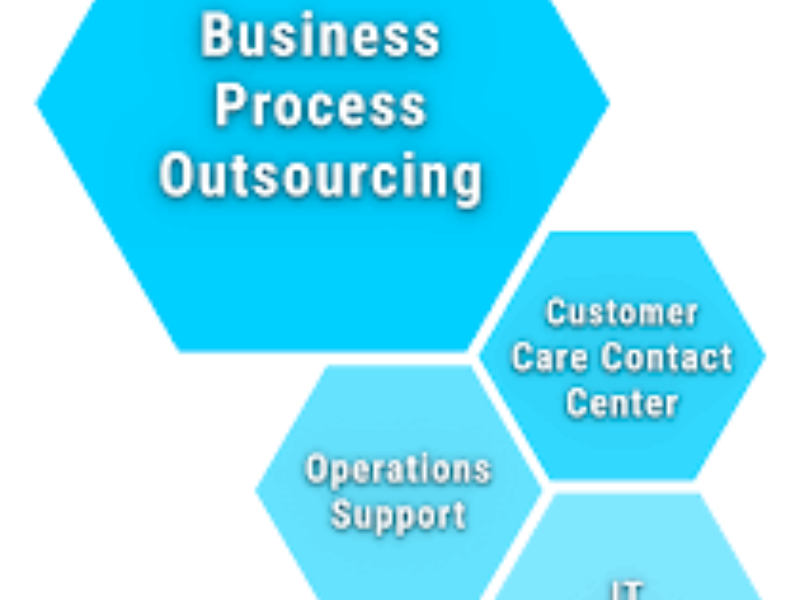
Finance and Accounting Outsourcing
Common finance services include bookkeeping, payroll, accounts payable, and accounts receivable.
益处
- Higher accuracy and compliance.
- Better cash flow visibility.
- Faster month-end closing.
例如
A services firm outsources payroll and reporting, cutting errors and gaining real-time financial insights.
Human Resources and Recruitment Outsourcing
HR BPO covers administrative and talent-related tasks.
Typical services
- Payroll and benefits administration.
- Compliance and employee records.
- Recruitment and onboarding.
Why it works
- Access to trained HR specialists.
- Faster hiring cycles.
- Reduced compliance risk.
Customer Support and Contact Center Services
Customer service BPO delivers multichannel support at scale.
Key features
- Phone, chat, email, and social media coverage.
- 24/7 operations.
- AI chatbots (software that answers routine questions automatically).
迷你箱子
A fintech company uses outsourced support with AI routing to improve first-response time by 50%.
Operations and Back-Office Outsourcing
Back-office BPO handles high-volume administrative work.
Common tasks
- Data entry and validation.
- Document management.
- Order processing.
结果
- Faster turnaround.
- Lower error rates.
- Predictable costs.
Procurement and Supply Chain Outsourcing
Procurement BPO focuses on sourcing and vendor coordination.
- Purchase order management.
- Vendor communication.
- Demand forecasting.
How Business Process Outsourcing Services Improve Efficiency and Reduce Costs

Standardization and Process Optimization
BPO providers rely on structured frameworks.
Optimization steps
- Document processes.
- Define KPIs.
- Automate repetitive steps.
- Review performance regularly.
This creates consistent output and continuous improvement.
Access to Specialized and Domain-Specific Talent
BPO unlocks talent that is hard to hire locally.
- Industry-trained professionals.
- Faster onboarding.
- Reduced learning curves.
Role of Automation and AI in Modern BPO
Automation enhances speed and accuracy.
- AI handles repetitive decisions.
- Analytics identify bottlenecks.
- Humans focus on exceptions.
Onshore vs Nearshore vs Offshore Business Process Outsourcing
Key Differences and Trade-Offs
| 模型 | 费用 | Time Zone | 控制 |
|---|---|---|---|
| 陆上 | 高 | Same | 高 |
| 近岸 | 中型 | Similar | 中型 |
| 海上 | 低 | Different | 托管 |
Which Outsourcing Model Is Right for Your Business?
- Choose onshore for sensitive or complex work.
- Choose offshore for cost efficiency.
- Use hybrid models for balance.
How to Choose the Right Business Process Outsourcing Provider

Evaluating Experience and Industry Expertise
Strong providers show proof.
Checklist
- Relevant case studies.
- Industry certifications.
- Independent recognition.
Providers like IBM Consulting and ARDEM are often cited for mature delivery models.
Data Security, Compliance, and Risk Management
Security is non-negotiable.
- ISO27001 compliance (information security standard).
- Clear data governance policies.
- 定期审计。.
Technology Capabilities and Scalability
Modern BPO relies on technology.
- Cloud platforms.
- Automation tools.
- Ability to scale quickly.
Pricing Transparency and Service Level Agreements
Clear pricing avoids surprises.
Common models
- Per transaction.
- Per FTE (full-time equivalent).
- Outcome-based.
SLAs should tie pricing to measurable results.
How to Get Started With Business Process Outsourcing Services

Identifying Processes Suitable for Outsourcing
Best candidates share common traits.
- Non-core to strategy.
- High volume.
- Rule-based.
Setting Clear Goals and Success Metrics
Define success early.
- Cost savings targets.
- Accuracy rates.
- Turnaround time.
Transitioning and Managing the Outsourcing Relationship
A phased approach reduces risk.
- Pilot first.
- Scale gradually.
- Maintain governance routines.
Common Misconceptions About Business Process Outsourcing
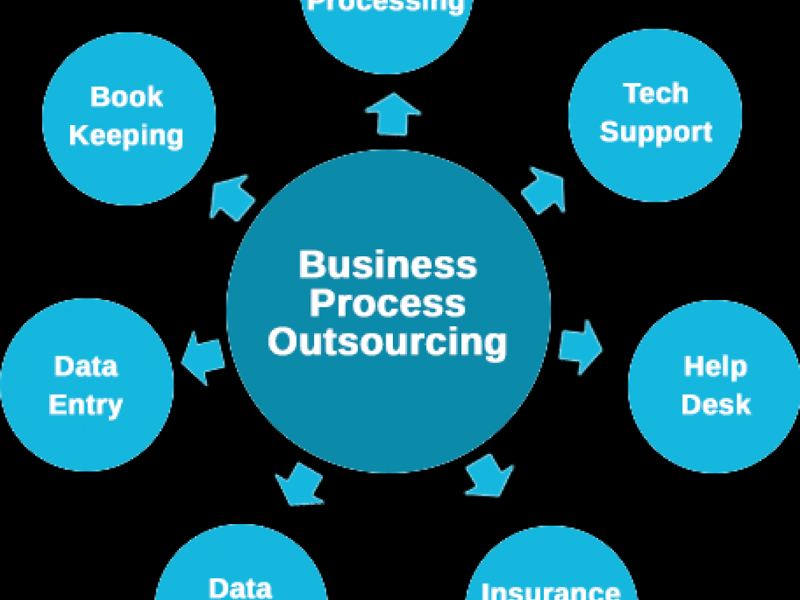
Outsourcing Means Losing Control
- Control shifts to metrics, not people.
- Reporting improves visibility.
BPO Is Only for Large Enterprises
- SMEs gain the most flexibility.
- Entry costs are lower than hiring.
Future Trends in Business Process Outsourcing Services

Increased Use of Automation and AI-Based Tools
- More straight-through processing.
- Smarter decision support.
Growing Demand From Small and Mid-Sized Businesses
- Faster adoption.
- More modular services.
Frequently Asked Questions About Business Process Outsourcing Services

What types of businesses benefit most from BPO?
Companies with repetitive processes, growth pressure, or limited internal resources benefit the most.
Is business process outsourcing secure?
Yes, when providers follow recognized security standards and clear governance models.
需要多长时间才能看到效果?
Most businesses see measurable improvements within three to six months.
Can I outsource only one process?
Yes. Many companies start with a single function and expand later.
结论

Business process outsourcing services are a practical way to reduce costs, improve efficiency, and scale without adding internal complexity. When done right, BPO becomes a long-term growth lever, not just a cost play.
If you want to grow faster with fewer operational headaches, start by evaluating which processes you can outsource today.
Frequently Asked Questions About Business Process Outsourcing Services

What is business process outsourcing (BPO)?
Business process outsourcing (BPO) refers to contracting non-core business tasks to third-party service providers. This helps companies reduce costs, optimize processes, and focus on strategic goals while leveraging external expertise and technology.
Why do businesses choose BPO services?
Businesses opt for BPO services to reduce operational costs, enhance efficiency, and access specialized expertise. It also allows flexibility in scaling operations and frees up time for core business activities, boosting overall productivity.
What types of business processes can be outsourced?
Commonly outsourced processes include finance and accounting, human resources, customer service, procurement, and back-office operations. These tasks are often repetitive, data-intensive, or require specific domain expertise.
How does BPO improve operational efficiency?
BPO improves efficiency by standardizing procedures, deploying AI-powered automation, and leveraging cloud-based solutions. This reduces manual errors, shortens process cycles, and enhances workflow accuracy.
Are BPO services scalable for growing businesses?
Yes, BPO services are highly scalable, allowing businesses to adjust resources to meet fluctuating demands, such as seasonal peaks or market expansions, without long-term commitments to in-house hires.
What should I consider when choosing a BPO provider?
Key factors include the provider’s industry expertise, data security compliance (e.g., ISO certifications), technology capabilities, track record of success, and transparency in pricing and SLAs (Service Level Agreements).
更多信息
- Accounts Receivable Collection Software Guide for Faster Payments
Agent Training Software Guide: Benefits, Use Cases, How to Choose - Autonomous Customer Service Guide to Benefits Use Cases



 English
  Russian
  Chinese