
Best VoIP Phone System: How to Choose the Right Provider for Your Business
选择 best voip phone system gets harder once your team moves beyond basic calling. Many businesses start with a simple setup, then run into hidden fees, weak reporting, support delays, or routing limitations as operations grow. The wrong cloud-based business phone system can look affordable at first but create friction later, especially when you add more users, expand internationally, or need better call visibility. This guide compares leading options by business fit, pricing logic, flexibility, support, and scale so you can shortlist faster. There is no one-size-fits-all winner. The right choice depends on how your team actually works, what your call volume looks like, and how much operational control you need.
What Makes the Best VoIP Phone System for Business?
"(《世界人权宣言》) best voip phone system is the one that best matches your team size, call volume, workflow complexity, support expectations, 集成 needs, pricing model, and growth plans. It is not simply the platform with the longest feature list.
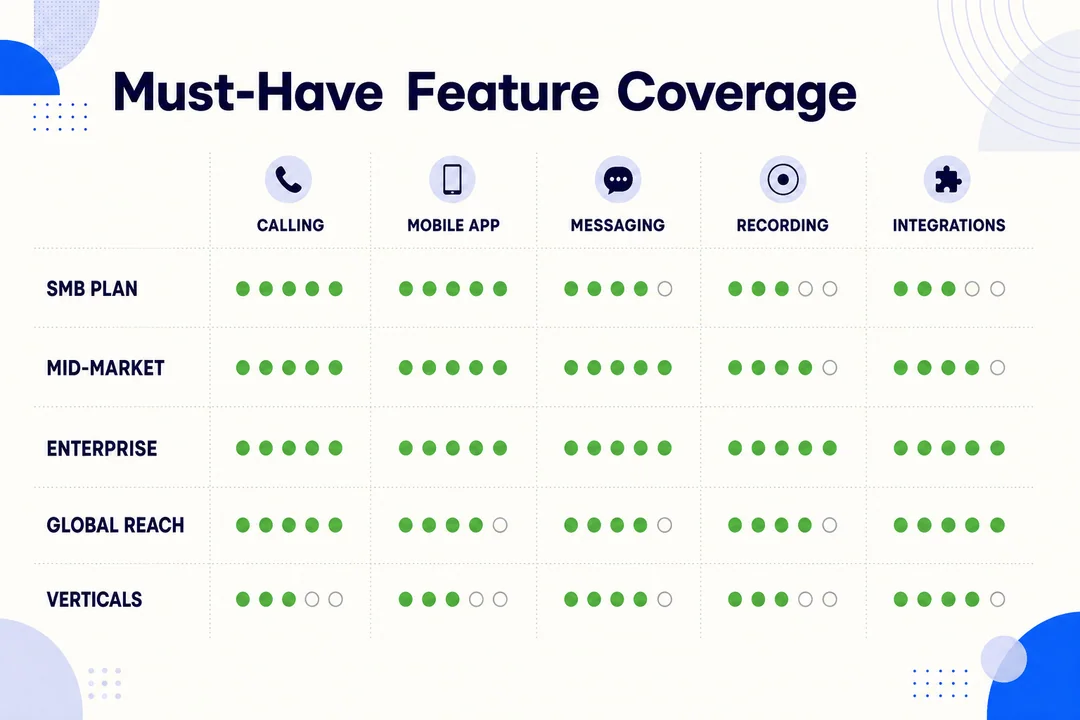
That distinction matters because many buyers overvalue feature count and undervalue operational fit. In practice, issues like support responsiveness, routing flexibility, reporting depth, and pricing transparency often matter more than whether a provider offers one extra collaboration tool.
The 7 Buying Criteria That Matter Most
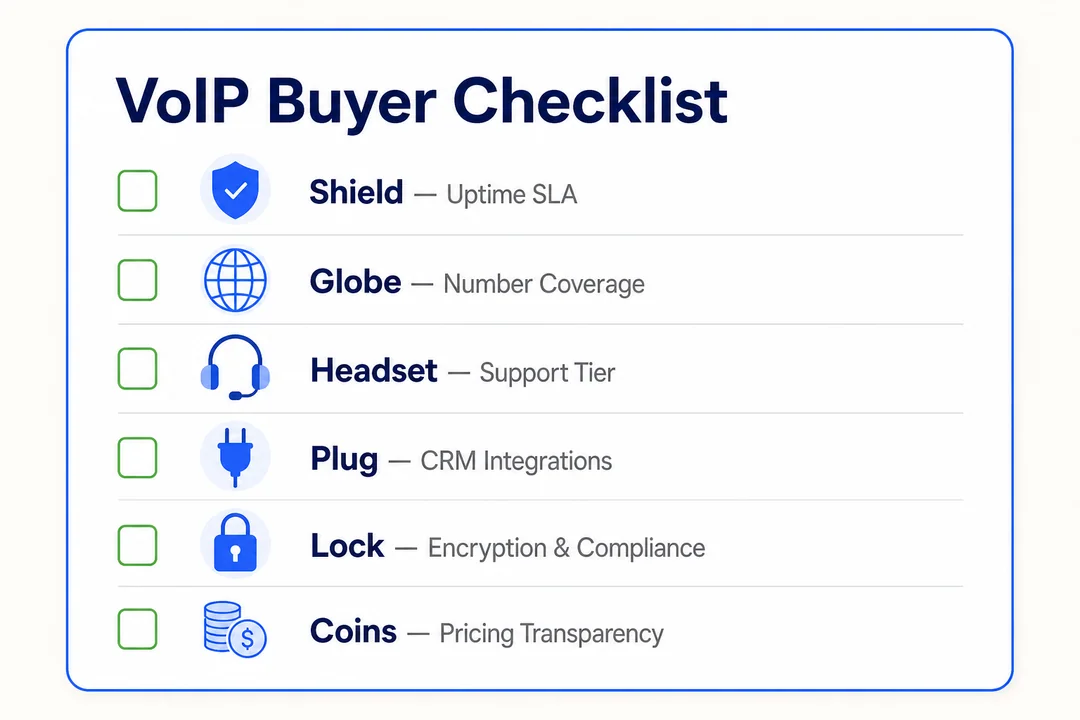
The best VoIP phone system for business usually comes down to seven factors:
-
Call quality and uptime consistency
强大 reliability reduces dropped calls, audio issues, and service disruption. If your sales or support teams depend on voice every day, inconsistent quality quickly becomes a revenue and customer experience problem. -
Ease of deployment and admin setup
一个好 cloud-based business phone system should be fast to launch and simple to manage. Complex setup increases IT workload and slows adoption across teams. -
Routing and IVR flexibility
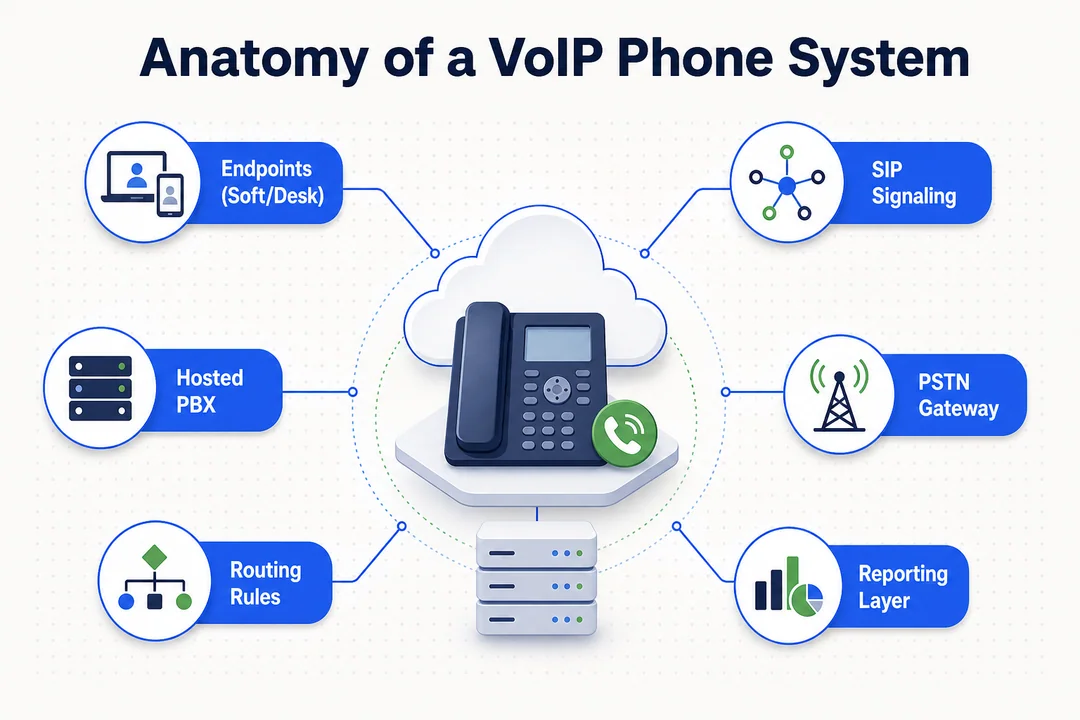
Routing logic decides how efficiently calls reach the right person. If your workflows vary by region, campaign, language, or team, basic hosted PBX logic may not be enough. -
Analytics and reporting depth
Reporting should help managers see answer rates, missed calls, agent activity, and campaign performance. Weak analytics make it harder to improve staffing, quality, and customer response times. -
CRM and API integration support
良好 集成 reduces manual work and keeps call activity connected to customer records. If your workflows depend on CRM, ticketing, or custom systems, this becomes a major buying factor. -
Support responsiveness and SLA clarity
SLA (Service Level Agreement – service performance and support commitments) matters when communication issues affect live operations. Buyers should know support hours, response expectations, and escalation paths before signing. -
Pricing transparency as teams scale
Headline pricing can be misleading. As teams grow, add-ons for recording, AI, analytics, international usage, or admin features can materially change total cost and long-term 扩展性.
No universal best provider exists. The strongest business VoIP choice is the one that reduces operational friction for your specific use case rather than the one with the loudest marketing.

Best VoIP Phone Systems at a Glance
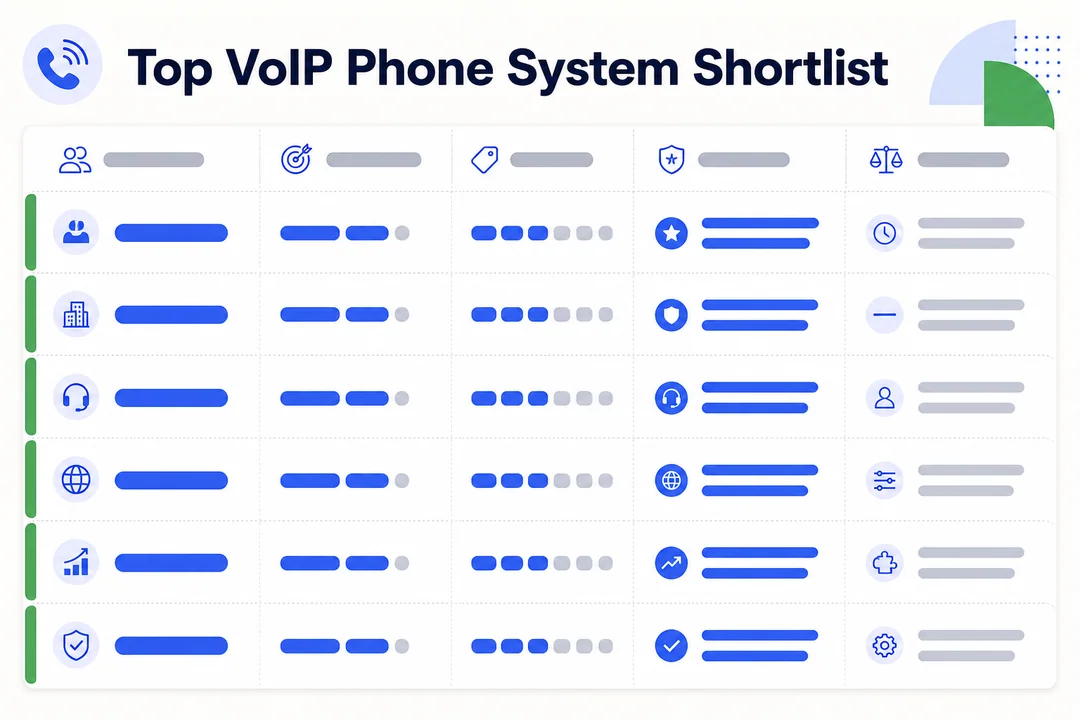
If you want to compare VoIP providers quickly, start with fit rather than popularity. A mainstream 商务电话系统 may work well for office collaboration, while a more flexible voip platform for business may be better for outbound campaigns, support teams, or cross-border operations.
| 提供商 | 最适合 | 定价模式 | 主要优势 | 当心 |
|---|---|---|---|---|
| RingCentral | All-in-one UCaaS teams | Per user | Broad voice, messaging, and meetings stack | Costs can rise with add-ons |
| Nextiva | SMBs wanting simplicity | Per user | Easy admin and solid support reputation | Limited workflow customization |
| 放大电话 | 以缩放为中心的公司 | Per user | Smooth rollout for collaboration-heavy teams | Advanced reporting may require higher tiers |
| 拨号盘 | AI-focused teams | Per user | Built-in AI features and modern UX | Feature access depends on plan tier |
| 8×8 | Global and distributed teams | Custom / quote-based | International calling and enterprise reach | Smaller teams may find it more than they need |
| Vonage | API-led customization | Per user + add-ons | Flexible communications APIs | Advanced setup may require more technical resources |
| GoTo 连接 | SMBs wanting straightforward setup | Per user | Simple call flow management | Less differentiated for advanced use cases |
| Flyfone | High-volume, fast-scaling call operations | 按使用量定价 | Fast deployment, flexible routing, AI QA, global routes | Less ideal for ultra-basic office-only setups |
The takeaway is straightforward: the best voip service provider depends on your operating model. Some teams need bundled UCaaS tools. Others need speed, route control, analytics, and cost flexibility. That is where the deeper use-case comparison becomes more useful than a generic top-10 list.

Top VoIP Providers Compared by Use Case
"(《世界人权宣言》) best voip phone system for small business is not always the best choice for global support teams, BPOs, or outbound-heavy operations. Provider fit depends on communication workflow, call volume, reporting needs, and how much customization your team requires.
RingCentral
最适合 Companies wanting a mature UCaaS stack with voice, messaging, and meetings in one platform.
Key strengths: RingCentral is a strong 商务电话系统 for organizations that want a broad feature set and a familiar all-in-one communications model. Its ecosystem is mature, and it is often a practical fit for businesses standardizing internal collaboration tools alongside calling.
小心 Breadth does not always equal efficiency. If your team mainly needs calling and operational routing, total cost can climb once extra features and add-ons are layered in.
Ideal business fit: Mid-sized teams that value bundled communications more than advanced call-operations flexibility.
Nextiva
最适合 Smaller and mid-sized businesses that want a practical, easy-to-manage phone setup.
Key strengths: Nextiva is often a contender for the best voip phone system for small business because it is accessible, straightforward to administer, and generally easier for non-technical teams to adopt. It works well when the priority is stable day-to-day communication without heavy customization.
小心 It is less compelling when routing complexity, campaign logic, or specialized telecom workflows become central requirements.
Ideal business fit: SMBs that need a dependable general-purpose 商务电话系统 with manageable admin overhead.
放大电话
最适合 Organizations already invested in the Zoom ecosystem.
Key strengths: 作为 cloud-based business phone system, Zoom Phone fits naturally into collaboration-led environments where meetings and internal communication are already centered on Zoom. Rollout is usually simple, and end-user adoption tends to be fast.
小心 Its value is strongest for collaboration-centric teams. For call-operations-heavy use cases, advanced reporting and workflow depth may not feel as differentiated, especially if higher plans are required.
Ideal business fit: Companies that prioritize user familiarity and already use Zoom heavily across departments.
拨号盘
最适合 Teams that want AI-powered cloud telephony without a heavy learning curve.
Key strengths: Dialpad stands out for AI features such as transcription, summaries, and real-time assistance. It also has a modern interface that many teams find easier to use than older communications platforms. For buyers exploring AI-assisted oversight, it is one of the more visible options.
小心 Buyers should verify exactly which AI and integration capabilities are included in the plan they are considering. Feature availability can vary meaningfully by tier.
Ideal business fit: Sales and support teams that want built-in AI support but do not need highly customized telecom architecture.

8×8
最适合 International operations and distributed teams.
Key strengths: 8×8 is often considered among enterprise-grade VoIP solutions for global teams because of its strong international positioning and broad communications footprint. Businesses with cross-border communication needs may find its global capabilities more relevant than domestic-only tools.
小心 Package clarity and pricing often require closer review. For smaller businesses, it may feel more enterprise-oriented than necessary.
Ideal business fit: Companies with significant international calling needs, distributed support teams, or global customer engagement requirements where 全球路由 matters.
Vonage
最适合 Businesses that value 应用程序接口 flexibility and custom communications workflows.
Key strengths: Vonage can be attractive when 集成 and programmability matter more than out-of-the-box simplicity. It is often a better fit for teams with technical capacity that want to connect calling into broader workflows or build custom communications experiences.
小心 Advanced functionality may require additional modules, development effort, or a more involved setup than some buyers expect from a standard SMB phone service.
Ideal business fit: Tech-enabled businesses that want communications flexibility and have internal resources to support customization.
GoTo 连接
最适合 Smaller teams that want a simple virtual office phone system.
Key strengths: GoTo Connect is practical for buyers who value easy setup, manageable admin, and straightforward call flow control. It is often easier to understand and deploy than more layered enterprise platforms.
小心 In a crowded market, it has fewer standout differentiators for organizations that need advanced analytics, deep routing control, or specialized workflows.
Ideal business fit: SMBs that prioritize simplicity over advanced flexibility.
Flyfone
最适合 BPOs, outbound teams, support operations, and fast-scaling businesses that need a flexible 云呼叫中心 rather than a basic office phone tool.
Key strengths: Flyfone is built for active call operations where launch speed, routing flexibility, and cost control matter. Businesses can deploy numbers, agent accounts, IVR flows, and outbound campaigns in under one hour. Its 按使用量计费 model avoids seat fees, which is useful for fluctuating teams or seasonal operations. The platform also includes 人工智能驱动的质量保证, real-time monitoring, and performance insights. Open APIs, SIP connectivity, omnichannel support, global routes with fallback logic, and architecture hosted on AWS Singapore make it especially relevant for APAC and global teams. It can scale from small teams to 500+ agents without a traditional infrastructure upgrade.
小心 Flyfone is better suited to team-based call operations than ultra-basic solo or office-only setups. Businesses that prioritize heavily bundled meetings and team chat suites may still prefer a larger UCaaS vendor.
Ideal business fit: High-volume support, outbound sales, collections, BPO, fintech, iGaming, or global operations that need a 全球商务电话系统 with speed, route control, and operational visibility.
If your shortlist includes teams with variable agent counts or campaign-driven calling, review Flyfone’s 云呼叫中心平台 和 现收现付定价 to see whether a fixed per-seat model still makes sense for your cost structure.
How to Choose the Right VoIP System for Your Business
To choose the right VoIP system, use this five-step checklist:
Match the Platform to Your Communication Model
Your communication pattern matters more than brand recognition.
- 入境支持: Prioritize queue management, IVR, call recording, and supervisor visibility.
- Outbound sales: Look for dialers, retry logic, reporting, and fast list-based workflows.
- Collections or campaign-driven operations: Route flexibility and volume handling matter more than bundled meetings.
- Hybrid communication: Teams handling both 入站支持 和 outbound sales need balanced routing, analytics, and admin controls.
- Global or multi-time-zone operations: Coverage, local numbers, route quality, and regional support become more important.
A platform that fits a 15-person office may not fit a 150-agent hybrid communication environment.
Check Pricing Beyond the Headline Plan
Many buyers underestimate real operating cost.
回顾:
- Per-user pricing vs 按使用量计费
- Charges for recording, analytics, AI features, and international calling
- CRM or API add-ons
- Onboarding, setup, support, or premium service fees
- Number costs, routing charges, and storage limits
Low entry pricing is only helpful if the platform still makes financial sense once your actual usage pattern is applied.
Evaluate Operational Readiness
Feature lists do not prove execution quality.
Validate:
- 部署 speed
- Admin simplicity
- CRM and 集成 readiness
- Route resilience and fallback logic
- Support hours and escalation access
- 服务级协议 明确性
- Reporting access for managers and supervisors
Many businesses choose on features first, then discover that slow support or weak route resilience creates the real friction.
Validate Growth Fit
Do not buy too small just to reduce monthly cost.
Check whether the provider can support:
- Current team size and future growth
- More complex permissions and reporting
- New departments, campaigns, or regions
- Seasonal hiring spikes
- Distributed or hybrid teams
- Higher call volume without operational disruption
强大 扩展性 is really about continuity. You want to avoid switching platforms the moment communication complexity increases.
Run a Demo or Pilot Before Committing
Before signing, test the platform in a real scenario.
Use a demo, trial, or pilot to verify:
- 通话质量
- Admin workflow
- 报告可用性
- Routing logic
- Integration readiness
- Support responsiveness
If possible, test with your own workflow rather than a generic vendor demo. That gives a far more accurate picture of operational fit.

If you are comparing platforms for high-volume voice operations, a guided review can reduce shortlist risk. You can book a product walkthrough with Flyfone to assess routing, AI QA, and deployment fit against your exact call workflow.
In-House PBX, Standard VoIP, or Flexible Cloud Call Center?
This is not only a vendor choice. It is also an operating-model choice. Before shortlisting brands, decide whether you need a traditional phone architecture, a standard cloud-based business phone system, or a more flexible call-operations platform.
| 标准 | 传统 PBX | Standard SMB VoIP | Flexible Cloud Call Center Platform |
|---|---|---|---|
| 部署速度 | 慢 | 快速 | 非常快 |
| 前期成本 | 高 | 低度至中度 | 低 |
| 路由灵活性 | 有限公司 | 中度 | 高 |
| Outbound scalability | 低度至中度 | 中度 | 高 |
| AI / QA / analytics | 最低限度 | Basic to moderate | 强大 |
| Global readiness | 有限公司 | 中度 | 强大 |
| 最适合 | Legacy office setups | General SMB calling | High-volume or multi-workflow operations |
在一个 cloud call center vs traditional PBX comparison, traditional PBX is increasingly restrictive for distributed teams. It requires more hardware, more setup, and less flexibility when workflows change.
A standard hosted PBX 或 virtual office phone system is enough for many SMBs. If your needs are mostly office calling, simple routing, and predictable per-user licensing, it can be the most practical option.
A flexible cloud call center platform becomes more attractive when routing complexity, outbound scale, analytics, AI QA, or cross-border operations matter. Not every business needs that level of operational control, but the ones that do usually feel the limits of standard SMB VoIP quickly.
When Flyfone Is the Better Fit Than Large VoIP Vendors
Flyfone is not the right answer for every buyer. It becomes the stronger option when operational flexibility matters more than broad UCaaS bundling.
If your team values fast launch speed, flexible routing, AI QA, global routes, open SIP and API access, responsive support, and 按使用量计费, Flyfone solves a different problem than many mainstream office-first VoIP suites. That difference matters for teams where communication is tied directly to sales throughput, support coverage, or campaign execution.
Larger vendors may still be a better fit for businesses that want tightly bundled meetings, chat, and office collaboration in one suite. They can also be sufficient for very simple office-only calling environments.
Best-Fit Business Profiles for Flyfone
Flyfone is a stronger fit for businesses with these conditions:
- Fluctuating team sizes where per-seat billing becomes inefficient
- Under-one-day launch needs for new campaigns, regions, or teams
- Outbound-heavy environments such as BPO, lead generation, collections, or sales that need a robust 自动拨号 workflow
- APAC or global support operations that need route flexibility
- Teams that require custom routing logic by campaign, market, or workflow
- Businesses where support responsiveness directly affects live operations
- Organizations seeking the best scalable business phone system with API integration for active call workflows rather than simple office telephony
This is where Flyfone’s AI-powered cloud telephony, 全球商务电话系统 capabilities, and pay-for-usage model can create a structural advantage rather than just another feature difference.
For teams that need deeper validation, review Flyfone’s SIP and API integrations, AI-powered QA, and deployment workflow before deciding whether a standard office VoIP tool is enough.
结论
"(《世界人权宣言》) best voip phone system is the one that fits your business model, not the one with the longest feature sheet. SMBs with straightforward office needs may prefer simplicity, predictable per-user pricing, and familiar UCaaS tools. But high-volume, outbound, or global teams should weigh routing flexibility, analytics, support responsiveness, and pricing structure much more heavily.
That is also where the line between standard VoIP and a 云呼叫中心 becomes important. If your operation depends on fast deployment, scalable agent workflows, route control, and usage-based efficiency, Flyfone deserves a place on the shortlist. If your needs are simpler, a mainstream office-first provider may be enough.
If you are narrowing down vendors and want a lower-risk decision, 预约专属演示 with the Flyfone team to compare your workflow, volume, and growth plans against the right platform model.
常见问题
What is the best VoIP phone system for business?
The “best” VoIP system is the one that aligns with your specific communication workflow, team size, and growth requirements. Rather than focusing on feature count, the best systems balance call quality, routing flexibility, transparent usage-based pricing, and reliable technical support.
How do I choose the right VoIP provider for my company?
Follow these five steps: assess your call volume (inbound vs. outbound), analyze pricing transparency beyond headline fees, evaluate technical deployment speed, confirm CRM/API integration compatibility, and ensure the provider’s scalability matches your long-term growth plans.
Is a cloud call center better than a standard business VoIP system?
Yes, for complex operations. While standard VoIP suits general office communication, a cloud call center platform provides advanced routing, real-time AI analytics, and multi-route failover, making it superior for high-volume support, sales teams, and global operations.
Does Flyfone offer better features than large enterprise VoIP vendors?
Flyfone excels in deployment speed, routing flexibility, and AI-driven quality assurance without seat-based fees. While large vendors offer broad UCaaS bundles (chat/video), Flyfone is often the better fit for businesses prioritizing call operation efficiency, performance analytics, and rapid scaling.
What are the main cost factors to watch for in VoIP pricing?
Look beyond the per-user fee. Hidden costs often include charges for advanced analytics, call recording storage, international calling routes, custom API integrations, and premium support tiers. Always verify if the pricing model scales linearly with your team size or shifts based on usage.
Do I need an IT team to deploy a cloud-based phone system?
Most modern cloud-based systems, including Flyfone, require no dedicated engineering team. You can typically activate global phone numbers, set up auto-dialers, and configure IVR flows in under an hour via a web-based dashboard with zero hardware requirements.