Call Center Outsourcing United States

Call Center Outsourcing United States: Guide and Top Providers

目录

Key Takeaways Call Center Outsourcing United States


– Call Center Outsourcing United States helps businesses scale customer support without building in-house teams.
– US-based, nearshore, and offshore models each fit different budgets, risk levels, and customer expectations.
– Most US companies now use hybrid approaches—combining BPO providers with cloud call center platforms for flexibility.
– Cloud platforms like Flyfone offer an alternative for businesses that want to manage their own agents with pay-per-minute pricing.
– Choosing the right approach depends on service quality, control needs, scalability, and compliance requirements.

Introduction to Call Center Outsourcing in the United States

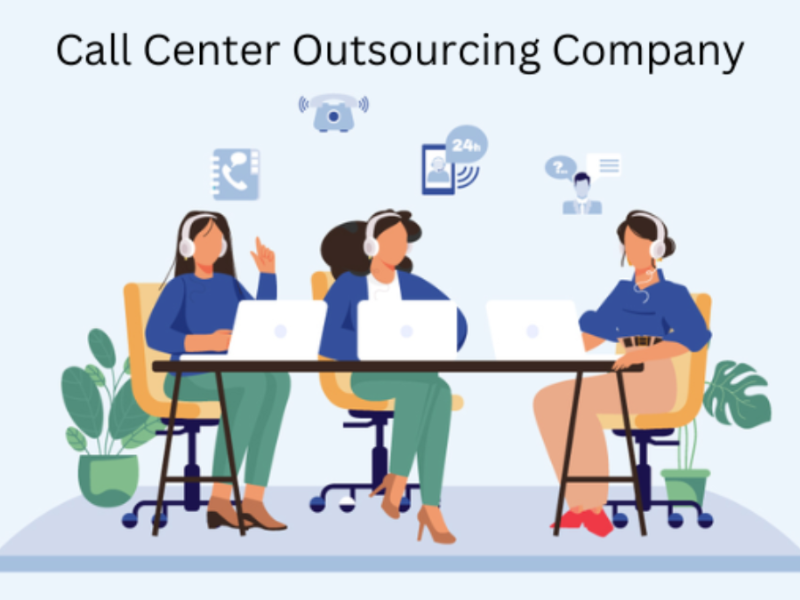
Call center outsourcing has become a core operating model for US businesses that need reliable customer support without the overhead of running an internal call center.

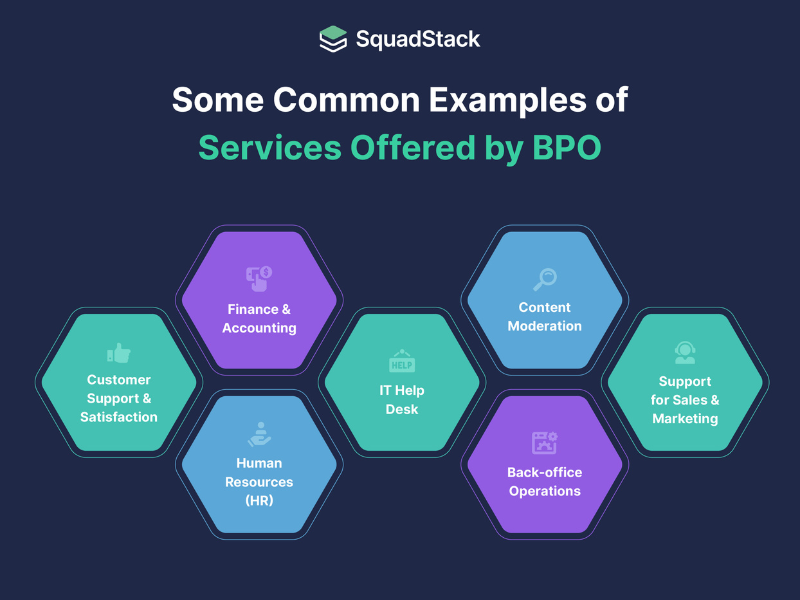
Instead of hiring, training, and managing agents internally, companies partner with specialized providers that handle phone-based customer interactions. These providers operate as part of a broader BPO ecosystem (Business Process Outsourcing: delegating non-core operations to external specialists).

备注: Some businesses also explore cloud call center platforms (like Flyfone) that enable self-managed operations with pay-per-minute pricing—offering more control than traditional outsourcing but less overhead than on-premise systems. This guide focuses primarily on traditional BPO outsourcing, though we’ll note where cloud platforms may be relevant alternatives.

In the US market, outsourcing is closely tied to customer experience management. Customers expect fast response times, knowledgeable agents, and availability beyond standard business hours. Meeting those expectations in-house is costly and slow to scale.

Common industries using call center outsourcing in the United States include:

  • Healthcare and insurance, where compliance and data security matter.
  • Financial services, which require trained agents and strict QA.
  • Ecommerce and retail, especially during seasonal spikes.
  • SaaS and technology companies with growing support volume.

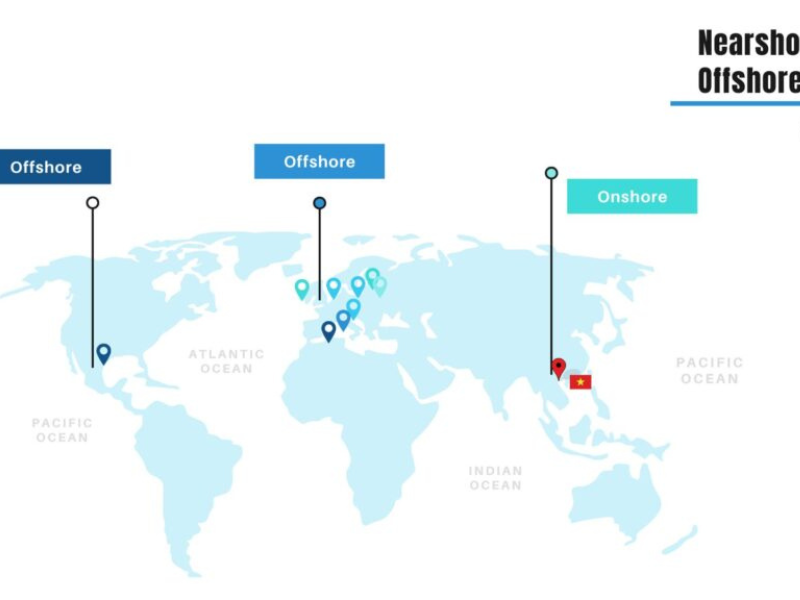
US businesses typically choose between three delivery models:

  • Onshore (US-based) for quality, accent neutrality, and compliance.
  • 近岸 for cost savings with time zone alignment.
  • 海上 for large-scale, cost-efficient operations.

From hands-on experience, most mid-market US companies no longer choose just one model. Hybrid setups are common. For example, US-based agents handle escalations and sensitive calls, while nearshore or offshore teams manage high-volume inquiries.


What Is Call Center Outsourcing?

Call center outsourcing is the practice of hiring an external company to manage inbound or outbound phone support for your business.

Instead of running your own call center, you rely on trained agents who represent your brand, follow your scripts, and work inside your systems.

Common models include:

  • Fully outsourced, where the provider handles all call center operations.
  • Hybrid, where internal teams work alongside outsourced agents.

Most providers integrate directly with your CRM (Customer Relationship Management system: software that stores customer data and interaction history), allowing agents to work as if they were internal staff.


Why US Businesses Outsource Call Center Operations

Outsourcing is not just about saving money. For US companies, it is about flexibility, speed, and consistent service quality.

1. Cost efficiency and predictable spending

Running an in-house call center requires upfront investment in hiring, training, facilities, and technology. Outsourcing shifts this to operating expenses, making costs easier to forecast and control.

This is especially valuable for startups and growing businesses that need support now, not six months later.

Alternative approach: Cloud call center platforms eliminate facility costs while letting you manage your own agents. For example, Flyfone charges $0.02/minute with no per-seat fees—useful for businesses with unpredictable call volume. However, you’ll still need to handle hiring and training internally.

This is especially valuable for startups and growing businesses that need support now, not six months later.

2. Scalability during demand spikes

Call volume rarely stays flat. Ecommerce brands see spikes during holidays. SaaS companies experience growth after product launches.

Outsourced providers can add or reduce agents quickly—typically with 2-4 weeks notice for significant changes. You pay for capacity when you need it, not year-round.

For faster scaling: Some businesses use cloud platforms for same-day agent provisioning. Flyfone, for instance, lets you add agent accounts and phone numbers in under an hour—useful for unpredictable surges (like crypto exchanges during trading spikes). The trade-off: you need your own hiring pipeline.

3. Access to trained agents and QA programs

Reputable providers invest heavily in agent training, call monitoring, and quality assurance. This includes:

  • Call scoring and coaching
  • Script optimization
  • Performance reporting tied to KPIs

Building this internally takes years—one of the strongest arguments for outsourcing.

Self-managed approach: Businesses that prefer to train their own agents can use cloud platforms with built-in QA tools. Flyfone includes AI-powered call scoring and sentiment analysis, reducing manual QA work. However, you’re still responsible for agent coaching and ongoing training programs.

4. Extended hours and multilingual support

Many US businesses now combine approaches:

  • Core operations on cloud platforms (self-managed agents for control and cost efficiency)
  • Outsourced agents for overflow (nights, weekends, seasonal spikes)

Example scenario:

An ecommerce company runs 30-50 agents year-round on Flyfone ($0.02/min usage-based pricing). During Black Friday, they add 100 outsourced agents from a nearshore provider for 6 weeks.

好处

  • Control over core team (hiring, training, quality)
  • Flexible capacity for predictable spikes
  • 30-40% lower annual costs vs 100% outsourced model

This model works best for businesses with:

  • Internal hiring capacity or staffing partnerships
  • Predictable seasonal patterns
  • 50+ agents baseline (makes platform ROI worthwhile)

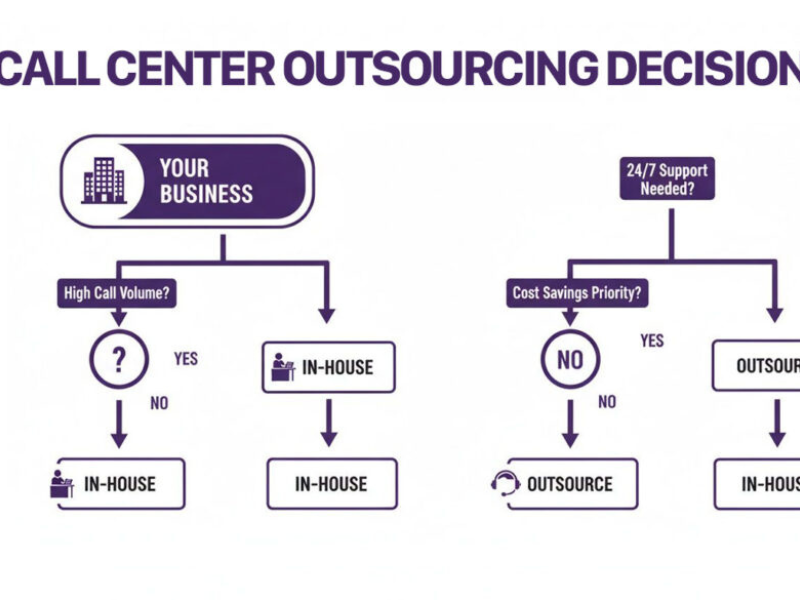
5. Clear decision rule

Outsourcing usually makes sense when:

  • Call volume is unpredictable.
  • Support is not your core differentiator.
  • Speed to scale matters more than full control.


Types of Call Center Outsourcing for US Companies

US-Based Call Center Outsourcing

US-based call centers operate entirely within the United States.

优点

  • Native accents and cultural alignment.
  • Easier compliance with HIPAA and PCI-DSS (payment data security standards).
  • Higher customer trust in regulated industries.

缺点

  • 劳动力成本增加。.
  • Limited ability to scale quickly at low cost.

Best fit

  • Healthcare, finance, and insurance.
  • Premium brands prioritizing CX over cost.


Nearshore Call Centers Serving the United States

Nearshore providers typically operate in Mexico and Central America.

优点

  • Lower costs than US-based centers.
  • Strong English and Spanish bilingual support.
  • Time zone alignment with US teams.

缺点

  • Slight cultural gaps compared to US-based agents.
  • Smaller talent pools than offshore hubs.

Best fit

  • US companies needing bilingual support.
  • Mid-market businesses balancing cost and quality.


Offshore Call Center Outsourcing

Offshore call centers are commonly located in the Philippines and India.

优点

  • Significant cost savings.
  • Large, scalable agent pools.
  • 24/7 coverage by default.

缺点

  • Accent and cultural differences.
  • Stronger management needed for QA and data security.

Best fit

  • High-volume support.
  • Price-sensitive operations with clear scripts.

Best practices include strict QA, regular audits, and limited access to sensitive data.


Top Call Center Outsourcing Companies Serving the United States (2026)

Teleperformance

概述: One of the largest global call center outsourcing providers with strong US presence.

优点

  • Massive global scale and multilingual coverage.
  • Deep experience in regulated industries.

缺点

  • Less flexible for small or low-volume programs.

最适合

  • Large enterprises with steady call volumes.

Key services

  • Inbound support, outbound sales, compliance-heavy programs.

Concentrix

概述: A global provider known for integrating customer support with digital CX solutions.

优点

  • Strong technology and reporting.
  • Industry-specific programs.

缺点

  • Better suited for mid-size to large organizations.

最适合

  • Companies needing voice plus digital channels.

Key services

  • Customer care, technical support, CX management.

Foundever

概述: A global outsourcing provider with broad industry coverage.

优点

  • Multilingual agents.
  • Flexible delivery models.

缺点

  • Not ideal for very small teams.

最适合

  • Growing companies with global customers.

Key services

  • Customer care, sales support, retention.

Alorica

概述: A high-volume call center outsourcing specialist with US and offshore delivery.

优点

  • Strong operational processes.
  • Scalable voice programs.

缺点

  • Less customization for niche use cases.

最适合

  • High-volume customer service programs.

Key services

  • Customer care, technical support.

Helpware

概述: A modern outsourcing company focused on tailored support teams.

优点

  • Flexible team structures.
  • Strong focus on CX and training.

缺点

  • Smaller scale than legacy providers.

最适合

  • SMBs and mid-market companies.

Key services

  • Customer support, help desk, order processing.

TTEC

概述: A long-established provider with strong analytics and CX focus.

优点

  • Data-driven approach.
  • Global delivery options.

缺点

  • Higher cost for premium programs.

最适合

  • Brands prioritizing CX metrics.

Key services

  • Customer support, sales, CX consulting.

Five Star Call Centers

概述: A US-based provider with a strong compliance reputation.

优点

  • US-only agent model.
  • Custom call handling.

缺点

  • Limited international coverage.

最适合

  • Healthcare and regulated industries.

Key services

  • Inbound support, healthcare call handling.

TeleDirect

概述: A flexible provider offering pay-as-you-go models.

优点

  • No long-term commitments.
  • Customizable scripts.

缺点

  • Costs can rise during peak periods.

最适合

  • Small businesses with fluctuating volume.

Key services

  • Inbound calls, appointment scheduling.

Working Solutions

概述: A network of US-based remote agents.

优点

  • Highly flexible scaling.
  • Strong seasonal support.

缺点

  • Higher pricing than offshore options.

最适合

  • Retail and ecommerce brands.

Key services

  • Customer service, sales support.

LiveOps

概述: A cloud-based, distributed call center platform with US agents.

优点

  • Fast onboarding.
  • Minimal long-term contracts.

缺点

  • Less structured than traditional centers.

最适合

  • Startups and unpredictable call volumes.

Key services

  • Inbound and outbound voice support.

How to Choose a Call Center Outsourcing Provider in the US

Service Quality and Agent Training

Look for clear QA processes, call monitoring, and reporting. Always request a pilot program and sample performance reports before committing.

Industry Expertise and Use Cases

Providers with experience in your industry ramp faster and make fewer mistakes. This matters most in healthcare, finance, and SaaS.

Scalability and Flexibility

Ask how quickly agents can be added or removed. Pay-as-you-go pricing is valuable for seasonal businesses.

Technology and CRM Integration

Your provider should integrate smoothly with tools like Salesforce or Zendesk and support omnichannel workflows.

Compliance, Security, and Data Privacy

Verify HIPAA and PCI-DSS readiness. Red flags include vague security policies or limited audit access.

US-Based vs Offshore Call Center Outsourcing

系数 US-Based BPO Offshore BPO Cloud Platform (Self-Managed)
费用 High ($25-65/hr/agent) Low ($8-20/hr/agent) Medium (pay-per-minute + agent salaries)
Deployment 4-8 weeks 4-8 weeks <1 hour (Flyfone)
Control Provider-managed Provider-managed Full control (you hire/train)
可扩展性 2-4 weeks notice 2-4 weeks notice Same-day agent provisioning
合规性 Strong Requires oversight You control data/processes
最适合 Regulated, premium CX High-volume, cost-sensitive Unpredictable volume, need control

请注意: Cloud platforms like Flyfone are most cost-effective for businesses with 20+ agents and internal hiring capacity. Below 20 agents, traditional outsourcing or smaller BPO providers may be simpler.

Common Call Center Services Offered

  • Inbound customer support
  • Technical assistance
  • Outbound sales and follow-ups
  • Appointment scheduling
  • After-hours and overflow support

Key Takeaways for US Businesses

Call center outsourcing in the United States is no longer a one-size-fits-all decision. The best results come from matching your business needs to the right delivery model and provider.

Traditional BPO outsourcing works best when:

  • You want fully hands-off operations
  • You have steady, predictable call volume
  • You need multilingual support across many countries

Cloud call center platforms (like Flyfone) work best when:

  • You want control over hiring and training
  • Your call volume is unpredictable or seasonal
  • You need same-day scaling without long-term contracts

Many businesses use hybrid models—combining self-managed operations with outsourced overflow for flexibility.

下一步:

  1. Define your priorities: control vs hands-off? Predictable vs variable volume?
  2. Calculate total costs: per-seat BPO vs pay-per-minute cloud platforms
  3. Request pilots from 2-3 providers (or test a cloud platform free trial)
  4. Start small, then scale what works

The right solution should feel like an extension of your team—whether that’s a BPO partner or a flexible cloud platform you manage yourself.

常见问题

How much does call center outsourcing cost in the US?

Costs vary widely. US-based services are the most expensive, while offshore options offer significant savings depending on volume and complexity.

Is offshore call center outsourcing risky?

It can be if poorly managed. Clear scripts, QA processes, and data controls reduce most risks.

What is the best call center outsourcing option for small businesses?

Flexible providers with pay-as-you-go pricing or US-based virtual agent models work best.

Outsourcing your call center can reduce costs, improve coverage, and help you scale faster. Start by defining your priorities, then request quotes and pilot programs from providers that match your needs.

常见问题

What is call center outsourcing?

Call center outsourcing is when a business hires an external provider to manage customer support tasks like inbound and outbound calls, tech support, or sales inquiries. This approach helps reduce operational costs while scaling and improving service quality.

Why do US businesses prefer call center outsourcing?

US businesses choose outsourcing to save costs, access trained agents, and offer 24/7 multilingual support. It also provides scalability during seasonal peaks and eliminates the need for in-house equipment and staffing.

How much does call center outsourcing cost in the United States?

Costs vary based on provider, location, and services offered. US-based centers typically charge $25-$65 per hour per agent, while nearshore or offshore options can start as low as $8-$20 per hour.

What is the difference between US-based, nearshore, and offshore call center outsourcing?

US-based outsourcing prioritizes quality, compliance, and cultural alignment but costs more. Nearshore centers, located in countries like Mexico, offer cost savings while aligning with US time zones. Offshore centers, such as those in the Philippines or India, provide the lowest costs but may face issues like accents or data security.

Which call center outsourcing companies are best for US businesses?

Top US call center outsourcing providers include Teleperformance, Concentrix, Foundever, Alorica, and Helpware. Each offers unique strengths, such as multilingual support, scalability, and industry-specific expertise.

How can I assess the quality of a call center outsourcing provider?

Evaluate providers based on agent training, QA processes, compliance standards, customer reviews, and service flexibility. Request pilot programs and performance reports before signing a contract.

Are there compliance risks with outsourcing call centers?

Yes, compliance risks exist with sensitive data handling in regulated industries like healthcare or banking. Look for providers with certifications like HIPAA, PCI-DSS, or SOC 2 to ensure secure operations.

更多信息

Call Center Outsourcing Singapore: Costs and Compliance

Gaming Outbound Call Strategies to Boost SMB Sales

目录

索引