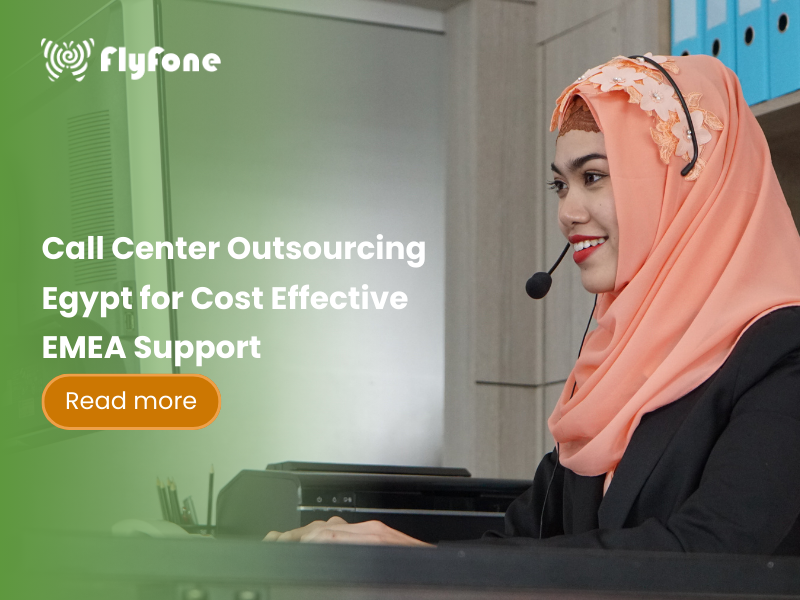
Call Center Outsourcing Egypt for Cost Effective EMEA Support


Customer service costs jumped 23% across US and EU markets in 2024. Labor shortages, wage inflation, and 24/7 coverage demands are squeezing margins. Your in-house team is either overworked or too expensive to scale.

Traditional offshoring to Asia delivers low costs but creates problems: 12-hour time zone gaps, cultural mismatches, and compliance headaches. Nearshore options in Eastern Europe cost nearly as much as keeping operations domestic.

Egypt has emerged as a practical middle ground—40-60% cost savings with EMEA time zone alignment, multilingual capability, and mature BPO infrastructure. But outsourcing isn’t a silver bullet. Success requires clear scope definition, quality governance, and realistic expectations about what you can delegate versus what stays in-house.

This guide examines Egypt outsourcing from an operations perspective: real cost structures including hidden expenses, language and talent realities, quality control challenges, and decision criteria for whether this model fits your business.

主要收获

  • Egypt offers significant cost savings while maintaining solid customer experience for EMEA markets.
  • Multilingual talent and time zone alignment make Egypt practical for regional and hybrid support models.
  • Success depends on quality control, cultural alignment, and choosing the right outsourcing partner.

Why Businesses Are Considering Call Center Outsourcing in Egypt

Customer experience costs are rising globally. Labor shortages, wage inflation, and 24/7 coverage expectations strain in-house teams.

Many companies look beyond traditional onshore or nearshore models. Asia delivers low cost but creates time zone and cultural gaps. Eastern Europe offers quality but at higher rates and limited scale.

Egypt sits in the middle.

From real projects, mid-size US and EU firms often use Egypt as a regional hub for EMEA. They keep strategy and escalation in-house while outsourcing Tier 1–2 customer interactions.

Key drivers behind this shift:

  • Cost pressure: Egypt typically delivers 40–60% savings versus US or Western Europe.
  • Language needs: One location can cover Arabic and major European languages.
  • Operational flexibility: Faster hiring and easier scaling during peaks.

Egypt’s BPO sector has matured. Providers now support omnichannel setups, CRM systems (customer relationship management software), and performance-based contracts.


What Makes Egypt a Cost-Effective Destination

Labor and Operational Cost Advantages

The main savings come from labor, but not only from wages.

Typical cost advantages include:

  • Lower agent salaries compared to US and EU markets.
  • Reduced facility and real estate costs.
  • Shorter recruitment cycles, lowering hiring spend.

Estimated cost comparison (illustrative):

Location Average Monthly Cost per Agent
US $4,000–5,000
Western Europe $3,500–4,500
Egypt $1,500–2,000

This gap allows reinvestment into training, QA, and better coverage hours.


Business Efficiency Gains

Cost reduction matters, but operational efficiency often drives more value. Egypt’s mature BPO market enables scaling that’s difficult with in-house teams.

Rapid capacity adjustments: Need 20 additional agents for a Black Friday campaign? Egyptian providers can recruit, train, and deploy in 2-3 weeks versus 6-8 weeks for European hires. After the peak ends, you scale back down without layoffs or severance costs.

24/7 coverage without shift premiums: In Western markets, overnight and weekend shifts require 15-30% wage premiums plus benefits. Egypt’s lower baseline costs make round-the-clock coverage economically viable—critical for travel companies handling disruptions or e-commerce brands serving global customers.

Management bandwidth: Instead of juggling recruitment, training, attrition, and facility management, you focus on strategy and escalations. The BPO handles tactical operations—agent scheduling, sick leave coverage, technology maintenance, facilities.

真实的例子 A European OTA (online travel agency) uses an Egyptian partner for baseline Tier 1 support. During winter weather disruptions affecting hundreds of flights, they temporarily doubled capacity from 40 to 80 agents within one week. After the crisis passed, they scaled back to baseline without restructuring costs.

Talent Quality and Multilingual Capabilities

Skilled Workforce and Education Background

Egypt produces a large number of university graduates every year, with strong focus on ICT and business services.

What this means in practice:

  • Agents adapt quickly to CRM tools and ticketing systems.
  • Omnichannel support (voice, chat, email, social) is standard.
  • Technical Tier 1–2 support is realistic for SaaS and platforms.

Government-backed programs under the Digital Egypt Strategy focus on job-ready skills, not just theory.


Multilingual Customer Support for EMEA Markets

Egypt’s workforce supports the full EMEA language spectrum from a single location:

  • Arabic (native): Essential for Middle East operations—particularly industries like online gaming platforms, crypto exchanges, and fintech serving Gulf markets where Arabic-speaking support is non-negotiable
  • English (business fluent): Standard across all agents, typically UK/European English rather than American
  • French: Strong availability, especially for North Africa and Francophone European markets
  • German, Italian, Spanish: Available but require higher pay bands (15-25% premium over Arabic/English agents)

Consolidation advantage: A UK e-commerce company serving UAE, France, and Germany can use one Egyptian partner instead of contracting three separate outsourcers (Philippines for English, Morocco for French, Poland for German). This means one contract, unified SLAs, consistent quality standards, and consolidated reporting.

Cultural nuance matters more than most realize. Egyptian agents understand both European business formality and Middle Eastern communication styles. When a German customer calls about a delayed shipment, they expect structured, process-focused resolution with clear timelines. When a UAE customer calls about the same issue, they expect relationship-first conversation—small talk before business, indirect problem discussion. Egyptian agents code-switch between these approaches naturally.

Realistic limitation: While Egypt offers multilingual breadth, accent neutrality varies by language. For US-market operations requiring neutral American English, Philippines or nearshore Latin America may perform better. Egypt excels specifically for EMEA-focused businesses where European and Middle Eastern accents are expected and accepted.

Strategic Location and Time Zone Advantages

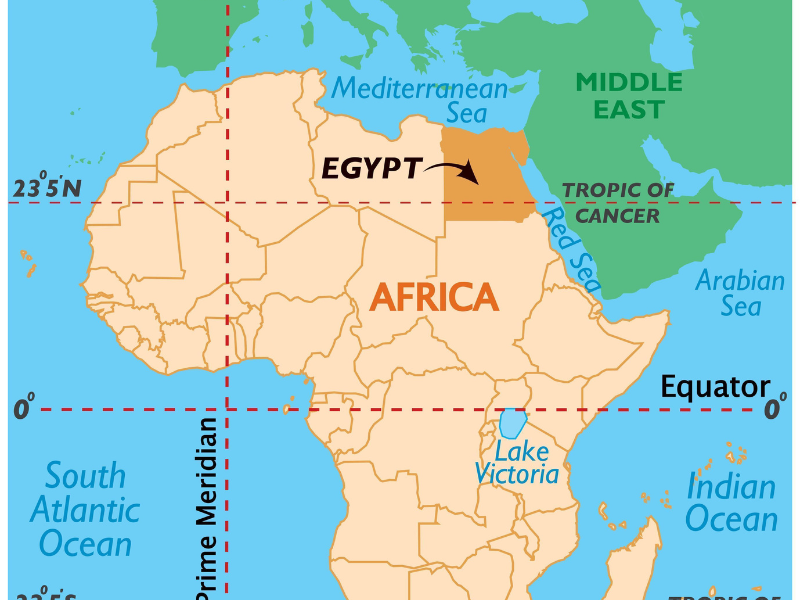
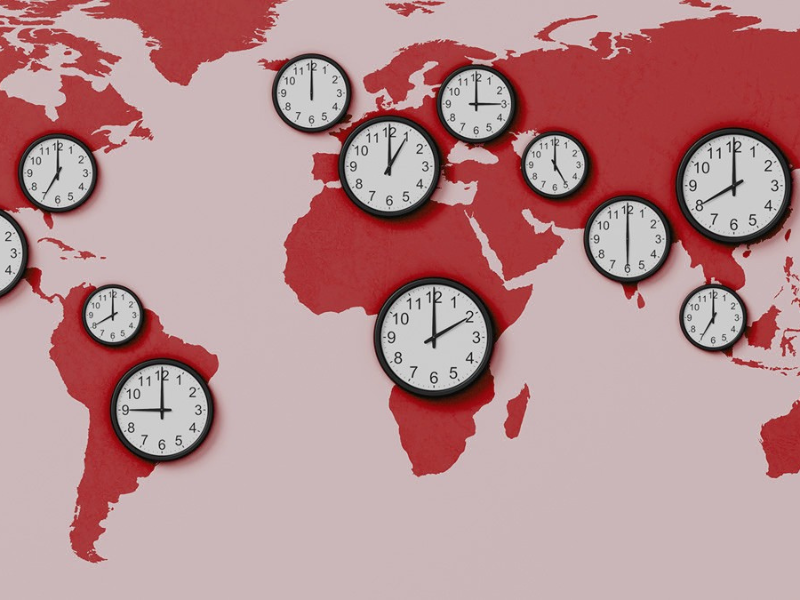
Egypt overlaps with Europe and aligns well with Middle East business hours.

Practical benefits:

  • Real-time collaboration with EU teams.
  • Extended coverage without night shifts.
  • Faster escalation handling.


Industries That Benefit Most

E-commerce and Retail

Online retailers face dramatic volume swings—Black Friday, Cyber Monday, holiday peaks—that strain in-house teams. Egypt provides elastic capacity for predictable seasonal surges.

常见用例

  • Order status and tracking inquiries: Tier 1 support handling ‘Where is my order?’ calls across multiple languages (Arabic for Middle East customers, French for North Africa, German/Italian for European expansion)
  • Returns and refunds processing: Agents trained on your policies, equipped to check order systems, initiate returns, process refunds within authority limits
  • Pre-sale product questions: Sizing guidance, product comparisons, availability checks—particularly valuable for markets where customers prefer voice over chat

Peak season strategy: A European fashion retailer maintains 20 baseline agents year-round in Egypt. Six weeks before Black Friday, they ramp to 60 agents. The BPO recruits and trains the additional 40 agents specifically for the campaign. After January returns season ends, operations scale back to baseline without layoffs or restructuring costs.

ROI consideration: For retailers with predictable seasonal patterns and multi-month peaks (Q4 holiday shopping, summer travel gear), Egypt’s model works well. For flash sales or unpredictable viral growth (TikTok-driven product surges), the 2-3 week ramp-up time may be too slow.

Travel and Hospitality

Travel and hospitality companies face two challenges: seasonal volume fluctuations (summer vacation peaks, winter holiday travel) and unpredictable disruption spikes (weather delays, strikes, cancellations).

Egypt supports both patterns:

Seasonal baseline support: Hotels and tour operators scale agent count to match booking seasons without maintaining expensive year-round teams. A Mediterranean resort chain might run 15 agents November-March (low season) and 40 agents June-September (peak season).

Disruption response: When a snowstorm grounds 200 flights, call volume spikes 10x overnight. Airlines need surge capacity immediately—not next week. Egyptian BPOs with existing travel clients can often redeploy agents from other accounts temporarily (4-8 hours) while recruiting additional capacity (2-3 days).

Language advantage for European travel: Customers calling from Italy expect Italian support. French travelers expect French. Egypt can staff multilingual teams handling EU markets from one location—more efficient than separate country-specific teams.

Critical limitation: Disruption response isn’t instant. If you need capacity within 1 hour (major airline crisis, system outage affecting thousands), Egypt’s 2-3 day ramp-up may not suffice. Some companies maintain small in-house teams for emergency surge and use Egypt for predictable seasonal volume.

Technology and SaaS

Egypt works well for Tier 1–2 support, onboarding questions, and basic troubleshooting.

Complex engineering escalations usually remain in-house.

Financial Services and Fintech

Egypt supports compliance-aware customer service.

Agents handle account inquiries and issue routing, while regulated advice stays with licensed teams.

Key Challenges and Considerations

Quality Control and Performance Management

Outsourcing fails without structure.

Key KPIs to track:

KPI 为何重要
CSAT (customer satisfaction score) Measures experience quality
FCR (first contact resolution) Shows efficiency
AHT (average handle time) Controls cost and flow

实用技巧:

  • Use call recordings and weekly QA reviews.
  • Set clear escalation rules.
  • Tie incentives to CX metrics, not volume alone.

Cultural and Communication Alignment

Accent and tone matter.

Mitigation steps:

  • Script localization, not direct translation.
  • Feedback loops between in-house and outsourced teams.
  • Regular calibration sessions.

Choosing the Right Outsourcing Partner

Shortlist vendors that show:

  • Proven EMEA experience.
  • Transparent pricing models.
  • Strong training and QA processes.

How to Decide If Egypt Is Right for Your Business

Businesses Best Suited

Egypt fits companies that:

  • Serve EMEA customers.
  • Need multilingual coverage.
  • Want cost control without extreme offshoring.

When Egypt May Not Be the Best Fit

It may not work if you require:

  • Highly specialized technical or legal advisory support.
  • Heavy onshore brand presence.

Simple Evaluation Checklist

  • Clear service scope defined.
  • KPIs and reporting agreed upfront.
  • Pilot phase planned.

Supporting Infrastructure and Government Role

Government Incentives and Policy Support

The Ministry of Communications and Information Technology actively supports BPO growth through incentives and training programs.

Major Outsourcing Hubs

Key locations include:

  • Cairo
  • Smart Village
  • Alexandria

Technology Adoption

Providers increasingly use AI tools (automation for routing and analytics) to improve efficiency and consistency.

FAQ

How much can businesses save by outsourcing call centers to Egypt?

Most companies save between 40% and 60% compared to US or Western Europe operations, depending on scope and language mix.

What languages are commonly supported?

Arabic and English are standard, with strong availability of French, German, Italian, and Spanish.

Is Egypt suitable for GDPR-compliant support?

Yes. Many providers operate under GDPR-aligned processes for EMEA clients, with clear data handling protocols.

Can Egyptian call centers support omnichannel CX?

Yes. Voice, email, chat, and social support are common, integrated through CRM platforms.

How does Egypt compare to Eastern Europe?

Egypt is generally cheaper and more scalable, while Eastern Europe may offer closer cultural alignment for niche European markets.

结论

Egypt outsourcing delivers measurable value—40-60% cost savings, multilingual capability, EMEA alignment—but only when it matches your operational profile. The companies that succeed treat it as a strategic partnership requiring active governance, not a “set it and forget it” solution.
Before engaging Egyptian BPOs, answer these questions honestly:

Do you have stable volume (50+ agents) or predictable seasonal patterns?
Are your customers primarily in EMEA markets?
Can you invest in quality governance (weekly QA reviews, monthly business reviews)?
Do you have clear scope definition (Tier 1-2 support with escalation paths)?
Can you commit to 12-month contracts and minimum agent counts?

If you answered yes to most of these, Egypt deserves serious evaluation.
下一步:

Define your scope precisely: Languages needed, support hours, volume ranges, KPIs, escalation criteria
Research 3-5 Egyptian BPOs: Look for providers with proven EMEA experience in your industry (e-commerce, travel, technology)
Request proposals: Include detailed requirements, ask for client references, visit facilities if possible
Negotiate pilot periods: 3-6 month trials with clear success metrics before full-scale commitment
Build governance structure: QA processes, reporting cadence, escalation protocols—define these upfront, not after problems emerge

If Egypt doesn’t fit your profile—unpredictable volume, small scale, US-focused, technical complexity—explore alternatives: nearshore outsourcing (Latin America for US, Eastern Europe for EU), remote employee models, or cloud call center platforms that eliminate traditional outsourcing entirely.
The goal isn’t choosing the “best” outsourcing destination in the abstract. It’s choosing the model that aligns with your specific operational needs, customer expectations, and growth trajectory.

更多信息 

索引