
What Is an Inbound Contact Center?
Every minute a customer waits for help, the chance of losing them grows. Inbound contact centers exist to prevent exactly that — by routing the right request to the right agent, fast, regardless of which channel the customer chose to reach out through.
These interactions come through multiple channels, not just phone calls. The goal is simple: respond quickly, solve problems, and deliver consistent customer support wherever customers choose to reach out.
Key Takeaways
- An inbound contact center handles customer-initiated inquiries across multiple communication channels.
- It focuses on support, issue resolution, and service-related requests rather than sales outreach.
- Unlike inbound call centers, it supports phone, email, chat, and social messaging in one system.
- Intelligent routing connects customers to the right agent faster.
- Businesses use inbound contact centers to improve customer satisfaction and retention.
The inbound call center outsourcing market is projected to reach USD 93.8 billion by 2030 at a 9% CAGR, while Gartner forecasts that agentic AI will resolve 80% of routine service issues by 2030. Inbound contact centers are at the center of that shift — unifying voice, digital, and AI channels into a single agent workspace.
Inbound Contact Center Definition
An inbound contact center is a centralized operation designed to manage incoming customer communications across multiple channels, including phone calls, emails, live chat, and social messaging. Customers initiate contact when they need help, information, or issue resolution, and trained agents respond using shared systems and processes.
“Incoming communications” refers to any request started by the customer, not the business. This can range from a billing question to technical support or an account update. The defining trait is that demand is reactive, driven by customer needs in real time.
“Multiple channels” means customers are not limited to calling. They can email, chat on a website, message through social platforms, or switch channels without starting over. Most inbound contact centers connect these channels into a single workspace so agents see the full conversation history.
“Support and issue resolution” is the primary purpose. Inbound contact centers sit at the core of customer service operations. They help businesses solve problems efficiently, maintain service quality, and protect the overall customer experience.
Key characteristics include:
- Centralized handling of inbound requests.
- Agents supported by shared customer data and interaction history.
- A primary goal of fast, accurate resolution rather than outbound engagement.

What Does an Inbound Contact Center Handle?
Common Types of Customer Inquiries
Inbound contact centers manage issues that customers actively seek help with. These requests usually require clarity, accuracy, and timely responses.
Common inquiries include:
- Product or technical support, such as troubleshooting a device or software issue.
- Billing and payment questions, including invoices, refunds, or failed transactions.
- Account management, like password resets or profile updates.
- Order-related requests, including order status, returns, or delivery issues.
- Service changes, such as upgrades, renewals, or cancellations.
Communication Channels Used
Inbound contact centers operate across multiple channels to meet customers where they are.
This is called omnichannel communication — meaning a customer can start a conversation via live chat, follow up by email, and call in later, with agents seeing the full history every time. The alternative, multichannel without unified data, forces customers to repeat themselves and agents to work blind.
Common channels include:
- Phone calls
- Live chat
- Social media messaging
- Web contact forms
By unifying these channels, agents can see context from previous interactions. Customers do not need to repeat themselves, and issues get resolved faster.

How Does an Inbound Contact Center Work?
Step 1: Customer Initiates Contact
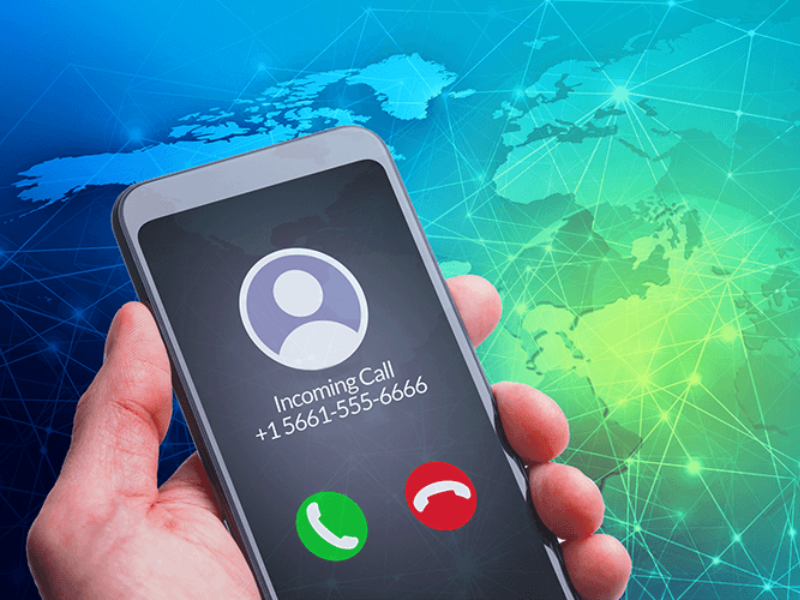
The process starts when a customer reaches out for help. They choose the channel that feels most convenient, such as calling support or starting a live chat. The contact center reacts to this request, rather than initiating it.
Step 2: IVR and Intelligent Routing
IVR (Interactive Voice Response) is an automated system that greets callers and understands their needs through menu options or spoken requests. Intelligent routing then directs the request to the right agent or team.
This step typically includes:
- Identifying the reason for contact.
- Matching the request to agent skills.
- Reducing transfers and wait time.
The result is faster access to the right support.
Step 3: Agent Interaction and Resolution
Once connected, the agent handles the interaction using a unified screen that shows customer history. This is often called a screen pop (customer information appearing automatically when the interaction starts).
Agents aim for first call resolution (FCR) — solving the issue completely in one interaction without a callback or transfer. Industry benchmark for FCR is 70-75%. Operations that fall below this typically see higher churn and repeat contact costs, which directly impacts support team capacity. For example, a customer calls about a billing error, and the agent reviews past invoices, fixes the issue, and confirms the correction before ending the call.
This step defines the customer’s perception of service quality.
Step 4: Tracking and Continuous Improvement
Inbound contact centers track performance to improve service over time. Metrics help teams spot issues and adjust staffing or workflows.
Commonly tracked metrics include:
- Customer satisfaction (CSAT) to measure perceived service quality.
- Service level to assess accessibility and responsiveness.
- Average speed of answer to monitor wait times.
These insights guide ongoing improvements without overcomplicating operations.
Inbound Contact Center vs Inbound Call Center
| Aspect | Inbound Contact Center | Inbound Call Center |
|---|---|---|
| Channels | Phone, email, chat, social | Phone only |
| Customer view | Unified across channels | Call-based |
| Flexibility | High | Limited |
| Use case | Modern customer support | Voice-focused support |
The key insight is scope. An inbound call center handles calls. An inbound contact center handles conversations, regardless of channel. Businesses with diverse customer touchpoints typically choose the latter.
Inbound vs Outbound Contact Center
Inbound contact centers respond to customer-initiated requests. Their primary goal is problem-solving and support.
Outbound contact centers initiate contact. They focus on proactive communication, such as lead generation, surveys, or follow-ups.
A practical rule:
- Use inbound for service and support needs.
- Use outbound for growth, research, or proactive outreach.
Some businesses combine both, but the intent behind each model remains distinct.
Key Benefits of an Inbound Contact Center
- Improved customer satisfaction: When customers reach the right agent on the first try — without repeating their issue — resolution time drops significantly. Contact centers with intelligent routing report 20-30% shorter handle times compared to manual queue management.
- Consistent service quality across all communication channels.
- Higher retention by resolving issues before they escalate.
- Better agent efficiency: Agents using unified screens with full interaction history spend less time searching for context and more time solving problems. For a 50-agent BPO handling 3,000 daily contacts, even a 2-minute reduction per interaction saves 100 agent-hours per day.
- Real-time visibility into service performance and demand trends.
Technologies Commonly Used in Inbound Contact Centers
- Cloud-based platforms, allowing flexibility and scalability.
- CRM systems, providing customer history and context.
- AI-powered chatbots, handling simple requests 24/7.
- Workforce management tools, supporting scheduling and staffing.
These tools support agents without adding unnecessary complexity.
When Should a Business Use an Inbound Contact Center?
A business should use an inbound contact center when customer inquiries are frequent and service quality matters.
This model fits well for:
- Ecommerce companies handling orders, returns, and delivery issues.
- SaaS businesses providing ongoing customer support.
- Subscription services managing renewals and account changes.
- Growing organizations that need scalable, consistent support.
If customer experience is a priority, an inbound contact center becomes a foundational capability.
Top 10 Inbound Contact Center Software in 2026
Most buyers evaluating an inbound contact center aren’t just looking for a definition — they need to shortlist a vendor. Below is a neutral comparison of the platforms most frequently evaluated for inbound operations in 2026.
- Genesys Cloud CX — enterprise omnichannel routing, predictive engagement, workforce management. Best for 500+ agent operations.
- NICE CXone — AI-native routing (Enlighten), robust WFM and QM. Strong in regulated industries (finance, healthcare).
- Five9 — cloud contact center with deep CRM integrations (Salesforce, ServiceNow). Solid for midmarket to enterprise.
- Talkdesk — AI-first platform with industry-specific experience clouds (retail, healthcare, financial services).
- Zendesk Contact Center — tight ticketing integration; best when your service team already runs on Zendesk.
- Vonage Contact Center — strong Salesforce-native option; conversational AI across voice and digital.
- RingCentral Contact Center — unified with RingEX UCaaS; good fit for companies consolidating phone and contact center.
- CloudTalk — SMB/midmarket-friendly; fast deployment, global numbers in 160+ countries.
- BigContacts — CRM-combined inbound center for small teams; simple pricing.
- FlyFone — cloud inbound contact center with intelligent routing, omnichannel inbox, and no long-term contract. Deploys in under 60 minutes for teams of 5–500 agents.
Pricing ranges from $65/agent/month (CloudTalk, BigContacts) to $200+/agent/month (Genesys, NICE CXone) depending on tier and AI add-ons. Always validate against your own routing rules, integration stack, and compliance requirements (HIPAA, PCI-DSS, SOC 2).
Frequently Asked Questions
What is the main purpose of an inbound contact center?
Its purpose is to handle customer-initiated inquiries and resolve issues efficiently across multiple channels — phone, email, chat, and social messaging — using a unified agent workspace.
Is an inbound contact center the same as customer support?
Inbound contact centers are a structured form of customer support, designed to manage volume, channels, and performance at scale.
How is inbound different from outbound contact centers?
Inbound responds to customer requests, while outbound initiates contact for sales, surveys, or proactive engagement.
Do inbound contact centers use AI?
Yes. Most modern platforms use AI for intelligent routing, chatbots, agent assist, and post-call analytics — Gartner expects agentic AI to resolve 80% of routine service issues by 2030.
Understanding what an inbound contact center is helps you evaluate whether your business is set up to meet customer expectations. When service demands grow, the platform you choose to manage inbound communications directly affects resolution speed, agent efficiency, and customer retention.
If you’re evaluating options for your team – whether you’re scaling a BPO operation or launching support for a digital product – explore how FlyFone deploys a full inbound contact center in under 60 minutes. Request a free trial.
Read more
- What Is Interactive Voice Response (IVR)? A Complete Guide
- Automatic Call Distribution Software: Guide, Benefits & Routing
- Cloud Contact Center: Definition, Benefits & How It Works
- Top 10 Enterprise Contact Center Solutions for 2026
More in Operations & CX Optimization
View all →
Customer Experience Transformation: Framework and Steps
A telecom customer calls support about a billing error. They explain the problem to the IVR system. Then to the first agent. Then get transferred and explain again. Then escalated—and explain a third time. Forty minutes later, they're exhausted and the problem still isn't solved. This is what broken customer experience looks like. And it's costing you customers. Customer experience…

Web Caller Meaning: JavaScript caller, Calling Tools or Portals
“Web caller” is one of those phrases where the search results and the searcher are frequently talking about different things. Three unrelated audiences use it: developers hitting an error on the legacy JavaScript caller property, buyers evaluating browser-based calling software, and people trying to reach a specific portal or training page whose exact name they cannot recall. That fragmentation is…
Customer Experience Strategy: How to Build One That Works
Customer experience is getting worse, not better. Forrester's 2025 Global CX Index found that 21% of brands declined in CX quality while only 6% improved — and in the US, 25% declined against 7% that improved, the second consecutive year of that pattern. Most of those brands were not neglecting customer experience. They were working on it without a strategy…

 English
  Russian
  Chinese