
If you manage or evaluate health insurance BPO operations, claims denials are not just a back-office issue. They drain revenue, strain provider networks, and erode member trust. This guide helps you understand why health insurance BPO claims denial happens and how insurers systematically reduce it through practical, proven strategies—without unnecessary technical depth.
Key Points You’ll Learn
If you manage or evaluate health insurance BPO operations, claims denials are not just a back-office issue. They drain revenue, strain provider networks, and erode member trust.
- Claims denials are largely preventable when errors are caught early in BPO workflows.
- Denials create revenue leakage, not just delayed payments.
- Eligibility, coding, and prior authorization issues drive most avoidable denials.
- Strong BPO partners focus on front-end prevention, not reactive appeals.
- Clear metrics, training, and communication directly reduce denial rates.
What Is a Health Insurance Claims Denial?
A health insurance claims denial occurs when an insurer reviews a submitted claim and decides not to pay it, fully or partially, based on policy rules.
This decision happens during claims adjudication (the process where insurers evaluate a claim for coverage, medical necessity, and payment).
Claim rejection vs. claim denial:
- Claim rejection: The claim is blocked before processing due to formatting or data errors and can usually be corrected and resubmitted quickly.
- Claim denial: The claim is processed and reviewed but not paid due to eligibility, coverage, authorization, or documentation issues.
Health insurance BPO services support insurers across claims intake, verification, coding checks, and denial resolution as part of the broader revenue cycle.
Why Claims Denials Are a Major Problem for Health Insurers

Financial Impact and Revenue Leakage
Claims denials quietly erode revenue. Every denied claim triggers rework, follow-ups, and appeals—often costing more than the claim’s margin.
Here’s how revenue leakage happens in practice:
- A claim is denied due to an avoidable error.
- Staff time is spent reviewing, correcting, and resubmitting.
- Appeals stretch payment timelines from weeks to months.
- Some claims are never recovered.
Industry benchmarks show that 30–50% of claims denials are preventable—stemming from eligibility errors, missing authorizations, and administrative mistakes that could be caught upstream. For a mid-size insurer processing 50,000 claims per month, even a 5% denial rate means 2,500 claims requiring rework, appeals, or write-offs.
Common financial impacts include:
- Reworking a denied claim costs 2–3x more than processing a clean claim on first pass. What starts as a $15 processing cost can balloon to $40–60 when you add staff time for review, appeals preparation, and payer follow-up.
- Slower cash flow and unpredictable collections.
- Resources diverted from improvement initiatives to cleanup work.
| Claim Status | Outcome | Cost Impact |
|---|---|---|
| Paid on first pass | Immediate reimbursement | Lowest |
| Denied and appealed | Delayed payment | High |
| Denied and unrecovered | Lost revenue | Highest |
Strain on Provider Relationships
Denials don’t stay contained within finance teams. Providers feel the impact first.
When reimbursements are delayed or denied:
- Providers face cash flow pressure.
- Billing teams spend more time disputing claims.
- Trust in the payer weakens.
Over time, repeated denials lead to more disputes, longer resolution cycles, and growing frustration. In competitive markets, providers may deprioritize payers known for complex or inconsistent claims outcomes.
In BPO-supported workflows, responsibility gaps are a common amplifier. When authorization tracking sits with one team, claims submission with another, and denial resolution with a third—without real-time communication between them—delays compound. A provider waiting 45 days for a denial resolution that should take 10 days represents both a relationship risk and a contractual compliance issue. BPOs that centralize communication workflows and automate status updates significantly reduce this friction.
Member Experience and Trust Issues
For members, a denied claim feels personal. They see bills they didn’t expect and explanations they don’t understand.
Common experience breakdowns include:
- Confusing Explanation of Benefits (EOB).
- Long wait times for answers or resolutions.
- Unclear next steps for appeals.
These issues directly affect member experience and can influence satisfaction measures like CAHPS, HEDIS, and CMS star ratings at a high level.
The long-term risk is simple: members lose confidence and become more likely to switch plans.
Common Causes of Claims Denials in Health Insurance BPO Workflows

Eligibility and Coverage Verification Errors
Eligibility errors are one of the most frequent and avoidable causes of denials.
Common issues include:
- Coverage inactive at the time of service.
- Mismatch between patient data and payer records.
- Services not covered under the specific plan.
- Failure to detect coordination of benefits issues.
These errors happen when verification relies on outdated data or manual checks. Real-time eligibility verification tools reduce this risk by confirming coverage before claims are submitted.
Example: A claim denied because coverage ended one day before the service—an issue that could have been flagged upfront.
Coding and Documentation Issues
Coding accuracy directly affects reimbursement. Even small inconsistencies can trigger denials.
At a high level:
- ICD-10 defines diagnoses.
- CPT codes describe procedures.
- HCPCS codes cover supplies and services.
Denials often occur when codes don’t align with clinical documentation or payer rules.
| Error Type | Typical Denial Reason |
|---|---|
| Code mismatch | Service not supported |
| Missing documentation | Medical necessity not met |
| Outdated code | Invalid submission |
Strong BPOs invest in ongoing training and quality assurance to keep coding aligned with payer requirements.
Missing or Incorrect Prior Authorization
Many services require prior authorization before care is delivered. When this step is missed or incomplete, denial is likely.
Challenges in BPO workflows include:
- Payer-specific authorization rules.
- Inconsistent tracking across teams.
- Breakdowns during handoffs.
A common scenario: care is provided, but authorization was never confirmed, resulting in a denial that is difficult to overturn.
Administrative and Data Entry Errors
Simple administrative mistakes still cause denials at scale.
Examples include:
- Incorrect member ID numbers.
- Wrong provider identifiers.
- Duplicate claim submissions.
Standardized workflows and data validation checks significantly reduce these issues, especially across distributed BPO teams.
How Health Insurance BPOs Help Reduce Claims Denials

Front-End Error Prevention
The most effective denial strategy starts before a claim is submitted.
Key prevention measures include:
- Eligibility verification at intake.
- Claims scrubbing to catch missing or invalid data.
- Automated checks against payer-specific rules.
Manual processes rely on memory and experience. Automated workflows apply rules consistently and at scale.
Dedicated Denial Management and Resolution Teams
Specialized denial teams outperform fragmented approaches.
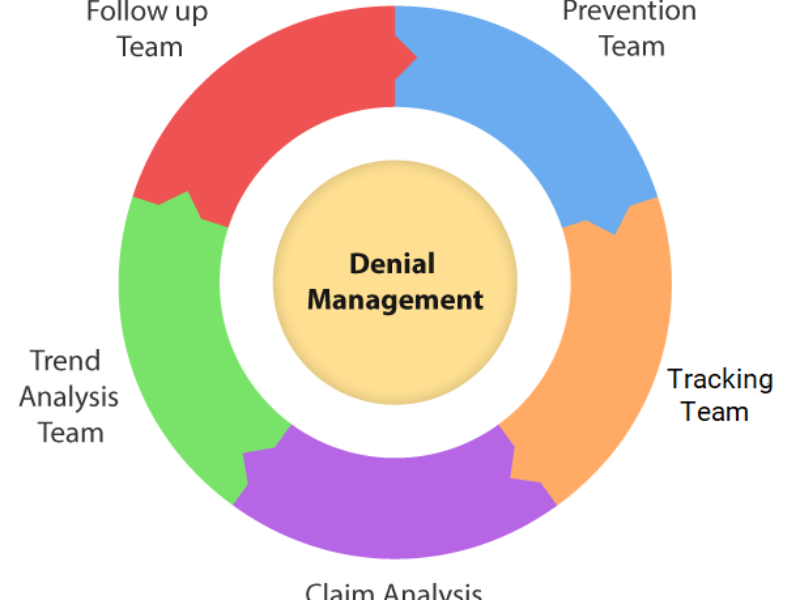
A typical workflow:
- Denial reason identified and categorized.
- Root cause reviewed.
- Appeal prepared with supporting documentation.
- Follow-up tracked to resolution.
This structure shortens appeal cycles and improves recovery rates.
Automation, Analytics, and Predictive Insights
Modern BPOs use analytics to spot patterns, not just fix individual claims.
Benefits include:
- Identifying repeat denial causes by payer or service.
- Flagging high-risk claims before submission.
- Preventing the same error from recurring.
This shifts denial management from reactive to preventive.
Compliance and Quality Control Support
Outsourcing does not increase compliance risk when managed correctly.
Effective BPOs provide:
- HIPAA-aligned handling of sensitive data.
- CMS-guided audits and quality checks.
- Regular reviews to ensure policy adherence.
Quality assurance acts as a safeguard, not a bottleneck.
Best Practices to Minimize Claims Denials in BPO-Supported Operations
Standardize Eligibility and Authorization Processes
Clear, repeatable workflows reduce variability and errors.
- Align insurer and BPO teams on a single process.
- Apply automation where it adds consistency.
- Document payer-specific rules clearly.
Improve Communication With Providers and Members
This is where communication infrastructure becomes critical. BPO operations handling high-volume claims communication—outbound status updates, inbound dispute resolution, authorization follow-ups—need a call center platform that deploys instantly and scales with claim volume. Flyfone’s cloud call center supports health insurance BPOs with pay-per-minute pricing (no seat minimums), real-time call monitoring, and AI-powered QA automation to ensure every agent interaction meets compliance standards.
Clarity prevents disputes.
- Give providers clear billing and authorization guidance.
- Offer proactive claim status updates to members.
- Reduce confusion before it becomes escalation.
Track Denial Trends and Performance Metrics
What gets measured gets fixed.
- Monitor denial rates by payer and claim type.
- Review trends regularly, not annually.
- Use insights to drive continuous improvement.
Invest in Training and Knowledge Updates
Policies change. Teams must keep up.
- Regular coding and policy refreshers.
- Alignment between onshore and offshore teams.
- Training tied directly to denial outcomes.
Key Takeaways for Health Insurance Leaders
- Claims denials are primarily a prevention problem, not an appeal problem.
- Eligibility, coding, and authorization drive most avoidable denials.
- Health insurance BPOs add value when they stop errors upstream.
- Strong metrics, training, and communication protect revenue and trust.
Now is the right time to reassess whether your BPO strategy is designed to reduce denials—or simply manage them after the damage is done.
FAQs

What are the most common reasons for health insurance claim denials?
Eligibility issues, coding errors, missing prior authorization, and administrative mistakes are the most frequent causes.
How do BPOs help reduce claims denials?
They prevent front-end errors, manage denials centrally, apply analytics, and enforce compliance and quality controls.
Are claim denials and rejections the same?
No. Rejections happen before processing due to formatting or data issues, while denials occur after review.
Does outsourcing increase compliance risk?
Not when the BPO follows HIPAA requirements, CMS guidelines, and structured quality audits.
Read more:
BPO Market Trends UK: Growth, AI, and Outsourcing Shifts
BPO Transition Checklist: Step-by-Step Guide to Risk-Free Go-Live



 English
  Russian
  Chinese