
This guide helps healthcare leaders create a clear, compliant healthcare BPO RFP. You get a practical template, section-by-section guidance, and evaluation criteria to compare vendors confidently, reduce risk, and protect patient data.
Key Takeaways at a Glance
- This template gives healthcare leaders a structured, repeatable process for requesting, comparing, and selecting BPO vendors — with built-in compliance safeguards at every stage. Clear scope and SLA definitions eliminate the ambiguity that leads to misaligned expectations and costly contract disputes. A weighted scoring model keeps vendor selection objective, so decisions are based on evidence rather than preference.
What Is a Healthcare BPO RFP?
A healthcare BPO RFP is a formal document used to request proposals from vendors that provide outsourced healthcare business process services.
It defines your requirements, compliance expectations, and evaluation criteria in one place. This is critical when handling PHI (Protected Health Information) and patient-facing processes.
A well-written healthcare BPO RFP helps:
- Ensure HIPAA compliance from day one.
- Compare vendors on quality, not just price.
- Align outsourcing with patient care goals.
Typical stakeholders include:
- Healthcare executives and operations leaders.
- Procurement and sourcing teams.
- Compliance and risk officers.
- IT and clinical support leaders.
When to Use a Healthcare BPO RFP
An RFP is the right tool whenever the service you’re outsourcing directly affects operations, compliance, or patient experience. This includes high-stakes functions like medical billing and revenue cycle management, patient contact centers and appointment scheduling, back-office support during rapid growth or staff shortages, and replacing an underperforming BPO vendor
- Back-office support during rapid growth or staff shortages.
- Replacing an underperforming BPO vendor.
Quick comparison:
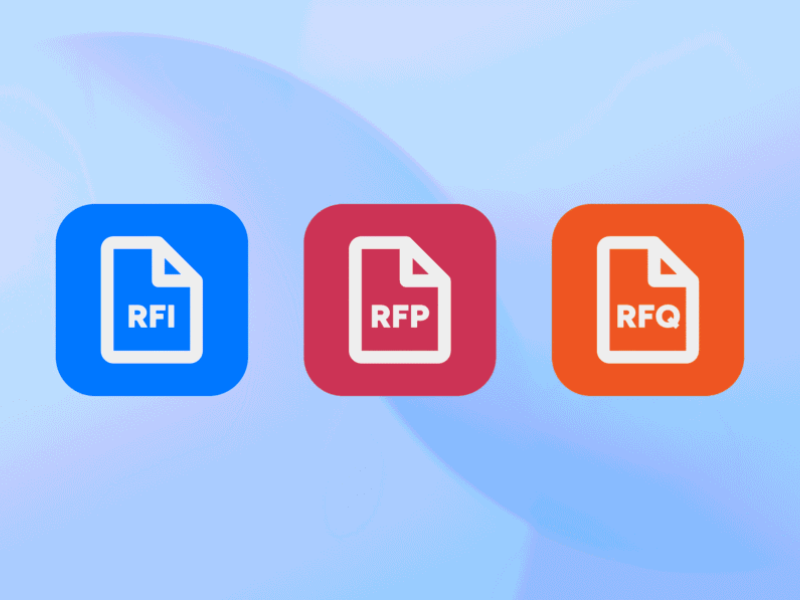
- Use an RFP when you need to evaluate a vendor’s full solution, experience, and compliance capabilities — the most common choice for complex healthcare outsourcing. An RFI is better suited for early-stage exploration, when you’re still mapping the market before committing to a formal process. Reserve an RFQ for situations where scope and pricing are already well-defined and you simply need comparable quotes.
You may not need an RFP for small pilots or simple contract renewals.
Healthcare BPO RFP Template Overview

This template is designed to be practical and easy to use. You can apply it directly or adapt it to your organization’s scale and services.
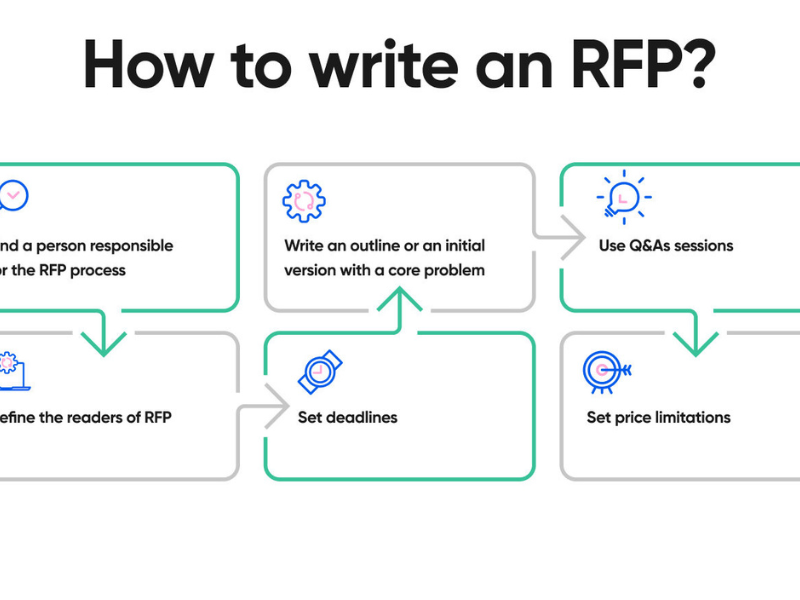
How to use this template step by step:
- Align internally on goals, scope, and compliance priorities.
- Use core sections as-is to ensure consistency.
- Customize service scope, SLAs, and pricing models.
- Share the same document with all shortlisted vendors.
- Score proposals using a standardized matrix.
Sections that usually require customization:
- Scope of services.
- Technology and system integrations.
- Service levels and KPIs.
- Pricing and contract terms.
Sections you should keep standardized:
- Compliance and regulatory requirements.
- Proposal submission instructions.
- Evaluation criteria and scoring logic.
Benefits of this approach:
- Faster vendor comparison with less ambiguity.
- Stronger compliance posture across all bids.
- Clear documentation for audits and governance.
This template works well for hospitals, clinics, and healthcare networks managing multiple vendors.
Healthcare BPO RFP Template Structure (Section-by-Section)
Organizational Background and Objectives
Start by giving vendors clear context about your organization.
Include:
- Organization type, size, and locations.
- Patient volume and service lines.
- Current operational challenges.
- Strategic goals for outsourcing.
Clearly state your objectives, such as:
- Improving patient experience.
- Reducing operational costs.
- Increasing scalability without hiring.
- Strengthening compliance and data security.
Be specific about pain points. Vendors respond better when they understand what must change.
Scope of Healthcare BPO Services
Define exactly what services are in scope and out of scope.
Common non-clinical services include:
- Medical billing and coding.
- Revenue cycle management.
- Patient scheduling and call center support.
- Eligibility verification and prior authorizations.
- Data entry and claims follow-up.
Clarify boundaries:
- Tasks the vendor owns end-to-end.
- Tasks that remain internal.
- Dependencies on your internal teams.
This prevents scope creep and pricing surprises later.
Compliance and Regulatory Requirements
Compliance is mandatory, not optional.
Your RFP should clearly require:
- Full HIPAA compliance, including signed BAAs (Business Associate Agreements).
- Defined PHI access controls using role-based permissions.
- Data encryption at rest and in transit.
- Regular security audits and compliance reporting.
- Clear breach notification timelines and escalation paths.
Specify responsibility boundaries:
- What the vendor is accountable for.
- What remains your responsibility.
- How incidents are investigated and resolved.
Ask vendors to describe:
- Their compliance framework.
- Past audits and outcomes.
- How staff are trained on healthcare regulations.
Technology and Integration Requirements
Technology gaps cause most BPO failures.
Clearly document:
- Required EHR/EMR systems (Electronic Health Records).
- Integration methods, such as APIs (software connectors).
- Data exchange standards and file formats.
- User access and authentication controls.
Include both:
- Required systems: Must be supported at launch.
- Optional systems: Planned for future phases.
Also address:
- Telehealth platform support.
- Secure remote access.
- Downtime handling and system monitoring.
Operational Requirements
Operational capability determines day-to-day success.
Your RFP should cover:
- Staffing models and team structure.
- Healthcare-specific training and certifications.
- Coverage hours, including 24/7 or after-hours support.
- Language support and accessibility needs.
Also require:
- Scalability plans for volume spikes.
- Business continuity and disaster recovery plans.
- Backup staffing and knowledge transfer processes.
Ask vendors to explain how they maintain service levels during disruptions.
Service Levels, SLAs, and KPIs
Define how performance will be measured and managed.
Include measurable SLAs such as:
- Response and turnaround times.
- Accuracy rates for billing or data entry.
- First-contact resolution for patient calls.
Track KPIs related to:
- Patient satisfaction.
- Error rates and rework.
- Productivity and throughput.
Specify:
- Reporting frequency.
- Review meetings cadence.
- Penalties and remediation steps for missed targets.
Pricing and Commercial Model
Pricing must be transparent and comparable.
Common models include:
- Per-transaction pricing.
- Per-FTE (Full-Time Equivalent) pricing.
- Volume-based tiered pricing.
- Hybrid models.
Request clarity on:
- Setup and transition costs.
- Ongoing management fees.
- Volume discounts.
- Exit and transition support fees.
Clear pricing structures reduce long-term financial risk.
Vendor Qualifications and Experience
Focus on healthcare-specific credibility.
Require vendors to provide:
- Years of healthcare BPO experience.
- Relevant certifications and audits.
- Case studies with similar organizations.
- Client references in healthcare.
Look for proven experience with:
- PHI-heavy workflows.
- Patient-facing services.
- Regulatory audits.
Proposal Submission Instructions
Standardize how vendors respond.
Clearly state:
- Required proposal format and length.
- Submission deadlines and contact details.
- Q&A process and timelines.
- Validity period of proposals.
This ensures fair and efficient evaluation.
Healthcare BPO Vendor Evaluation Criteria and Scoring

Use a weighted scoring model to stay objective.
Common evaluation categories:
- Compliance and security.
- Healthcare experience.
- Operational capability.
- Technology fit.
- Pricing and commercial terms.
- Cultural and communication fit.
Example weighting logic:
- Compliance and security: High weight.
- Service quality and SLAs: High weight.
- Price: Balanced, not dominant.
Use a scoring table: [Bảng: Criteria | Weight | Vendor A | Vendor B | Vendor C]
Tips to avoid bias:
- Score independently before group discussion.
- Use evidence from proposals, not assumptions.
- Document reasons for final decisions.
Common Mistakes to Avoid in Healthcare BPO RFPs

- Vague service scopes are the most common source of vendor disputes — when deliverables aren’t clearly defined, each vendor interprets them differently, making proposals impossible to compare and contracts difficult to enforce. Treating compliance as a checklist rather than a core requirement creates gaps that surface during audits, not before. And overweighting price during evaluation consistently leads to hidden costs downstream: rework, compliance remediation, and early contract exits are all more expensive than the savings gained upfront.
- Ignoring integration and transition risks.
- Skipping clear SLAs and performance penalties.
How to Customize This Healthcare BPO RFP Template
Customization makes the template practical.
Hospitals typically require deeper system integration — multiple EHR environments, complex routing rules, and 24/7 coverage across patient-facing functions. Clinics and smaller practices, by contrast, often benefit more from flexibility and cost predictability: simpler scopes, clear SLAs, and pricing models that scale with actual volume rather than fixed headcount
Adjust by service:
- Billing-focused RFPs need stricter accuracy KPIs.
- Call center RFPs should emphasize patient experience metrics.
Adjust by delivery model:
- Onshore vendors for patient-facing roles.
- Offshore or hybrid models for back-office scale.
Always align customization with growth plans and compliance risk.
Key Takeaways for Healthcare Leaders
- A structured RFP process doesn’t just reduce risk — it raises the quality of every vendor conversation from the start. When compliance requirements, operational expectations, and SLA standards are defined upfront, vendors respond with more accurate proposals and fewer surprises during implementation. Standardized templates also create an audit trail that supports governance and internal accountability. The next step is straightforward: adapt this template to your organization’s scope and issue it to three to six qualified vendors.
FAQ – Healthcare BPO RFPs
How detailed should a healthcare BPO RFP be?
It should be detailed enough to cover scope, compliance, SLAs, and pricing without overwhelming vendors with unnecessary detail.
Do all healthcare BPO RFPs require HIPAA language?
Yes. Any vendor handling PHI must meet HIPAA requirements and sign a BAA.
How many vendors should receive the RFP?
Typically three to six qualified vendors to balance competition and evaluation effort.
Can this template be used for both onshore and offshore vendors?
Yes. You should adjust compliance, security, and operational sections to reflect delivery location risks.
How often should SLAs be reviewed?
Monthly reporting with quarterly reviews works well for most healthcare organizations.
Read more:
Call Center RFP Template: Free Download and Evaluation Guide
Airline RFP Template Guide for Corporate Travel Buyers
More in Industry
View all →
Customer Experience Trends 2026: What Changed and What to Do
Customer experience in 2026 is being reshaped by three converging forces: persistent economic uncertainty, widespread AI adoption, and fundamentally different customer expectations. Today's customers are more price-conscious than previous years, less attached to brands they once trusted, and willing to switch providers the moment value becomes unclear. For businesses, this means customer experience is no longer a differentiator—it's a survival…


Customer Experience Analytics: Metrics, Data and Tools
Most companies do not have a customer data problem. They have a customer data connection problem: marketing measures ad clicks, support measures resolution time, product measures feature adoption, and nobody can answer whether the customer who abandoned checkout on Tuesday is the same one who called about pricing on Thursday. Customer experience analytics is the practice that closes that gap…

What Is Customer Experience Management? A Practical Guide
Customer experience management (CXM) is the practice of designing, measuring, and improving every interaction a customer has with your company — treated as one connected journey rather than as separate departmental touchpoints. It is what turns a collection of well-meaning teams into an experience a customer can recognise as coming from a single organisation. The distinction that matters is between…



 English
  Russian
  Chinese