

Customer experience management (CXM) is the practice of designing, measuring, and improving every interaction a customer has with your company — treated as one connected journey rather than as separate departmental touchpoints. It is what turns a collection of well-meaning teams into an experience a customer can recognise as coming from a single organisation.
The distinction that matters is between managing records and managing perception. A CRM tells you what a customer did. CXM asks how the sequence felt, where it broke, and who is responsible for repairing it. This guide covers what CXM includes, how it differs from CRM, the components of a working programme, how to start one without a platform purchase, the mistakes that stall most attempts, and how the tooling landscape actually breaks down.
Key Takeaways About Customer Experience Management
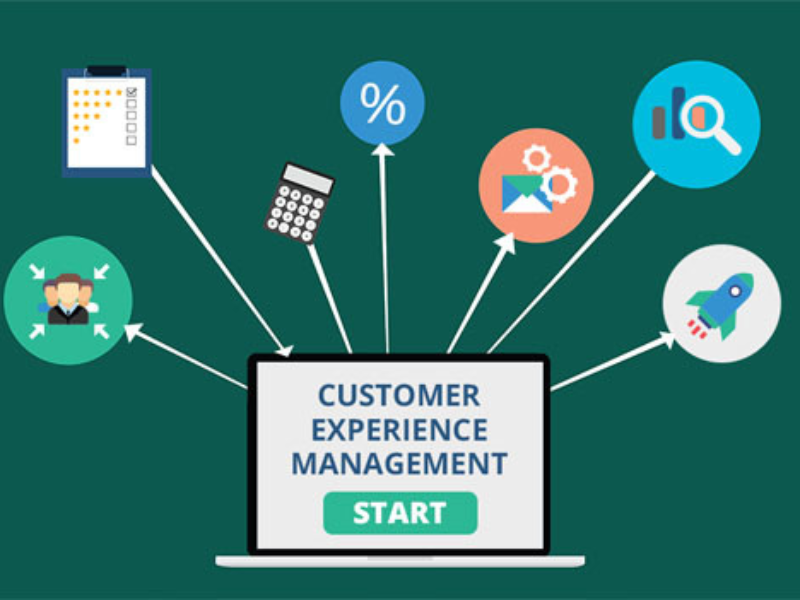
- CXM manages the journey, not the interaction. Its object is the whole sequence — discovery, evaluation, purchase, onboarding, usage, support, renewal — and the handoffs between them, which is where most experiences actually fail.
- Effort predicts loyalty better than satisfaction. CEB’s research, now part of Gartner, found 94% of customers who had a low-effort experience intend to repurchase and 88% say they would spend more, while 96% of those with a high-effort experience became less loyal.
- The commercial case is measured, not theoretical. McKinsey reports that customer-experience improvement programmes typically deliver revenue gains of 5-10% and cost reductions of 15-25% within two to three years.
- CXM is not CRM with better reporting. CRM stores what happened; CXM governs how it felt and who fixes it. Companies that buy one expecting the other end up with excellent data about a journey nobody owns.
- Software comes last. The most common failure mode is buying a platform before deciding which journey is being fixed, who owns it, and what evidence will show it improved.
What Is Customer Experience Management?

Customer experience management is how a business plans, tracks, and improves every interaction a customer has with the brand so the result is consistent and deliberate rather than accidental. In practice it means three ongoing activities: understanding what customers actually encounter, deciding which of those moments the business will invest in, and holding a named owner accountable for each one.
The reason it needs a name at all is that experience is produced by teams that report to different people. Marketing sets expectations, sales makes commitments, product determines whether those commitments hold, and support absorbs the difference. Each team can hit its own target while the composite experience degrades — and no single dashboard will show it.
What CXM covers across the journey. Six stages account for most of what a programme manages.
Discovery and marketing. How customers first encounter you, and what expectations that sets. Promising 24/7 support when support runs weekdays only creates distrust that colours every later interaction, and no amount of service recovery fully removes it.
Evaluation and decision. Website usability, pricing clarity, and sales conversations. Friction here is usually informational — confusing tiers, unclear comparisons, a rep who cannot answer a technical question — and it delays decisions rather than announcing itself as a complaint.
Purchase and onboarding. The highest-leverage stage in most businesses. A customer who completes payment and then hears nothing for three days, or receives a welcome email that does not explain how to activate the account, has already started reconsidering.
Product or service usage. Behavioural signals live here. A customer who logs in daily for a week and then stops is telling you something months before they cancel, and usually without opening a ticket.
Support and issue resolution. Recovery is remembered more vividly than smooth service. A well-handled failure frequently produces more loyalty than an interaction where nothing went wrong at all.
Retention and advocacy. Renewal, follow-up, and referral. This stage exposes whether the previous five were managed or merely survived.
Why Customer Experience Management Matters
The argument for CXM has moved from persuasion to arithmetic. McKinsey’s assessment of customer-experience programmes puts typical results at 5-10% revenue improvement and 15-25% cost reduction over two to three years — notable because the cost side is often the part that funds the work. Experience improvement and cost reduction are usually presented as a trade-off, and at the journey level they are frequently the same project: removing the reason a customer has to contact you improves the experience and lowers the contact volume simultaneously.
Effort is the variable that moves loyalty. CEB’s research into what actually drives repurchase found that reducing customer effort predicted loyalty far better than delighting customers did: 94% of low-effort customers intended to repurchase and 88% said they would increase spending, while 96% of high-effort customers became less loyal, against 9% of low-effort ones. The practical reading is that removing a step usually beats adding a gesture.
Where CXM reduces churn. Most churn is decided quietly and long before cancellation. A programme reduces it through four mechanisms: capturing feedback at moments when the experience is fresh rather than at annual intervals; connecting behavioural signals across channels, so a customer who emailed a complaint, called twice, then stopped logging in is visible as one pattern instead of three unrelated records; enabling outreach based on those signals rather than waiting for a cancellation request; and improving recovery, because a team with full context repairs trust faster than one starting from scratch.
What it changes internally. Three effects show up consistently. Customers stop re-explaining themselves, because context follows them. Resolution gets faster, because the billing team can see what the sales rep promised. And improvement compounds, because each fix removes a recurring cause rather than an individual complaint.
None of that requires a transformation programme. It requires deciding that the journey has an owner. For the planning layer that sits above this — choosing which journeys to invest in and how to sequence them — see our guide to customer experience strategy.
Customer Experience Management vs CRM
The two are routinely conflated in software procurement, which is expensive, because a CRM purchased to solve a CXM problem will do exactly what it was built to do and still leave the problem in place.
| Aspect | CXM | CRM |
|---|---|---|
| Primary focus | Customer perceptions and experiences | Customer data and relationship records |
| Scope | End-to-end journey, including handoffs | Sales, marketing, and service activity |
| Goal | Satisfaction, loyalty, advocacy | Pipeline efficiency and revenue tracking |
| Key question | How did this feel, and where did it break? | What did this customer do, and when? |
| Typical owner | Cross-functional, with an executive sponsor | Sales or revenue operations |
| Fails when | Nobody owns the journey between teams | Data is entered inconsistently or not at all |
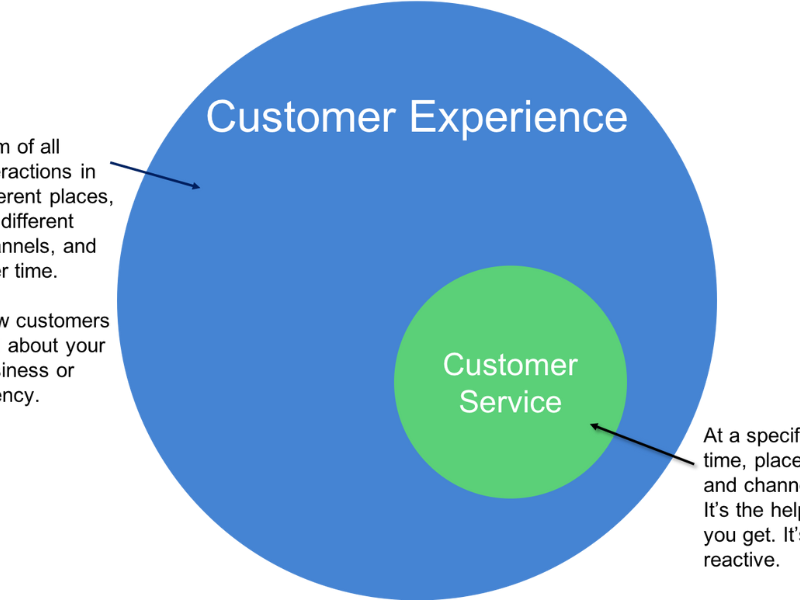
CRM is the engine; CXM is the steering. A CRM records that a customer contacted support three times in a week. It does not record that they were asked to verify their identity on each call, that the second agent contradicted the first, or that they had already found the answer in a help article that turned out to be outdated. Those are the details that determine whether the customer stays, and they are invisible in transaction data.
Where CRM alone runs out. Three gaps recur. Handoffs between teams — sales commits to something support has never heard of, or billing cannot see the support history and asks the customer to re-explain a refund. Tone that varies by channel — measured and helpful over email, rushed on the phone — which makes the brand feel unpredictable. And repetitive process, which a CRM logs faithfully without ever flagging the frustration it generates.
Used together they work well: the CRM supplies history and context, CXM decides what to do with it. Problems start when a company assumes the second follows automatically from the first.
Core Components of Effective Customer Experience Management
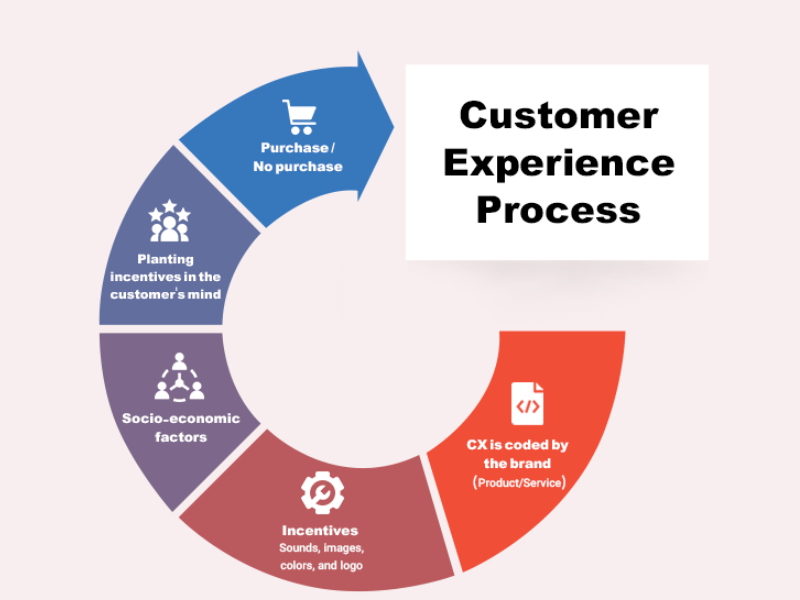
Four components carry most of the weight. A programme missing any one of them tends to stall in a predictable way: mapping without feedback goes stale within two quarters, feedback without ownership becomes an archive, personalisation without data quality actively damages trust, and consistency without a shared customer record is impossible regardless of intent.
They are also sequential in practice. Mapping tells you where to look, consistency removes the most common category of damage, personalisation improves what remains, and the feedback loop is what stops the whole thing decaying once the initial attention moves elsewhere. Attempting them in parallel is the usual reason a programme produces documentation instead of change.
Customer journey mapping
Journey mapping visualises how customers actually move through the business and where friction appears. Four steps cover it: define the stages, list the touchpoints at each, identify the moments where the experience decides something, and prioritise fixes by impact against effort.
The discipline is in what you leave out. Mapping every touchpoint produces a diagram nobody uses. Mapping the three to five moments that most influence whether a customer stays produces a work list. Map from the customer’s side too — “customer is asked for a company registration number, does not have one, abandons the form” is useful; “customer submits form, record created” is not.
Capture the emotional state alongside the action, because frustration predicts churn more reliably than any single behaviour does. And date the map. A journey map without a review date becomes a description of a business that no longer exists, usually within about eighteen months, and teams keep referring to it long after it stopped being accurate.
Omnichannel consistency
Omnichannel means a customer can move between channels without the conversation restarting. The test is concrete: a customer chats at 10pm about a billing issue and phones at 8am. Does the phone agent see the chat? If not, you are running parallel channels, and every channel-level dashboard will look healthy while the customer’s actual experience does not.
Three things break it — messaging and policies that differ by channel, context that does not travel between teams, and journeys designed around the channel’s convenience rather than the customer’s. The benefits of omnichannel service only materialise once context follows the customer.
The inconsistency that costs most is not tone but policy. When the website states one response time, the autoresponder another, and chat declines the topic entirely, each answer is defensible alone and together they teach the customer that nobody is in charge. Fix this by making one team accountable for the promise across every surface rather than letting each channel own its own wording.
Personalisation grounded in data
Personalisation tailors the experience using behaviour, history, and context. Done well it raises relevance and conversion and makes the company feel like it remembers you. Done badly it does more damage than generic communication: recommending a product the customer bought last week, or using the wrong name, signals that the data exists but nobody checks it.
Two rules keep it useful. Fix data quality before scaling personalisation, because errors are amplified by volume — a broken rule applied to fifty customers is an embarrassment, and the same rule applied to fifty thousand is a brand problem. And use fewer signals than you have: referencing too much of what you know shifts the impression from attentive to intrusive, and customers rarely tell you when that line has been crossed.
The most valuable personalisation is usually the least visible. Not addressing someone by name, but not asking them for information you already hold, and not showing them an onboarding prompt they completed months ago.
Feedback loops that close
A feedback loop only exists if it completes. Collect from several sources so you are not only hearing from the delighted and the furious; analyse for patterns rather than reacting to individual comments; assign each theme an owner; tell customers what changed; then measure whether it did.
The fourth step is the one that gets skipped, and it is the one that keeps the loop alive. A customer who raised something and never heard back learns that speaking up achieves nothing, and stops — which quietly degrades the quality of your feedback data over time as the most engaged customers go silent.
Weight unsolicited sources more heavily than you probably do. Support tickets, reviews, cancellation reasons, and sales objections are unprompted and therefore more honest than survey responses, which come disproportionately from people at the two extremes of satisfaction.
How to Get Started With Customer Experience Management
You do not need a platform, a dedicated team, or a transformation mandate to begin. You need one journey, one owner, and a measurement you agreed on beforehand.
Two things are worth settling before the first step. Decide who arbitrates: CXM decisions involve trade-offs between departmental targets, and appointing a referee after the first disagreement never works. Then agree the time horizon, because touchpoint fixes move within weeks while retention effects take quarters — a programme judged on the wrong clock gets cancelled before its main result arrives.
Step 1: Define what experience you are trying to deliver
Not “world-class service” — something observable. “A customer can resolve a billing question without contacting support” is testable. Align it with a business outcome the company already cares about: if retention is the priority, work on onboarding and renewal; if acquisition is, work on trial-to-paid. Choose metrics that measure experience quality rather than activity — effort score, first-contact resolution, or second-month retention beat total tickets handled.
Keep the list shorter than feels comfortable. Two or three priorities for the year, ranked, with a line drawn after the third. A longer list guarantees each team picks whichever item sits closest to its own targets and the rest lapse quietly. Writing down what you have decided not to do this year is what protects the items you chose when a new request arrives in month four.
Step 2: Map the journey as it actually is
Document what customers currently experience, not the intended design. Read the last hundred support contacts and tag them by cause. Review where sessions end. Sit with an agent for an afternoon. Focus on the high-impact stages — onboarding, first purchase, issue resolution — rather than attempting complete coverage. Broad and shallow first surfaces the largest problems fastest; depth can follow once you know where it is worth spending.
Read behaviour before you read surveys. Which features do customers who stay past twelve months use in their first thirty days? Where do sessions end without a completed action? What do people ask about in the first week? Behavioural data is cheaper to obtain, harder to argue with, and does not suffer from the self-selection that distorts survey responses.
Step 3: Fix the biggest pain point first
Choose something with visible customer impact that does not require a quarter of engineering. Rewriting the ten most-read help articles, or giving sales and support a shared notes field, costs little and removes repeated explanations immediately. Ship small and quickly rather than pursuing a complete solution — an improvement live next week beats an overhaul that lands in six months, and it builds the credibility needed to fund the larger work.
Fix causes rather than symptoms. Heavy contact volume at a touchpoint usually originates upstream: a product page that set the wrong expectation, a delivery estimate that keeps slipping, a form field nobody can answer. Adding capacity to absorb the contacts treats the symptom and locks in the cost permanently, which is how support budgets grow without the experience improving.
Step 4: Measure, learn, and repeat
Commit to the expected result before shipping: name the metric, the size of the shift, and the date you will check. Written down beforehand, a miss produces information; left unwritten, every outcome becomes arguable.
Track satisfaction and effort together rather than separately, because divergence between them is more informative than either moving alone — satisfaction holding steady while effort rises is the pattern that precedes churn. Review monthly against contact reasons rather than against an average score, and re-examine the journey annually, since the path customers take drifts faster than most maps are updated. Retire the surveys and dashboards nobody reads; maintaining them is effort not spent fixing anything.
Separate the two review rhythms while you are at it. A monthly operational review asks what moved and what broke. A quarterly review asks a different question entirely — whether these are still the right priorities given what the last three months taught you. Merged into one meeting, the urgent reliably crowds out the important, and the programme drifts into maintenance without anyone deciding that it should.
Common Customer Experience Management Mistakes
Three failure patterns account for most stalled programmes, and all three are organisational rather than technical.
Treating CXM as a software purchase. Organisations buy a platform expecting improvement and then wonder why nothing changes. Tools make existing processes visible and scalable; they do not decide which touchpoint matters or how to redesign it. A journey-mapping tool will not tell you what to prioritise, and a feedback platform will not convert complaints into shipped changes. Without an owner, shared goals, and a commitment to act, the software becomes an expensive record of problems nobody is fixing.
Ignoring employee experience. Staff deliver the experience directly, and they cannot deliver what the organisation makes impossible. An agent told to minimise handle time while fully resolving issues has been given a contradiction, not a target. A sales rep who does not know what product is building will make commitments the company cannot keep. Misaligned goals and missing context guarantee inconsistent customer interactions regardless of how good the journey map is — which is why employee experience in customer support belongs inside the CXM programme rather than beside it.
Collecting feedback without acting on it. This is worse than not asking. A customer who completes a survey and sees nothing change concludes the company is interested in appearing to listen. The pattern is common: feedback gathered across channels, analysed carefully, presented in a meeting, then dropped because priorities shifted. Either act and say what changed, or explain honestly why you cannot address something. Acknowledgement with a stated limitation builds more trust than silence after soliciting input.
Customer Experience Management Tools and Software
Tooling matters, but the sequence matters more: fix the process, then buy the thing that scales it. Reversing the order is the single most reliable way to end up with an unused platform and a CX programme that has lost its budget.
| Category | What it does | Buy it when | Common examples |
|---|---|---|---|
| CRM / unified customer record | Holds interaction and transaction history in one place | Agents on different channels cannot see the same customer | Salesforce, HubSpot, Zoho |
| Feedback and survey | Collects solicited input at defined moments | You are guessing at causes instead of measuring them | Qualtrics, Delighted, SurveyMonkey |
| Support / contact centre | Handles the interactions and generates behavioural data | Contact volume exceeds what a shared inbox can track | Zendesk, Intercom, Freshdesk |
| Journey analytics | Connects touchpoints into a measurable path | You can see individual metrics but not the sequence | Adobe, Sprinklr, Medallia |
| Integrated CX platform | Combines several of the above under one model | Point tools have stopped talking to each other | Vendor suites across the categories above |
Three rules keep tool selection from becoming the strategy. Buy against a defined problem — “we cannot see a customer’s history across channels” is a requirement; “we need better CX technology” is a purchase waiting to disappoint. Check the integration before the feature list, because a platform that does not write back to your customer record recreates the silo it was bought to remove. Match the tool to your maturity — an enterprise experience suite in a company without tagging discipline produces dashboards nobody acts on, and a shared inbox with disciplined tagging will outperform it.
For the measurement layer specifically, our guide to customer experience analytics covers which metrics are worth instrumenting and where each one misleads.
Customer Experience Management in Practice
Two patterns show what CXM changes, and both illustrate that the hard part is coordination rather than intent. The figures below are illustrative of the shape of the problem rather than measurements from a specific company.
Retail: returns that cross channels. Letting customers buy online and return in store — or the reverse — raises purchase confidence measurably, because it removes the risk that stops a first order. Delivering it requires store staff to see online order history in real time, inventory to update across channels immediately, and one returns policy regardless of where the transaction ends. When any of those is missing, the failure is highly visible: a customer arrives at a store with an online order the associate cannot find. The capability is not a decision to offer a feature; it is coordinated work across ecommerce, point of sale, inventory, and training.
SaaS: onboarding that gets finished. When a large share of trial users abandon during setup, the instinct is to add documentation. The more effective move is to find where exactly they stop — a technical integration step, a configuration screen with no sensible defaults, an invitation flow whose value is unclear — and remove the step rather than explain it. That distinction is the whole of CXM in miniature: reducing effort beats adding assistance. It also requires maintenance, since guidance that worked for one cohort of users goes stale as the product changes.
Financial services: proactive contact inside compliance limits. Reaching out before a customer notices a problem builds trust quickly, and is constrained by what can be said, recorded, and to whom. The constraint is real, and it is why proactive programmes in regulated industries are designed with compliance rather than retrofitted past it.
Where to Start
Start narrower than the frameworks suggest. Take the last hundred customer contacts and tag them by cause rather than by sentiment. The top three reasons will point at one stage of the journey, and that stage is your first piece of work.
From there: write one goal with an outcome, a number, and a date; put one person’s name on it; agree the two metrics you will read together; and set a monthly review that examines contact reasons rather than satisfaction averages. That is a complete first cycle, and it will change more than a full journey-mapping programme that arrives after the budget year closes.
Companies that are strong at customer experience rarely got there through a single large initiative. They got there through repeated small corrections, guided by real feedback and judged on behaviour rather than sentiment. For the wider direction of travel and what customers are coming to expect, see our overview of customer experience trends, and for what a full-scale programme involves once the basics hold, customer experience transformation.
FAQ – Customer Experience Management Explained
The questions below are the ones that come up most often when a CXM programme is being scoped, defended in a budget meeting, or restarted after a first attempt stalled. Where a figure is quoted, the source is linked in the relevant section above rather than repeated here.
What is the main goal of customer experience management?
The goal is a consistent, low-effort experience across the whole journey, which in turn increases retention and lifetime value. Consistency is the operative word: CXM exists because experience is produced by several teams and owned by none, so its main job is assigning ownership and priority rather than improving any single interaction. Success is measured on retention, effort, and repeat behaviour rather than on a satisfaction average, which can hold steady while customers quietly leave.
How is CXM different from CRM?
CRM records what a customer did — purchases, tickets, calls, campaign responses — and optimises sales and service efficiency. CXM governs how the sequence of those events felt and who is accountable for fixing it. A CRM will faithfully log that a customer contacted support three times in one week without registering that they were asked to verify their identity each time. Most companies need both: the CRM supplies the history, CXM decides what to do with it.
Is CXM only for large companies?
No, and small companies often see results faster because the journey is shorter and fewer teams need to agree. A first cycle can be run without buying anything: tag your last hundred customer contacts by cause, pick the stage generating the most, fix one thing, and measure whether contacts for that reason fall. The constraint at small scale is attention rather than budget, which is why a single named owner matters more than tooling.
How long does it take to see results from CXM?
Touchpoint fixes usually show movement within four to eight weeks — contact volume for a specific reason falls, or a drop-off point shrinks. Relationship-level measures such as retention and referral move across quarters, because they reflect decisions customers make slowly. McKinsey frames the full commercial effect of a customer-experience programme as landing within two to three years, so agreeing the time horizon before you start is what protects the work from being judged too early.
What are the core components of a CXM programme?
Four: journey mapping that identifies the three to five moments that decide whether customers stay; omnichannel consistency so context travels with the customer instead of restarting per channel; personalisation grounded in data you have actually verified; and feedback loops that close, meaning customers are told what changed. A fifth, less discussed, is named ownership — without it the other four produce documentation rather than improvement.
Which metrics should a CXM programme track?
Customer Effort Score is the earliest warning of the common set, since rising effort precedes falling retention. CSAT diagnoses a specific interaction and is fast enough to act on. NPS is useful as a quarterly relationship trend and unreliable month to month at typical response volumes. Retention or repeat rate is the hardest to argue with but slow, so it confirms rather than warns. Read them in pairs — CSAT steady while effort worsens is the classic pre-churn pattern.
Do I need CXM software to start?
No, and starting with a purchase is the most common way these programmes fail. Software makes an existing process visible and scalable; it does not decide which journey to fix or who owns it. Run one improvement cycle using the systems you already have, learn where the manual work genuinely limits visibility or speed, and buy against that specific requirement. Check that any platform writes back into your customer record, or it will recreate the silo you bought it to remove.
Who should own customer experience management?
One executive sponsor who can arbitrate between teams, plus a named owner for each journey being worked on. Ownership by committee reliably fails, because CXM decisions involve trade-offs between departmental targets — shorter handle time against higher resolution, faster signup against better qualification — and someone has to be able to settle them. The sponsor does not need a CX title; they need the authority to decide when marketing, product, and support disagree.
Read more:
Call Center Outsourcing Singapore: Costs and Compliance
Call Center SLA Template: Simple Structure and Real Examples
More in Industry
View all →
Customer Experience Trends 2026: What Changed and What to Do
Customer experience in 2026 is being reshaped by three converging forces: persistent economic uncertainty, widespread AI adoption, and fundamentally different customer expectations. Today's customers are more price-conscious than previous years, less attached to brands they once trusted, and willing to switch providers the moment value becomes unclear. For businesses, this means customer experience is no longer a differentiator—it's a survival…


Customer Experience Analytics: Metrics, Data and Tools
Most companies do not have a customer data problem. They have a customer data connection problem: marketing measures ad clicks, support measures resolution time, product measures feature adoption, and nobody can answer whether the customer who abandoned checkout on Tuesday is the same one who called about pricing on Thursday. Customer experience analytics is the practice that closes that gap…

Contact Center Outsourcing: Costs, Models and Providers
Support volume doubles every 6-12 months at a growing company, but recruiting and training an in-house team takes 10-14 weeks. That gap is where contact center outsourcing earns its place: instead of building capacity, you rent it from a provider that already has trained agents, multi-channel infrastructure, and running processes. The decision looks simple on a rate card and rarely…



 English
  Russian
  Chinese