

Key Takeaways
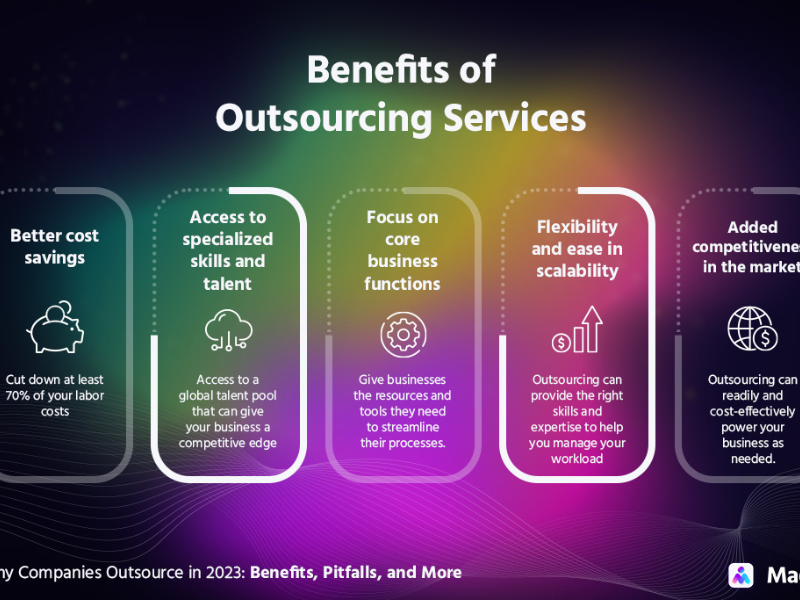
- You’re growing fast, but your team is drowning in operational work. Business process outsourcing (BPO) lets you hand off time-consuming processes to specialists—so your team can focus on what actually drives revenue.What you need to know:
- Cost control: BPO typically reduces operational costs by 30-50% through specialized labor, shared infrastructure, and economies of scale.
- Speed to scale: Add capacity in days or weeks, not months—critical during growth phases or seasonal spikes.
- Focus on core business: When experts handle payroll, support tickets, or data entry, your leadership team spends more time on strategy and less time on admin.
- Best-fit processes: BPO works best for high-volume, repeatable tasks like customer support, accounting, or HR administration—not for core competitive advantages.
- Provider selection matters: The right BPO partner has proven industry expertise, transparent pricing, strong security practices, and clear performance guarantees (SLAs).
Who benefits most: Small and mid-sized businesses gain the biggest advantage—accessing enterprise-grade operations without enterprise-scale overhead.
What Is Business Process Outsourcing?
Business process outsourcing is the practice of contracting a defined business operation — customer support, payroll, accounts payable, data processing — to an external provider that runs it as a service. You keep ownership of the outcome and the standards; the provider owns the execution, the staffing, and usually the tooling.
The market is large and growing quickly, though estimates differ substantially by methodology: analyst forecasts for 2026 range from roughly $354 billion to $436 billion globally, with compound annual growth generally put between 7% and 10%. The US market alone is estimated at about $100 billion in 2026. Treat any single headline figure with caution. The spread between reputable sources is wider than most articles admit.
Simple Definition of Business Process Outsourcing (BPO)
Business process outsourcing means contracting specific business operations — like customer support, payroll, or data entry — to a specialized provider. Instead of hiring, training, and managing internal teams for these functions, you define the standards and let experts handle the execution.
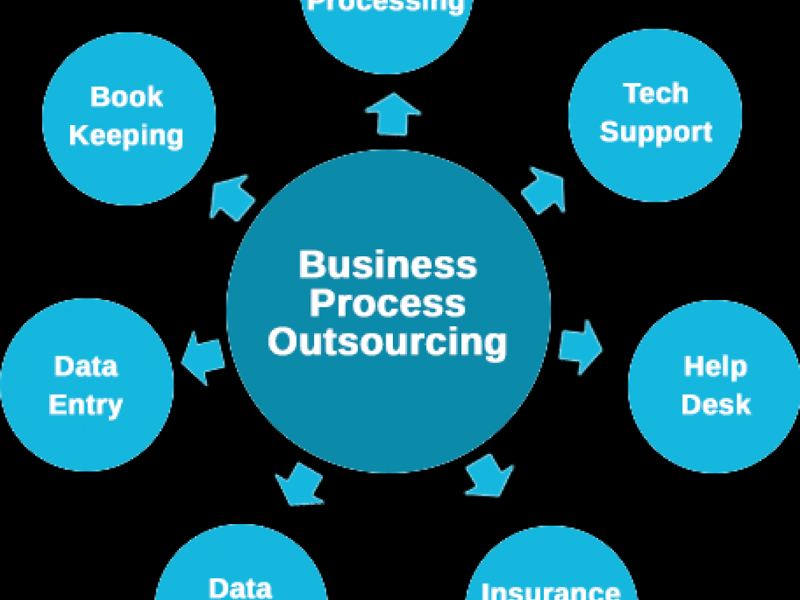
Processes are conventionally split into two groups. Back-office functions are internal operations the customer never sees: accounting, payroll, HR administration, data entry, procurement, compliance. Front-office functions touch the customer directly: customer service, technical support, sales, and appointment setting. Most companies start with one and expand into the other only after the first program is stable.
How BPO Differs From Other Outsourcing Models
These terms get used interchangeably and should not be. The difference determines who is accountable when something goes wrong.
| Model | What the provider supplies | Who manages the work | Accountable for outcome |
|---|---|---|---|
| BPO | People, process, and usually tooling for a whole function | The provider | The provider, against agreed SLAs |
| IT outsourcing | Infrastructure, applications, development capacity | The provider | Shared — usually uptime and ticket SLAs |
| Staff augmentation | Individual contractors | You | You |
| Managed services | A defined technical service (e.g. network, security) | The provider | The provider, against technical SLAs |
| Shared services | Nothing — an internal centralized team | You | You |
The practical distinction: with staff augmentation you are buying hours and still doing the managing. With BPO you are buying a result and the provider does the managing. Companies that sign a BPO contract while still behaving like a staff-augmentation client end up paying BPO rates , paying BPO rates for staff-augmentation value, one of the most common and expensive mistakes in this market.
How Business Process Outsourcing Services Work in Practice
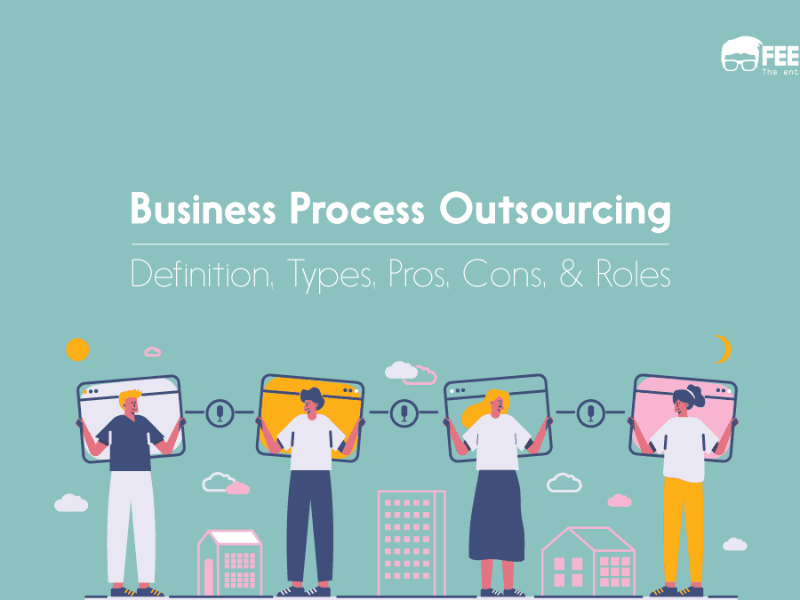
BPO is not “hire a vendor and hope for the best”. Successful programs follow a structured sequence: identify the right process, document it, transition it in stages, then govern it on a fixed cadence. Skipping any of those steps is where most failed engagements begin. The lifecycle below is what a well-run implementation actually looks like, followed by a worked example.
The BPO Implementation Lifecycle
Step 1: Identify Processes for Outsourcing
Start with business functions that meet these criteria:
- Non-core: Important for operations but not your competitive advantage
- High-volume: Enough work to justify external management. As a rough guide, 500+ support contacts or 200+ invoices a month
- Rules-based: Can be documented in standard operating procedures (SOPs)
- Time-consuming: Currently taking 20+ hours per week of internal resources
Common candidates: Payroll processing, accounts payable, customer support, data entry, recruiting coordination.
Step 2: Select a BPO Provider
Look beyond price—evaluate operational maturity:
- Industry experience: Have they served companies in your vertical? Ask for 3-5 references.
- Process documentation: Do they have proven SOPs, or will they “figure it out” with your data?
- Technology stack: What tools do they use for workflow management, reporting, and quality control?
- Case studies: Request specific examples showing measurable outcomes (cost reduction, error rates, turnaround time).
Step 3: Define SLAs and KPIs
Service Level Agreements (SLAs) are contracts that define performance expectations. Key metrics include:
- Speed: “95% of support tickets resolved within 24 hours”
- Accuracy: “99.5% error-free invoice processing”
- Availability: “24/7 coverage with max 2-minute response time”
KPIs (Key Performance Indicators) track these metrics over time. Without clear SLAs, you have no basis for accountability.
Step 4: Transition and Integration
This is where most BPO relationships fail or succeed. A strong transition includes:
- Process documentation: Every workflow mapped in detail before handoff
- Knowledge transfer: 2-4 weeks of shadowing, training, and Q&A
- System integration: Connect the BPO provider’s tools to your CRM, ERP, or internal platforms
- Pilot phase: Run a small volume (10-20% of work) for 2-4 weeks to identify issues before full rollout
Step 5: Ongoing Execution and Optimization
Once live, the provider handles daily operations while you monitor performance:
- Weekly reporting: Review KPI dashboards (speed, accuracy, volume)
- Monthly business reviews: Discuss trends, bottlenecks, and improvement opportunities
- Continuous optimization: Providers should propose process improvements based on data (e.g., “We can reduce ticket resolution time by 20% if we add a self-service FAQ”)
Real-World Example: SaaS Company Outsources Customer Support
The situation: A 50-person SaaS company was handling 1,200 support tickets per week with 3 internal agents. Average response time: 6 hours. Ticket backlog during product launches: 48+ hours.
The BPO implementation:
- Provider: Specialized in SaaS customer support with experience in CRM integrations
- Setup: 2-week transition period to document ticket types, integrate with Zendesk, and train BPO agents on the product
- Structure: BPO provides 6 agents covering 24/7 (US, EU, APAC time zones)
- Pricing: Pay-per-ticket model with tiered SLA (standard vs priority)
Results after 3 months:
- Response time: Dropped from 6 hours to 45 minutes (87% improvement)
- Resolution rate: First-contact resolution increased from 60% to 78%
- Cost: $7,500/month (BPO) vs $15,000/month (3 internal agents + overhead)
- Scalability: During a major product launch, BPO scaled to 10 agents for 2 weeks, then back to 6—no hiring/firing needed
Key success factors:
- Clear SLAs tied to customer satisfaction scores
- Weekly performance reviews with dashboard access
- Continuous optimization (BPO suggested adding chatbot for common queries, reducing ticket volume 15%)
How Much Do BPO Services Cost?
Almost no provider publishes pricing, which makes budgeting difficult before you are deep in a sales process. Here is what the structures actually look like and what drives the number.
The three pricing models
| Model | How you are billed | Best when | Watch out for |
|---|---|---|---|
| Per FTE (full-time equivalent) | A monthly rate per dedicated agent or analyst | Volume is steady and predictable | You pay for the seat whether or not the work is there |
| Per transaction | A unit price per ticket, invoice, call, or record | Volume fluctuates or is seasonal | Definition creep — agree precisely what counts as one unit |
| Outcome-based | Priced against a result (resolution rate, days-sales-outstanding, accuracy) | The outcome is cleanly measurable and attributable | Requires mature measurement on both sides; rare for first contracts |
What drives the rate
Delivery location is the largest single factor. Typical fully loaded rates for a customer-support or back-office agent run approximately:
- Onshore (US, Canada, UK): $28–45 per hour
- Nearshore (Mexico, Colombia, Costa Rica): $14–28 per hour
- Offshore (Philippines, India, Vietnam): $8–18 per hour
For comparison, a fully loaded in-house agent in the US costs roughly $65,000–78,000 per year. That covers salary, benefits and payroll costs at around +43% of base, infrastructure of $3,000–5,000 per seat, and supervision at one manager per 10–15 agents.
Beyond location, rates rise with process complexity, regulatory burden (healthcare and financial services carry compliance overhead), language requirements, and the seniority the work demands. A bilingual agent handling regulated financial queries is not priced like a data-entry operator.
What the quoted rate usually excludes
The headline number is rarely the invoice. Ask specifically about:
- Setup and transition fees.
- Whether training hours are billed at full agent rate.
- Minimum monthly commitments.
- Volume-band pricing that changes when you cross a threshold.
- Technology or license pass-throughs.
- How change requests are priced.
Then request a fully loaded twelve-month model including the ramp period. That is the only figure worth comparing between vendors.
Types of BPO Services
BPO is not one service. These are the five categories that account for most contracts, and what each realistically involves.

Finance and Accounting Outsourcing
Finance and accounting BPO typically covers bookkeeping, accounts payable and receivable, payroll processing, expense management, month-end close support, and financial reporting. It is one of the most mature categories, because the processes are rules-based and the output is verifiable.
What good looks like: a shorter month-end close (many companies move from ten working days to four or five), fewer posting errors, and cleaner cash-flow visibility because reconciliation happens continuously instead of in a monthly scramble.
What to check before signing:
- Which accounting platform they work in — do they adapt to yours, or expect you to move?
- How segregation of duties is kept when one external team handles both payables and reconciliation.
- Who signs off on payment runs.
Finance BPO carries fraud exposure that customer-support BPO does not. Those controls belong in the contract, not in a policy document.
Human Resources and Recruitment Outsourcing
HR BPO splits into two quite different things that are often sold together. Administrative HR covers payroll, benefits administration, employee records, onboarding paperwork, and compliance filings. Recruitment process outsourcing (RPO) covers sourcing, screening, and interview coordination — sometimes the entire hiring funnel.
Administrative HR transfers well because the work is procedural and the compliance requirements are documented. RPO is harder: recruiters represent your employer brand to candidates, and a provider who does not understand your culture will fill roles that do not stick.
The question that decides this one: for administrative HR, which jurisdictions the provider is licensed to file in — payroll compliance is country-specific and errors are expensive. For RPO, ask for offer-acceptance rate and 12-month retention on placements, not just time-to-fill. Time-to-fill improves easily by lowering the bar.
Customer Support and Contact Center Services
The largest BPO category by headcount. Providers deliver support across phone, email, live chat, SMS, social media, and messaging apps, commonly with AI handling routine queries and routing before a human takes over.
Pricing usually differs between voice and non-voice channels, because a single agent can handle several concurrent chats but only one call. Get the channel mix written into the rate rather than assumed around it — non-voice concurrency is where quotes and invoices most often diverge.
Before you sign: ask for agent attrition on accounts your size. The 30–45% annual figure in general circulation is a call-center benchmark rather than an outsourced-specific one, and no vendor-independent dataset covers outsourced floors, which makes the industry number close to useless for your decision. The account-level number is the one that predicts anything, because each departure resets product knowledge. Also ask how many hours of client-specific training an agent receives before taking live contacts, and whether your own QA team may score calls independently. A provider confident in delivery agrees to independent scoring without hesitation.
Operations and Back-Office Outsourcing
Back-office BPO covers high-volume administrative processing: data entry and validation, document management and digitization, order processing, claims handling, and records administration. The work is repetitive, rules-based, and measurable, which is exactly why it transfers well and why automation is reshaping it fastest.
A well-run back-office program shows: turnaround measured in hours, not days; error rates tracked as a contractual metric instead of an aspiration; and a cost per processed record that falls as volume rises.
Push hard on this: how accuracy is measured, and at what sample size. “99% accuracy” means very different things when measured on a 2% sample versus full double-keying. For any process touching regulated or personal data, confirm where records are stored and how long they are retained.
Procurement and Supply Chain Outsourcing
Procurement BPO handles purchase-order management, supplier onboarding and communication, invoice matching, spend analysis, and demand forecasting support. It is the least commoditized of the five categories, because value depends on category knowledge rather than transaction volume alone.
Done well, it produces reduced maverick spend, faster PO cycle times, and better data on what the organization actually buys. Many companies discover their real supplier count is several times what they believed.
What to check: whether the provider is purely transactional or also advises on sourcing strategy, and whether they hold any supplier relationships that could create a conflict of interest. Ask how savings are calculated before agreeing to any gain-share arrangement.
Key Benefits of BPO Services
The case for BPO usually gets made on cost, but cost is rarely the benefit that keeps a program running after year one. These six benefits are listed roughly in the order companies actually experience them: savings arrive first, and the structural gains compound later.
Cost Reduction and Cost-Effective Business Solutions
Cost savings drive most BPO decisions—but not for the reasons you might think. It’s not just about “cheaper labor overseas.” The real savings come from three structural advantages BPO providers have over in-house operations.
How BPO Reduces Costs (With Real Numbers)
1. Labor cost arbitrage
Most published arbitrage comparisons are unusable because they compare a US salary against an offshore billing rate. Those are different units, and the mismatch flatters the offshore side. Compared honestly, on what the work actually costs you:
- Customer support agent: about $64,000 a year fully loaded in-house in the US (BLS mean base of $45,110 plus roughly 43% in benefits and payroll costs), against roughly $28,000 billed by a nearshore provider and $18,000 offshore.
- Accounts payable clerk: about $70,000 fully loaded in-house (BLS median base of $49,210), against roughly $38,000 nearshore and $25,000 offshore.
Worth knowing what sits inside the offshore figure: an agent in the Philippines earns closer to $5,000 a year, so most of the $18,000 you pay is the provider’s facilities, management, technology, and margin. That is the part people miss when they assume the wage gap and the price gap are the same gap. It is also why offshore savings look larger on a spreadsheet than they land on an invoice.
Beyond the rate, outsourcing removes recruiting cost, the internal time spent training, and the benefits administration that comes with an employee.
2. Shared Infrastructure
When you hire an in-house team, you pay for:
- Office space, equipment, software licenses
- Management overhead (supervisors, HR support)
- Technology infrastructure (phones, CRM, workforce management tools)
BPO providers amortize these costs across dozens or hundreds of clients. A 100-agent call center serving 20 clients pays 1/20th per client for infrastructure vs a company building a 5-agent internal team.
3. Scalability Without Fixed Costs
In-house teams carry fixed costs regardless of volume. BPO pricing flexes with usage:
- Slow month: 800 support tickets → pay for 800 tickets
- Busy month: 1,500 tickets → pay for 1,500 tickets
- In-house: Pay for 3 full-time agents whether you have 500 tickets or 2,000
Cost Comparison: In-House vs BPO (100-Agent Contact Center)
| Cost Category | In-House (Annual) | BPO (Annual) | Gross difference |
|---|---|---|---|
| Salaries (100 agents × $45,110 BLS mean) | $4,511,000 | $1,800,000 | 60% |
| Benefits and payroll costs (43% of base) | $1,940,000 | Included | 100% |
| Office space (100 seats × $8k) | $800,000 | Included | 100% |
| Technology (phones, CRM, WFM) | $250,000 | Included | 100% |
| Management (10 supervisors × $75k) | $750,000 | $200,000 | 73% |
| Recruiting & training | $150,000 | Included | 100% |
| Total | $8,401,000 | $2,500,000 | 70% |
Now the part vendors leave out. That 70% is the arithmetic, not the outcome. ISG surveyed 368 executives with BPO decision-making responsibility in 2024 and found average realized savings of 15%, and cost-savings achievement was rated the weakest of every dimension in the study: only 38% scored it highly. Labor arbitrage plus process improvement typically caps out around 20–30%; getting beyond that requires real automation, not just relocation.
The gap between 70% and 15% is not vendors lying. It is governance time, the ramp period, quality remediation, work that turns out not to be as rules-based as the process map claimed, and volume that was overstated when the contract was priced. Build the business case on the lower number. If the higher number arrives, that is upside, not a missed forecast.
What this looks like on one process
An illustrative accounts payable move, using round numbers, not a specific client: a mid-market company processing several hundred invoices a month with a small internal finance team typically sees cost per invoice fall by roughly half, error rates drop once validation is templated instead of re-keyed, and time from invoice receipt to payment shorten by about a week.
The cost line is the smaller half of that. The larger half is what the finance team stops doing. Reclaiming a day a month of a controller’s time matters more to most companies than the per-invoice saving, because that time goes to forecasting and budgeting instead of chasing approvals.
One caution on any figure like this, including ours: savings on a single process do not generalize across functions. Back-office processing and customer support behave differently, and HR administration behaves differently again. Model your own before assuming a published range applies.
Improving Operational Efficiency and Productivity
Cost savings get the headlines, but efficiency gains often deliver bigger long-term value. BPO providers don’t just do your work cheaper—they do it better, because operational excellence is their core business.
Why BPO Providers Operate More Efficiently
1. Process Standardization Across Hundreds of Clients
When you handle accounts payable for one company, you develop decent workflows. When you process 50,000 invoices per month across 30 clients, you’ve seen every edge case and optimized every step.
BPO providers benefit from cross-client learning:
- Best practices: “Client A’s approval workflow reduced invoice aging by 40%—let’s implement that for Client B”
- Error patterns: “These 5 invoice formats cause 80% of errors—let’s build validation rules”
- Bottleneck removal: “Manual data entry is the slowest step—automate with OCR”
Your in-house team improves linearly (learning from their own work). BPO providers improve exponentially (learning from every client).
2. Automation at Scale
Automation requires upfront investment. For a single company processing 500 invoices/month, building automated workflows might not justify the cost. For a BPO handling 50,000 invoices/month, automation delivers massive ROI.
A typical automation stack for customer support BPO:
- Deflection — chatbots and help-center search absorb the most repetitive queries, usually password resets and order status.
- Ticket routing — conversations go to agents trained on that category instead of the next available person.
- Sentiment flagging — frustrated customers surface for priority handling.
- Automated QA — every conversation gets scored, not a sample.
The last one changes the relationship more than the others. When QA moves from a 5% sample to full coverage, disputes about quality stop being anecdotal, which is the only basis on which an SLA is enforceable.
3. Real-Time Performance Monitoring
BPO providers operate on data transparency that most in-house teams lack:
- Agent-level dashboards: Every agent sees live metrics (handle time, resolution rate, customer satisfaction)
- Manager dashboards: Real-time queue status, SLA compliance, productivity trends
- Executive reporting: Weekly business reviews with trend analysis and improvement recommendations
The contrast with most in-house operations is not that internal teams are careless. It is that reporting is somebody’s third priority when they are also handling the queue. A provider reports because reporting is what the contract is measured against.
A realistic shape for the efficiency curve: worse than in-house for the first month or two while the provider learns the process, roughly at parity by the end of the first quarter, and ahead after that if — and only if — someone on your side keeps feeding them exceptions and edge cases. Providers who are left alone plateau in exactly the same way in-house teams do.
Scalability Through Outsourcing
The value of scalability is not that capacity goes up — it is that capacity goes down without a redundancy process. In-house teams are asymmetric: adding twenty people takes ten to fourteen weeks, and removing them costs severance, morale, and institutional memory. An outsourced arrangement moves in both directions on contractual notice.
This matters most in three situations. Seasonal peaks — an online retailer whose order volume doubles between November and January can scale support and back-office processing within weeks and release it in February at no exit cost. Growth phases — a startup adding customers faster than it can hire buys time to build the internal team properly instead of panic-hiring. Market entry — launching in a new region without establishing a local entity or payroll.
The practical constraint is notice periods and minimum commitments. A contract with a twelve-month minimum volume commitment is not genuinely scalable downward, whatever the sales conversation suggested. Read that clause carefully.
Focus on Core Business Functions
The argument for focus is easy to state and hard to measure, so it is worth being concrete about what actually changes.
The real gain is usually management attention rather than headcount. When a founder or operations lead spends six hours a week on support scheduling, invoice chasing, and payroll queries, that is six hours not spent on product, pricing, or customers. Moving those processes out does not just remove the tasks. It removes the interruptions, which are more costly than the hours suggest.
The test for whether a process belongs in-house is straightforward: would a customer choose us because of how we do this? If a competitor doing it identically would lose no ground, it is a candidate for outsourcing. If the way you handle it is part of why customers stay, keep it.
The caution: focus benefits disappear if you replace operational work with vendor-management work. Budget five to ten hours a week for governance once a program is stable, and more during ramp. That is our own estimate, not a benchmark, but the direction is not in question. If nobody owns the relationship, the attention you freed up comes straight back as rework.
Access to Specialized and Domain-Specific Talent
Some skills are genuinely hard to hire one at a time. A company needing two people who understand medical-claims adjudication, multilingual technical support, or indirect-tax compliance faces a long and expensive search for a role that will never be more than a fraction of a department.
Providers carry these specialisms across many clients, which means the expertise already exists and the onboarding curve is measured in weeks, not quarters. It also means certification and continuous training are the provider’s cost, not yours, a meaningful saving in regulated domains where requirements change annually.
The trade-off: specialist knowledge that sits with the provider does not accumulate inside your business. For a capability you expect to matter more over time, that is a real cost. For one that is necessary but static, it is exactly the point.
Standardization and Process Optimization
Most in-house processes are undocumented. They live in the habits of whoever has done the job longest, which makes them fragile, inconsistent, and impossible to improve systematically.
A transition to a BPO provider forces documentation, and that alone frequently surfaces problems that predate the outsourcing decision: duplicate approval steps, exceptions that became the norm, handoffs nobody owns. Providers then apply structured improvement: baseline the process, define KPIs, remove or automate repetitive steps, and review performance on a fixed cadence.
Two cautions worth holding onto. First, standardization is not automatically improvement. A bad process executed consistently is still a bad process, so insist the baseline review question the steps, not just measure them. Second, make sure the resulting documentation belongs to you. If process knowledge exists only in the provider’s runbooks, switching providers later becomes far harder than it should be.
Onshore, Nearshore, or Offshore: Choosing a Delivery Model
Location choice drives cost, coverage, and control simultaneously. There is no universally correct answer, only a correct answer for a given process.

Key Differences and Trade-Offs
| Model | Typical rate/hour | Time-zone overlap | Talent pool | Best suited to |
|---|---|---|---|---|
| Onshore | $28–45 | Full | Smallest, most expensive | Regulated work, high-value accounts, brand-sensitive interactions |
| Nearshore | $14–28 | Substantial (1–3 hours) | Growing; strong bilingual availability | Real-time collaboration at lower cost; English/Spanish coverage |
| Offshore | $8–18 | Little to none | Largest and deepest | High-volume, rules-based work; genuine 24/7 coverage |
The trade-off that surprises people is not accent or quality — providers screen for both — but escalation latency. When an offshore team hits something outside the playbook at 3 a.m. your time, the question waits until your morning. For processes with frequent exceptions, that delay costs more than the hourly saving.
Which Outsourcing Model Is Right for Your Business?
Work through it by process rather than by company:
- Choose onshore when the work is regulated, when the conversation influences a large deal, or when a real-time internal handoff happens many times a day.
- Choose nearshore when you need meaningful overlap with your working day at materially lower cost, or when bilingual English/Spanish coverage is the requirement.
- Choose offshore when volume is high, the process is well documented, exceptions are rare, and you need coverage outside business hours.
- Choose a hybrid, increasingly the default at scale, with onshore or nearshore handling escalations and complex accounts while offshore absorbs routine volume. The blended rate follows the ratio: around $14–26 an hour at a 70/30 offshore split, nearer $18–32 at 50/50.
One practical rule: do not offshore a process you have never documented. Offshore delivery amplifies whatever process quality you hand over, in both directions.
How to Choose a BPO Provider
Most selection processes end up assessing a sales team rather than a delivery team. Those are rarely the same people, and only one of them is still on your account in six months. These four areas test the second group.

Evaluating Experience and Industry Expertise
Ask for clients that resemble you in size, sector, and process, not the largest logos on the wall. A provider whose reference accounts are all enterprise programs may assign a fifteen-seat contract to a junior team, while a smaller provider gives the same work senior attention. It is fair to ask what share of their revenue an account your size represents.
Useful questions: which of your existing clients most resembles us, and may we speak to them? Can you name an account you lost, and what happened? What is the average tenure of the team we would be assigned? A provider who cannot name a single departed client is either very new, or managing you.
Analyst mentions work as a filter, not an answer. Large providers such as IBM Consulting, Concentrix and Teleperformance, and specialists like ARDEM, are frequently cited for mature delivery.
But treat any published ranking with care. Ranking methodology varies enormously between publications and is almost never disclosed: some rank on employee count, some on review volume, some on who paid for placement. What no list can weigh is the thing that actually decides your process or your compliance requirements. Use them to build a shortlist, not to make the decision.
Data Security, Compliance, and Risk Management
Outsourcing the work does not outsource the obligation. If a provider mishandles cardholder, patient, or personal data, the regulator comes to you.
Look for two baseline certifications. ISO/IEC 27001 covers information security management. SOC 2 Type 2 covers whether those controls actually worked over a period, which is why Type 2 matters far more than Type 1, where they only have to exist on paper.
Sector rules add to that: HIPAA for healthcare, PCI DSS for payment data, GDPR wherever EU residents’ data is processed.
Verify rather than accept. Confirm certifications directly with the issuing body, not from a PDF supplied by the vendor. Then pin down the operational detail:
- Exactly where data is stored and processed.
- Which subcontractors have access.
- How agent access is limited to the minimum necessary.
- The breach-notification window.
- What happens to your data when the contract ends.
Put all of it in the agreement. The gap between a security policy and a contractual obligation is the gap you will be standing in if something goes wrong.
Technology Capabilities and Scalability
Establish early whose systems the work runs on. A provider working inside your platforms keeps data and process visibility with you and makes switching feasible later. A provider using their own stack may deliver faster initially but takes your process knowledge with them when the contract ends.
Questions worth asking: what integrations do you support with our CRM, ticketing, and ERP, and are they native or custom-built? What reporting do we receive, at what frequency, and can we query the underlying data or only view dashboards? What automation do you apply, and does the resulting efficiency reduce our cost or increase your margin? That last question is asked far too rarely.
On scalability, ask specifically: how quickly can you add ten agents, and what bench capacity exists today? “We can scale” is not an answer — trained availability is.
Pricing Transparency and Service Level Agreements
An SLA without consequences is a statement of intent. Insist on service credits that are financially meaningful relative to the contract value, and confirm how performance is measured, by whom, and using whose data.
A workable SLA defines a small number of metrics that genuinely matter (resolution rate, turnaround time, accuracy, availability) with clear definitions and thresholds. Long metric lists dilute accountability. Agree how exceptions are handled, what counts as a force-majeure event, and what happens during your peak periods when the risk of a miss is highest.
On commercial terms: keep the initial term to twelve months or less, avoid automatic renewal without a review point, and require a defined exit and transition-assistance clause before you sign. Ask which SLA targets they have paid penalties against in the last twelve months. The answer tells you both how real the SLAs are and how candid the provider is.
Getting Started: From First Process to Full Program
Most failed BPO programs fail at the start, not in delivery. This sequence reduces that risk.
Identifying Processes Suitable for Outsourcing
Good candidates share four traits:
- Non-core — necessary, but not why customers choose you.
- High-volume — enough work to justify the oversight. As a rough guide, 500+ support contacts or 200+ invoices a month.
- Rules-based — the steps can be written down and followed consistently.
- Measurable — quality is verifiable, not a matter of opinion.
Poor candidates are the inverse. Judgment matters more than procedure. The conversation is where the sale happens. Volume is too low to justify oversight. Or exceptions are so frequent that the playbook never settles.
A practical starting exercise: list your operational processes, score each on those four traits, and start with the highest scorer rather than the one causing the most pain today. The most painful process is often painful precisely because it is complex, which makes it the worst first candidate.
Setting Clear Goals and Success Metrics
Define success before the transition, and define it against your own baseline rather than an industry figure. If you do not know your current cost per transaction, error rate, and turnaround time, measure them for a month first. Without a baseline you cannot demonstrate improvement, and you will end up arguing about whose numbers are right six months in.
Set targets across three dimensions, not one. Cost — cost per transaction or per resolved contact, not just total spend. Quality — accuracy or resolution rate, with the measurement method agreed in advance. Speed — turnaround or response time at the percentile that matters, since averages hide the tail where complaints originate.
Also agree the review cadence and what happens when a target is missed twice in a row. Deciding that in advance, while the relationship is cordial, is considerably easier than deciding it in the middle of a problem.
Transitioning and Managing the Outsourcing Relationship
Run a pilot before committing. Sixty to ninety days on a defined slice — one channel, one process, or after-hours only — measured against your own baseline, not the vendor’s dashboard. Decide before you start what result would justify expanding, and what result would end it.
Expect a temporary dip. Productivity almost always falls during knowledge transfer and recovers over the following weeks; a provider who promises no dip is overselling. Plan for parallel running on critical processes rather than a hard cutover.
Once live, governance is what keeps quality from drifting:
- Operational check — weekly during ramp, monthly once stable.
- Calibration — monthly. Your QA team and theirs score the same work, so standards stay aligned.
- Business review — quarterly, looking at trends, not last month’s numbers.
Name one person on each side who owns the relationship. Programs without a named owner degrade quietly, and the first visible symptom usually arrives a quarter after the cause.
Common Misconceptions About BPO
Two objections come up in almost every internal discussion. Both contain something real, and both are usually stated in a way that leads to the wrong decision.

“Outsourcing means losing control”
This is the most common objection and it inverts what usually happens. Most in-house processes are managed by observation: you know things are fine because nobody is complaining. Outsourcing replaces that with defined metrics, agreed thresholds, and scheduled reporting. Many companies find they have more visibility into an outsourced process than they ever had into the internal version, because nobody previously measured it.
What does change is the type of control. You stop directing individuals and start managing outcomes, which requires different skills — specification, measurement, and governance rather than supervision. Companies that struggle are usually those that never made that shift, continuing to manage the provider’s staff directly while paying for managed delivery.
The legitimate version of the concern is knowledge concentration. If the provider ends up as the only party who understands the process, your practical control does erode. That is preventable through contract terms — own the documentation, own the systems, require exportable data — rather than a reason to avoid outsourcing.
“BPO is only for large enterprises”
This was largely true twenty years ago, when contracts were measured in hundreds of seats and multi-year terms. It is not true now. Providers have moved to modular services, shorter terms, and per-transaction pricing precisely because small and mid-sized demand has grown.
The entry point is lower than most people assume. A small business can outsource bookkeeping or after-hours support with no dedicated team and no long commitment, often for less than the fully loaded cost of one part-time hire.
Proportionally, smaller companies frequently gain more. The alternative is a founder doing the work at midnight.
There is a genuine floor, though we should be clear it is our own rule and not a published one. No analyst firm or trade body puts a number on this. Below roughly 200 transactions a month, oversight tends to cost more than it saves. A harder limit you can actually verify: ask what the provider’s minimum dedicated headcount is. Most will not staff below five to ten people on an account, and under that threshold they either decline or quote as though you had hired the full team anyway. The realistic guidance is not “BPO is for large companies” but “BPO needs enough volume to be worth governing”.
Where BPO Is Heading
Two shifts are changing what buyers should negotiate for. Neither is speculative: both are already visible in how providers price and package their services.

Increased use of automation and AI
Automation is changing what BPO providers sell. Rules-based work that once justified a team of twenty is increasingly handled by straight-through processing, with people managing the exceptions, not the volume. In customer support, AI handles routine queries and routing before a human is involved; in back-office processing, document extraction and validation are largely automated.
This has a direct commercial consequence worth raising in negotiation. If a provider automates 40% of the work you send, does your cost fall or does their margin rise? Per-FTE pricing rewards the provider for the efficiency gain; per-transaction or outcome-based pricing shares it. As automation deepens, the pricing model matters more than the rate.
The second consequence is that the remaining human work gets harder. When routine volume is automated away, what reaches an agent is disproportionately complex. Expect the skill profile — and the rate — to shift upward even as the headcount falls.
Growing demand from small and mid-sized businesses
Analyst forecasts consistently put growth in the 7–10% range annually, and the fastest-growing segment is not enterprise. Smaller companies are adopting BPO because the entry barriers that once excluded them (long contracts, large minimums, heavy integration work) have fallen.
Three things drove that change:
- Cloud platforms that let a provider work inside your systems, with no integration project.
- Modular service catalogs, so you can buy one process instead of a department.
- Pricing models that scale down as well as up.
The practical implication for buyers is that the market is more competitive than it was, particularly at the smaller end. Providers who once ignored fifteen-seat programs now compete for them, which means you have more leverage on terms than the sales process may suggest.
Frequently Asked Questions
The questions buyers most often ask before a first BPO engagement, answered briefly. Each links back to the section above that covers it in full.

What is business process outsourcing (BPO)?
Business process outsourcing is contracting a defined business operation — such as customer support, payroll, accounts payable, or data processing — to an external provider who runs it as a managed service. You set the standards and own the outcome; the provider supplies the people, process, and usually the tooling, and is accountable against agreed service levels.
How much do BPO services cost?
Pricing follows one of three models: per FTE (a monthly rate per dedicated person), per transaction (a unit price per ticket, invoice, or call), or outcome-based. Rates depend mainly on delivery location — roughly $8–18 per hour offshore, $14–28 nearshore, and $28–45 onshore — and rise with process complexity, regulatory burden, and language requirements. Compare vendors on a fully loaded twelve-month model including setup, transition, and ramp, not on the headline hourly rate.
What types of business processes can be outsourced?
The five main categories are finance and accounting, human resources and recruitment, customer support and contact center, back-office operations, and procurement. Processes transfer best when they are non-core, high-volume, rules-based, and measurable. Work that depends on judgment, or where the conversation itself drives revenue, is usually better kept in-house.
Is business process outsourcing secure?
It can be, but responsibility does not transfer — your regulatory obligations remain yours regardless of who performs the work. Look for ISO/IEC 27001 certification and SOC 2 Type 2, plus any sector-specific requirement such as HIPAA, PCI DSS, or GDPR. Verify certifications with the issuing body; a document supplied by the vendor is not verification, and define data location, subcontractor access, breach-notification timelines, and end-of-contract data handling in the agreement itself.
How long does it take to see results?
Expect a productivity dip during knowledge transfer, recovery over the following weeks, and measurable improvement within three to six months for a straightforward process. Simple back-office work can stabilise faster; regulated or complex processes take longer. Any provider promising immediate gains with no transition dip is overselling.
Can I outsource only one process?
Yes, and for a first engagement that is the sensible approach. Start with a single function, or even a slice of one such as after-hours support only. You learn how the provider actually performs on work that matters less, and it caps the cost of choosing the wrong partner.
What is the minimum size worth outsourcing?
As a rough guide, below about 200 transactions a month the management overhead tends to exceed the saving. Between 200 and 500, partial models such as overflow or after-hours coverage usually work best. Above 500, a dedicated managed service generally becomes cost-effective. The threshold is about having enough volume to be worth governing, not about company size.
What should I consider when choosing a BPO provider?
Test delivery rather than sales. Ask for reference clients that resemble you in size and sector, and for one who left and why. Verify security certifications independently. Establish whose systems the work runs on and whether reporting data is queryable. Insist on SLAs with meaningful service credits, an initial term of twelve months or less, and a defined exit clause. Then pilot on a defined slice for sixty to ninety days before committing.
Conclusion

Business process outsourcing services are a practical way to reduce costs, improve efficiency, and scale without adding internal complexity. When done right, BPO becomes a long-term growth lever, not just a cost play.
If you want to grow faster with fewer operational headaches, start by evaluating which processes you can outsource today.
Read more:
- Customer Service BPO: Benefits, Definition & Selection Guide
- What Is a BPO Call Center? Definition, Types, and Benefits
- Contact Center Outsourcing: A Practical Guide for Businesses
- Accounts Receivable Collection Software Guide
- Agent Training Software Guide
More in Industry
View all →
Customer Experience Trends 2026: What Changed and What to Do
Customer experience in 2026 is being reshaped by three converging forces: persistent economic uncertainty, widespread AI adoption, and fundamentally different customer expectations. Today's customers are more price-conscious than previous years, less attached to brands they once trusted, and willing to switch providers the moment value becomes unclear. For businesses, this means customer experience is no longer a differentiator—it's a survival…


Customer Experience Analytics: Metrics, Data and Tools
Most companies do not have a customer data problem. They have a customer data connection problem: marketing measures ad clicks, support measures resolution time, product measures feature adoption, and nobody can answer whether the customer who abandoned checkout on Tuesday is the same one who called about pricing on Thursday. Customer experience analytics is the practice that closes that gap…

What Is Customer Experience Management? A Practical Guide
Customer experience management (CXM) is the practice of designing, measuring, and improving every interaction a customer has with your company — treated as one connected journey rather than as separate departmental touchpoints. It is what turns a collection of well-meaning teams into an experience a customer can recognise as coming from a single organisation. The distinction that matters is between…



 English
  Russian
  Chinese