

A customer browses your product catalog online, abandons their cart, then contacts support with a question. Your support agent sees a ticket number and a name—but not browsing history, cart contents, or previous purchases. They ask the customer to repeat information already captured by your website.
This disconnect isn’t an isolated system failure. It’s a structural problem that compounds at enterprise scale. When customer data lives in separate systems—CRM for sales, CMS for web content, support platform for tickets, analytics for behavior—no single team sees the complete customer picture. Each interaction starts from scratch.
Digital experience platforms (DXPs) solve this by acting as a central orchestration layer. They connect data from multiple systems, coordinate experiences across channels, and ensure customers receive consistent, contextual interactions—whether they’re on your website, mobile app, email, or speaking with an agent.
Key Takeaways at a Glance
-
• Unified customer context: DXPs connect CRM, analytics, support, and commerce data into a single customer view—so agents see full history instead of isolated tickets, and websites show relevant content based on actual behavior, not just demographics.
• Journey orchestration: Instead of optimizing individual channels separately, DXPs coordinate experiences across web, mobile, email, and service touchpoints. When a customer abandons a cart, the platform can trigger a personalized email, update the agent dashboard, and adjust website messaging—all automatically.
• Real-time personalization at scale: Enterprises deliver contextual experiences based on live behavior, not static segments. A banking customer viewing mortgage pages sees relevant rate calculators and pre-qualified offers—updated as their browsing intent becomes clearer.
• Cross-team alignment: DXPs provide shared customer journey maps and data for marketing, CX, and IT teams—reducing duplicated work and conflicting customer communications.
• Journey-first approach wins: The biggest CX improvements come from designing end-to-end customer journeys first, then selecting technology to enable them—not buying platforms and hoping they solve problems.
Why Enterprise Customer Experience Breaks Down at Scale

Enterprise CX rarely fails because teams don’t care. It fails because scale multiplies complexity.
As organizations grow, they add regions, brands, channels, and tools. Each layer introduces friction. Over time, this creates CX debt—the accumulated gaps between what customers expect and what systems can deliver.
The most common root causes are structural.
-
The most common root causes are structural, and their effects compound at scale:
Siloed systems create blind spots. Your CRM stores purchase history, your CMS tracks web behavior, analytics platforms measure engagement, and support tools manage tickets—but these systems don’t share data in real time.
In practice: A VIP customer who just spent $50,000 contacts support about a delayed shipment. The agent sees a ticket, not purchase value or loyalty status. They follow standard protocol instead of priority handling. The customer feels unrecognized despite years of high-value purchases.
Channel sprawl fragments the experience. Web, mobile, email, apps, chat, and phone channels evolve independently—each optimized by different teams with separate tools and metrics.
In practice: A customer adds items to cart on mobile, switches to desktop to complete purchase, then calls support with a question. Each channel treats them as a new visitor. The cart doesn’t sync between devices. The agent can’t see what they were trying to buy. Conversion rate drops 15-25% on these cross-device journeys compared to single-session purchases.
Fragmented ownership prevents end-to-end optimization. Marketing optimizes email open rates. CX improves call handle time. Operations reduces shipping costs. IT prioritizes system uptime. Each team succeeds locally while the overall customer journey deteriorates.
In practice: Marketing sends a promotional email. Customer clicks through and calls to redeem the offer. Support agents weren’t informed about the promotion and can’t verify the offer code. Customer gets transferred twice, waits 20 minutes, and abandons. Marketing reports high email engagement. Support reports normal metrics. No one sees the broken end-to-end journey.
In practice, this looks familiar.
A customer browses a product online, abandons the cart, then contacts support. The agent sees a ticket, not intent. Marketing sends a generic follow-up. The experience feels disconnected, even though each team “did their job.”
At enterprise scale, these gaps compound.
- Personalization rules break because data is delayed or incomplete.
- Journeys differ by region or brand without governance.
- New channels launch faster than they can be integrated.
From experience, enterprises often respond by adding more tools. This increases cost but rarely fixes CX. The problem is not tooling. It’s the lack of a unifying experience layer.
What Is a Digital Experience Platform (DXP)?
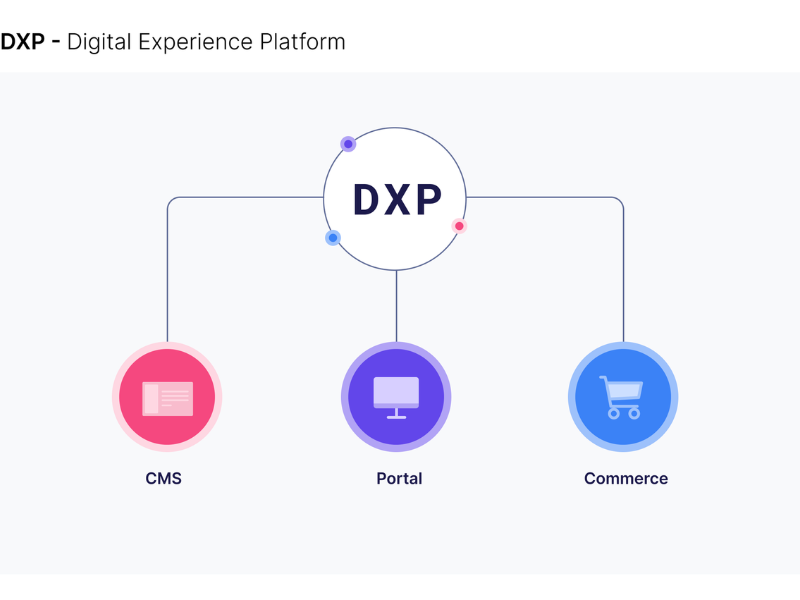
A digital experience platform is software infrastructure that connects your existing enterprise systems—CRM, analytics, CMS, commerce, support tools—and coordinates how they work together to deliver customer experiences.
Think of it as a control center. Your individual systems still handle their core functions: Salesforce manages customer records, your CMS publishes web content, your support platform handles tickets. But the DXP sits above them, pulling data from each system and deciding: What should this specific customer see, on which channel, at this exact moment?
What DXPs do in practice:
First, they unify customer context across systems. When a customer lands on your website, the DXP pulls their profile from your CRM, recent purchases from your commerce platform, support ticket status, email engagement history, and current browsing behavior—combining these into a real-time customer view.
Second, they orchestrate experiences based on that context. The DXP doesn’t just display data; it makes decisions. If a customer abandoned a high-value cart yesterday, has an open support ticket today, and just browsed your pricing page—the DXP might suppress the standard promotional popup, display targeted help content related to their support issue, and alert a sales rep to reach out proactively.
Third, they ensure consistency across channels. When customer data updates in one system, the DXP propagates relevant changes everywhere. A customer upgrades to premium status in your CRM → their website experience, email messaging, and support priority all adjust automatically within minutes, not days.
DXPs don’t replace your existing technology stack. They integrate with it—acting as the orchestration layer that makes disconnected systems work together as a unified customer experience engine.
At a high level, a DXP does three things well.
First, it unifies customer context. Data from CRM, analytics, commerce, and support feeds into a usable customer view. This view updates in near real time.
Second, it orchestrates journeys. Based on context, the DXP decides what experience to deliver, on which channel, and at what moment.
Third, it activates content and experiences consistently. Teams reuse content and logic across regions and channels with governance.
This makes DXPs strategic for enterprise CX.
Instead of each channel making isolated decisions, the DXP coordinates them. Instead of static personalization rules, experiences adapt to behavior and intent.
From a CX perspective, the DXP becomes the control center. It ensures that what customers see, receive, or experience aligns with who they are and where they are in the journey.
What DXPs Are Not
- A CMS that only manages content.
- A CRM that stores customer records.
- A single CX tool that replaces your entire stack.
- A short-term personalization plugin.
Why Digital Experience Platforms Matter for Enterprise CX
Customer expectations are shaped by the best experiences, not your industry peers. Enterprises are expected to deliver relevance, consistency, and speed across every touchpoint.
DXPs matter because they make this achievable at scale.
Without a DXP, personalization depends on static segments and delayed data. With a DXP, personalization responds to behavior as it happens.
Without a DXP, teams optimize channels independently. With a DXP, journeys are designed and measured end-to-end.
There are also internal benefits that directly impact CX.
- Faster execution: Teams launch and adapt experiences without rebuilding logic for each channel.
- Better alignment: Marketing, CX, and IT work from shared journeys and data.
- Stronger governance: Enterprises maintain brand and compliance standards across regions.
From real-world implementations, the biggest shift is mindset. CX stops being a collection of touchpoints. It becomes a coordinated system.
Before vs After DXP: A Simple Enterprise CX Scenario
Before DXP
- Website shows generic content based on broad segments.
- Email campaigns ignore recent support interactions.
- Support agents lack visibility into digital behavior.
After DXP
- Website adapts content based on recent actions and intent.
- Email messaging reflects current journey stage and issues.
- Support sees full context, reducing handle time and frustration.
Key Capabilities of Digital Experience Platforms That Impact CX
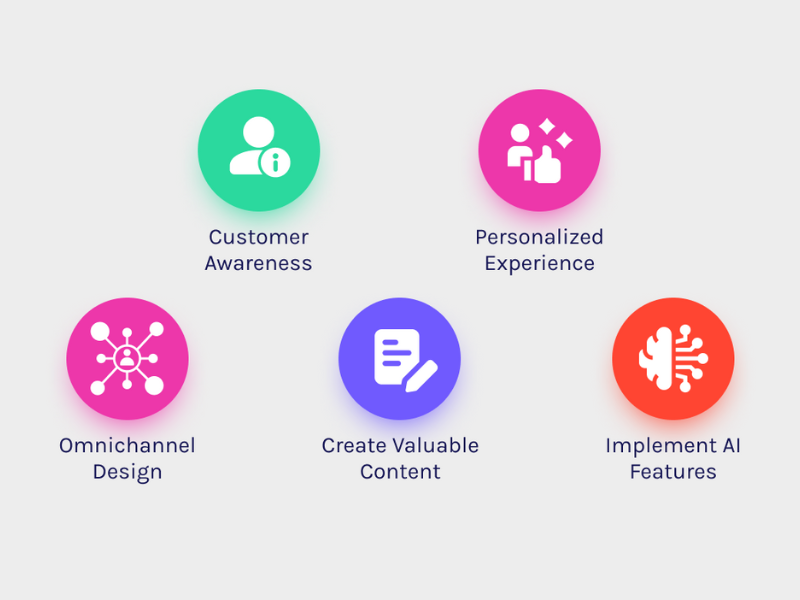
Not every DXP capability matters equally for CX. The following directly affect experience quality and consistency.
-
Key Capabilities of Digital Experience Platforms That Impact CX
Not every DXP capability matters equally for customer experience. The following directly affect experience quality and consistency at enterprise scale:
1. Unified customer profiles
DXPs combine behavioral data (website clicks, app usage, content downloads), transactional data (purchases, subscription changes, support tickets), and contextual data (device type, location, referral source) into a single, real-time customer view.
Why this matters: Without unified profiles, your marketing team sees email engagement, sales sees CRM records, support sees tickets, and web analytics shows page views—but no one sees how these connect. A customer might be highly engaged in emails (marketing success metric) while simultaneously frustrated with product issues (support metric) and researching competitors (web behavior). Each team optimizes locally, missing the holistic picture.
In practice: A retail customer abandons a cart containing $400 of items. Your unified profile shows: (a) they’re a repeat customer with $5,000 lifetime value, (b) they have an open support ticket about shipping delays, (c) they viewed your competitor’s website 10 minutes ago. Instead of sending a generic “complete your purchase” email, your DXP triggers: personalized outreach from customer success addressing the shipping concern, expedited shipping offer, and price-match guarantee. Recovery rate on high-value abandoned carts increases from 12% to 31% using contextual recovery instead of generic reminders.
2. Journey orchestration
Journey orchestration coordinates customer experiences across multiple touchpoints and channels based on where customers are in their journey—not just which channel they’re currently using.
Why this matters: Traditional channel-specific optimization creates disconnected experiences. Marketing optimizes email performance, web teams optimize page conversion, support improves response time—but when a customer interacts across all three channels in one day, the experience feels fragmented.
In practice: A B2B prospect downloads a whitepaper (marketing touchpoint), visits your pricing page twice (web behavior), then calls sales (phone channel). Without orchestration, each interaction is independent: marketing sends generic nurture emails, website shows standard content, sales rep has no context about whitepaper topic or pricing interest. With journey orchestration, the DXP recognizes this as “high-intent evaluation stage” and coordinates: (a) marketing shifts to case studies matching the whitepaper topic, (b) website displays industry-specific ROI calculator with pricing transparency, (c) sales rep receives alert with full context before prospect calls. Deal velocity improves by 35%, and prospects report “feeling understood instead of sold to.”
3. Real-time decisioning
Real-time decisioning means the DXP adjusts experiences based on live customer signals—browsing behavior, recent transactions, support interactions, location changes—within seconds, not hours or days.
Why this matters: Batch-processed personalization (updated overnight or weekly) misses time-sensitive moments. A customer researching mortgage rates today receives irrelevant credit card promotions because the system updated last night before their mortgage research began.
In practice: Banking customer lands on your website. Real-time decisioning detects: (a) they just searched Google for “refinance mortgage rates,” (b) they’re browsing from a new ZIP code (recently moved), (c) their checking account balance increased 40% in past 30 days (potential down payment savings). Within 2 seconds, the homepage dynamically displays: “New to [City Name]? See mortgage rates for your area” with pre-filled calculators using local market data. Mortgage application starts increase 3-5x compared to generic homepage for customers exhibiting these signals.
4. Content and experience management
DXPs enable teams to create content and experience components once, then reuse them across regions, brands, and channels—while maintaining governance rules for brand consistency and compliance.
Why this matters: Enterprise marketing teams at multi-brand companies often rebuild the same promotions, email templates, or landing pages for each region or brand. This creates: (a) duplicated work (8-12 hours per campaign × number of regions), (b) inconsistent messaging across markets, (c) compliance risks when regional teams modify regulated content without approval.
In practice: Global financial services company launches a new investment product across 12 countries. Without DXP: Each regional team builds separate landing pages, emails, and ad campaigns—taking 6-8 weeks total, with inconsistent messaging and 3 compliance violations caught post-launch. With DXP: Marketing builds one master campaign with modular components (product benefits, risk disclosures, CTAs). Regional teams customize local pricing, language, and regulations-required content using approved templates. Total launch time: 10 days. Zero compliance violations. Customer messaging maintains brand consistency while respecting local market nuances.
5. Omnichannel delivery
Omnichannel delivery ensures experiences feel connected regardless of which channel customers enter from or switch between during their journey.
Why this matters: Customers don’t think in channels—they think in tasks. “I want to buy a product” might involve researching on mobile during commute, comparing options on desktop at work, asking questions via chat, and completing purchase in-store. If each channel treats them as a new visitor, the experience feels disjointed.
In practice: Retail customer adds winter coat to cart on mobile app while browsing at lunch. Two hours later, they visit your website from work computer. DXP recognizes same customer across devices and: (a) syncs cart contents automatically, (b) displays “complete your purchase” with one-click checkout, (c) shows “available for pickup at store near your office” using location data. Later that day, customer visits physical store. Sales associate’s tablet shows: items in cart, browsing history (they compared 3 coat styles), size preferences from past purchases. Associate pulls all 3 coats in customer’s size for fitting. Omnichannel purchase conversion rate: 47% vs 28% for single-channel journeys.
6. Enterprise governance
Enterprise governance applies centralized rules for brand standards, compliance requirements, and content approval workflows—without requiring manual oversight of every customer interaction.
Why this matters: At scale (10,000+ daily customer interactions), manual governance becomes impossible. But uncontrolled personalization creates risks: off-brand messaging, regulated content violations, inconsistent pricing or offers across channels.
In practice: Healthcare company uses DXP to personalize content for 500,000 patients across telemedicine, appointment scheduling, and billing portals. Governance rules automatically: (a) block any AI-generated medical advice from displaying without physician review, (b) ensure HIPAA-required privacy notices appear on every personalized communication, (c) prevent promotional content from showing to patients with active billing disputes, (d) maintain consistent tone and terminology across 40+ patient journey touchpoints. Compliance team reviews 0.3% of interactions (flagged edge cases only) instead of 100% manual review—saving 2,000+ hours monthly while maintaining zero compliance violations over 18 months.
Supporting Technologies Inside Modern DXPs
- AI-driven decisioning and recommendations.
- Predictive analytics for intent and churn signals.
- Automated quality checks and experience testing.
DXP vs CRM vs Traditional CX Platforms: Simple Comparison
| Platform | Primary Role | CX Impact |
|---|---|---|
| CRM | Manages customer records and workflows | Enables personalization inputs but doesn’t orchestrate journeys |
| Traditional CX platforms | Handle specific CX functions | Improve parts of CX, not the whole journey |
| DXP | Orchestrates end-to-end digital experiences | Delivers consistent, contextual CX at scale |
The key difference is orchestration.
CRMs store data. CX platforms execute tasks. DXPs decide how experiences come together across systems and channels.
How DXPs Integrate with Existing Enterprise CX Ecosystems
- To fully operationalize DXP-driven experiences, enterprises also need scalable infrastructure on the service side. Choosing the right enterprise contact center solutions ensures that customer interactions—whether automated or agent-assisted—are aligned with real-time data and journey context. This alignment helps bridge the gap between digital experiences and human support, delivering a truly seamless omnichannel CX.
- Connects with CRMs like Salesforce for customer data.
- Integrates with support tools like Zendesk for service context.
- Pulls insights from analytics and data platforms.
Business Benefits of DXPs for Enterprise Customer Experience
DXPs deliver measurable business outcomes when applied correctly.
- Higher customer retention: Relevant, consistent journeys reduce churn.
- Improved NPS: Customers experience fewer handoffs and repeated steps.
- Faster time-to-market: Teams launch experiences without rebuilding logic.
- Operational efficiency: Fewer manual fixes and duplicated efforts.
- Stronger Return on Experience (ROX): CX improvements translate into revenue and loyalty.
The most successful enterprises tie these outcomes directly to journey metrics, not just channel KPIs.
When Should an Enterprise Consider a Digital Experience Platform?
Enterprises typically reach for a DXP when patterns become obvious.
- CX feels inconsistent across regions or brands.
- Personalization efforts stall despite more data.
- New channels launch but don’t integrate cleanly.
- Teams struggle to align on end-to-end journeys.
If CX improvements require constant workarounds, a DXP is usually the missing layer.
How to Adopt a DXP Without Overcomplicating CX
DXP adoption fails when technology leads strategy. A simpler approach works better.
- Start with key customer journeys. Identify high-impact moments that matter most.
- Define experience principles. Set clear rules for consistency and personalization.
- Integrate, don’t replace. Connect existing systems instead of rebuilding everything.
- Establish governance early. Prevent fragmentation as teams scale.
- Measure journey outcomes. Track CX metrics tied to real business value.
From experience, enterprises that move step-by-step gain faster wins and avoid platform sprawl.
Common Mistakes Enterprises Make with DXPs
- Treating DXPs as marketing-only tools.
- Overengineering personalization too early.
- Ignoring governance until problems appear.
- Measuring success by features, not CX outcomes.
Key Takeaways: DXPs as the Foundation of Modern Enterprise CX
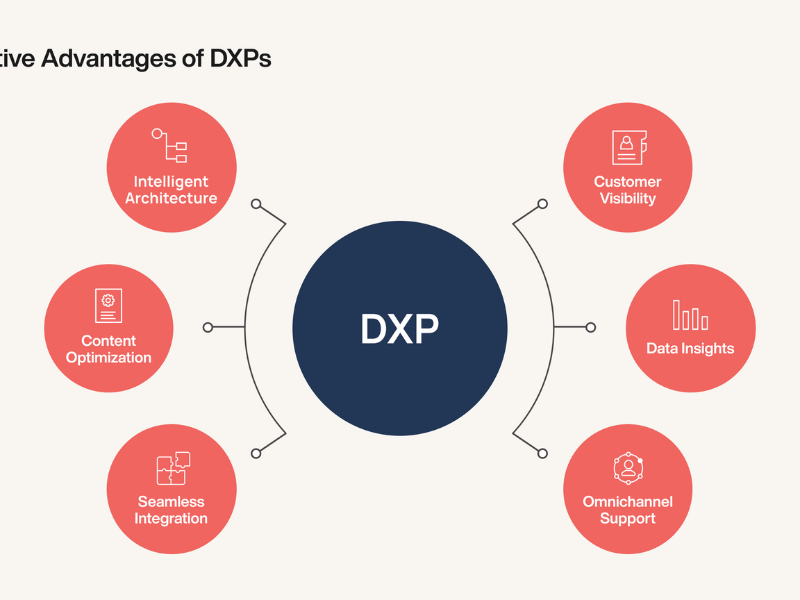
Digital experience platforms give enterprises control over complexity. They unify data, align teams, and orchestrate journeys that feel seamless to customers.
For enterprise CX leaders, DXPs are not optional infrastructure. They are the foundation for scaling relevance, consistency, and trust.
If your CX strategy struggles to scale, the answer is rarely more tools. It’s better orchestration.
FAQ – Common Questions About Digital Experience Platforms
What is a digital experience platform (DXP)?
A DXP is a platform that unifies data, content, and journey orchestration to deliver consistent digital experiences across channels.
How is a DXP different from a CX platform?
CX platforms manage specific CX functions. DXPs orchestrate how those functions work together across journeys.
Do DXPs replace CRM systems?
No. DXPs integrate with CRMs and use their data to power experiences.
Are DXPs only for large enterprises?
DXPs provide the most value where scale, complexity, and multiple channels create CX fragmentation.
How long does DXP adoption take?
Most enterprises see early CX improvements within months when starting with focused journeys.
FAQs

What is a Digital Experience Platform (DXP)?
A Digital Experience Platform (DXP) is a suite of tools designed to unify customer data, content, and communication channels to deliver seamless and personalized customer experiences across all touchpoints.
How does a DXP improve enterprise customer experience (CX)?
A DXP enhances CX by unifying fragmented data, enabling omnichannel support, delivering real-time personalization, and improving internal collaboration between teams such as marketing, sales, and operations.
What is the difference between a DXP and a CRM?
A CRM focuses on managing customer data, sales, and service workflows. A DXP, on the other hand, integrates this data to orchestrate personalized experiences across digital channels, offering a more holistic approach to customer engagement.
Is DXP suitable for all enterprises?
DXPs are ideal for enterprises dealing with complex customer journeys and multiple touchpoints. However, smaller organizations with simpler CX needs might find standalone tools like CRMs or CEMs more cost-effective.
Can DXPs integrate with existing CX tools?
Yes. DXPs are designed to integrate seamlessly with tools like CRMs (e.g., Salesforce), help desks (e.g., Zendesk), customer data platforms, and analytics solutions to enhance their functionality and centralize CX management.
How do I choose the right DXP for my business?
Consider your business goals, required integrations, scalability, and budget. Opt for platforms that align with your customer journey’s complexity and offer robust support for omnichannel orchestration, AI, and analytics.
What is omnichannel orchestration in a DXP?
Omnichannel orchestration ensures that customers receive consistent, seamless experiences across all interaction points (e.g., web, mobile, email, social media) by centralizing and synchronizing data and communications.
What industries benefit most from using DXPs?
Industries such as retail, finance, healthcare, and telecommunications benefit the most, as DXPs offer solutions for managing complex journeys, real-time personalization, and high customer expectations.
What are the key capabilities of modern DXPs?
Modern DXPs offer capabilities like omnichannel journey orchestration, AI-driven personalization, real-time analytics, unified customer profiles, and seamless integrations with other enterprise tools.
When should an enterprise adopt a DXP?
Enterprises should consider a DXP if they face challenges like siloed data, disconnected touchpoints, inconsistent customer experience, or if they aim to scale CX personalization across multiple channels and regions.
Read more
CSAT Improvement Software to Boost Customer Satisfaction
Customer Experience Analytics: Understand and Use CX Data



 English
  Russian
  Chinese