
When your IT support team spends 60% of their time resetting passwords and troubleshooting printer errors, strategic priorities stall. Help desk outsourcing solves this: it shifts routine support to an external team, freeing your internal IT for the work that actually moves the business forward—security, cloud migration, system modernization.
This guide covers how outsourcing works, what it costs, which model fits your size, and what to watch out for before signing a contract.
This guide explains how help desk outsourcing works, when it makes sense, and how to choose the right provider—so you can make a confident, low-risk decision.
Key takeaways:
- Help desk outsourcing shifts day-to-day IT support to a specialized external provider.
- It offers predictable costs, faster response times, and access to skilled teams.
- The right model depends on your size, growth speed, and support complexity.
- Clear SLAs, security standards, and communication processes reduce risks.
What Is Help Desk Outsourcing?

Simple Definition in Plain Business Terms
Help desk outsourcing means hiring an external provider to handle IT support requests for your employees or customers instead of relying only on an in-house IT team.
The provider manages common issues like password resets, software errors, device setup, and access problems. Your internal IT team stays focused on higher-value work.
Example:
A 100-employee company doesn’t need to hire two full-time IT support agents. Instead, it outsources help desk support to a provider that handles tickets, calls, and chats for a fixed monthly fee.
How Help Desk Outsourcing Fits Into IT Service Management and BPO
- It is part of IT service management (ITSM), which focuses on delivering IT services consistently.
- It is often delivered through business process outsourcing (BPO) providers.
- Performance is tracked through SLAs (service-level agreements) and KPIs (key performance indicators).
Help Desk Outsourcing vs In-House IT Support
| Criteria | In-House IT Support | Help Desk Outsourcing |
|---|---|---|
| Cost | High fixed labor costs | Predictable monthly or usage-based costs |
| Scalability | Slow to scale | Scale up or down quickly |
| Control | Full internal control | Shared control with governance |
| Coverage | Limited hours | 24/7 support available |
In-house support works well for highly regulated environments or custom systems. Outsourcing fits SMBs and mid-market companies that need flexibility, broader coverage, and cost control.
How Help Desk Outsourcing Works in Practice

Typical Outsourced Help Desk Workflow
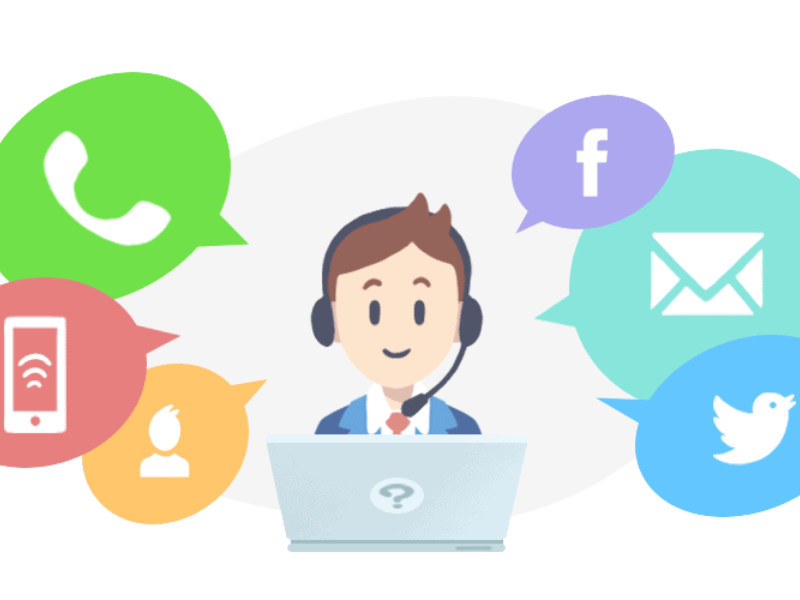
- A user submits a ticket via phone, email, chat, or portal.
- Tier 1 support handles basic issues.
- If needed, the ticket escalates to Tier 2 or Tier 3.
- Resolution is delivered within SLA targets.
- Performance is logged and reported.
Mini use case:
A user forgets a password. Tier 1 verifies identity, resets access, and closes the ticket in minutes.
Common Support Channels
- Phone: Best for urgent issues.
- Email: Good for non-urgent requests.
- Live chat: Fast and user-friendly.
- Self-service portal: Reduces ticket volume.
Role of Automation and Ticketing Systems
- Automates ticket routing and prioritization.
- Reduces response times.
- Improves consistency and reporting.
Why Businesses Choose Help Desk Outsourcing

Cost Efficiency and Predictable IT Support Expenses
In-house IT support includes salaries, benefits, training, and turnover costs. Outsourcing shifts these to a predictable operating expense (OPEX).
| Option | Estimated Annual Cost |
|---|---|
| 1 IT Support FTE | $70,000–$90,000 |
| Outsourced Help Desk | $30–$60 per user/month |
Outsourcing avoids large upfront investments (CAPEX) and aligns costs with actual usage.
Solving IT Labor Shortages and Scaling Support Quickly
- Access to ready-to-deploy talent.
- No hiring delays.
- Easy scaling during rapid growth.
Case:
A company doubles headcount in one year. The provider scales support without new hires.
Improving User Experience and Response Times
- Faster first response times.
- Higher CSAT scores.
- Consistent service quality.
Allowing Internal IT Teams to Focus on Strategic Work
- Cybersecurity improvements.
- Cloud optimization.
- System modernization.
Types of Help Desk Outsourcing Models
Onshore Help Desk Outsourcing
- US-based teams.
- Higher cost.
- Strong cultural alignment.
Nearshore Help Desk Outsourcing (Latin America for US Companies)
Nearshore outsourcing is popular with US companies because it balances cost and quality.
- Time zone alignment with the US.
- Strong English proficiency.
- Lower labor costs than onshore.
Example:
A US company uses a LATAM-based team for real-time support during business hours.
Offshore Help Desk Outsourcing
- Lowest cost.
- Larger time zone gaps.
- Best for non-urgent or after-hours support.
Which Model Is Best for Small and Mid-Sized Businesses?
- Nearshore works best for most SMBs.
- Offshore fits cost-driven, non-critical support.
- Hybrid models combine nearshore and offshore teams.
Support Levels Explained: Tier 1–3
Tier 1 Support: Basic User Issues
- Password resets.
- Account access.
- Simple troubleshooting.
Tier 2 Support: Advanced Troubleshooting
- Application issues.
- Network problems.
- Device configuration.
Tier 3 Support: Specialized Expertise
- Server virtualization.
- Disaster recovery.
- Code-level issues.
Key Benefits of Help Desk Outsourcing
Faster Issue Resolution and 24/7 Coverage
24/7 support reduces downtime and supports remote or global teams.
Example:
A remote employee gets support outside US business hours without delays.
Scalability Based on Business Growth or Seasonality
- Scale up during peak periods.
- Scale down when demand drops.
Access to Specialized and Multilingual Support Teams
- Multilingual agents.
- Broader technical expertise.
Measurable Performance Through SLAs and KPIs
| Metric | What It Measures |
|---|---|
| First Response Time | Speed of initial reply |
| Resolution Time | Time to fix issues |
| CSAT | User satisfaction |
Clear metrics drive accountability and transparency.
Potential Risks and Challenges
Loss of Control and Communication Gaps
Outsourcing can feel less direct. Clear escalation paths and regular reviews reduce this risk.
Data Security and Compliance Concerns
- Require security certifications.
- Enforce access controls.
- Conduct regular audits.
Quality Issues With Low-Cost Providers
Low price often means high turnover and poor service. Focus on value, not just cost.
How SLAs and Clear Processes Reduce Outsourcing Risks
- Defined escalation paths.
- Regular performance reporting.
- Clear ownership of outcomes.
When Help Desk Outsourcing Makes Sense — And When It Doesn’t
Scenarios Where Outsourcing Is a Strong Fit
- Growing SMBs.
- Remote or hybrid teams.
- Limited internal IT resources.
- Need for 24/7 support.
Situations Where In-House Support May Be Better
- Highly regulated industries.
- Proprietary or custom-built systems.
Quick Decision Checklist for Business Leaders
- Do you need 24/7 coverage?
- Is hiring IT staff difficult?
- Are costs unpredictable?
- Is user satisfaction declining?
How to Choose the Right Help Desk Outsourcing Provider

Key Criteria to Evaluate Vendors
- Proven experience with similar companies.
- Clear SLAs and reporting.
- Strong security and compliance standards.
- Positive client references.
Questions to Ask Before Signing a Contract
- How do you handle escalations?
- What are your response time guarantees?
- How do you protect sensitive data?
- How do you scale support?
Understanding Pricing Models
- Cost-per-ticket: Good for low, predictable volume.
- Fixed monthly fee: Best for stable user bases.
Choose the model that aligns with your demand patterns.
Importance of SLAs, KPIs, and Performance Reporting
They ensure transparency, accountability, and continuous improvement.
Conclusion & CTA
Help desk outsourcing gives businesses flexible, cost-effective IT support without the burden of building large internal teams. When done right, it improves response times, user satisfaction, and cost control. The key is choosing the right model, setting clear expectations, and partnering with a trusted provider.
Help desk outsourcing works best when your communication infrastructure can keep pace with your team’s growth. For BPO operations and fast-scaling businesses, this means choosing a call center platform that doesn’t lock you into per-seat pricing or multi-week deployment timelines.
Flyfone is built for exactly this environment: cloud call center infrastructure that deploys in under 1 hour, scales from 3 to 500+ agents, and charges only for actual usage—no setup fees, no seat minimums.
FAQs
What is help desk outsourcing?
Help desk outsourcing is the process of hiring an external service provider to manage a company’s IT support needs. Providers handle tasks such as resolving technical issues, maintaining systems, and offering 24/7 support for end users.
How does help desk outsourcing work?
Help desk outsourcing involves contracting an external provider to handle IT support. Service requests are received via multiple channels (email, phone, or chat), categorized by severity, and addressed by support teams across Tier 1, 2, or 3 levels based on complexity.
What are the benefits of outsourcing help desk services?
Key benefits include reduced costs, access to specialized expertise, improved response times, scalability, and 24/7 support. It also frees internal IT teams to focus on strategic projects rather than day-to-day troubleshooting.
How do I choose a help desk outsourcing provider?
Evaluate providers based on experience, technology capabilities, response times, customer support channels, and compliance with industry standards like ISO 27001 for data security. Checking client reviews and case studies can also help in assessing their reliability.
Is nearshore outsourcing a good option for US companies?
Yes, nearshore outsourcing to regions like Latin America offers cost savings, cultural alignment, and time zone compatibility. This ensures smoother communication, faster response times, and access to skilled English-speaking IT professionals.
Can help desk outsourcing support businesses of all sizes?
Yes, help desk outsourcing is tailored to meet the needs of businesses ranging from small startups to large enterprises. Providers offer scalable solutions, from handling periodic issues to delivering comprehensive IT support for rapidly growing companies.
How much does it cost to outsource a help desk?
The cost varies depending on factors such as provider expertise, service levels, and support scope. Common pricing models include cost-per-ticket or fixed monthly fees, with packages customized to meet specific business requirements.
What are the challenges of outsourcing help desk services?
Challenges may include reduced control, potential communication issues, or quality concerns with low-cost vendors. These can be mitigated through clear Service Level Agreements (SLAs), regular reporting, and close vendor monitoring.
How can businesses ensure the data security of outsourced help desk services?
Choose vendors with ISO 27001 certification or similar credentials. Ensure they follow strict compliance standards, provide data encryption, and have clear protocols for incident management and audits. Regular updates and transparency are vital for maintaining security.
What are SLAs, and why are they important in help desk outsourcing?
Service Level Agreements (SLAs) outline specific performance metrics such as response time, resolution rates, and customer satisfaction. They ensure accountability, set clear expectations, and help track the provider’s performance effectively.
Read more:
Ecommerce Call Center Outsourcing: Scale Support, Keep Quality
Employee Experience in Customer Support Drives Better CX
More in Industry
View all →
Customer Experience Trends 2026: What Changed and What to Do
Customer experience in 2026 is being reshaped by three converging forces: persistent economic uncertainty, widespread AI adoption, and fundamentally different customer expectations. Today's customers are more price-conscious than previous years, less attached to brands they once trusted, and willing to switch providers the moment value becomes unclear. For businesses, this means customer experience is no longer a differentiator—it's a survival…

Customer Experience Analytics: Metrics, Data and Tools
Most companies do not have a customer data problem. They have a customer data connection problem: marketing measures ad clicks, support measures resolution time, product measures feature adoption, and nobody can answer whether the customer who abandoned checkout on Tuesday is the same one who called about pricing on Thursday. Customer experience analytics is the practice that closes that gap…
What Is Customer Experience Management? A Practical Guide
Customer experience management (CXM) is the practice of designing, measuring, and improving every interaction a customer has with your company — treated as one connected journey rather than as separate departmental touchpoints. It is what turns a collection of well-meaning teams into an experience a customer can recognise as coming from a single organisation. The distinction that matters is between…



 English
  Russian
  Chinese