

Retail customer experience now determines which brands survive and which disappear. A shopper who waits 8 minutes in a checkout line will leave—and tell 15 people about it. Another who can’t find accurate inventory online will buy from a competitor within 60 seconds.
This guide shows retail managers, store owners, and CX leaders how to improve customer experience without overcomplicating operations. You’ll learn what retail CX really means beyond buzzwords, why it directly impacts revenue and retention, and exactly which friction points to fix first across in-store, digital, and omnichannel touchpoints.
No theory. Just the operational improvements that make measurable differences.
What Is Customer Experience Retail?
Customer experience in retail is the sum of every interaction a shopper has with your brand, before, during, and after a purchase. It covers both what happens and how it feels.
This includes the full retail customer journey—from discovery to loyalty.
- Discovering products online or in-store
- Browsing, comparing, and evaluating options
- Purchasing and checkout
- Fulfillment, returns, and support
- Post-purchase engagement and repeat visits
Customer experience is not a single moment. It’s the consistency across all moments.
Functional vs. Emotional Experience
Retail CX operates on two layers that must work together:
Functional experience focuses on ease, speed, and accuracy—the mechanics of shopping. Examples: finding products in under 2 minutes, checkout completed in 90 seconds, prices matching online and in-store.
Emotional experience focuses on how customers feel throughout their journey. Examples: feeling confident about a purchase decision, valued by knowledgeable staff, or frustrated by confusing store layouts.
Both dimensions require equal attention. A retailer might process checkout in 90 seconds (excellent functional experience), but if the cashier never makes eye contact or acknowledges the customer (poor emotional experience), shoppers leave feeling like transactions rather than people. The interaction was efficient but cold.
Conversely, a friendly 5-minute conversation with a knowledgeable associate creates positive feelings (strong emotional experience), but if the customer then waits 12 minutes in the checkout line (weak functional experience), the goodwill evaporates. The relationship felt warm, but the process felt broken.
Best practice: Optimize speed and convenience first, then train staff to create brief but genuine connection moments within efficient workflows. A 90-second checkout with eye contact and a sincere ‘thank you’ beats a 5-minute transaction with forced small talk.
Customer Service vs. Customer Experience
In retail the difference is easy to see on the shop floor. Customer service is the colleague who helps when a shopper asks a question. Customer experience is whether the shopper needed to ask at all.
| Customer service | Customer experience | |
|---|---|---|
| In the store, it is | The colleague who helps when asked | Whether the shopper needed to ask |
| Triggered by | A question or a problem | Everything, all the time |
| Owned by | The floor team | Merchandising, ops, digital and the floor team together |
| Shows up as | Interaction quality | Layout, signage, pricing clarity, stock accuracy, queue length |
| Fails quietly when | Staff are rushed or untrained | Staff are excellent and compensating for everything else |
A store can have excellent service and poor experience at once — helpful staff compensating for confusing signage, unclear pricing, or a stock system nobody trusts. That reads as success in service metrics and shows up as cost, because you are paying people to patch a layout problem.
The practical test: if your staff repeatedly answer the same question, that question is an experience defect, not a service opportunity. Count the top three questions asked at your service desk this week. Each one is a sign somewhere.
Seamless Experience Is the Baseline
Today’s shoppers expect consistency by default—not as a bonus feature, but as basic operational competence.
Non-negotiable expectations include:
- Identical pricing online and in-store (no surprise markups at checkout)
- Inventory accuracy within 15 minutes (not “call store to confirm” disclaimers)
- Seamless channel transitions (start online, complete in-store, return anywhere)
A seamless shopping experience has shifted from competitive advantage to table stakes. When Target and Walmart customers check inventory online before visiting stores, they expect 95%+ accuracy. According to Harvard Business Review, 73% of shoppers abandon brands after just 2-3 inconsistent experiences between channels.
What “seamless” looks like: A customer checks availability online (shows 3 in stock), drives to store (product is there, in the specified aisle), picks it up, decides it’s the wrong size, returns it at the counter without receipts or hassle (system recognizes online purchase), and receives a personalized follow-up offer the next day. No friction. No surprises. No repeated information.
What “broken” looks like: Same customer checks availability online (shows in stock), drives to store (can’t find it, staff checks “the system” for 8 minutes, discovers it’s actually out of stock), wastes 40 minutes, tries to leave feedback (form requires account creation), gives up, and buys from Amazon instead.
Retailers operating with siloed systems between online and physical stores lose customers to competitors who’ve unified their infrastructure. The gap isn’t about technology sophistication—it’s about basic execution.
Why Customer Experience Matters in the Retail Industry
Customer experience directly impacts revenue, loyalty, and long-term survival in retail.
It Drives Loyalty and Lifetime Value
Shoppers return to brands that feel easy and consistent—not out of loyalty alone, but because those brands minimize cognitive load and purchase risk. When a customer knows Nordstrom’s return policy works seamlessly whether they shop online, in-store, or via app, they’re more willing to try new products without hesitation. The brand earned trust through predictable execution.
The loyalty-revenue connection is quantifiable:
Repeat purchase rate: Customers with positive experiences return 3.5x more frequently than those with neutral experiences (Temkin Group)
Basket size: Loyal customers spend 67% more per transaction than new customers, because trust reduces decision friction (Bain & Company)
Churn velocity: After one bad experience, 32% of customers immediately stop buying from a brand they previously loved—no second chances (PwC)
Real-world retail example: A regional home goods retailer implemented consistent cross-channel inventory visibility and hassle-free returns (online orders returnable in-store, no boxes or receipts required). Within 6 months:
- Online-to-store shopping trips increased 43% (customers trusted inventory data)
- Return rate stayed constant at 8%, but repeat purchase rate from customers who’d made returns jumped from 22% to 41%
- Customer lifetime value increased by $127 per shopper
The mechanism is simple: Friction destroys trust. Once broken, trust is expensive to rebuild—and most retailers never get the chance. In crowded retail markets where products and prices feel similar, experience becomes the only defensible difference. You can’t patent a good return policy, but competitors can’t replicate it overnight either—it requires operational investment, trained staff, and cultural commitment that takes months or years to build.
It’s a Competitive Advantage in Saturated Markets
Products are easy to copy. Experience is not.
Customer-centric strategies help retailers:
- Stand out without heavy discounting
- Reduce churn caused by frustration
- Build trust beyond price
When products feel similar, experience decides.
Consumer Expectations Have Changed
Modern shoppers expect:
- Speed and convenience
- Consistent pricing and policies
- Flexibility across channels
If something feels slow or confusing, they leave.
Gen Z Is Raising the Bar
Generation Z shoppers (born 1997-2012) grew up with Uber, Netflix, and Instagram—services that respond instantly, anticipate needs, and work flawlessly across devices. They expect retail to function with the same immediacy and intelligence. When it doesn’t, they leave without hesitation.
What ‘digital product standards’ mean in retail context:
Mobile-first interactions: 78% of Gen Z discover products on social media, then expect to purchase within 2 taps—not get redirected to desktop-only sites or forms requiring account creation. When a TikTok video shows a product, Gen Z expects Instagram Shopping integration or a mobile-optimized checkout that saves payment info. Anything requiring 4+ screens to complete a purchase feels broken.
Real-time information: When checking if an item is in stock, Gen Z expects accuracy within seconds—not “please call store to confirm” disclaimers that force phone calls during business hours. Retailers like Target provide aisle-level location directly in their app (“Aisle C7, left side, middle shelf”). This is now the baseline expectation. Vague “usually in stock” messaging feels like 2010 technology.
Minimal friction: Gen Z abandons carts 2x faster than Millennials when checkout requires more than 3 steps. They expect Apple Pay, Google Pay, and guest checkout as defaults—not buried options after creating accounts and filling address forms. Every extra field or required login reduces conversion by 15-20%.
The disconnect costing retailers sales: Many retailers still operate with 24-48 hour inventory update cycles, desktop-optimized checkout flows, and limited payment options. For Gen Z, this feels like using a flip phone. A 2024 Salesforce study found that 54% of Gen Z shoppers have permanently stopped buying from brands that felt ‘too slow or complicated’—even when product and price were competitive.
They value experience as much as product quality because experience signals competence. A clunky checkout suggests the brand might also handle returns poorly, ship slowly, or provide weak customer service. First impressions happen in seconds, and Gen Z gives brands one chance to prove they understand modern expectations.
Practical audit: Open your mobile site right now. From product page to order confirmation, count the screens. If it’s more than 3, you’re losing Gen Z customers. If it requires account creation before checkout, you’re losing even more.
Industry data shows:
- 71% of consumers expect personalized interactions.
- Shoppers engaging across channels spend up to 70% more than single-channel shoppers.
Customer experience optimization is no longer optional.
Common Customer Experience Challenges in Retail
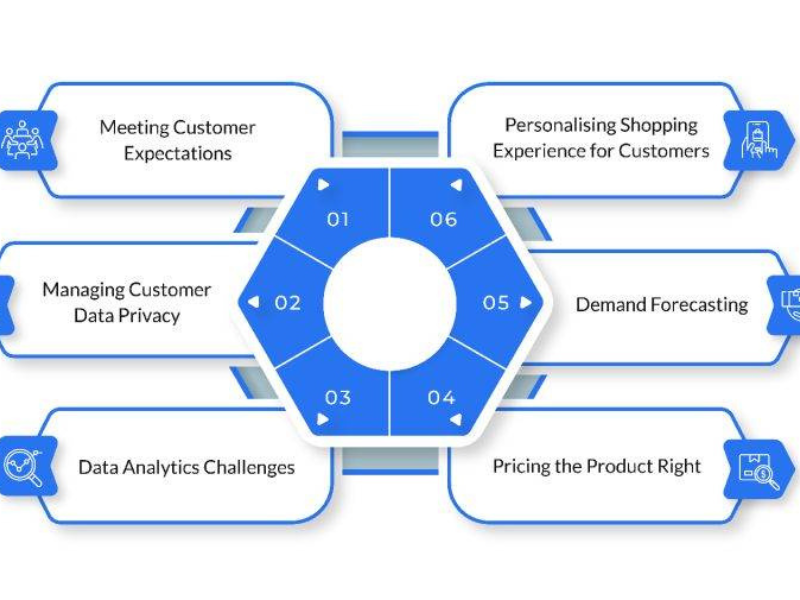
Inconsistent In-Store and Online Experiences
Shoppers do not experience your channels separately, so inconsistency between them reads as carelessness rather than as two teams doing their best.
The mismatches that damage trust are concrete rather than aesthetic:
- A price online that differs from the shelf.
- A promotion valid in one channel only.
- Stock shown as available that is not.
- A returns policy that changes depending on where the item was bought.
Brand consistency in tone and design matters less than most retailers assume. A shopper will forgive a website that looks different from the store. They will not forgive being told two different prices for the same item on the same day.
Long Checkout Times and Queue Frustration
Queueing is the most measurable failure in retail, and the numbers say most stores are on the wrong side of the line.
Published service research puts the point at which retail shoppers abandon a queue at around 10 minutes. The average retail checkout wait sits at 8 to 12 minutes. Read those two figures together and the conclusion is uncomfortable: on an ordinary day, the average store is operating at or past the point where customers walk out.
| Setting | Average wait | Point where people abandon |
|---|---|---|
| Fast food / QSR | 3–5 min | 8 min |
| Retail stores | 8–12 min | 10 min |
| Barbers & salons | 10–20 min | 25 min |
| Restaurants (walk-in) | 15–25 min | 30 min |
| Healthcare clinics | 18–24 min | 20 min past appointment |
Figures compiled by ScanQueue from the Waitwhile State of Waiting Report 2025 and Qminder Service Intelligence Report 2025.
Notice how much tolerance varies by setting. A 15-minute wait at a walk-in restaurant is unremarkable; the same wait at a till is a lost sale. Tolerance tracks what the customer feels they are getting for the wait — and at a checkout, they are getting nothing they did not already decide to buy.
What the research says actually helps
The most useful finding for retailers is that perceived wait is more malleable than actual wait. Around 59% of customers say they would wait longer given progress updates. Service research reports roughly a 35% reduction in perceived waiting time when people can see their position in the queue.
That matters because adding staff is expensive and slow, while making the wait legible is neither. A visible queue counter, a “next till opening” announcement, or a simple estimate of remaining time changes the experience without changing the throughput.
The broader stakes are well documented: 73% of customers name waiting as the most frustrating part of a service experience, and 86% say they would switch providers over long waits. (Zendesk CX Trends 2025 and Loris Customer Expectations Survey 2025, via the compilation linked above.)
Fixes ranked by cost
- Free: move the busiest staff shift to match your actual peak rather than the roster you inherited. Most stores are mis-staffed by 30–60 minutes at each end.
- Cheap: make the wait visible — position indicator, estimated time, or an announcement when another till opens.
- Moderate: take the slowest transaction types out of the main queue. Returns, price checks, and gift wrapping stall a line disproportionately.
- Expensive: more tills and more staff. Effective, and worth doing only once the three above are exhausted.
Lack of Personalization
Many retailers collect extensive customer data—purchase history, browsing behavior, email opens, location data—but fail to translate it into relevant experiences. The disconnect frustrates customers who know brands have their information but still treat them like strangers.
Common personalization failures:
Generic promotions: A customer who exclusively buys women’s athletic wear receives promotions for men’s formal shoes. The brand has 18 months of purchase data but sends the same mass email to everyone. The customer thinks: “You have my history and still don’t know me?”
Irrelevant recommendations: A shopper buys a coffee maker, then gets recommended three more coffee makers. Basic logic would suggest accessories (filters, mugs) or complementary products (coffee beans, grinders), but the algorithm prioritizes “similar items” over useful suggestions.
No recognition of repeat customers: A customer who’s made 47 purchases over 3 years walks into a store and gets treated identically to a first-time visitor. No “welcome back,” no acknowledgment of loyalty status, no expedited service. Digital and physical experiences remain completely disconnected.
The cost of feeling anonymous: When customers feel like transaction numbers rather than individuals, emotional connection disappears. McKinsey research shows 71% of consumers expect personalized interactions, and 76% get frustrated when it doesn’t happen. More critically, customers who receive relevant personalization spend 40% more than those who don’t (Epsilon).
Personalization in retail doesn’t require complex AI or massive budgets. It requires relevance:
- Purchase history: “We noticed you buy running shoes every 6 months. Your last pair was purchased 5 months ago—here’s early access to new arrivals.”
- Browse behavior: “You viewed these hiking boots three times this week. They’re now 20% off.”
- Location + timing: “You’re near our downtown store, and the jacket you favorited online is in stock there now. Want us to hold it for 2 hours?”
Start with obvious, low-tech personalization that leverages data you already have. When a repeat customer contacts support, greet them by name and reference their last purchase. When someone buys a product, send follow-up content about how to use it—not ads for identical products. These small touches demonstrate you’re paying attention.
Friction in Returns and Fulfillment
Returns are treated as a cost centre and experienced as a loyalty test. A shopper returning something is deciding whether to buy from you again, and the process answers that question more clearly than any marketing does.
Three points of friction cause most of the damage:
- Requiring the original packaging when the product is undamaged.
- Refunding to store credit by default rather than the original payment method.
- Making the customer travel to a specific location when they bought online.
The counter-argument is that generous returns invite abuse, and a small proportion of customers do abuse them. The arithmetic still usually favours generosity: the cost of the abused returns is normally lower than the lifetime value of the customers a restrictive policy quietly drives away. Measure both before tightening a policy.
How to Improve Customer Experience in Retail
Improve the In-Store Customer Experience
In-store experience improvements often deliver the fastest ROI because they impact every customer who walks through your doors. Start with operational fundamentals—most create measurable results within 2-4 weeks.
Simplify store layout to reduce cognitive load Decision fatigue starts the moment customers enter. Confusing layouts force shoppers to scan, search, and guess—draining mental energy before they even find products.
What to fix: Ensure clear category signage visible from 20+ feet away. Group related products logically (baking supplies together, not scattered across three aisles). Create obvious pathways—customers shouldn’t need to backtrack or wander in circles.
Quick test: Ask three strangers to find a specific product. If it takes more than 2 minutes or requires asking staff, your layout needs work.
Train staff for experience, not just tasks Product knowledge and genuine approachability matter more than scripted greetings. Customers can tell the difference between someone who understands products deeply versus someone reading off packaging.
What works: Staff who can answer “Will this work for X situation?” without checking their phone or calling a manager. Staff who notice when customers look confused and offer help proactively (not hovering, but aware). Training should emphasize problem-solving and empathy over transaction speed.
Red flag: If your team can’t explain why a customer would choose Product A over Product B, they need more training.
Speed up checkout without sacrificing quality Checkout is the last impression and the easiest place to lose customers. Options beyond “hire more cashiers”:
- Self-checkout lanes: For customers buying 1-5 items who want speed over assistance
- Mobile payment options: Apple Pay, Google Pay, tap-to-pay reduce transaction time by 30-40%
- Flexible staffing: Cross-train floor staff to open additional registers during peak hours (lunch, after work, weekends)
Target metric: 90% of customers should complete checkout in under 3 minutes, measured weekly.
Improve physical comfort (often overlooked) Lighting, temperature, cleanliness, and noise levels directly affect mood and purchase behavior—but retailers rarely audit these systematically.
Common issues: Fluorescent lighting that feels harsh, stores that are too cold (customers leave faster), cluttered aisles that feel stressful, loud music that prevents conversation.
Monthly audit: Walk your store as a customer would. Is it comfortable enough to browse for 20+ minutes? Would you want to spend time here?
Focus on helpful presence, not aggressive selling Modern shoppers research products online before visiting stores. They don’t need (or want) scripted sales pitches. They need answers to specific questions and help when they’re stuck.
Good engagement: “I noticed you’re looking at wireless chargers. Are you trying to match a specific phone, or looking for something that works with multiple devices?”
Bad engagement: “Those are on sale this week, you should definitely get one!” (pushy, assumptive)
Train staff to read body language. Customers making eye contact or looking around signal they want help. Customers focused intently on products prefer to browse undisturbed.
Strengthen the Digital Retail Experience
Digital is often the first impression.
Key priorities:
- Mobile-first design for browsing and checkout
- Accurate product information across channels
- Clear inventory visibility
- Consistent support options
A slow or confusing site breaks trust before shoppers enter the store.
Build a Seamless Omnichannel Retail Experience
Omnichannel has become a word retailers use to describe having both a website and a shop. That is multichannel. Omnichannel means the two know about each other.
The commercial case is unusually well evidenced. Research indicates that 73% of consumers use more than one channel during a shopping journey, touching an average of six or more touchpoints before buying. Those shoppers are also worth more: omnichannel customers spend roughly 16% more per order and show a 30% higher lifetime value than single-channel buyers, while retailers running unified commerce report about 18% lower cart abandonment. (Figures compiled by Ringly from Harvard Business Review, Capital One Shopping and Manhattan Associates research.)
What “seamless” actually requires
Four things have to be true, and most retailers fail on the second and third:
- Inventory is honest across channels. If the website says in stock and the shelf is empty, nothing else you do matters. This is the single most common omnichannel failure and it is a data problem, not a strategy problem.
- The basket survives the switch. A customer who saves items online should find them on the app, and staff in store should be able to see them.
- Staff can see the online history. An in-store colleague who cannot look up a web order forces the customer to explain a transaction the company already has a record of.
- Returns work in any direction. Buy online, return in store is now an expectation rather than a feature. Refusing it converts a return into a complaint.
Where to start if you cannot do all four
Start with inventory accuracy, because every other omnichannel promise depends on it and because it is measurable. Track the gap between system stock and counted stock at your busiest locations for a month. Most retailers are surprised by the number and every point of improvement makes the rest of the programme more credible.
A caution worth stating plainly: omnichannel projects fail more often on operations than on technology. The platform can connect the channels; only process and staffing make the connection reliable on a Saturday afternoon.
Use Technology Without Overcomplicating the Experience
Technology should remove friction, not add it.
Effective uses include:
- Self-checkout and mobile payments
- Basic personalization tools
- Simple customer support automation
Avoid tech overload. If customers need instructions, it’s too complex.
What to Fix First: CX Priorities for Retailers
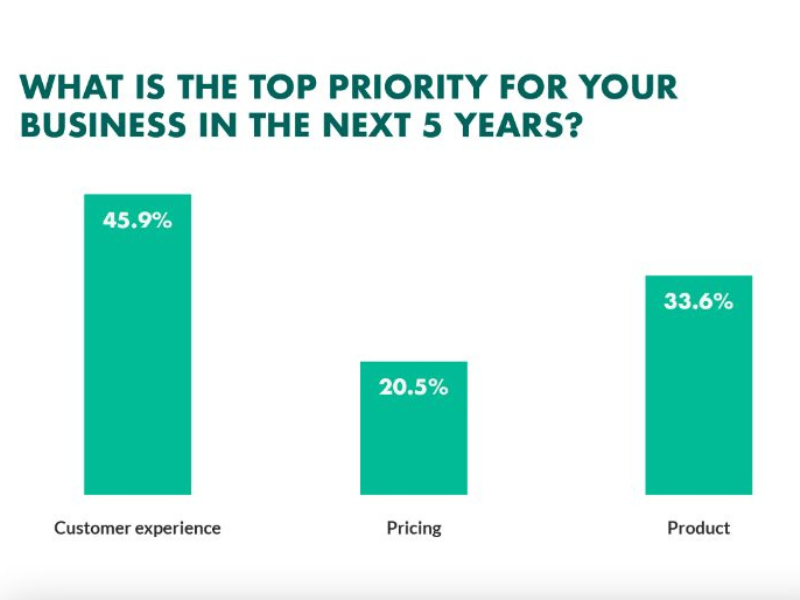
When facing multiple CX problems simultaneously, prioritization matters. The wrong sequence wastes time and budget on improvements customers won’t notice until bigger issues are fixed.
This priority order maximizes impact-to-effort ratio, addressing universal pain points before niche improvements:
1. Fix checkout speed first (Week 1-2 priority) Why this first: Checkout affects 100% of purchasing customers, every single day. It’s the final interaction before they decide whether to return. Long wait times override positive experiences earlier in the journey.
Quick wins:
- Add self-checkout lanes (2-3 week implementation)
- Enable mobile payments (1 week with modern POS systems)
- Cross-train 3-5 floor staff for peak-hour register coverage
Expected result: 30-40% reduction in average checkout time within 2 weeks, 15-20% improvement in satisfaction scores.
2. Align online and in-store basics (Week 2-4 priority) Why this second: Inventory and pricing mismatches break trust instantly. When customers check online then visit stores only to find different information, they feel deceived—even if unintentional.
Critical alignments:
- Inventory accuracy: Sync systems to update within 15 minutes (not end-of-day)
- Pricing parity: Same prices across channels, or clearly communicate differences upfront
- Promotion consistency: Online coupons work in-store, store sales visible online
Expected result: 25-30% reduction in customer service complaints about “bait and switch,” 10-15% increase in online-to-store visits.
3. Simplify returns (Week 3-5 priority) Why this third: Returns are low-frequency but high-impact moments. Easy returns encourage larger purchases (customers take more risks) and increase repeat rates even among returners.
Simplification steps:
- Accept online returns in physical stores (no need to ship back)
- Eliminate receipt requirements (lookup by email, phone, or card)
- Extend return windows to 30+ days (builds confidence)
Expected result: Return rate may stay flat or increase slightly (good—means customers feel safe buying), but repeat purchase rate from customers who’ve made returns increases 30-50%.
4. Train frontline staff (Ongoing priority) Why this last (but continuous): Staff training has longer lead time to show results but creates compounding improvements. One well-trained employee affects thousands of interactions over months.
Training focus areas:
- Deep product knowledge (not just features, but use cases)
- Reading customer body language (when to engage vs. when to give space)
- Handling complaints with empathy and solutions (not scripts)
Expected result: Gradual improvement over 2-3 months, measurable through customer feedback mentioning staff helpfulness.
Why this sequence works: Checkout and inventory accuracy are operational fixes with immediate, measurable impact. Returns and training are process/cultural changes that take longer but create sustained differentiation. Fix the obvious friction first, then build deeper capabilities.
How to Measure Customer Experience in Retail
Measurement prevents CX initiatives from becoming subjective guesswork. Without metrics, you can’t prove impact, prioritize fixes, or know whether changes actually improved experiences.
Three core metrics cover different aspects of retail CX:
Net Promoter Score (NPS) — Measures loyalty and word-of-mouth potential
The question: “How likely are you to recommend [Brand] to a friend or colleague?” (0-10 scale)
How to calculate:
- Scores 9-10 = Promoters (loyal enthusiasts)
- Scores 7-8 = Passives (satisfied but unenthusiastic)
- Scores 0-6 = Detractors (unhappy, likely to spread negative word-of-mouth)
- NPS = % Promoters – % Detractors (ranges from -100 to +100)
Retail benchmarks: 30-50 is average, 60+ is excellent, 70+ is world-class (Apple, Costco)
When to use: Measure quarterly for overall brand health tracking. Don’t overuse—NPS fatigue reduces response rates.
Customer Satisfaction (CSAT) — Measures satisfaction with specific interactions
The question: “How satisfied were you with [specific interaction]?” (1-5 scale: Very Unsatisfied to Very Satisfied)
How to calculate: (Number of 4-5 ratings / Total responses) × 100 = CSAT %
Retail benchmarks: 75-85% is typical, 90%+ is excellent
When to use: Immediately after specific touchpoints—checkout, returns, customer service calls, delivery. CSAT shows where operational processes fail. If checkout CSAT drops below 75%, investigate process bottlenecks. If returns CSAT is low, simplify your policy.
Customer Effort Score (CES) — Measures how easy it was to complete an action
The question: “How easy was it to [complete action]?” (1-7 scale: Very Difficult to Very Easy)
How to calculate: Average score across all responses (higher = better)
Retail benchmark: 5.5+ out of 7 is good
Why it matters: Harvard Business Review research found that reducing customer effort is more effective at building loyalty than delighting customers. When things are easy, customers stay. When they’re hard, customers leave—even if other aspects are good.
When to use: For friction-prone processes—returns, exchanges, finding products in-store, contacting support, using loyalty programs. If CES is below 5.0 for any process, that’s a priority fix.
Practical implementation:
Deploy short surveys (1-2 questions max) at key moments:
- At checkout: CSAT survey via receipt or SMS
- After returns: CES survey emailed within 24 hours
- Quarterly: NPS survey to random sample of customers
Track trends over time rather than obsessing over individual scores. A CSAT drop from 82% to 76% over two months signals a growing problem worth investigating.
Retail Customer Experience Trends to Watch
- Hybrid shopping as the default
- Experience-driven physical stores
- Faster fulfillment expectations
- Simplified technology adoption
Trends favor clarity, not complexity.
Real-World Retail Customer Experience Examples
- Coca-Cola: Reduced product variety to improve merchandising clarity.
- Walmart/Sam’s Club: Cut checkout friction with smarter exit verification.
- Easy in-store returns: Increase trust and repeat visits.
Each example focuses on removing friction, not adding features.
Key Takeaways for Improving Customer Experience in Retail
- Customer experience in retail is the full journey, not a single interaction.
- Seamless experiences are now baseline expectations.
- Small operational fixes often outperform large tech investments.
- Omnichannel success depends on consistency, not channel count.
- Improving CX starts with removing friction points customers feel daily.
Audit your current experience. Fix what slows customers down first.
Final CTA
Customer experience is the most controllable competitive advantage in retail. Start by identifying where customers feel friction today. Fix those moments first. Small changes, done well, create lasting loyalty.
FAQ – Customer Experience in Retail
What is customer experience in retail?
Customer experience in retail refers to the entire journey a shopper has with a brand, across both online and in-store channels. It includes emotional and practical aspects, such as convenience, personalization, and satisfaction at every touchpoint.
Why is customer experience important in retail?
Customer experience is critical in retail because it impacts shopper loyalty, repeat purchases, and revenue. Positive experiences can help retailers differentiate in competitive markets and create lasting relationships with customers.
How can retailers improve in-store customer experience?
Retailers can improve in-store experiences by optimizing store layouts, providing staff with better training, streamlining checkout processes with technology such as self-service kiosks, and creating engaging environments that cater to all senses.
What are some examples of seamless omnichannel retail experiences?
Examples include Buy Online, Pick Up In-Store (BOPIS), unified loyalty programs, and integrating inventory systems so customers can easily locate or check the availability of products both online and in-store.
How does personalization enhance retail customer experience?
Personalization in retail involves tailoring product recommendations, offers, and messaging based on an individual’s preferences or shopping history. This creates a more relevant and engaging shopping experience, increasing customer satisfaction and purchase likelihood.
What are common challenges in delivering great retail customer experience?
Challenges include inconsistent experience between online and in-store, long wait times at checkout, lack of informed staff or technology, and restrictive return policies that discourage repeat business.
What technologies can improve retail customer experience?
Technologies such as AI for personalized recommendations, chatbots for instant support, smart fitting rooms, and self-checkout kiosks can enhance both online and in-store shopping experiences.
How do you measure customer experience in retail?
Key metrics for measuring retail customer experience include Net Promoter Score (NPS) for loyalty, Customer Satisfaction (CSAT) for specific interactions, and Customer Effort Score (CES) to evaluate ease of the shopping process.
What are some current trends in retail customer experience?
Retail trends include hybrid shopping models blending online and offline experiences, personalized shopping journeys powered by AI, and flexible fulfillment options such as curbside pickup or same-day delivery.
How can small retailers improve their customer experience on a budget?
Small retailers can focus on building personal relationships with customers, gathering feedback to address pain points, hosting small in-store events, and implementing affordable digital tools like social media chat or basic loyalty programs for consistent engagement.
Read more:
Call Center KPIs for Customer Experience: What to Track
Call Center Agent Performance Metrics That Actually Improve CX
More in Industry
View all →
Customer Experience Trends 2026: What Changed and What to Do
Customer experience in 2026 is being reshaped by three converging forces: persistent economic uncertainty, widespread AI adoption, and fundamentally different customer expectations. Today's customers are more price-conscious than previous years, less attached to brands they once trusted, and willing to switch providers the moment value becomes unclear. For businesses, this means customer experience is no longer a differentiator—it's a survival…


Customer Experience Analytics: Metrics, Data and Tools
Most companies do not have a customer data problem. They have a customer data connection problem: marketing measures ad clicks, support measures resolution time, product measures feature adoption, and nobody can answer whether the customer who abandoned checkout on Tuesday is the same one who called about pricing on Thursday. Customer experience analytics is the practice that closes that gap…
What Is Customer Experience Management? A Practical Guide
Customer experience management (CXM) is the practice of designing, measuring, and improving every interaction a customer has with your company — treated as one connected journey rather than as separate departmental touchpoints. It is what turns a collection of well-meaning teams into an experience a customer can recognise as coming from a single organisation. The distinction that matters is between…


 English
  Russian
  Chinese