
Contact center managers face a recruiting paradox: you need to hire fast to fill seats, but hiring too fast drives the 30-60% annual turnover that created the staffing gap in the first place.
Each bad hire costs 6-9 months of their salary to replace. The hidden costs are worse: service levels drop (the percentage of calls answered within target time), customer satisfaction erodes, and remaining agents burn out from coverage gaps.
This guide shows SMB and mid-size US contact centers how to break the cycle—hiring faster without sacrificing quality, reducing early attrition, and building a recruiting process that supports retention instead of undermining it.
What Makes Contact Center Recruiting Different
High-Volume Hiring and Constant Turnover Risk
Contact centers hire at scale. That changes everything.
- High-Volume Hiring Magnifies Every MistakeContact center recruiting operates at a scale that turns small errors into expensive patterns. A 200-seat center with 40% annual turnover must recruit and onboard 80 agents per year—roughly 1-2 new hires every week, year-round.
This volume creates a dangerous trade-off:
- Hire fast: Fill seats quickly to maintain service levels, but accept marginal candidates who will likely churn within 90 days
- Hire slow: Screen thoroughly for quality, but suffer coverage gaps and service degradation while positions stay open
Most centers choose speed. The result: 30-60% of new hires leave within their first year, restarting the cycle and consuming recruiting resources that could have been invested in retention.
The compounding effect: If each bad hire costs $3,000-6,000 to replace (recruiting, training, lost productivity), a 200-seat center with 40% turnover spends $240,000-480,000 annually just cycling through agents.
When agents leave, service levels drop (service level = the percentage of calls answered within a target time). Staffing gaps lead to longer wait times, lower CSAT, and burned-out remaining agents.
From operations experience, the real issue is not hiring speed alone. It’s hiring speed without quality.
Why Attitude and Soft Skills Matter More Than Experience
Many centers still prioritize “experienced agents.” This often backfires.
Experience-heavy hiring
- Faster ramp-up on tools.
- Higher expectations and faster burnout.
- Agents leave quickly if reality doesn’t match past roles.
Attitude-first hiring
- Strong empathy and emotional control.
- Better coachability during training.
- Higher long-term retention.
In real customer interactions, empathy and composure under pressure matter far more than prior CRM experience. Tools can be taught in days. Attitude takes months to change—if it’s even possible.
The shift from experience-heavy to attitude-first hiring:
Traditional approach: “Must have 2+ years contact center experience”
- Assumption: Experience = faster productivity
- Reality: Experienced agents often bring bad habits from previous roles, have higher salary expectations, and leave faster if your environment doesn’t match their last job
Modern approach: “Customer service background + strong soft skills”
- Hire for: Empathy, coachability, emotional resilience, problem-solving mindset
- Train for: Your specific tools, processes, and workflows
- Result: Longer tenure because candidates chose the role for the work itself, not just prior job title match
Practical shift in job requirements:
Instead of:
- “2+ years in a contact center environment”
- “Experience with Salesforce or similar CRM”
- “Proven track record meeting performance metrics”
Try:
- “Customer-facing experience in any industry (retail, hospitality, tech support, etc.)”
- “Comfortable learning new software and following structured processes”
- “Patient and empathetic when helping people solve problems”
This expanded talent pool reduces time-to-fill and often improves retention because you’re hiring for intrinsic traits instead of checking boxes on a resume.
The Link Between Recruiting Quality and Long-Term Retention
Recruiting mistakes don’t fail immediately. They fail later.
- Poor fit leads to stress and emotional exhaustion.
- Stress turns into disengagement and absenteeism.
- Disengagement ends in resignation.
Each bad hire triggers rehiring, retraining, and lost productivity. On average, replacing one agent costs several months of their salary.
A well-known example is Arvato, which reduced unwanted turnover significantly by setting realistic expectations and hiring for cultural alignment.
Defining the Ideal Contact Center Candidate
Essential Soft Skills for Contact Center Agents
Strong agents show the same core behaviors across channels.
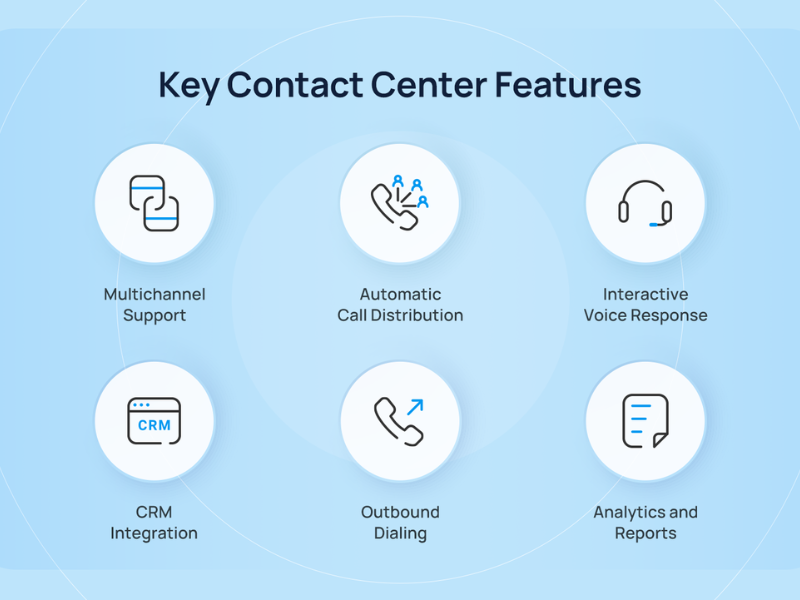
- Essential Soft Skills—And Why They Drive Business OutcomesStrong contact center agents demonstrate these behaviors regardless of channel (phone, chat, email):
1. Clear communication
Explains solutions in plain language without industry jargon or technical terms that confuse customers.Example: Instead of “I’ll escalate your ticket to Tier 2,” a strong agent says “I’m connecting you with a specialist who handles billing disputes—they’ll call you within 2 hours.”
Why this matters: Reduces repeat contacts. When customers understand the resolution clearly, they don’t call back asking “what happened?” This directly improves First Call Resolution (FCR)—typically 70-75% for strong communicators vs 50-60% for agents who use unclear language.
2. Emotional resilience
Stays composed when customers are upset, angry, or demanding. Doesn’t take complaints personally or respond defensively.Example: Customer yells “This is ridiculous! I’ve been waiting 3 days!” A resilient agent responds: “I understand how frustrating that delay must be. Let me pull up your account right now and fix this.”
Why this matters: Prevents escalation spirals. Customers often start frustrated but will de-escalate if the agent stays calm. Agents who mirror customer anger trigger supervisor escalations, longer handle times, and negative CSAT scores.
3. Active listening
Waits for the full problem before jumping to solutions. Asks clarifying questions. Paraphrases to confirm understanding.Example: Customer says “My payment didn’t go through.” Weak agent immediately says “I’ll process it manually.” Strong agent asks “When did you try to make the payment, and what error message did you see?”—discovering the real issue was a declined credit card, not a system problem.
Why this matters: Reduces handle time paradoxically. Agents who interrupt and guess wrong spend 8-12 minutes fixing the wrong issue, then re-handling the call. Agents who listen first solve correctly in 4-6 minutes.
4. Problem ownership
Takes responsibility for finding a solution instead of deflecting to other teams, policies, or “that’s not my department.”Example: Customer has a complex issue spanning billing and technical support. Weak agent says “You’ll need to call our tech team.” Strong agent says “I can see this involves both billing and technical—let me coordinate with our tech team while you’re on the line so we solve this together.”
Why this matters: Drives customer satisfaction. Customers rate “someone took ownership” as the #1 factor in positive experiences—even when the actual resolution was partial or delayed.
Example:
A strong agent acknowledges frustration first, then solves the issue.
A weak agent jumps to scripts and escalates too fast.
Technical Skills vs. Trainable Skills
Not all skills deserve equal weight.
| Category | Skills |
|---|---|
| Must-have | Basic computer literacy, typing accuracy, clear spoken English |
| Trainable | CRM navigation, product knowledge, call handling scripts |
From training teams, one pattern is consistent: teaching systems is easy. Teaching empathy is not.
Cultural Fit and Schedule Compatibility
Schedule mismatch is one of the top reasons agents quit early.
- Night and weekend shifts must be disclosed clearly.
- Mandatory overtime should never be a surprise.
- Team culture should match how managers actually lead.
During interviews, ask candidates how they handle routine, repetition, and feedback. Their answers reveal fit faster than resumes.
Building a Simple Candidate Profile Template
Before posting a job, define the target clearly.
| Criteria | Must-Have | Trainable |
|---|---|---|
| Communication | Clear spoken English | Advanced objection handling |
| Availability | Required shifts | Cross-team flexibility |
| Experience | Customer-facing role | Contact center tools |
This template keeps recruiters and hiring managers aligned.
Where and How to Attract Contact Center Candidates

Best Channels for Contact Center Recruiting
Each channel serves a different goal.
- Matching Recruiting Channels to Your Hiring NeedsDifferent channels serve different strategic purposes. The best mix depends on whether you’re scaling fast, replacing steady churn, or hiring for specialized roles.
Employee Referrals
Best for: Quality over speed, cultural fit, roles requiring specific soft skills
Cost: Low—typically $500-2,000 referral bonus per hire
Time-to-fill: 2-3 weeks average
Quality: Highest—referred candidates stay 40-50% longer than job board hiresWhy they work: Current agents self-select candidates who match the actual job culture. Employees won’t refer friends to a toxic environment or role they wouldn’t recommend, so high referral participation signals healthy retention conditions.
Implementation tip: Make bonuses contingent on 90-day retention. Pay $500 at hire, $1,000 at 90 days. This ensures agents recommend candidates who will stay, not just anyone who needs a job.
When to prioritize: You need 5-10 quality hires and can wait 3-4 weeks. You’re building long-term team culture.
General Job Boards (Indeed, LinkedIn, ZipRecruiter)
Best for: High-volume hiring, rapid backfill, entry-level roles
Cost: Medium—$200-500 per hire in ad spend
Time-to-fill: 3-5 weeks average
Quality: Mixed—expect 30-50% first-year attritionTrade-off: Large applicant volume but significant screening time. For every 100 applicants, expect 15-20 qualified candidates and 3-5 actual hires.
When this makes sense: You’re opening a new site, launching a major campaign, or backfilling unexpected attrition. You need 20+ agents within 6-8 weeks. Speed matters more than perfect cultural fit.
Best practice: Use targeted job titles and clear requirements to reduce unqualified applications. “Customer Service Agent – Must work nights/weekends” filters better than generic “Customer Service Representative.”
Niche Platforms (CallCenterJobs.com, FlexJobs, Remote.co)
Best for: Experienced agents, specialized skills (bilingual, industry-specific), remote-first teams
Cost: Medium-High—$300-800 per hire
Time-to-fill: 4-6 weeks
Quality: Higher for specific needs, but much smaller talent poolUse case examples:
- You need Spanish/English bilingual agents for healthcare support
- You’re hiring compliance-focused agents for financial services
- You’re building a fully remote team and need candidates experienced with remote work
Trade-off: Higher quality matches but 5-10x fewer applicants than general job boards. Worth it when specific skills are non-negotiable.
Local Community Groups (Facebook community pages, workforce development centers, community colleges)
Best for: Entry-level roles, local hiring, diversity recruiting
Cost: Very low—often free or <$100 in outreach
Time-to-fill: 4-6 weeks
Quality: Variable—requires strong screening processWhy this works: Reaches candidates who may not actively job-hunt online but are looking for stable work. Often connects with underrepresented groups (career changers, re-entering workforce, older workers).
Best practice: Partner with local workforce development programs. They pre-screen for basic employability (background, transportation, commitment) and often subsidize training costs.
Strategic Channel Mix Example
For a 100-seat contact center hiring 40 agents/year:
- 60% from referrals (24 hires)—highest retention, builds culture
- 30% from job boards (12 hires)—fills volume needs during scaling
- 10% from niche sites (4 hires)—specialized roles (bilingual, compliance-focused)
This mix balances quality, speed, and cost while reducing over-reliance on any single source.
Use referrals for quality. Use job boards for volume. Balance both.
Writing Clear, Realistic Job Descriptions
Overpromising causes early attrition.
Do
- List real schedules and performance metrics.
- Explain call volume and customer types.
- Clarify pay structure and incentives.
Don’t
- Hide stress factors.
- Use vague growth promises.
- Inflate role responsibilities.
Transparent job descriptions attract fewer applicants, but better ones.
Employer Branding Without Overcomplication
Employer branding is simply how candidates perceive you.
- Show real teams, not stock photos.
- Share honest employee testimonials.
- Keep the career page mobile-friendly.
A simple, authentic message beats polished but unrealistic claims.
Using Realistic Job Previews to Reduce Early Attrition
Realistic Job Previews—Low-Cost Tactics That Cut Early Attrition by 15-20%
Realistic job previews (RJPs) work by letting candidates experience the job’s reality before accepting an offer. Instead of discovering stress factors during week three of training, candidates self-select out during interviews if the role isn’t a fit.
Three Practical RJP Methods (Ranked by Effectiveness):
Method 1: Call Listening Session (15-20 minutes during interview)
How it works:
Play 2-3 recorded customer calls during the interview—one easy interaction, one difficult customer, one typical call.
Sample implementation:
- “Before we continue, I want you to hear what a typical day sounds like. I’ll play three actual customer calls.”
- Play calls (use anonymized recordings with customer permission)
- Ask: “How would you have handled the angry customer in call #2?” and “Does this match what you expected the job to be like?”
What you’re screening for:
- Can they handle hearing a customer be rude or demanding?
- Do they show empathy or defensiveness when listening?
- Do their expectations match reality? (Red flag: “I thought it would be easier”)
Cost: Zero (use existing recorded calls)
Time required: 15 minutes per candidate
Attrition reduction: ~10-15%
Method 2: Performance Dashboard Walkthrough (10 minutes during interview)
How it works:
Show candidates the actual dashboard they’ll see daily with real performance metrics.
Sample script:
“This is the dashboard you’ll see every day. Here’s what each metric means:
- Calls Handled: You’ll take 40-60 calls per day
- Average Handle Time: Target is 6 minutes; yours will be displayed in real-time
- CSAT Score: Customer ratings—goal is 4.2/5.0 or higher
- Adherence: Percentage of time you’re available when scheduled—goal is 95%+
Your supervisor will review these metrics with you weekly. You’ll always know exactly how you’re performing.”
Ask: “How do you feel about being measured this closely?”
What you’re screening for:
- Candidates uncomfortable with metrics will say “That’s a lot of tracking” or hesitate
- Strong candidates say “I like knowing how I’m doing” or “That seems fair”
Cost: Zero (screenshare existing dashboard)
Time required: 10 minutes per candidate
Attrition reduction: ~10-12%
Method 3: Paid Shadowing Session (1-2 hours, final-round candidates only)
How it works:
Invite final-round candidates to shadow a current agent for 1-2 hours (paid at their expected hourly rate).
Sample implementation:
- Candidate arrives and sits with a high-performing agent
- They listen to 8-12 live calls via headset
- Agent explains what they’re doing between calls
- Candidate asks questions
- Debrief: “What surprised you? Is this what you expected?”
What you’re screening for:
- Do they seem engaged or overwhelmed?
- Do they ask thoughtful questions or look uncomfortable?
- After seeing the reality, do they still want the job?
Cost: $15-25 per candidate (1-2 hours at expected wage)
Benefit: Eliminates ~20-25% of candidates who would have quit in first 90 days
ROI: Saving one bad hire ($3,000-6,000 replacement cost) pays for 120-400 shadowing sessions
When to use: Only for final-round candidates (top 2-3 per opening). Don’t offer shadowing to everyone—too resource-intensive.
Combined Approach for Maximum Impact:
Use all three methods in sequence:
- Phone screen: Describe job realities verbally
- First interview: Play call recordings + show dashboard
- Final round: Offer paid shadowing to top 2-3 candidates
Total attrition reduction: 15-20% fewer 90-day exits
Total cost per hire: <$50
ROI: Saves $3,000-6,000 per avoided bad hire
Screening and Selecting the Right Candidates

Simple Pre-Screening Methods That Save Time
A 5–7 minute phone screen filters fast.
- Availability confirmation.
- Communication clarity.
- Motivation check.
This step alone removes many poor-fit candidates.
Behavioral Interview Questions That Predict Performance
Use the STAR method (Situation, Task, Action, Result).
Question: Tell me about a time you handled an angry customer.
Good answer: Specific actions, calm approach, clear outcome.
Weak answer: Vague details, blaming the customer.
Ask 3–5 questions. Consistency matters more than quantity.
Group Interviews and Practical Assessments
Group interviews work well for high-volume roles.
- Brief role overview.
- Group discussion or role-play.
- Individual scoring.
Role-play scenarios reveal real behavior under pressure.
Common Hiring Mistakes to Avoid in Contact Centers
- Hiring too fast to fill seats.
- Ignoring schedule constraints.
- Overvaluing experience over attitude.
- Skipping realistic job previews.
Each mistake increases churn downstream.
Retention-Focused Recruiting Strategies

Setting Expectations Before the Offer Stage
Before making an offer, clarify:
- Daily KPIs and quality metrics.
- Shift patterns and overtime rules.
- Pay progression and bonus structure.
Clarity builds trust and reduces early exits.
Aligning Recruiting With Onboarding and Training
Recruiting should not end at the offer.
- Share candidate insights with trainers.
- Reinforce expectations during onboarding.
- Assign early-stage coaching support.
Smooth handoffs increase early engagement.
How Poor Hiring Decisions Drive Turnover
Poor fit creates constant stress. Stress leads to burnout. Burnout leads to exits.
The cost is not just rehiring. It’s lost customer satisfaction and team morale.
Using Exit Interview Insights to Improve Future Hiring
Ask every exiting agent:
- What surprised you most about the job?
- What made the role hardest?
- What would have helped you stay longer?
Feed this data back into job descriptions and interviews.
Using Technology to Improve Contact Center Recruiting
- ATS (applicant tracking system): Centralizes applications and status.
- Skills testing: Screens basic communication and typing.
- Remote interviewing: Speeds up high-volume hiring.
- Automation: Useful for scheduling, risky for decision-making.
Avoid over-automation. Human judgment still matters most.
Scaling Your Contact Center Recruiting Process

- Build a repeatable hiring framework.
- Track time-to-hire, early attrition, and quality scores.
- Consider agencies when internal teams hit capacity limits.
Scaling works best when quality standards stay fixed.
Contact Center Recruiting Checklist
- Define candidate profile before posting jobs.
- Use realistic job descriptions.
- Screen for attitude first.
- Validate schedule compatibility early.
- Align recruiting with onboarding.
- Collect and act on exit feedback.
This checklist can be reused for every hiring cycle.
FAQ

How long should contact center recruiting take?
Most SMB contact centers aim for 2–4 weeks from posting to offer.
What is the biggest cause of early agent turnover?
Mismatched expectations around workload, schedules, and stress.
Should I prioritize experience or soft skills?
Soft skills should come first. Experience is easier to train.
Are group interviews effective?
Yes, especially for high-volume roles with standardized tasks.
Conclusion / CTA

Contact center recruiting is not just about filling seats. It’s a retention strategy in disguise. When you hire for attitude, set clear expectations, and align recruiting with onboarding, turnover drops naturally.
If your center struggles with churn, start by auditing your current hiring process. Use the checklist above to find gaps, fix them, and build a recruiting system that supports long-term performance.
Read more:
Inbound Contact Center Guide Benefits and Best Practices
Outbound Dialer Guide Types Benefits and How to Choose
More in Industry
View all →
Customer Experience Trends 2026: What Changed and What to Do
Customer experience in 2026 is being reshaped by three converging forces: persistent economic uncertainty, widespread AI adoption, and fundamentally different customer expectations. Today's customers are more price-conscious than previous years, less attached to brands they once trusted, and willing to switch providers the moment value becomes unclear. For businesses, this means customer experience is no longer a differentiator—it's a survival…


Customer Experience Analytics: Metrics, Data and Tools
Most companies do not have a customer data problem. They have a customer data connection problem: marketing measures ad clicks, support measures resolution time, product measures feature adoption, and nobody can answer whether the customer who abandoned checkout on Tuesday is the same one who called about pricing on Thursday. Customer experience analytics is the practice that closes that gap…

What Is Customer Experience Management? A Practical Guide
Customer experience management (CXM) is the practice of designing, measuring, and improving every interaction a customer has with your company — treated as one connected journey rather than as separate departmental touchpoints. It is what turns a collection of well-meaning teams into an experience a customer can recognise as coming from a single organisation. The distinction that matters is between…



 English
  Russian
  Chinese