The Philippines has become the global hub for high-quality, cost-efficient call centers, delivering measurable savings while maintaining exceptional customer service. With a skilled, English-speaking workforce, competitive rates, and advanced infrastructure, it’s a prime destination for US companies seeking to streamline operations.
Key Takeaways
- Outsourcing to a Philippines call center can cut operational costs by 50–70%.
- Competitive rates average $8–14/hour compared to $20–40/hour in the US/Europe.
- Workforce of 1.8+ million in the IT-BPM sector with low attrition rates.
- 24/7 coverage with cultural compatibility for Western markets.
- Government incentives and strong industry regulation ensure stability.
- Top providers include Helpware, Teleperformance, [24]7.ai, and Magellan Solutions.
- Services range from inbound support to AI-powered analytics.
Overview of the Philippines Call Center Industry
The Philippine BPO sector has grown from a small offshore service niche in the early 2000s to a $38 billion powerhouse as of 2025. Holding 16% of the global outsourcing market share, it surpasses older hubs like India in customer service rankings.
Employing over 1.8 million professionals, the industry thrives due to a steady pipeline of college graduates in business, IT, healthcare, and communications. Filipino agents are known for empathy, neutral accents, and adaptability to Western cultures, which makes them ideal for high-touch customer experience roles.

Why the Philippines is a Leading Global Outsourcing Destination
- High English Proficiency: Nearly 94% of Filipinos communicate in English fluently, minimizing language barriers.
- Cultural Compatibility: Strong understanding of US idioms and customer expectations.
- Large Talent Pool: Over 500,000 new graduates yearly, feeding specialized sectors like healthcare CX and tech support.
- 24/7 Operations: Flexible work culture accommodates round-the-clock support for multiple time zones.
- Government Support: Tax holidays via PEZA, BPO-focused training via TESDA, and infrastructure upgrades by DICT.
- Emotional Intelligence: Agents are trained to provide empathetic, relationship-focused service, enhancing loyalty.
Cost Analysis of Outsourcing to a Philippines Call Center

Typical Outsourcing Rates (What You Pay BPO Vendors)
- Philippines: $8–14/hour (includes vendor markup, infrastructure, management)
- India: $6–10/hour Latin America: $10–18/hour
- US/Western Europe: $20–40/hour
Note: These are BPO provider rates with 40-50% markup included. Direct agent labor costs in Philippines are $2.90-3.20/hour fully loaded (salary + benefits + taxes). The difference covers vendor operations, technology, facilities, and profit margin.
Monthly Salary Bands
- Direct Agent Salary Structure (Internal BPO Costs)
Entry-level agent: 15,000-22,000/month ($400–$600 USD)
Experienced agent: 25,000-31,000/month ($700–$1,200 USD)
Supervisor/Manager: 60,000+/month ($1,200–$2,500 USD)These are base salaries paid to agents. With employer contributions (SSS, PhilHealth, 13th month bonus), total employment cost is approximately $2.90-3.20/hour fully loaded. BPO vendors then add 40-50% markup to cover infrastructure, technology, management overhead, and profit, resulting in the $8-14/hour rates you pay as a client.
Startup Costs (One-Time Setup)
For 5-10 Agent Pilot Program: $5,000–$8,000
- Workstations and equipment: $2,000-3,000
- Software licenses (CRM, dialers): $1,000-2,000
- Initial training materials: $1,000-1,500
- Legal/contract setup: $500-1,000
- First month infrastructure: $500-1,500
For 20-50 Agent Full Team: $12,000–$20,000
- Workstations and equipment: $6,000-9,000
- Dedicated CRM integration: $2,000-4,000
- Comprehensive training program: $2,000-3,500
- Infrastructure setup: $1,500-2,500
- Legal, HR, compliance setup: $500-1,000
Note: Many BPO providers absorb setup costs and spread them across monthly fees. Ask about setup fee waivers for 12-month contracts.
Key Cost Drivers
- Location (Manila vs provincial cities)
- Service complexity (technical vs basic support)
- Tech integration (CRM, AI tools)
- Training intensity
ROI Outlook
Savings can reach 60% within the first year, with efficiency gains from reduced handle time and improved CSAT scores.
Top 10 Call Center Companies in the Philippines
1. Flyfone – Cloud-Based Platform for Building Your Own Philippines Team
Company Overview: Flyfone is a cloud-based call center platform that enables companies to build and manage their own Philippines teams without traditional BPO markup. Instead of paying vendors $8-14/hour with 40-50% markup included, you hire agents directly at market rates ($2.90-3.20/hour fully loaded) while Flyfone provides infrastructure, technology, and support. Ideal for iGaming, crypto, fintech, and BPOs wanting direct control over operations.
Key Features:
- Pay-Per-Minute Pricing ($0.02-0.05/min): No per-seat fees, minimums, or contracts. 100-agent team runs ~$9,600/month vs $10,000-12,000 with traditional BPOs. Perfect for seasonal scaling.
- Live in under 60 minutes—configure phone numbers (200+ countries), IVR, auto-dialer, add agents. No consultants or weeks-long onboarding.
- AI Quality Assurance: Scores 100% of calls automatically. Reduces manual QA by 70%, catches compliance issues real-time.
- Multiple Auto-Dialers: Predictive (200-300% productivity boost), Power, Progressive modes for different campaign needs.
- AWS Singapore Infrastructure: 99.9% uptime, low APAC latency, 1-year call retention, encrypted data.
- 18/7 Live Chat Support: Real humans Monday-Friday 8am-2am, Saturday-Sunday 10am-8pm SGT. 24/7 email support.
Best For: 10-500 agent operations needing direct control, fast deployment, usage-based pricing, or operating in iGaming/Crypto/Fintech with compliance requirements.

2. Teleperformance – Global BPO Giant with Deep Philippines Presence
Company Overview: Operating since 1996 with 45,000+ employees across 22 Philippine locations (Manila, Cebu, Baguio, Bacolod, etc.). Part of 400,000+ global workforce serving Fortune 500 clients in telecom, retail, healthcare, financial services, and technology.
Key Features:
- Massive Scale & Redundancy: 22 facilities ensure business continuity during disasters. Can deploy 500-1,000 agent teams with backup locations.
- Multilingual Services: 30+ languages including Spanish, French, Japanese, Mandarin. Centralized APAC hub for global brands.
- Mature QA Infrastructure: Six Sigma methodology, 88-92% CSAT for enterprise clients, formal remediation processes.
- Industry Verticals: Specialized teams for healthcare (HIPAA), financial services (PCI-compliant), telecom, e-commerce.
- Omnichannel: Voice, email, chat, social media, back-office all under one roof.
Pricing: $10-14/hour, setup fees $15,000-25,000, 12-month minimum, 50+ seats.
Best For: Enterprises needing 200+ seats, multilingual support, regulatory compliance, business continuity.

3. Concentrix – Largest Philippines BPO Workforce
Company Overview: 80,000 employees in Philippines (largest single BPO employer), 15+ sites in Manila, Cebu, Davao, Bacolod, Clark. Part of 265,000 global workforce. Serves major tech (Microsoft, Google, Amazon), telecom, financial clients.
Key Features:
- Advanced Analytics: Proprietary CX Intelligence platform with predictive analytics, real-time dashboards, churn risk identification.
- AI Integration: NLP for email/chat automation, chatbots handle 20-30% of tier-1 inquiries, speech analytics scores 100% of calls, sentiment analysis.
- Low Attrition: 22-26 month average tenure (vs 18-24 industry standard) via career pathing, tuition reimbursement, quarterly bonuses.
- Security & Compliance: SOC 2 Type II, ISO 27001, PCI-DSS Level 1, HIPAA-compliant with annual audits.
- Fast Scaling: Ramp 100-500 agents in 6-8 weeks (vs 8-12 week industry average) with pre-screened candidate bench.
Pricing: $12-16/hour standard, $16-22/hour specialized, setup $20,000-30,000, 12-month minimum, 100+ seats.
Best For: Large enterprises (500+ seats) needing advanced analytics/AI, multi-country coordination, Fortune 500 standards.

4. Alorica – High-Touch Customer Experience Specialist
Company Overview: 16,000+ employees across Metro Manila, Cebu, Clark since early 2000s. Focuses on empathy-driven CX for healthcare, insurance, telecom, fintech where relationship-building drives loyalty.
Key Features:
- Extended Training: 4-6 weeks (vs 2-3 week industry norm) covering product knowledge, soft skills, simulated scenarios. Reduces handle time 15-20%, improves FCR 10-15%.
- Vertical Expertise: Dedicated healthcare (HIPAA), telecom, fintech, e-commerce teams with industry certifications.
- Consistent 90%+ CSAT: Agent empowerment (authority to issue credits, escalate without approval), emotional intelligence coaching.
- Omnichannel: Single agent handles voice, email, chat, SMS with unified CRM history for personalized service.
- Seasonal Flexibility: Flex agents for volume spikes (50→150 agents during holidays, scale back in January).
Pricing: $11-15/hour inbound, $15-19/hour specialized, setup $12,000-20,000, 12-month minimum, 30+ seats (20 for pilots).
Best For: 30-300 seats prioritizing CSAT/NPS over cost, empathy-driven industries (healthcare, insurance, financial services).

5. [24]7.ai – AI-Powered CX with Predictive Engagement
Company Overview: 6,000+ agents in Manila and Cebu since 2006. AI-first approach combining human agents with predictive analytics, intent prediction, automated engagement. Serves telecom, retail, financial services, travel.
Key Features:
- Predictive Engagement: AI analyzes behavior (website clicks, app usage) to proactively offer help before customers call. Reduces inbound volume 15-25%.
- Intent-Based Routing: NLU determines intent in first seconds, routes to specialized agent or IVR. Reduces misroutes 40%, improves FCR 12-18%.
- Agent Assist: Real-time AI suggestions with knowledge articles, recommended responses, next-best-action guidance. Cuts handle time 20-25%.
- Hybrid Automation: Chatbots handle 30-40% of tier-1 inquiries 24/7, escalate when sentiment negative or issue complex.
- Analytics Dashboard: Real-time visibility into call drivers, sentiment trends, agent performance, automation effectiveness.
Pricing: $13-17/hour for agents + $0.10-0.30 per AI-automated interaction, setup $25,000-40,000, 12-month minimum, 50+ seats.
Best For: Tech-savvy enterprises (100-500 seats) wanting AI-human hybrid, high-volume repetitive inquiries, analytics-driven optimization.
![247ai #rusaforhighereducation #transformingeducation | [24]7.ai India](https://media.licdn.com/dms/image/v2/D5622AQGOlejzZ1suKQ/feedshare-shrink_800/feedshare-shrink_800/0/1690537314472?e=2147483647&v=beta&t=wIDWudU6gwqonAdTD93XD9QlZV-yNW8NpNC7nhgrDLo)
6. TTEC – Process Consulting + BPO Services
Company Overview: 18,000+ agents in 12 Philippine hubs since 2002. Offers CX consulting (strategy, tech selection, process redesign) alongside traditional BPO operations.
Key Features:
- CX Consulting: Strategy workshops, customer journey mapping, technology selection guidance, change management. Typical 2-3 month engagement before BPO transition.
- Technology Integration: Certified partner for Salesforce, Microsoft Dynamics, Genesys, Five9. Can integrate existing stack or deploy new systems.
- Humanify® Platform: Proprietary omnichannel routing, WFM, QM, analytics—or use your own tech.
- Industry Depth: Healthcare (claims, prior auth), financial services (fraud detection), telecom, automotive with certifications.
- Global Delivery: Coordinates Philippines with US, Bulgaria, Mexico, South Africa hubs for follow-the-sun support.
Pricing: $12-16/hour BPO, consulting $50,000-200,000 (project-based), setup $20,000-35,000, 12-month minimum, 50+ seats.
Best For: 100-500 seats needing CX strategy + execution, digital transformation, tech integration beyond labor arbitrage.
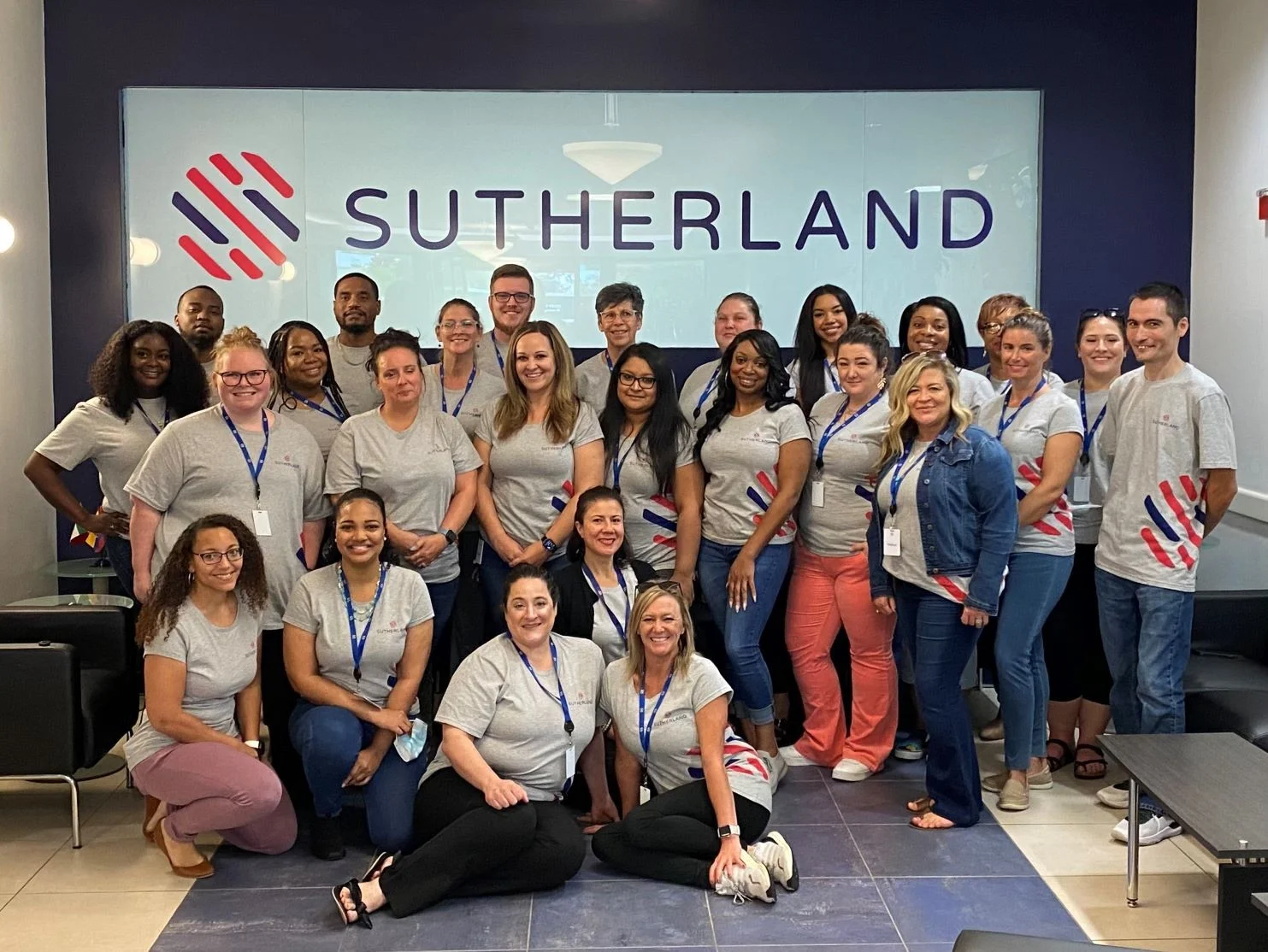
7. Sutherland Global Services – Process Transformation Specialists
Company Overview: 12,000+ agents in Manila, Cebu, Bacolod since 1990s. Differentiates through Lean Six Sigma process transformation—redesigning workflows for efficiency before offshoring.
Key Features:
- Lean Six Sigma: Process mapping, root cause analysis, statistical control, continuous improvement (DMAIC). Typical 3-4 month transformation before ramp-up yields 15-30% efficiency gains.
- Industry Certifications: ISO 9001, ISO 27001, COPC Certified, PCI-DSS with annual audits.
- Digital Automation: RPA for back-office tasks (data entry, invoices) reduces manual work 40-60%. AI document extraction for forms, contracts, claims.
- Outcome-Based Pricing: Optional payment based on business outcomes (cost per resolved ticket, cost per new account) vs per-seat.
- Custom Analytics: Dashboards showing operational KPIs, financial metrics, process improvement ROI with weekly business reviews.
Pricing: $11-15/hour, process transformation $75,000-150,000 (often waived for 12+ month commit), outcome-based pricing available, 50+ seats.
Best For: 50-500 seats wanting process optimization + BPO, inefficient legacy workflows, outcome-based pricing alignment.
8. SixEleven Global Services – Homegrown Philippines BPO for SMBs
Company Overview: Filipino-owned, founded 2001, 3,000+ agents in General Santos City, Davao, Manila. Targets mid-market and SMBs (10-100 agents) with personalized service and flexibility.
Key Features:
- Provincial City Advantage: General Santos/Davao offers 15-20% lower costs (₱14,000-16,000/month vs ₱18,000-22,000 Manila), lower attrition (25% vs 30-35%), less commute stress.
- Fast Deployment: 4-6 weeks vs 8-12 for enterprise BPOs. Flexible 6-month pilots for 10-20 seats (no rigid 12-month minimums).
- Personalized Service: Direct access to account director and ops manager. Weekly video calls with leadership. Custom requests executed in days vs weeks.
- Service Range: Inbound customer service, outbound sales (cold-calling, appointment setting), telemarketing, back-office (data entry, email), content moderation.
- Tech Flexibility: Works with your existing tech stack (CRM, contact center software) vs forcing proprietary systems.
Pricing: $8-12/hour inbound/back-office, $10-14/hour outbound, setup $5,000-10,000 (waived for 12-month), 10+ seats, 6-month contracts.
Best For: SMBs/startups (10-100 seats) needing agility, lower provincial costs, personalized service without enterprise bureaucracy.
.jpg?w=1200&h=675&auto=format%2Ccompress&fit=max&enlarge=true)
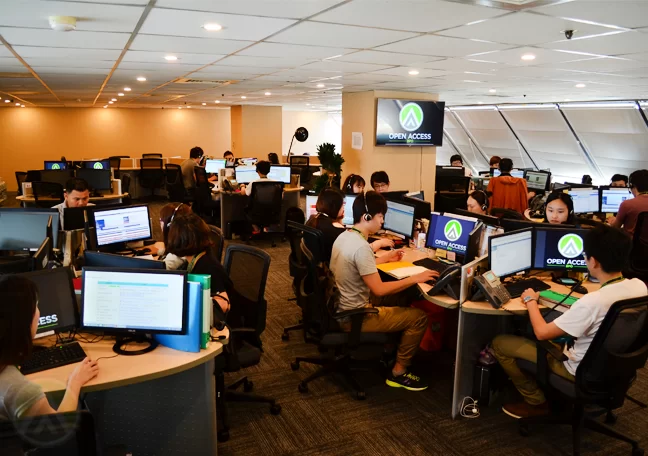
9. Open Access BPO – Multilingual & Content Moderation Focus
Company Overview: 3,500+ agents in Makati since 2006. Specializes in multilingual support (30+ languages) and content moderation for tech companies (Uber, TripAdvisor, Amazon), social media platforms, marketplaces.
Key Features:
- 30+ Languages: Native speakers for European (Spanish, French, German), Asian (Japanese, Mandarin, Korean), Middle Eastern (Arabic, Hebrew) languages. Hired specifically for language proficiency + CX skills.
- Content Moderation: Trained moderators review user-generated content for community standards violations, illegal content, spam, misinformation. Psychological support for moderators handling disturbing material.
- Cultural Awareness: Immersion training in US slang, European etiquette, Japanese honorifics, Middle Eastern sensitivities. Reduces misunderstandings.
- E-commerce Expertise: Order management, returns/refunds, seller/buyer disputes, fraud detection for Amazon, eBay, Shopify platforms.
- Tech Integration: APIs with content moderation platforms (Besedo, Hive, Sift), CRMs (Salesforce, Zendesk), e-commerce systems.
Pricing: $10-14/hour English, $12-16/hour European languages, $14-18/hour Asian languages, $11-15/hour content moderation, setup $10,000-20,000, 20+ seats.
Best For: Tech companies (20-200 seats) with multilingual customers, social media content moderation, online marketplaces, global e-commerce brands.
10. VXI Global Solutions – US-Based Provider with Philippines Operations
Company Overview: 10,000+ employees in Manila (Ortigas, BGC, Makati) and Cebu since 1998. US-headquartered (Los Angeles) serving primarily US clients in technology, telecom, healthcare, financial services.
Key Features:
- US Account Management: Client-facing directors based in US handle contracts, SLAs, escalations. Day-to-day ops in Philippines, but ultimate accountability US-side (easier for US legal/procurement).
- Quality-First: 90%+ CSAT targets with financial penalties if underperformed. FCR emphasized over handle time—agents empowered to fully resolve vs rush customers.
- Technology Stack: Enterprise-grade Genesys, Five9, Salesforce, Zendesk, Verint WFM, Calabrio QM without client CapEx.
- Healthcare Vertical: Dedicated HIPAA-compliant facilities for insurance verification, prior authorization, claims, patient scheduling. SOC 2 audited annually.
- Scalability: Ramp 50-200 agents in 8-10 weeks with structured onboarding (2 weeks training, 1 week nesting, 1 week monitored live).
Pricing: $13-17/hour standard, $17-22/hour healthcare, setup $20,000-30,000, 12-month minimum, 50+ seats. SLA penalties/bonuses built-in.
Best For: US enterprises (50-500 seats) wanting offshore savings with onshore accountability, HIPAA compliance, quality-first vs cheapest option.
Note: Rankings based on 2025–2026 market presence, workforce size, client satisfaction scores, and industry recognition.

Types of Call Center Services Commonly Outsourced

- Inbound Customer Service – Handling inquiries, complaints, orders.
- Outbound Sales & Telemarketing – Lead generation, cold-calling campaigns.
- Technical Support – Troubleshooting, IT helpdesk.
- Back-Office Functions – Data entry, billing, HR processing.
- Non-Voice Services – Chat support, social media care, content moderation.
Technology Use and Innovation in Philippine Call Centers

- AI & Automation: Chatbots, RPA streamline high-volume queries.
- Predictive Analytics: Anticipate customer needs, improve first-call resolution.
- Omnichannel CRM: Integrated voice, email, chat, and social tracking.
- Cloud-Based Systems: Ensure scalability and remote agent deployment.
- Hybrid Human–AI: Technology augments human empathy, not replaces it.
Challenges Facing the Philippines Call Center Industry

1. Infrastructure Capacity Limits in Metro Manila
- Power reliability: Typhoon season (June-November) brings occasional outages despite backup generators
- Internet bandwidth: Peak hour congestion (8AM-5PM) in older business districts
- Traffic congestion: 90-minute average commute times vs 45 minutes in Cebu/Davao
- Mitigation: Leading providers operate multi-city hubs (22 locations for Teleperformance) and have work-from-home backup capacity
2. Wage Inflation Narrowing Cost Advantage
- Agent salaries increased 5-7% annually from 2020-2025
- Entry-level pay rose from ₱12,000 to ₱18,000/month over 5 years
- Cost gap vs US still significant (60-70% savings) but narrowing vs India/Vietnam
- Mitigation: Providers investing in automation to offset labor cost growth; only 8% reduced headcount due to AI, most use AI to boost agent productivity
3. Emerging Competition from Vietnam, Colombia
- Vietnam: 20-30% lower costs than Philippines, strong IT infrastructure, government incentives
- Colombia: Nearshore advantage for US (same time zone), Spanish + English bilingual
- Philippines edge: Superior English proficiency (94% vs Vietnam 60%), deeper BPO talent pool (1.8M vs Vietnam 200K), established reputation
- Recommendation: Philippines remains #1 for English-based customer service; consider Vietnam for cost-sensitive projects, Colombia for Spanish language needs
4. Agent Attrition (20-30% Annually)
- High-stress environment, night shifts for US hours, career progression limits
- Better than US call centers (30-45% attrition) but still requires constant recruitment
- Mitigation: Tier-1 providers have robust talent pipelines (500,000 college graduates yearly), career development programs (agent → supervisor → manager), competitive benefits
- Client impact: Vendor absorbs replacement costs but expect 10-15% of your team in continuous onboarding
How to Choose the Right Call Center Partner in the Philippines
- Clarify Needs: Define inbound, outbound, or blended service goals.
- Verify Tech Stack: CRM integration, cloud readiness, analytics capabilities.
- Quality Assurance: Proven CSAT scores and industry compliance.
- Industry Familiarity: Specialized experience in your niche.
- Cultural Fit: Ability to align with your customer base.
- Check References: Case studies and client feedback.
Addressing Common Concerns About Philippines Outsourcing

Concern #1: Won’t the accent/language be an issue with our US customers?
Reality Check:
- Philippines ranks #22 globally in English proficiency (higher than France, Spain, Italy)
- 94% of population speaks fluent English with neutral accent (American English taught since 1900s)
- Customer satisfaction data: Filipino agents score 85-90% CSAT vs 88-92% with US agents (minimal 3-5 point gap)
Why Philippines Accent is Better Than Other Offshore Locations:
- vs India: Customers rate Filipino accent 30% higher in satisfaction (less heavy accent, fewer idioms)
- vs Latin America: English proficiency much stronger (94% vs 60-70% in LatAm)
- vs Eastern Europe: More cultural familiarity with American idioms, pop culture references
Training Mitigates Any Gap:
- 2-week accent neutralization and voice training before going live
- US cultural immersion: American slang, holidays, sports, customer service norms
- Continuous coaching on “direct communication” (Filipinos culturally more indirect/polite, need coaching for US directness)
First-Hand Experience:
We were skeptical about the accent issue. After 6 months with our Manila team, our CSAT actually increased from 85% to 88%. Customers comment on how ‘polite and helpful’ the agents are. The accent concern was overblown”. Operations Director, E-commerce Company
Recommendation: Request sample call recordings during RFP. Judge for yourself.
Concern #2: How do I manage a team 12 time zones away?
Reality Check: Most Philippine call center agents work YOUR business hours (night shift in Manila).
Time Zone Math:
- Manila is GMT+8
- US Eastern Time is GMT-5 (13-hour difference)
- When it’s 9AM Monday in New York, it’s 10PM Monday in Manila
This Means:
- Your Philippines team works 10PM-7AM Manila time = 9AM-6PM your time
- You interact with them during YOUR normal workday (no 3AM calls)
- Daily standup meetings at 9AM your time = end of their shift, perfect for handoff
Account Manager Bridge:
- Most BPO providers assign US-based account manager (or one working US hours)
- You communicate with account manager in your time zone
- They coordinate with Manila operations team during overlap hours
Technology Eliminates Distance:
- Cloud contact center platforms (Five9, Genesys, Talkdesk) give you real-time dashboards
- Monitor call queue, agent status, CSAT scores from anywhere, anytime
- Recorded calls accessible 24/7 for quality review
- Slack/Teams for instant communication with supervisors
Communication Cadence (Typical):
- Real-time: Dashboards, alerts for SLA breaches
- Daily: End-of-shift summary email (what happened, any issues, tomorrow’s plan)
- Weekly: Video call with account manager + team lead (performance review, process tweaks)
- Monthly: Business review with senior management (trends, improvement plans, expansion discussions)
Agent Perspective:
- Night shift is PREFERRED by many Filipino agents (10-30% night differential pay)
- Manila has a vibrant 24-hour culture (malls, restaurants open late to serve BPO workers)
- Career advancement often tied to US-hours positions (higher pay, client-facing)
Recommendation: During pilot, establish clear communication protocols (daily summary template, weekly meeting agenda). Over-communicate early, scale back once rhythm is established.
Concern #3: What if quality drops and we can’t fix it fast?
Risk Mitigation Strategies:
1. Pilot Program with Exit Clause
- Start with 60-90 day pilot, 5-10 agents
- Include 30-day termination clause (if not working, exit with 30 days notice, minimal penalty)
- Define success criteria UPFRONT: “CSAT >85%, FCR >75%, Quality Score >90% by day 60 or we terminate”
2. Service Level Agreements (SLAs) with Teeth
- CSAT target: >85% or 5% monthly fee reduction
- FCR target: >75% or remediation plan required
- Quality score: >90% or additional training at vendor’s expense
- Uptime: >99.5% or credits for downtime
3. Real-Time Quality Monitoring
- Random call sampling: 5-10% of all calls reviewed daily
- AI-powered QA: Tools like CallMiner, Observe.AI score 100% of calls automatically
- Daily quality reports: Catch issues within 24 hours, not weeks later
- Weekly calibration: Your QA team + BPO QA team review calls together to align standards
4. Hybrid Model During Ramp-Up
- Keep 20-30% of volume in-house during first 3-6 months
- Complex/VIP customers → in-house team
- General/transactional → offshore team
- Gradually shift more volume as confidence builds
5. Escalation Tiers
- Tier 1 (minor issues): Supervisor responds within 4 hours
- Tier 2 (quality drops): Operations manager + remediation plan within 24 hours
- Tier 3 (critical): Account director + you on call within 2 hours, daily updates until resolved
Warning Signs to Watch:
- Week 4-6: If CSAT hasn’t improved from week 1, intervention needed
- Agent turnover >30% during pilot (indicates training issues, poor culture)
- Consistent errors in same area (knowledge gap, process issue)
- Slow response from account manager (>24 hours to reply to urgent issues)
Success Indicators:
- CSAT trending upward week-over-week (even if not at target yet, improvement shows potential)
- Agents asking good questions (shows engagement, learning)
- Supervisor catching issues before you do (proactive quality management)
- Positive feedback from your internal team collaborating with BPO
Recommendation: Don’t expect perfection in month 1. Look for continuous improvement trend. If no improvement by week 6-8, that’s a red flag.
Concern #4: Is our customer data secure with offshore providers?
Short Answer: Tier-1 Philippine BPOs have SAME security certifications as US providers.
Security Certifications (Verify During RFP):
- ISO 27001: International standard for information security management
- SOC 2 Type II: Audited controls for security, availability, confidentiality (required by most US enterprises)
- PCI-DSS: Payment Card Industry compliance (if handling credit card data)
- HIPAA: For healthcare BPO handling protected health information (PHI)
Philippine Data Privacy Laws:
- Data Privacy Act of 2012: Philippines equivalent to GDPR (strict data handling, breach notification requirements)
- National Privacy Commission (NPC): Government agency enforcing compliance, can levy heavy fines
- BPO industry is heavily regulated due to economic importance (government wants to protect reputation)
Physical Security (Standard at Tier-1 Facilities):
- Biometric entry: Fingerprint/facial recognition to enter building and office floors
- No USB ports: Workstations locked down, no external drives allowed
- No phones/cameras: Personal devices prohibited on production floor
- CCTV monitoring: 24/7 video surveillance, recorded and stored
- Clean desk policy: No paper notes, all work in system only
- Secure badge disposal: Can’t take badge out of building
Digital Security:
- VPN-only access: All systems accessed through encrypted VPN tunnel
- No direct internet: Agents can only access approved work systems
- Whitelisted websites: Can’t browse open internet from work machines
- Email/file transfer logs: All data movement tracked and auditable
- Screen recording: Some providers record screens (not just calls) for audit trail
Background Checks & Legal:
- Pre-employment screening: Criminal background check, education verification, previous employment check
- NDA (Non-Disclosure Agreement): All agents sign before accessing your data
- Non-compete clause: Prevents agents from working for your competitors
- Periodic re-screening: Some providers re-check backgrounds annually
Data Handling Best Practices:
- Data minimization: Only provide data necessary for the job (don’t send entire customer database)
- Tokenization: Mask sensitive data (credit cards, SSNs) where possible
- Role-based access: Agents only see data relevant to their function
- Regular audits: Quarterly security audits, penetration testing
For Highly Sensitive Data:
- Consider hybrid model: Sensitive data (PHI, financial) stays in-house, general support offshore
- Philippines-based servers: Some providers offer data residency (data never leaves Philippines data center)
- Dedicated infrastructure: Your data on separate servers, not shared with other clients (more expensive but higher security)
Red Flags During Due Diligence:
- Provider can’t produce recent SOC 2 report (should be
- Vague answers about data handling processes
- No facility tour offered (what are they hiding?)
- Agents using personal phones/laptops (major red flag)
- No formal incident response plan
Questions to Ask:
- Can you provide your most recent SOC 2 Type II report?
- Have you had any data breaches in past 3 years? (If yes, how handled?)
- What happens if an agent violates data policy? (Immediate termination + legal action?)
- Can I tour your facility and see security measures in person?
- What’s your incident response time if breach detected? (Should be
Recommendation: For first engagement, start with less-sensitive data (order status, general support). Expand to sensitive data only after 6-12 months of proven security compliance.
Concern #5: What about agent turnover? Will we constantly be retraining?
Reality: 20-30% annual attrition in Philippines BPO (better than US, but still significant).
Context:
- US call center attrition: 30-45% annually (Philippines is better)
- India BPO attrition: 15-20% for IT roles, 30-40% for voice roles (comparable)
- No call center market has
Why Attrition Happens:
- Career progression limits: Agent → Senior Agent → Team Lead → Supervisor (only so many management roles)
- Night shift burnout: Working US hours (night in Manila) takes toll over time
- Competitive market: 750+ BPO companies in Philippines, agents get poached with higher pay
- Education aspirations: Many agents use BPO as temporary job while studying or saving for other careers
What This Means for You:
- Expect 10-15% of your team in continuous onboarding at any time
- 50-agent team: ~10-15 agents turn over annually, need replacement
- Training pipeline must be constant (not one-time event)
How Tier-1 Providers Manage This:
- Robust talent pipelines: 500,000 college graduates yearly in Philippines, constant recruitment
- Bench strategy: Pre-screen candidates, some providers keep “bench” of trained agents ready
- Career pathing: Clear advancement path with salary increases every 6-12 months
- Retention programs: Performance bonuses, best agent awards, team outings, wellness programs
- Backfill guarantee: Contract specifies vendor must maintain staffing levels (you don’t pay to replace agents)
Your Responsibilities:
- Provide detailed training materials: Product docs, FAQs, call scripts, process flows
- Allow for learning curve: New agents need 2-4 weeks to reach full productivity
- Budget for continuous training: 5-10% of team always in onboarding phase
- Monitor onboarding metrics: Track how fast new agents reach quality/speed targets
Financial Impact:
- Most BPO contracts: You pay per seat, vendor absorbs turnover cost
- Verify in contract: “Vendor responsible for backfilling all positions within 5 business days at no additional charge”
- Hidden cost: Quality dip when new agents start (first 2-4 weeks), plan for this
Mitigation Strategies:
- Build team buffer: Need 50 agents? Contract for 55 (10% buffer for turnover/training)
- Tiered support: New agents handle simple queries, experienced agents handle complex (reduces risk)
- Knowledge base investment: Better documentation = faster ramp-up for new agents (40 hours upfront saves 100s of hours later)
- Stay interviews: Provider should conduct “why do you stay?” interviews with long-tenure agents, replicate those factors
- Retention bonuses: Some clients offer bonuses to agents at 1 year, 2 year milestones (provider administers)
Signs of Unhealthy Attrition:
- 40% annual turnover (provider has culture/pay issues)
- Top performers leaving (if your best agents quit, something’s wrong with client, not just industry)
- Entire teams leaving together (management issue or competitor poaching)
- Turnover during pilot >30% (red flag, should be lower during eval period)
Healthy Attrition Profile:
- 20-25% annually (industry norm)
- Mix of voluntary (better opportunities) and performance-based (bottom 10% managed out)
- Average agent tenure 18-24 months (enough to recoup training investment)
- Core team (20-30%) with 3+ year tenure (provides stability)
Questions to Ask Provider:
- What’s your actual attrition rate? (Ask for last 12 months, not “industry average”)
- What’s average agent tenure on accounts similar to ours? (Should be 18+ months)
- How fast can you backfill? (5 business days or less)
- What’s your bench strategy? (Pre-screened candidates ready?)
- Do you charge for backfills? (Should be NO)
Recommendation: Accept 20-30% attrition as industry reality. Focus on choosing provider with strong talent pipeline and backfill process, not one claiming “we have no attrition” (not believable).
FAQs About Philippines Call Center Outsourcing
What services can I outsource?
Inbound/outbound customer care, technical support, back-office tasks, non-voice digital services.
How much can I save?
Typically 50–70% compared to in-house US teams.
Is data secure?
Yes, providers follow strict compliance like GDPR and HIPAA.
Can they handle global clients?
Yes, 24/7 multilingual support is common.
Are they reliable long-term?
Government incentives and strong infrastructure make the industry stable.
Conclusion
The Philippines call center industry offers an unmatched combination of cost savings, skilled talent, and cultural compatibility for US businesses. Whether you need inbound support, tech troubleshooting, or omnichannel CX, the right partner can deliver measurable ROI. Assess your needs, shortlist vendors, and leverage this global leader to transform customer experience while optimizing costs.
Read more:
Best Fintech Customer Service Software for Banking CX
Top Enterprise Contact Center Solutions for Scalable Support
Crypto KYC Verification Calls for Secure Compliance
More in Operations & CX Optimization
View all →
Customer Experience Transformation: Framework and Steps
A telecom customer calls support about a billing error. They explain the problem to the IVR system. Then to the first agent. Then get transferred and explain again. Then escalated—and explain a third time. Forty minutes later, they're exhausted and the problem still isn't solved. This is what broken customer experience looks like. And it's costing you customers. Customer experience…


Web Caller Meaning: JavaScript caller, Calling Tools or Portals
“Web caller” is one of those phrases where the search results and the searcher are frequently talking about different things. Three unrelated audiences use it: developers hitting an error on the legacy JavaScript caller property, buyers evaluating browser-based calling software, and people trying to reach a specific portal or training page whose exact name they cannot recall. That fragmentation is…
Customer Experience Strategy: How to Build One That Works
Customer experience is getting worse, not better. Forrester's 2025 Global CX Index found that 21% of brands declined in CX quality while only 6% improved — and in the US, 25% declined against 7% that improved, the second consecutive year of that pattern. Most of those brands were not neglecting customer experience. They were working on it without a strategy…


 English
  Russian
  Chinese