
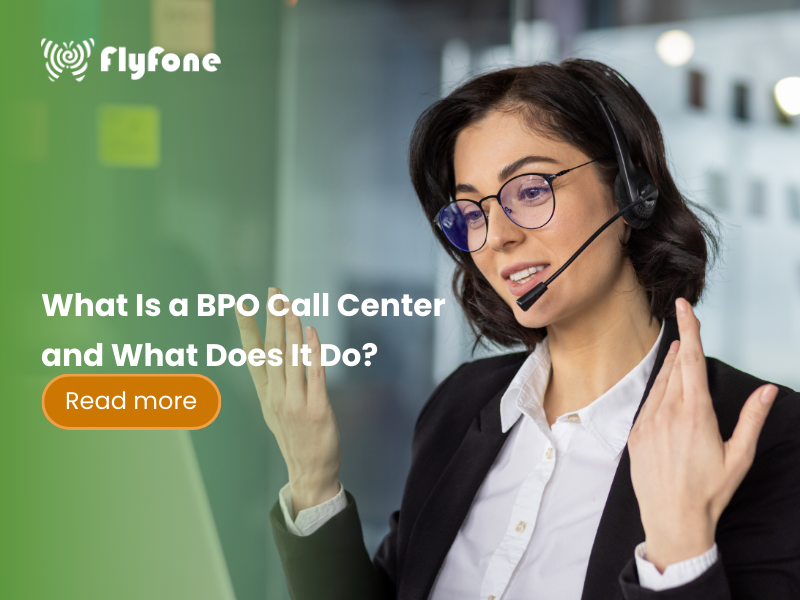
If your team is drowning in calls, emails, and chats, a BPO call center can step in fast. This guide shows you—in plain English—what a BPO call center is, what it does, key pros and cons, and how to decide if outsourcing customer service or sales is right for your business.
Key takeaways at a glance

- A BPO call center is an outsourced call center run by a third-party company that handles customer calls and other interactions for your business.
- BPO stands for Business Process Outsourcing, which simply means hiring an outside provider to handle specific operations like customer service BPO or sales.
- A BPO call center manages inbound and outbound work, including support calls, sales calls, order questions, renewals, and follow-ups.
- Main types include inbound, outbound, and virtual/remote BPO call centers, often working across phone, email, chat, SMS, and social media.
- Key benefits are cost savings, scalability, better coverage, and access to specialized tools and expertise without building everything in-house.
- Main risks include less direct control, possible quality issues, data security and compliance concerns, and hidden costs if contracts are not managed well.
- You should consider a BPO call center when your team is overwhelmed, call volume is growing or seasonal, or you need extended hours or multilingual support.
What is a BPO call center?

Simple definition in plain English
In simple terms, a BPO call center is an outside company that handles customer calls and related tasks for your business.
Business Process Outsourcing (BPO) means you hire a third-party vendor to run a piece of your operations, like customer support, technical help, or sales outreach.
So a BPO call center is a specialized outsourced call center that:
- Answers incoming calls from your customers (support, billing, order questions, etc.).
- Makes outgoing calls to your customers or prospects (sales, follow-ups, renewals, surveys).
- Often handles other channels like email, chat, and social media messages.
They act as an extension of your own team, not a random group of agents:
- They use your brand name, scripts, and policies.
- They follow your rules for refunds, escalations, and tone.
- Customers usually cannot tell they are speaking with a third-party provider.
Example:
You run a growing eCommerce store. You get flooded with calls about shipping, returns, and product questions during the holidays. Instead of hiring and training 20 temporary reps, you outsource that work to a BPO call center. Their agents follow your scripts, answer questions, and process returns under your brand.
How a BPO call center fits into customer service and business operations
A BPO call center usually sits inside your broader customer service and contact center strategy. It’s one piece of your service stack, alongside:
- In-house agents.
- Self-service tools (FAQ, help center, chatbot).
- Email ticketing systems and CRM.
Today, many BPO call centers are full contact centers. They support:
- Phone calls.
- Email tickets.
- Live chat.
- Social media messages.
- Sometimes SMS.
Compared with other options:
- In-house call center: You own the people, tools, and office. More control, higher fixed costs.
- Self-service only: Cheap and scalable, but many customers still need human help.
- Small internal team: Works at low volume, but breaks when you scale.
BPO call centers help you:
- Keep customer service running smoothly.
- Avoid building a large internal call center from scratch.
- Focus your core team on product, marketing, and operations while specialists handle customer interactions.
What does a BPO call center actually do day to day?

Common inbound call center tasks
Inbound BPO call centers mainly handle incoming calls and messages from customers and prospects.
Typical day-to-day inbound work includes:
- Answering customer service questions and basic technical support
Agents handle password resets, login issues, simple troubleshooting, and “how-to” questions about products or services. - Order processing and order status
They take orders over the phone, update orders, track shipments, handle returns and exchanges, and answer billing questions. - Account changes and subscription management
Agents update customer details, change plans, manage upgrades and downgrades, handle cancellations, and help with renewals. - Billing and payment questions
They explain charges, fix billing errors, update payment methods, and guide customers through payment steps. - Triage and escalation
They solve simple issues directly and carefully pass complex or high-risk cases to your internal experts.
Inbound support is not limited to phone. Many BPO call centers also:
- Respond to email tickets.
- Handle website live chat.
- Reply to social media messages and SMS.
This matters because:
- Customers get faster answers, shorter hold times, and predictable support.
- Your internal team can focus on higher-value work instead of fielding repetitive questions all day.
Common outbound call center tasks
Outbound BPO call centers focus on proactive outreach—they call customers and prospects instead of waiting for calls.
Common outbound tasks include:
- Sales and telemarketing calls
Agents call leads to introduce your product, qualify interest, and set up sales meetings or even close simple deals over the phone. - Appointment setting
They schedule demos for your sales reps, visits for service technicians, or consultations for financial, legal, or healthcare services. - Post-purchase follow-up and satisfaction calls
After a purchase or service, they call customers to check satisfaction, confirm everything went well, and uncover upsell or cross-sell opportunities. - Payment reminders and renewals
BPO agents remind customers about upcoming payments, expiring subscriptions, contract renewals, and win-back offers for churned customers. - Surveys and basic market research
They run short phone surveys to gather customer feedback, test new ideas, or measure loyalty.
One important point:
Outbound calling must respect local regulations (like the TCPA in the US) and internal rules to avoid spam and protect your brand. A serious BPO provider:
- Uses opt-in lists where required.
- Keeps do-not-call lists updated.
- Limits call frequency and calling hours.
Beyond phone calls – other customer support channels
Many modern BPO call centers operate as outsourced contact centers, not just phone shops. They support multiple channels:
- Email: Handling support tickets, complex issues, and documentation requests.
- Live chat: Answering real-time questions on your website or inside your app.
- Social media DMs: Responding to messages on platforms like Facebook, X (Twitter), and Instagram.
- SMS: Sending reminders, one-time codes, shipping updates, and quick replies.
Benefits of using a BPO across channels:
- Customers choose the channel they prefer.
- You can start simple (phone + email) and add chat or social media support as you grow.
- Your response times and coverage stay consistent, even during busy periods.
Main types of BPO call centers

Inbound BPO call centers
An inbound BPO call center focuses on receiving and responding to incoming requests.
Typical services:
- General customer service and “how-to” questions.
- Tier 1 technical support for common issues.
- Order placement and reservations (eCommerce, travel, restaurants, events).
- Dispatch and booking (delivery, repairs, home services, field technicians).
- Basic help desk for SaaS or tech products.
Inbound BPO call centers are useful when:
- You have high support volume and your team is overwhelmed.
- You deal with seasonal spikes (holidays, tax season, product launches).
- Your products are somewhat complex but can be supported using clear scripts and workflows.
- You want to improve Customer Experience (CX) and cut wait times without investing heavily in an in-house call center.
Outbound BPO call centers
An outbound BPO call center specializes in calling customers and prospects on your behalf.
Common use cases:
- Lead generation and telesales campaigns
Calling warm or cold leads, qualifying interest, collecting data, and passing good opportunities to your sales team. - Appointment setting
Scheduling demos, consultations, or on-site visits so your sales or operations teams can focus on closing and delivering. - Post-purchase check-ins and NPS-style calls
Checking satisfaction, asking for feedback, and encouraging positive reviews or referrals. - Surveys and market research
Running structured phone surveys to learn about customer needs, pricing sensitivity, or product ideas.
Outbound BPO is especially useful when:
- You need consistent outreach, but don’t have an internal SDR or telemarketing team.
- You want to test a new market, offer, or script quickly without hiring a full sales floor.
- You need a structured follow-up process to boost conversion, renewals, or retention.
Virtual and remote BPO call centers
A virtual BPO call center uses remote agents instead of a single physical office. Agents log in from different locations and connect to the same cloud platform.
Key benefits:
- Global talent pool and multilingual support
You can cover different languages and time zones using agents around the world. - Lower costs
Providers can operate without expensive offices and can leverage regions with lower wage levels. - Easy scalability
Adding or reducing agents is simpler when they work remotely and use a cloud-based contact center platform.
From the customer’s view, nothing changes:
- Calls and messages are routed through modern cloud contact center technology.
- Customers cannot see where the agent is located as long as the connection and service quality are good.
When should a company consider a BPO call center?

Common signs it may be time to outsource
Here are practical signs your business might be ready to consider call center outsourcing:
- Your team is overwhelmed
Customers wait on hold too long, voicemails pile up, and emails go unanswered for days. - You are growing faster than your support capacity
New customers arrive faster than you can hire and train reps, so quality starts to slip. - You face strong seasonal spikes
During holidays, events, or tax season, call volume jumps dramatically and your internal team burns out. - Customers expect 24/7 service or multilingual support
You get complaints from customers in other time zones or countries who can’t reach you during their business hours. - You need to reduce service costs but keep quality
You spend too much on support per customer and need a more efficient model without hurting CX. - Your leadership wants your core team focused elsewhere
You want product, engineering, and sales leadership focused on innovation and growth, not daily call management.
If several of these match your situation, it’s a strong signal that BPO call center services are worth exploring.
Simple real-world examples
- Example 1 – Small eCommerce store
A small online store sells home goods and sees a huge spike in orders during the holidays. Calls about shipping, returns, and stock overwhelm the two-person support team. They hire an inbound BPO call center for three months to handle order questions and returns. The internal team keeps managing listings, inventory, and marketing while BPO agents handle customer calls and emails. - Example 2 – SaaS startup
A SaaS startup has a lean engineering and product team. Support tickets and simple “how-to” questions distract engineers from building features. The startup outsources Tier 1 tech support (basic troubleshooting) to a BPO. The BPO resolves common issues and escalates only complex bugs, so engineers can focus on the roadmap. - Example 3 – Home services company
A local plumbing and HVAC company wants to capture more after-hours calls and weekend bookings. Instead of hiring a night-shift team, they partner with a virtual BPO call center to answer calls, book appointments, and dispatch urgent jobs at night. Customers speak with a live agent 24/7, and the internal office staff only handles daytime calls and field coordination.
When keeping customer service in-house might make more sense
Outsourcing is not always the best answer. Keeping service in-house can make more sense when:
- You handle highly specialized or high-risk issues
For example, complex medical advice, legal services, or financial planning that needs your own licensed staff. - You work with very sensitive data and strict compliance
Industries with heavy regulations (like healthcare under HIPAA, or businesses with strict GDPR obligations) may need extreme control over all access and workflows. - Your call volume is very low
If you only get a handful of calls per day, you may not gain much from outsourcing. - Your brand promise depends on ultra high-touch, bespoke service
If every customer interaction must be deeply personalized and handled by people immersed in your culture, it may be hard to script and delegate to a third party.
In these cases, you may still use a BPO for simple, low-risk tasks and keep sensitive, high-impact work in-house.
Key benefits of using a BPO call center

Cost savings and efficiency
If you’re considering outsourcing your customer support, it’s also helpful to explore specific regions that dominate the industry. For example, many businesses choose Southeast Asia for its balance of cost and quality. Learn more about how this model works in detail in this guide to call center outsourcing Philippines, including pricing, benefits, and when it makes the most sense.
For many companies, a BPO call center is part of a broader cost reduction strategy for customer service.
Main cost and efficiency advantages:
- Lower labor costs
BPO providers often operate in regions with lower wages and optimize staffing across multiple clients. This can reduce your per-contact cost. - No need for your own contact center infrastructure
You avoid renting extra office space, buying phone systems, headsets, servers, and paying for maintenance and upgrades. - Access to existing contact center technology
You get the provider’s tools—like IVR (interactive voice response), call routing, analytics, and call recording—without large upfront investments. - Shared resources across clients
Supervisors, workforce planners, trainers, and QA specialists are shared, so you do not pay the full cost for each role.
Real savings only matter if service quality stays high. If poor support causes churn or bad reviews, cheap hourly rates will cost you more in the long run.
If you’re evaluating outsourcing strategies beyond call centers, it’s worth understanding the broader impact of global talent models. For a deeper breakdown of cost savings, scalability, and operational efficiency, explore this guide on benefits of offshore outsourcing.
Scalability and flexibility
Scalability is one of the biggest reasons companies choose BPO.
How BPO helps you stay flexible:
- Scale up and down with demand
You can add or remove agents quickly for busy seasons or new campaigns, instead of hiring and laying off staff. - Faster ramp-up
BPOs have hiring pipelines, training teams, and ready-made processes. It is usually faster to add 10 agents with a provider than to build them in-house. - Test new markets and channels
You can pilot a new region, language, or channel (like live chat) with a small BPO team before committing to a big internal build.
Example:
A fashion brand plans a large flash sale and expects support volume to double for three weeks. Instead of hiring temporary staff, it asks its BPO partner to add 15 extra agents for that time. After the sale, the BPO scales back to normal volume.
Better coverage and customer experience
BPO call centers can directly improve Customer Experience (CX) by giving customers better coverage.
Key advantages:
- Extended hours or 24/7 coverage
You can offer support evenings, weekends, and overnight by using agents in different time zones. - Multilingual support
Many BPOs can staff agents for multiple languages, so you can serve more markets without creating separate teams. - Shorter wait times and faster responses
With more agents available at peak times, customers spend less time in queues and get answers faster across phone, email, and chat.
Better coverage and faster responses lead to:
- Higher satisfaction.
- Stronger loyalty and retention.
- More repeat purchases and positive word of mouth.
Access to specialized expertise and tools
BPO call centers are specialists in customer interactions, so you can tap into their strengths.
Common advantages:
- Well-trained agents
Agents are trained in soft skills, de-escalation, working with scripts, and handling high-volume queues. - Professional contact center technology
Many providers use platforms similar to Zendesk or Nextiva, with built-in routing, analytics, and reporting. - Basic workforce optimization
Providers forecast volumes, schedule staff, and manage occupancy so service levels stay stable. - Industry-specific experience
Some BPOs specialize in sectors like travel, SaaS, eCommerce, or retail and bring proven scripts and best practices.
This means you don’t need to become an expert in telecom or contact center operations to deliver reliable support.
Main risks and downsides of BPO call centers

Less direct control and possible quality issues
When you outsource to a third-party provider, you naturally give up some day-to-day control.
Key risks include:
- Harder to coach individual agents
You are not walking the floor, listening to calls live, or managing schedules directly. - Brand voice and tone may be inconsistent
Without clear guidelines and training, agents may not sound like “you”, which can confuse or frustrate customers. - Escalations may be slower
If escalation paths are unclear, complex issues can bounce between teams and drag out.
To reduce these risks:
- Provide clear scripts and brand guidelines.
- Share examples of good and bad calls.
- Set up strong quality assurance with your provider.
- Review recordings, score interactions, and give feedback regularly.
Control does not disappear, but it shifts from direct supervision to processes, SLAs, and structured reviews.
Data security and compliance concerns
To let a BPO call center help your customers, you usually need to share customer data, and sometimes sensitive details like payment information or health-related notes.
This raises important security and compliance questions:
Best practices:
- Ask for clear data security policies
Understand how they control access, store data, and manage employee permissions. - Check relevant compliance standards
For example, GDPR for customers in the EU, or HIPAA for US healthcare data. - Sign proper legal documents
Use NDAs and Data Processing Agreements that define roles, responsibilities, and rules for data handling. - Confirm technical safeguards
Look for encryption, secure connections, audit logs, and limited access to sensitive systems.
During vendor selection, plan enough time to:
- Ask detailed security questions.
- Review certifications and audit reports.
- Understand their breach response process.
Hidden or unexpected costs
BPO call centers can save money, but hidden costs are common if you do not review contracts carefully.
Watch for:
- Onboarding and knowledge transfer fees
Some providers charge extra to set up your account, run initial training, and build documentation. - Custom training, reporting, and integrations
Special scripts, advanced reports, or CRM integrations may come with extra cost. - Volume-related penalties or minimums
Dropping below a certain call volume, or needing sudden extra capacity, can trigger additional fees. - Annual price increases
Contracts may allow regular rate increases that erode savings over time.
Always evaluate total cost over 1–3 years, not just the headline hourly rate.
Communication and cultural challenges
Using offshore or nearshore teams can introduce communication and cultural gaps.
Typical challenges:
- Time zone differences that slow decisions or daily coordination.
- Accent or language nuances that some customers may find hard to understand.
- Different expectations about what “great customer service” means if not defined clearly.
Mitigation tips:
- Share clear guidelines and examples of your service standards.
- Hold regular check-ins and calibration sessions where you review calls together.
- Set structured escalation paths so tough cases move quickly to the right internal owner.
With deliberate management, global teams can still deliver strong, consistent customer experiences.
How a BPO call center relationship typically works

Step 1 – Define your needs and goals
Before you speak with vendors, be very clear about what you want.
Key decisions:
- Define the scope
- Do you need inbound support, outbound sales, or both?
- Are they handling Tier 1 support only, or more complex cases?
- Choose channels
- Phone only?
- Phone plus email and chat?
- Social media and SMS later?
- Clarify your goals
- Reduce response times?
- Offer 24/7 coverage?
- Lower support cost per ticket?
- Enter new markets or languages?
- Set simple KPIs
- Response time and average hold time.
- First-call resolution rate.
- Customer satisfaction scores.
This upfront work makes vendor conversations faster and more productive.
Step 2 – Choose a third-party call center provider
With your needs clear, you can evaluate potential third-party call center providers more effectively.
Key criteria:
- Industry and use-case experience
Ask what industries they serve and which call types they handle most (support vs sales vs mixed). - References and reviews
Request case studies and client references. Check public signals where possible. - Technology and integrations
Confirm they can integrate with your CRM, ticketing system, or basic customer database. - Transparent pricing model
Understand how they charge—per minute, per agent, per month—and what is included or extra. - Clear SLAs
Lock in targets for answer times, service levels, quality, and reporting frequency. - Location and languages
Match their geography and language capabilities with your customer base.
You can also learn a lot by:
- Reviewing their website and documentation.
- Reading their job ads (to see how they train and manage agents).
- Asking detailed questions about turnover and training programs.
Step 3 – Knowledge transfer and agent training
This is the most critical stage for quality.
What you provide:
- Product and service overview
Clear descriptions, key use cases, and what makes your offer different. - FAQs and policies
Returns, refunds, warranties, SLAs, and any non-negotiable rules. - Scripts and brand voice guidelines
How you greet customers, how formal or informal you sound, words to use or avoid. - Real call examples
Recordings or transcripts of great calls and poor calls, with notes.
What the provider does:
- Trains agents
Runs training sessions, role-plays, and mock calls so agents can practice before going live. - Builds an internal knowledge base
Creates articles, decision trees, and quick-reference guides tailored to your business. - Tests understanding
Uses quizzes, test calls, and side-by-side sessions to ensure readiness.
Strong knowledge transfer reduces early mistakes and builds a consistent customer experience from day one.
Step 4 – Go live and handle daily operations
Once training is complete, you launch.
Typical daily workflow:
- Customer interactions flow to the BPO
Calls are routed via your telecom or cloud platform; emails and chats are assigned to BPO agents. - Supervisors manage staffing and performance
The provider schedules agents, adjusts staffing during peaks, and handles day-to-day coaching. - Your team handles escalations and updates
You review complex cases, answer questions from the BPO, and update documentation and policies as needed.
During the first 4–6 weeks, it’s wise to:
- Hold weekly check-ins.
- Review sample interactions together.
- Adjust scripts and processes based on what you see.
Step 5 – Monitor performance and adjust
Outsourcing is not “set it and forget it”. You need ongoing monitoring and improvement.
Core activities:
- Review performance reports
Track volume, wait times, abandonment rates, and customer satisfaction scores. - Listen to sample calls and read transcripts
Confirm that agents follow scripts, show empathy, and solve problems correctly. - Update scripts and knowledge
Refine answers to recurring questions and adapt as your products or policies change. - Align on improvements
Hold regular reviews with the provider and agree on changes to staffing, training, or workflows.
This keeps the partnership healthy and ensures your BPO call center continues to support your business goals.
BPO call center vs in-house call center

BPO call center – quick overview
A BPO call center is:
- A third-party service provider that runs support or sales operations for your business.
- Paid through flexible contracts—often with lower upfront investment than building your own center.
- Usually equipped with modern contact center tools and ready-made processes.
- Less directly controlled by you day-to-day, so quality and security must be managed through contracts, reporting, and regular reviews.
It suits businesses that value flexibility, speed, and cost efficiency and are willing to manage a vendor relationship carefully.
In-house call center – quick overview
An in-house call center is:
- A department fully owned and managed by your company.
- Staffed with your employees, hired and trained directly by you.
- Running on tools and infrastructure you choose and pay for.
- Under tight control for hiring, culture, workflows, and daily coaching.
Key aspects:
- Higher fixed costs (salaries, benefits, office space, telecom tools).
- Slower to scale up or down, because hiring and training take time.
- More control and alignment with your brand, culture, and specific requirements.
It fits companies that need deep control, strong internal culture, or very specialized service.
Which option fits which situation?
A BPO call center may fit better if you:
- Run a small or mid-sized business with limited budget and want professional customer service without building a full call center.
- Have variable or seasonal call volume that your internal team can’t handle alone.
- Need 24/7 or multilingual support but can’t staff multiple shifts in-house.
- Want your internal team focused on core products and strategy, not daily call handling.
An in-house call center may fit better if you:
- Operate in a highly regulated or specialized industry where you must control every step of support.
- Offer a unique, high-touch service that is hard to script and outsource.
- Have stable, high volume and can justify building a strong internal operation for the long term.
Many companies end up with a hybrid model: a lean in-house team for complex, high-value work plus a BPO provider for overflow, basic support, or after-hours coverage.
Quick checklist – is a BPO call center right for your business?

Yes, consider a BPO call center if you:
- You often miss calls or have long hold times.
- Your team struggles to keep up with calls, emails, or chats.
- Your volume spikes during certain seasons or campaigns.
- You need extended hours or 24/7 coverage but cannot staff night shifts.
- You want to reduce the cost of customer service without sacrificing quality.
- You plan to expand into new markets or languages and need support to follow.
- If you checked several boxes, a BPO call center is worth serious consideration.
Be cautious or rethink if you:
- You handle very sensitive data with strict security or regulatory requirements.
- Your service model is highly customized and hard to capture in scripts.
- Your call volume is low and predictable, and your existing team handles it fine.
- You are not ready to invest time in vendor selection, training, and ongoing management.
In these cases, fully outsourcing might not be the best first move. A small pilot or hybrid approach can be safer.
Conclusion – understanding BPO call centers at a glance

If you want a deeper understanding of how outsourcing works beyond call centers, including benefits, risks, and how to choose the right vendor, check out this comprehensive customer service BPO guide.
If you’re planning to outsource or scale your operations, it’s critical to understand not just what a BPO call center does—but also how to transition smoothly without operational risk. For a step-by-step framework covering planning, knowledge transfer, and go-live execution, explore this detailed BPO transition checklist.
A BPO call center is a third-party provider that manages inbound and outbound calls—and often other customer interactions—on behalf of your business. It acts as an extension of your team, using your scripts, tools, and policies to support customers under your brand.
Used well, BPO call centers offer:
- Cost savings and higher efficiency.
- Scalability and flexibility for changing demand.
- Better coverage and improved Customer Experience (CX).
- Access to specialized expertise and technology you don’t need to build yourself.
At the same time, you must manage trade-offs:
- Less direct control and potential quality issues.
- Data security and compliance requirements.
- Hidden costs if contracts and scope are not clear.
Use the checklists and steps in this guide to decide if a BPO call center fits your business. Clarify your goals, define your scope, and then shortlist 2–3 providers to discuss needs, pricing, and timelines. With the right partner and clear expectations, a BPO call center can help you deliver better customer service while your core team focuses on growth.
Frequently Asked Questions

What is a BPO call center in simple terms?
A BPO call center is an external company that handles incoming and outgoing customer calls and other interactions on behalf of your business. Think of it as an outside team that answers and makes calls for your business under your brand, acting as an extension of your own customer service or sales department.
Is a BPO call center only for large companies?
No, BPO call centers are extensively used by small and mid-sized businesses (SMBs) and startups. Many smaller operations leverage BPO to access professional customer support, handle seasonal call volume spikes, or simply focus on their core products while experts manage customer interactions.
Can a BPO call center save my company money?
Yes, BPO call centers often offer significant cost savings by reducing labor expenses, infrastructure investment, and operational overhead. However, the actual savings depend on factors like call volume, pricing structures, and the quality of service provided to avoid customer churn. It’s important to focus on the overall value, not just the hourly rate.
Do BPO call centers only handle phone calls?
Many modern BPO call centers function as multichannel contact centers. In addition to phone calls, they commonly handle customer inquiries via email, live chat, SMS text messages, and social media direct messages, offering a comprehensive support experience across various communication channels.
How quickly can I start using a BPO call center?
The implementation timeline for a BPO call center typically ranges from a few weeks to a couple of months. This duration depends on the complexity of your training needs, the number of communication channels you require, and any necessary integrations with your existing systems like CRMs or ticketing platforms.
What’s the difference between a regular call center and a BPO call center?
A regular call center is typically an in-house department managed directly by your company. A BPO call center, on the other hand, is a third-party vendor that provides services to multiple clients. Key differences lie in ownership, direct control, cost structure, and the vendor’s specialized expertise in managing call center operations.
Read more:
- Gaming Outbound Call Strategies to Boost SMB Sales
- Outbound Call Centers Types Benefits and Setup Guide
- VoIP Meaning in Gaming Benefits Challenges and Top Tools
 English
  Russian
  Chinese