
Customer experience in 2026 is being reshaped by three converging forces: persistent economic uncertainty, widespread AI adoption, and fundamentally different customer expectations. Today’s customers are more price-conscious than previous years, less attached to brands they once trusted, and willing to switch providers the moment value becomes unclear. For businesses, this means customer experience is no longer a differentiator—it’s a survival requirement.
Key Takeaways at a Glance
- Customers are prioritizing tangible value—clear pricing, measurable outcomes, and visible ROI—over brand attachment or loyalty built on habit.
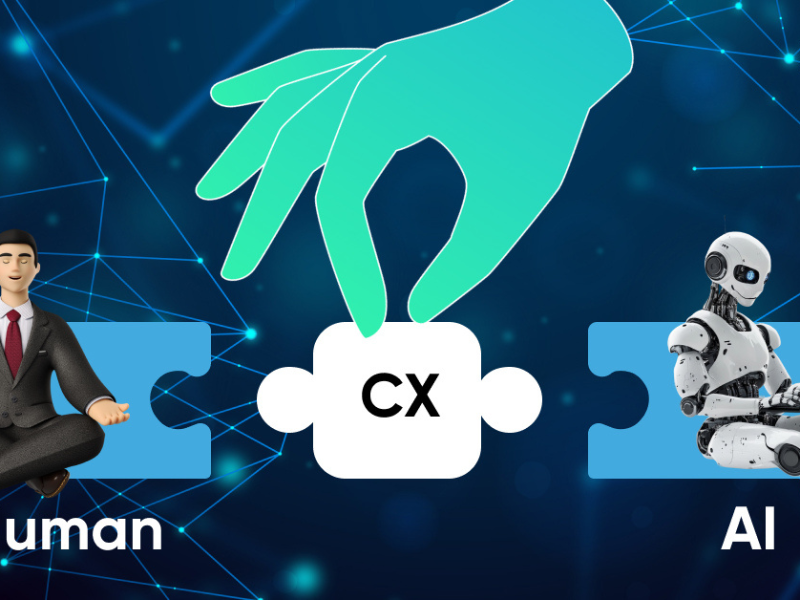
- AI is reshaping discovery and support, but human interaction still drives trust.
- Human-centered experiences—empathetic support, genuine problem-solving, and accessible human contact—are becoming a competitive advantage rather than a line item to minimize
- Personalization only works when customers clearly see the benefit of sharing data.
- Digital-first and omnichannel experiences are now baseline expectations.
- Loyalty programs must be flexible, relevant, and quiet.
- Content and websites must be optimized for dual audiences: human readers who scan for clarity, and AI tools (like ChatGPT, Perplexity, Google’s AI Overviews) that summarize and recommend before users ever visit your site.
Why Customer Experience Trends Matter More Than Ever
Customer experience is no longer a “nice to have.” It is a primary driver of retention, revenue stability, and brand resilience.
Economic uncertainty has made customers cautious. Many feel less financially secure and are actively reassessing subscriptions, vendors, and brands. When budgets tighten, poor experiences are cut first.
At the same time, switching costs are lower than ever. Digital alternatives are one click away, pricing is transparent, and peer reviews are easy to access. Loyalty based on habit is fading.
Understanding customer experience trends helps businesses act before problems become revenue losses:
Early warning signals: Customer complaints about confusing pricing, slow response times, or difficult cancellation processes often predict churn 30-60 days before it happens. Addressing these friction points early prevents attrition.
Automation trade-offs: AI-powered tools can reduce support ticket volume by 40-60%, but over-automation creates new problems. Knowing where AI helps (routine inquiries) versus where it damages trust (complex problems, emotional situations) prevents costly mistakes.
Smart investment priorities: In value-driven markets, spending on first-call resolution and response time improvements delivers 3-5x higher ROI than adding new communication channels. Trends reveal which improvements actually reduce churn versus which just increase operational complexity.
Ignoring these shifts leads to fragmented journeys, over-automation, and messaging that no longer resonates. Understanding them early allows teams to adjust strategy without panic-driven changes.
Top Customer Experience Trends to Watch in 2026
Customers Are More Value-Driven and Less Brand Loyal
Value-driven customer behavior means customers now evaluate every interaction—every support call, every renewal notice, every feature update—based on tangible return rather than brand emotion or habit. Three factors dominate purchase decisions: transparent pricing, clear communication about what customers actually get, and demonstrated usefulness in their daily operations. Brand familiarity and historical loyalty play smaller roles than ever before.
Several forces are driving this shift:
- Economic pressure makes customers compare alternatives more often.
- Subscription fatigue pushes customers to cut anything unclear or underused.
- Pricing transparency removes information advantages brands once had.
This directly impacts retention, pricing strategy, and messaging. Customers now ask, “Is this still worth it?” after every renewal, update, or service interaction.
Examples across industries:
-
This shift affects every industry differently:
Retail & E-commerce: Shoppers compare prices across 3-5 stores before purchasing—even for price differences as small as 5-10%. Clear discount communication (‘Save $20 today’) drives conversions more effectively than vague promotions (‘Limited time offer’). Loyalty to a single retailer has declined 30-40% since 2020.
SaaS & Software: Users downgrade from premium to basic tiers—or churn entirely—when they can’t articulate how features benefit their daily workflow. The question customers ask during renewals has shifted from ‘Do I recognize this brand?’ to ‘Did I use this enough to justify the cost?’ Tools with clear usage analytics and ROI dashboards see 25-35% higher retention.
Subscription Services: Customers cancel subscriptions within 30-60 days if value isn’t continuously reinforced. Generic renewal emails (‘Your subscription is renewing’) perform worse than value-reminder emails (‘You’ve used [feature] 47 times this month—here’s what you accomplished’). Services that quantify member value see 20-30% lower voluntary churn.
Practical actions to adapt:
-
Practical actions to adapt to value-driven behavior:
1. Audit pricing transparency Review your pricing pages and invoices from a customer’s perspective. Are there hidden fees, unclear line items, or surprise charges? Each surprise creates distrust.
Actionable step: List all possible charges a customer might encounter (setup fees, overage charges, add-on costs) and make them visible upfront. Companies that disclose total cost early—even if higher—see better retention than those hiding fees until checkout.
2. Translate features into outcomes Stop listing features like bullet points in a spec sheet. Instead, explain what customers accomplish.
Example transformation:
- Feature-focused: ‘Includes 50GB storage and automatic backups’
- Outcome-focused: ‘Store 10,000+ customer files with automatic daily backups—so you never lose critical documents even if hardware fails’
3. Reduce friction in support and billing Make getting help easy. Every extra click, form field, or wait time gives customers a reason to leave.
Specific improvements:
- Put live chat or phone numbers on every page—not buried in footer links
- Allow account cancellation online in 2-3 clicks (not phone-only)
- Respond to billing questions within 4 hours, not 24-48 hours
- Offer self-service for common tasks (download invoices, update payment methods, adjust plans)
Companies that reduce support friction by just 20% typically see 15-20% improvement in retention because easy help reinforces value perception.
Brands that consistently remind customers what they gain—not just what they offer—retain attention longer in a value-first market.
AI Is Reshaping Customer Journeys, Not Replacing Humans
AI is now embedded across the customer journey, especially in discovery, support, and decision-making. Customers use AI tools to research products, summarize options, and get quick answers.
Where AI meaningfully improves customer experience:
Faster initial responses: AI-powered chatbots respond instantly to common questions—account status, order tracking, password resets—eliminating 2-5 minute wait times for simple inquiries. This doesn’t replace human support; it handles the routine volume so human agents can focus on complex issues. In practice, AI can deflect 40-60% of simple inquiries, reducing overall support load without sacrificing quality.
Easier product comparison: AI tools help customers research and compare options faster than manual searching. Instead of opening 10 browser tabs to compare features and pricing, customers can ask ‘Which CRM works best for a 15-person sales team under $5,000/year?’ and get structured comparisons in seconds. This changes how customers discover products—they often interact with AI-generated summaries before ever visiting a vendor’s website.
Reduced effort for routine tasks: AI automates repetitive, low-value activities:
- Order status checks: ‘Where’s my package?’ answered instantly via chatbot instead of 5-minute phone call
- Appointment scheduling: AI suggests available times based on preferences, reducing 3-4 email exchanges to one interaction
- Basic troubleshooting: AI walks customers through common fixes (reset password, clear cache, update settings) before escalating to human agents
The cumulative effect: customers spend less time on administrative tasks and get help faster when they need human expertise.
Where AI creates frustration instead of value:
Emotional understanding: AI can detect sentiment (positive/negative keywords), but cannot genuinely empathize. When a customer is frustrated about a billing error or upset about poor service, they want acknowledgment and understanding—not scripted apology templates. AI responses can feel dismissive even when technically accurate, escalating emotions rather than resolving them.
Complex problem resolution: Multi-step issues requiring judgment, exceptions, or account history review exceed AI capabilities. Example: A customer needs to dispute a charge, verify their identity, review account history, and arrange a refund—all requiring context that spans multiple interactions and systems. AI can gather initial information, but resolution requires human judgment.
Context across long or sensitive interactions: AI loses thread in extended conversations or sensitive situations. A customer explaining a problem across 8-10 chat messages often has to repeat themselves when AI fails to maintain context. In sensitive situations—financial hardship, health issues, security concerns—customers strongly prefer human contact who can adapt tone and approach appropriately.
Real failure pattern: Customer asks AI chatbot for help → gets generic response → asks clarifying question → gets similar response → repeats 3-4 times → becomes frustrated → demands human agent → waits 10+ minutes → starts conversation from scratch. This ‘AI loop’ creates worse experiences than if the customer reached a human immediately.
A common failure pattern is over-automation without a clear human fallback. Customers tolerate AI until it blocks progress.
Effective hybrid approach:
-
Designing effective AI-human hybrid support:
The goal is not replacing humans with AI—it’s using AI to make human support more accessible and effective:
AI handles well-defined, routine tasks: Account lookups, password resets, order tracking, FAQ answers, basic troubleshooting steps. These inquiries follow predictable patterns and have clear resolution paths. AI can handle these 24/7 without wait times.
Clear, fast escalation paths: Customers should reach humans in 2-3 steps maximum—not after 10 chatbot exchanges. Best practice:
- Offer ‘Talk to a person’ option in every AI conversation
- Escalate automatically after 2-3 failed resolution attempts
- Show estimated wait times transparently (‘3-minute wait for live agent’)
- Pass conversation history to human agents so customers don’t repeat themselves
Humans own complexity, emotion, and judgment: Live agents handle situations requiring:
- Empathy and emotional de-escalation
- Account exceptions or policy interpretations
- Cross-functional coordination (billing + technical + account management)
- Judgment calls on refunds, discounts, or special accommodations
Success pattern example: Customer contacts support → AI chatbot answers simple question OR gathers context → Human agent receives full history and context → Problem resolved in one interaction → Customer feels helped, not bounced between systems.
Companies with smooth AI-human handoffs maintain 75-85% customer satisfaction scores. Those with poor handoffs (repetitive questions, lost context, long waits) see satisfaction drop to 40-50%.
Mini case pattern:
- Chatbot answers FAQs and gathers context.
- Live agent takes over with full conversation history.
- Customer feels helped, not bounced.
The goal is efficiency without emotional abandonment. AI should shorten the path to help, not replace it.
Human-Centered Experiences Are Becoming a Key Differentiator
As automation spreads, human interaction becomes more noticeable—and more valuable. Customers remember how they were treated when something went wrong.
Human-centered experiences focus on:
- Empathy over scripts.
- Resolution over deflection.
- Ownership over handoffs.
Brands known for strong human care stand out because expectations are now lower. Meeting basic human needs feels exceptional.
Designing effective human fallback:
- Make human contact easy to find.
- Train teams to resolve, not redirect.
- Empower agents to make small decisions without escalation.
This approach reduces repeat contacts and builds emotional trust that automation alone cannot.
Personalization Depends on Data Trust and Clear Value
Effective personalization in 2026 is not about collecting maximum data—it’s about using the right data to create obviously better experiences. Customers understand the value exchange: ‘I give you information about my preferences, you give me more relevant recommendations and less wasted time.’
This exchange works when benefits are immediate and specific. It fails when personalization feels creepy (‘How did they know that?’), repetitive (‘Why are they asking for information they already have?’), or valueless (‘These recommendations are still generic despite all the data I shared’).
Good personalization:
- Is specific and timely.
- Clearly improves relevance or savings.
- Respects boundaries.
Poor personalization:
- Feels generic or creepy.
- Repeats known information.
- Offers unclear benefits.
| Good Personalization | Poor Personalization |
|---|---|
| Relevant product reminders | Random recommendations |
| Clear discounts or benefits | Vague “just for you” messages |
| Context-aware timing | Constant interruptions |
Practical principle: Personalize less frequently, but with higher relevance
Instead of sending 10 generic personalized emails per week, send 2-3 highly relevant ones per month. Instead of recommending 50 products based on loose correlations, recommend 5 products with clear explanations of why they match customer needs.
Trust grows when customers understand the exchange and see genuine value. When personalization improves their experience noticeably—saving time, surfacing relevant options, preventing problems—they willingly share more data. When personalization feels like surveillance or spam, they disengage and withhold information.
The question to ask before each personalization effort: ‘Would the customer immediately understand why this is more relevant than a generic message?’ If not, skip it.
Digital-First and Omnichannel Experiences Are Now Standard
Digital-first customer experience does not mean digital-only—it means customers expect seamless movement across every channel (website, mobile app, phone, email, live chat, social media) without losing context or repeating information.
True omnichannel experience requires three fundamentals:
1. Shared context across all platforms When customers switch channels, their information travels with them. Example: Customer starts return request via mobile app, calls customer service with questions, then completes return via website—the agent and website both show the same information without requiring the customer to re-explain.
2. Consistent information and tone Pricing, policies, product details, and brand voice remain identical across touchpoints. Customers shouldn’t see different prices on mobile vs. desktop, or receive different policy explanations from chat vs. phone support.
3. No repeated information requests Systems remember what customers already shared. If a customer already verified their account via email, they shouldn’t re-verify via phone. If they described a problem in a chat conversation, they shouldn’t repeat it when escalated to a call.
The expectation is simple but difficult to execute: ‘I should be able to start in one channel, continue in another, and finish in a third without friction.
The most common omnichannel failure: disconnected systems, not missing channels
Most companies have multiple channels—website, app, phone, email, chat. The problem is these channels don’t communicate with each other.
Typical failure scenario:
- Customer starts chat conversation, explains problem in detail
- Chat agent says, ‘I need to transfer you to our technical team’
- Customer calls technical support
- Phone agent has no record of chat conversation
- Customer must re-explain entire problem from beginning
- Phone agent says, ‘Actually, billing handles this—let me transfer you’
- Customer repeats explanation a third time
- Frustrated customer abandons problem or switches providers
Each disconnected handoff increases customer effort, frustration, and likelihood of abandonment. Research shows that customers whose issues require 3+ channel switches have 60-70% lower satisfaction scores than those resolved in one channel.
The solution is not adding more channels—it’s connecting existing ones so context flows seamlessly.
Focus areas:
- Align data across touchpoints.
- Design journeys, not channels.
- Remove steps that add no value.
Consistency matters more than novelty.
Loyalty Programs Must Be Flexible and Non-Intrusive
Loyalty still works, but only when it feels optional and relevant.
Key shifts:
- Customers want control over rewards.
- Communication should be minimal and useful.
- Blanket perks feel outdated.
Effective programs reinforce value quietly instead of demanding attention.
Websites and Content Must Serve Both Humans and AI
AI-driven discovery tools now summarize and recommend content before users visit websites. This changes how brands are found.
Content must be:
- Clear and structured.
- Easy to interpret without context.
- Useful at a glance.
Clarity improves both human understanding and AI-mediated discovery.
Emerging CX Technologies to Be Aware Of (Without the Hype)
New technologies matter when they solve real problems, not when they look impressive.
Extended Reality (XR) in Customer Interaction
XR (extended reality, including AR and VR) enables immersive previews and guided experiences. Use cases remain limited but useful for high-consideration purchases.
Low-Code and No-Code Tools Changing CX Capabilities
Low-code and no-code tools allow faster CX experiments without heavy engineering. They enable teams to test journeys, forms, and workflows quickly.
Speed, not sophistication, is the main benefit.
What These Customer Experience Trends Mean for Businesses
Customer experience strategy in 2026 should focus on fundamentals, not hype.
Key priorities:
- Reinforce value at every touchpoint.
- Use AI to reduce effort, not replace care.
- Protect human interaction for moments that matter.
- Personalize with purpose and restraint.
- Fix disconnections before adding new channels.
CX improvements work best when they simplify life for customers and teams alike.
Key Takeaways for CX Leaders and Decision-Makers
Customer experience in 2026 revolves around value, trust, balance, and humanity.
Leaders should:
- Review journeys from the customer’s financial perspective.
- Audit where automation helps or harms.
- Ensure humans remain visible and reachable.
- Align personalization with clear benefits.
Now is the time to audit, simplify, and refocus CX efforts on what customers actually value.
FAQ – Customer Experience Trends

What are the most important customer experience trends in 2026?
Value-driven behavior, AI-shaped journeys, human-centered support, and trust-based personalization are the most impactful trends.
Is AI replacing human customer service?
No. AI handles efficiency, while humans handle empathy, complexity, and trust.
Why is brand loyalty declining?
Customers prioritize price, clarity, and usefulness over long-term brand attachment.
How should businesses approach personalization?
Personalize less often, but with clearer relevance and visible benefits.
Are omnichannel experiences still important?
Yes. Consistency across channels is now a basic expectation, not a differentiator.
FAQs

What are the key customer experience trends in 2026?
The key trends include value-driven customer behavior, AI’s impact on customer journeys, the importance of human-centered experiences, and the necessity for personalization backed by data trust.
How is AI changing customer journeys?
AI simplifies product discovery with natural language queries, offering efficient interactions. It complements human empathy in customer service rather than replacing it.
Why is human-centered experience important in CX?
Human-centered experiences enhance customer satisfaction as consumers value personal interaction, which can be a key differentiator for businesses.
How do personalization and data trust relate?
Personalization relies on consumers’ trust in data handling. Clear value exchange encourages data sharing for better customer experiences.
What role does omnichannel play in customer experience?
A seamless omnichannel approach ensures consistency across platforms, reducing friction and enhancing the overall customer experience.
How should businesses adapt to these CX trends?
Businesses should focus on understanding customer values, integrating AI carefully, enhancing human touchpoints, and ensuring data transparency in personalization efforts.
Read more:
Call Center KPIs for Customer Experience: What to Track
Call Center Agent Performance Metrics That Actually Improve CX

 English
  Russian
  Chinese