
If you’ve ever had a client dispute whether your call center is “performing well,” you know exactly why SLAs matter. Without a documented Service Level Agreement, performance becomes subjective—leading to disagreements over missed targets, unexpected fee reductions, and operations teams scrambling to prove they’re meeting expectations.
A properly structured call center SLA eliminates this ambiguity. It defines exactly what “good service” means using specific metrics, realistic targets, and clear consequences when standards aren’t met.
This guide provides a copy-paste-ready SLA template you can customize for your operation—whether you run an in-house support team or manage a BPO handling multiple client contracts. You’ll get practical customization guidance for inbound, outbound, and multichannel operations, without legal jargon or theoretical fluff.
Key Takeaways You’ll Get From This Guide
- You get a simple, ready‑to‑use call center SLA template written in plain English.
- You learn which SLA sections actually matter for daily call center operations.
- You see realistic SLA metrics and target ranges used by real teams.
- You understand how to customize the SLA for inbound, outbound, and multichannel support.
- You avoid common SLA mistakes that cause disputes and missed targets.
What Is a Call Center SLA Template?
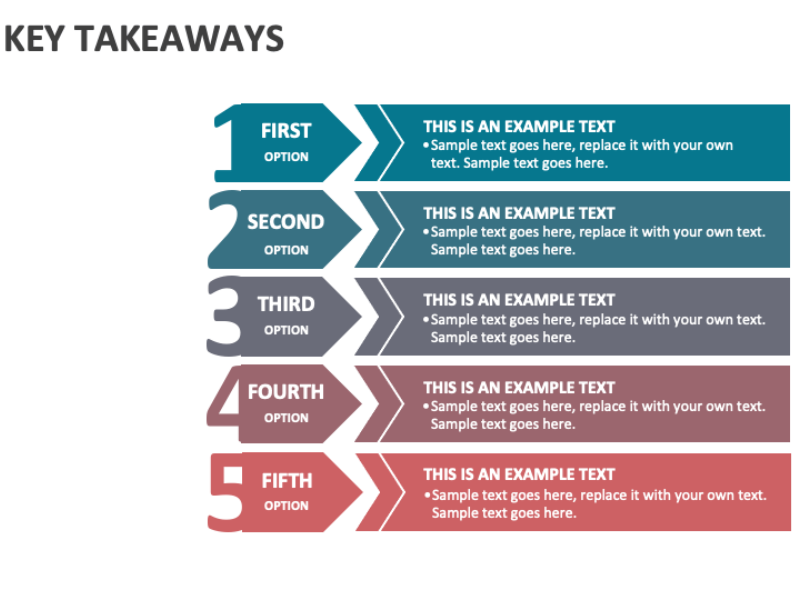
A call center SLA template is a standardized agreement that defines exactly what “good service” looks like—with specific metrics, measurable targets, and documented consequences for non-performance.
Why this matters: Without a documented SLA, call center performance evaluations become subjective. You can’t enforce standards, prove compliance to clients, or identify performance gaps before they escalate into contract disputes. For BPO operations managing multiple client accounts simultaneously, a clear SLA is often the difference between profitable long-term partnerships and constant conflicts over what counts as “acceptable performance.”
Unlike generic service agreements, call center SLAs focus on outcomes that directly impact customer experience:
Call handling performance: How quickly calls are answered (Average Speed of Answer), how long customers wait, and what percentage of calls are abandoned before reaching an agent.
Availability and coverage: Exact hours of operation, holiday handling, after-hours escalation procedures, and uptime commitments for platform availability.
Measurable CX outcomes: First Contact Resolution rates (are issues solved immediately?), Customer Satisfaction scores, and quality assurance benchmarks.
Who Uses Call Center SLA Templates?
In-house support teams use SLAs to align internal stakeholders—ensuring sales, product, and operations departments agree on realistic service standards before conflicts arise.
BPO and outsourced call centers use SLAs to formalize client commitments, protect against scope creep, and provide documentation when clients request performance improvements or fee adjustments.
Operations during contract renewals use historical SLA performance data to reset expectations based on what’s actually achievable—replacing optimistic projections with proven track records.
Why Call Centers Need an SLA Document
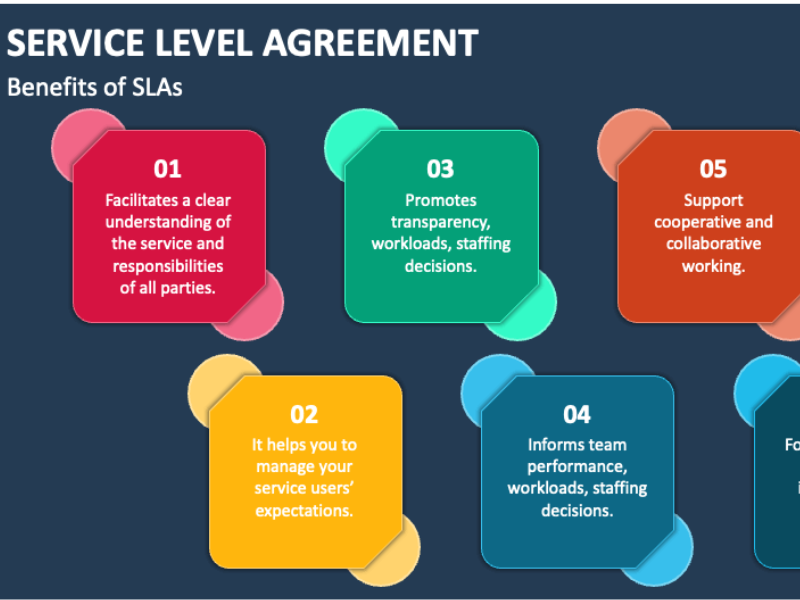
A well-written SLA transforms subjective expectations into measurable commitments—protecting both service providers and clients from misaligned assumptions that cause conflicts later.
What Happens Without an SLA
Disputed performance: A client complains that “service is too slow,” but without an agreed baseline, you have no objective way to evaluate whether the complaint is valid or whether expectations were unrealistic from the start.
Scope creep: Mid-contract, a client adds new requirements—24/7 weekend coverage, multilingual support, or additional reporting—without renegotiating terms or adjusting fees. Without documented scope boundaries, you’re forced to absorb the cost or risk losing the client.
Invisible problems: Performance issues go undetected until clients escalate or threaten to terminate contracts. By the time you discover First Contact Resolution has dropped from 75% to 60%, the client has already been dissatisfied for weeks.
No leverage in disputes: When targets are missed, neither party knows what remedy applies. Do you owe a service credit? Is corrective action required? Without documentation, every dispute becomes a negotiation.
What You Gain With a Documented SLA
Clear accountability: When Average Speed of Answer exceeds 45 seconds for three consecutive weeks, both parties know exactly what corrective action is required—whether that’s adding agents, adjusting routing rules, or temporarily relaxing targets during volume surges. No ambiguity about who fixes what.
Consistent CX: Service levels remain predictable even during volume fluctuations. Example: A crypto exchange running KYC verification sees 300% call volume increases during market surges. The SLA defines how quickly you’re expected to scale staffing, what temporary performance adjustments are acceptable, and when volume is considered “abnormal” and outside standard SLA scope.
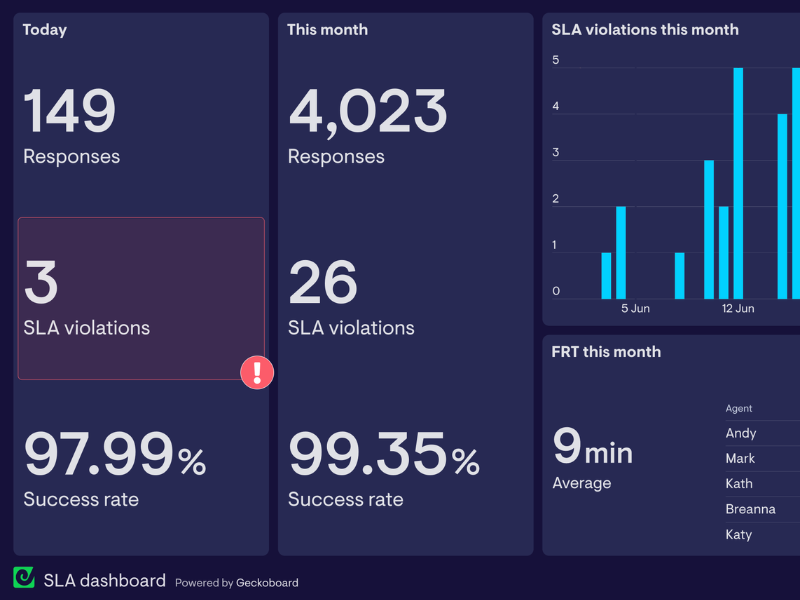
Performance visibility: Real-time dashboards expose gaps immediately instead of weeks later. If First Contact Resolution drops from 75% to 62%, you catch it in Week 1—not Month 3 when the client is already evaluating alternative vendors. Early detection means faster fixes and fewer lost clients.
Vendor control: For BPO operations, the SLA becomes your enforcement and protection tool. When a client demands 24/7 coverage but only forecasted 9-5 volume in the original agreement, the SLA protects you from being held liable for understaffing during unpredictable demand. You can point to documented forecasts and renegotiate terms with data, not emotions.
Key Sections Every Call Center SLA Template Must Include
Agreement Overview and Scope
This is the most disputed part of any SLA. Get it wrong, and everything else breaks.
What to define clearly:
- Parties involved: Client and service provider.
- Services covered: Inbound calls, outbound calls, channels supported.
- Exclusions: What is explicitly not included.
Keep the scope narrow and specific. Broad language creates loopholes.
Example scope statement:
This agreement covers inbound customer support calls and emails for Product X,
excluding billing disputes, chargebacks, and third‑party system issues.
Service Hours and Availability
Availability defines when the SLA actually applies.
You must specify:
- Business hours vs 24/7 coverage.
- Time zone.
- Holiday and exception handling.
- After‑hours escalation rules.
Example comparison:
| Model | Coverage | Notes |
|---|---|---|
| Business Hours SLA | Mon–Fri, 9am–6pm ET | No holiday coverage |
| 24/7 SLA | 365 days | On‑call escalation included |
Core Call Center SLA Metrics
This is the heart of the SLA. More metrics do not mean better control.
Best practice: Use 4–6 KPIs that directly impact CX and operations.
Common core metrics:
- ASA (Average Speed of Answer): Average time before a call is answered.
- FCR (First Contact Resolution): Percentage of issues resolved on first interaction.
- Abandonment Rate: Percentage of callers who hang up before reaching an agent.
- CSAT (Customer Satisfaction Score): Post‑interaction customer rating.
How to use them correctly:
- Define how each metric is calculated.
- Define the data source.
- Define the reporting period.
Typical KPI targets:
| KPI | Definition | Typical Target |
|---|---|---|
| ASA | Avg. wait time before answer | ≤ 30 seconds |
| FCR | Issues resolved on first contact | ≥ 70% |
| Abandonment | Calls dropped before answer | ≤ 5% |
| CSAT | Customer satisfaction score | ≥ 85% |
Avoid vanity metrics that look good but don’t drive action.
Roles and Responsibilities
SLAs fail when responsibility is treated as one-sided—when clients expect perfect performance but don’t provide the tools, data, or support needed to deliver it. Effective SLAs define accountability for both parties.
Service Provider Responsibilities
Staff according to forecasted volume: Use client-provided volume forecasts to maintain adequate agent coverage. If the client forecasts 1,000 daily calls, you staff for that volume—not 500 or 1,500.
Meet agreed SLA targets: Deliver performance within documented ranges for ASA, FCR, abandonment rate, and other committed metrics. If targets are at risk, notify the client immediately with a corrective action plan.
Provide regular performance reports: Generate SLA compliance reports on the agreed schedule (weekly, monthly). Reports should include trend analysis, root cause explanations for any missed targets, and planned improvements.
Escalate issues promptly: When system outages, unexpected volume surges, or client-side problems prevent SLA compliance, document and escalate within defined timeframes (e.g., within 2 hours for critical issues).
Client Responsibilities
Provide accurate volume forecasts: Deliver realistic call volume projections at least 2 weeks in advance for standard operations, 4 weeks for major campaigns or seasonal spikes. Inaccurate forecasts make it impossible for providers to staff appropriately.
Maintain up-to-date knowledge base and scripts: When products, policies, or procedures change, update documentation immediately. Agents can’t resolve issues correctly if they’re working with outdated information. Delayed updates directly impact FCR and CSAT.
Ensure system access and tools work reliably: Provide VPN access, CRM credentials, and ticketing system logins that function consistently. If agents spend 20% of call time waiting for systems to load, that’s not an SLA compliance issue—it’s an infrastructure problem the client must fix.
Respond to escalations within agreed timeframes: When agents escalate complex issues, respond within documented windows (e.g., Tier 2 support responds within 15 minutes). Slow escalation response destroys FCR.
Shared Accountability Example
Scenario: A BPO commits to 70% FCR for a software support line. After 3 months, FCR is only 55%.
Root cause investigation reveals:
- Provider issue (40% of problem): Insufficient agent training on new features launched 6 weeks ago
- Client issue (60% of problem): Knowledge base hasn’t been updated in 8 weeks; agents are working with outdated troubleshooting steps
Resolution per SLA:
- Provider schedules immediate training sessions (completed within 1 week)
- Client updates knowledge base (completed within 3 days)
- Both parties waive penalties because responsibilities were shared
- FCR recovers to 68% within 2 weeks
Without documented shared responsibility: This situation would have devolved into finger-pointing and potential contract termination. The SLA’s clarity around both parties’ roles enabled a collaborative fix instead of a destructive dispute.
Performance Monitoring and Reporting
If you can’t see it, you can’t enforce it.
If you can’t see performance metrics in real time, you can’t enforce SLA compliance effectively. By the time you discover problems through monthly reports, you’ve already missed targets for weeks.
What Your SLA Must Define
KPI data sources: Specify exactly which system provides each metric. Example: “All ASA, FCR, and abandonment data pulled from [Platform Name] call detail records. CSAT scores collected via post-call IVR survey.”
Why this matters: When disputes arise, both parties need to agree on the source of truth. If the provider uses one analytics platform and the client uses another, you’ll get different numbers—and endless arguments about whose data is correct.
Reporting frequency: Define how often performance is measured and reported.
- Real-time dashboards: Best practice for high-volume operations. Operations managers see live ASA, queue depth, and agent availability—allowing immediate adjustments.
- Weekly reports: Standard for most BPO contracts. Provides enough data to spot trends without overwhelming stakeholders.
- Monthly summaries: Minimum acceptable frequency. Useful for stable, low-volume operations but too slow for fast-moving environments like sales campaigns or seasonal support spikes.
Review meetings and escalation triggers: Document when formal performance reviews occur and what thresholds trigger escalation.
Example: “SLA performance reviewed in monthly business reviews. If any core metric misses target for 2 consecutive weeks, an emergency review meeting is scheduled within 3 business days to identify root causes and implement corrective action.”
Why Automated Tracking Matters
Manual reporting creates three problems:
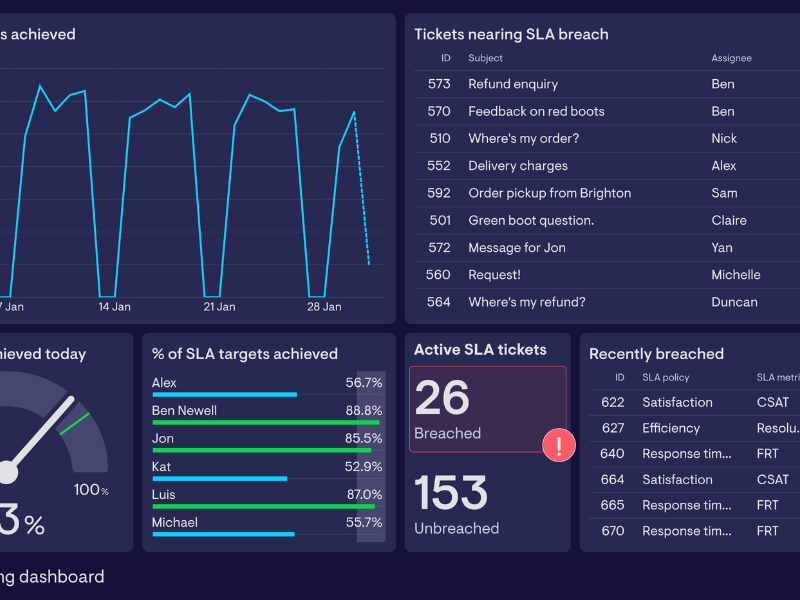
Delayed visibility: You don’t see issues until weekly or monthly reports are compiled. A sudden ASA spike on Tuesday isn’t discovered until Friday’s report—meaning you’ve missed targets for 3 days before anyone notices.
Human error: Manual data export and spreadsheet calculations introduce mistakes. A single formula error in Excel can cause disputes over whether SLA was actually met.
Wasted time: Operations managers spend hours pulling call logs, calculating metrics, and formatting reports instead of coaching agents or improving performance.
Modern cloud call center platforms automate this entirely:
- Real-time SLA dashboards: See ASA, FCR, and abandonment rate live—no waiting for reports
- Automated alerting: Get notified immediately when metrics drift out of SLA range (e.g., “ASA exceeded 40 seconds for 2 consecutive hours”)
- One-click reporting: Generate client-ready SLA performance reports instantly—no manual data compilation
- Historical trend analysis: Compare current performance against last month, last quarter, or contract start date to prove consistent compliance
Real-world example: A 100-agent BPO handles customer support for a crypto exchange. During a sudden market crash, call volume spikes 300% in 15 minutes. ASA climbs from 25 seconds to 65 seconds.
With real-time monitoring: The operations manager receives an instant alert. She redeploys agents from outbound campaigns to inbound queues within 10 minutes, bringing ASA back to 30 seconds within an hour. Total SLA breach duration: 60 minutes.
Without real-time monitoring: The issue goes undetected until the weekly report is generated 4 days later. ASA averaged 58 seconds for 3 consecutive days before anyone noticed. The client files a formal complaint and demands service credits.
The difference: Real-time visibility turns potential disasters into minor incidents.
Penalties, Remedies, and SLA Breaches
Penalties must be meaningful enough to incentivize compliance but realistic enough to actually enforce. Overly aggressive penalties (e.g., “50% fee reduction for any missed target”) sound tough but rarely get applied—because they would bankrupt providers and trigger immediate contract terminations.
Common Remedy Structures
Service credits (most common): A percentage of monthly fees is credited back to the client when SLA targets are missed.
Example tiered structure:
- Miss target by <5%: No penalty (within acceptable variance)
- Miss target by 5-10%: 5% service credit
- Miss target by 10-20%: 10% service credit
- Miss target by >20%: 15% service credit + mandatory corrective action plan
Calculation example: Monthly fee is $50,000. ASA target is ≤30 seconds. Actual ASA for the month was 38 seconds (27% above target = miss by >20%). Provider owes $7,500 service credit + must submit corrective action plan within 5 business days.
Fee reductions (for repeated breaches): Applied when the same metric misses targets for 3+ consecutive months, indicating systemic problems rather than temporary issues.
Example: “If FCR remains below 70% for 3 consecutive months despite corrective actions, the base monthly fee is reduced by 10% until FCR recovers to target range for 2 consecutive months.”
Corrective action plans (required for major breaches): When critical metrics miss targets significantly, providers must document root causes and improvement steps.
Required elements:
- Root cause analysis (why the breach occurred)
- Specific corrective actions (what will be fixed)
- Timeline for implementation (when fixes will be completed)
- Success metrics (how you’ll measure improvement)
Example: FCR dropped from 72% to 58% in one month.
Root cause: Product knowledge base was outdated; new product features launched 3 weeks ago weren’t documented.
Corrective actions:
- Update knowledge base within 3 business days (due: [date])
- Conduct refresher training for all agents (due: [date])
- Implement weekly knowledge base review process
Success metric: FCR recovers to ≥70% within 4 weeks.
What Your SLA Must Include
Escalation workflow: Define who gets notified when breaches occur and how quickly.
Example: “Tier 1 breach (single metric misses target): Operations manager notified within 24 hours. Tier 2 breach (multiple metrics or repeated breaches): VP of Operations and client account manager notified within 4 hours.”
Grace periods: Allow for normal variance before penalties apply.
Example: “SLA targets are measured monthly. Performance is considered compliant if metrics fall within ±5% of target. Penalties only apply when variance exceeds 5% for the full reporting period.”
Why this matters: A single bad day (system outage, unexpected volume spike) shouldn’t trigger penalties if overall monthly performance was strong.
Force majeure exceptions: Define events outside anyone’s control that suspend SLA obligations temporarily.
Common exceptions:
- Natural disasters affecting operations facilities
- Internet/telecom outages beyond provider control
- Client-side system failures preventing agents from working
- Government-mandated shutdowns or restrictions
Example clause: “SLA obligations are suspended during force majeure events. Provider must notify client within 2 hours of event start, provide status updates every 4 hours, and resume normal service within 24 hours of event resolution. SLA clock restarts when operations return to normal.”
Why Moderate Penalties Work Better Than Aggressive Ones
Overly aggressive penalties (e.g., 50% fee reduction for missing any target) create problems:
- Providers inflate prices to absorb risk: If one bad month could cost you half your revenue, you price contracts 40-50% higher to offset the risk—making you uncompetitive.
- Penalties get negotiated away: When faced with a massive penalty, providers push back aggressively. Clients often waive penalties to preserve relationships, making the SLA meaningless.
- Providers walk away: If penalties are too severe, vendors terminate contracts rather than pay them—leaving clients scrambling for replacement providers mid-campaign.
Moderate penalties (5-15% service credits) are effective because:
- They’re meaningful enough to incentivize good performance (losing $5,000-$7,500/month hurts)
- They’re realistic enough to actually enforce without destroying the relationship
- They create accountability without being punitive
Real-world outcome: In practice, the best SLAs rarely invoke penalties—because both parties know the consequences are real and work proactively to stay compliant.
Review, Revision, and Termination Terms
An SLA is not static.
Define upfront:
- Review cadence (quarterly or bi‑annual).
- Triggers for updates (volume change, new channels).
- Termination conditions and notice period.
This protects both sides as operations evolve.
Simple Call Center SLA Template (Copy‑Paste Ready)
SERVICE LEVEL AGREEMENT – CALL CENTER

1. Parties
This SLA is between [Client Name] and [Service Provider Name], effective [Date].

2. Scope of Services
Covered services include:
- Inbound customer support calls for [Product/Service]
- Support channels: phone, email
Excluded services:
- Billing disputes
- Third‑party system failures

3. Service Hours
Support hours: [Days/Times/Time Zone]
Holiday coverage: [Yes/No]

4. SLA Metrics and Targets
- Average Speed of Answer (ASA): ≤ [X] seconds
- First Contact Resolution (FCR): ≥ [X]%
- Abandonment Rate: ≤ [X]%
- CSAT: ≥ [X]%

5. Roles and Responsibilities
Provider responsibilities include staffing, training, and reporting.
Client responsibilities include forecasts, tools, and documentation.

6. Monitoring and Reporting
Performance will be reported [weekly/monthly].
Data source: [System Name].

7. SLA Breaches and Remedies
Failure to meet targets may result in service credits or corrective actions.

8. Review and Termination
This SLA will be reviewed every [X] months.
Either party may terminate with [X] days written notice.
How to Customize This Call Center SLA Template
Inbound Call Centers
Focus on speed and resolution.
- Prioritize ASA and FCR.
- Align staffing with peak hours.
- Add call quality monitoring clauses.
Best for customer support and help desks.
Outbound Call Centers
Compliance and contact quality matter more than speed.
- Track contact rate and successful connections.
- Include compliance requirements.
- Limit aggressive volume‑based targets.
Ideal for sales, collections, and surveys.
Multichannel Support
Each channel behaves differently.
Channel‑specific benchmarks:
| Channel | Key KPI | Typical Target |
|---|---|---|
| Phone | ASA | ≤ 30 sec |
| First response time | ≤ 24 hrs | |
| Chat | Response time | ≤ 60 sec |
Avoid forcing one metric across all channels.
By Business Size and Industry
- Startups: Fewer KPIs, flexible targets.
- Enterprises: Tighter targets, detailed reporting.
- Regulated industries: Add compliance and audit clauses.
Match SLA complexity to operational maturity.
Common Call Center SLA Mistakes to Avoid
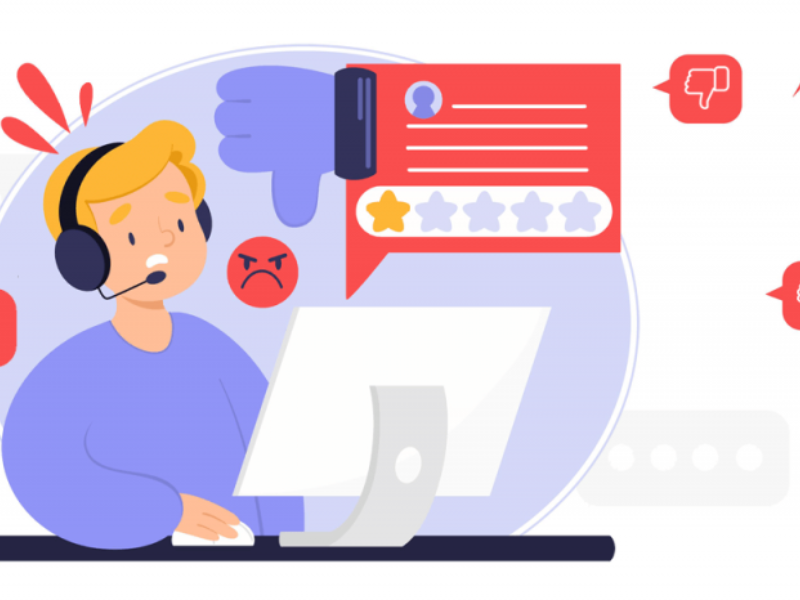
- Too many KPIs: Creates noise, not clarity. Limit to what you can manage.
- Unclear scope: Leads to constant disputes.
- Unrealistic targets: Burn agents and fail silently.
- No review process: SLA becomes outdated fast.
- One‑sided responsibility: Breaks trust and execution.
Each mistake weakens enforceability and CX.
When and How to Review Your Call Center SLA
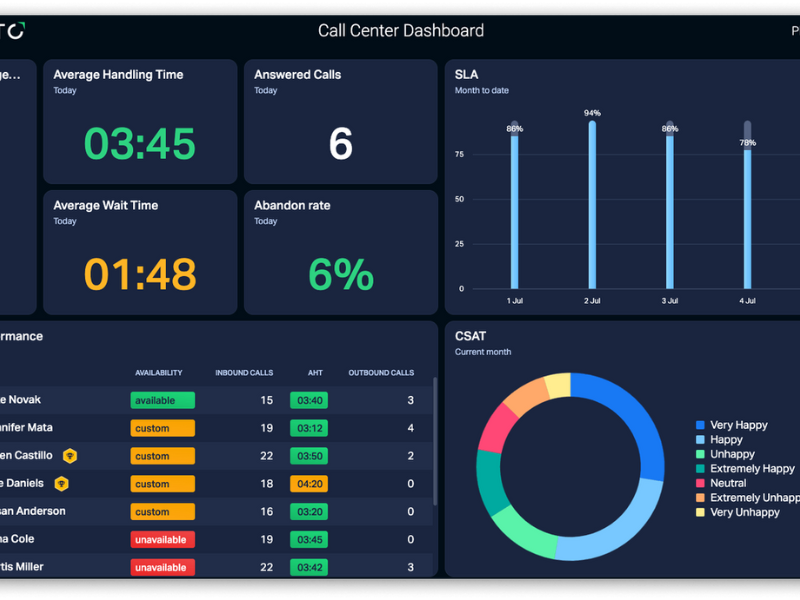
Review your SLA when:
- Call volume shifts significantly.
- New channels are added.
- Targets are consistently missed or exceeded.
Checklist:
- Validate KPI relevance.
- Adjust targets to reality.
- Update scope and exclusions.
Regular reviews keep the SLA useful.
Best Practices for Implementing Call Center SLAs Successfully
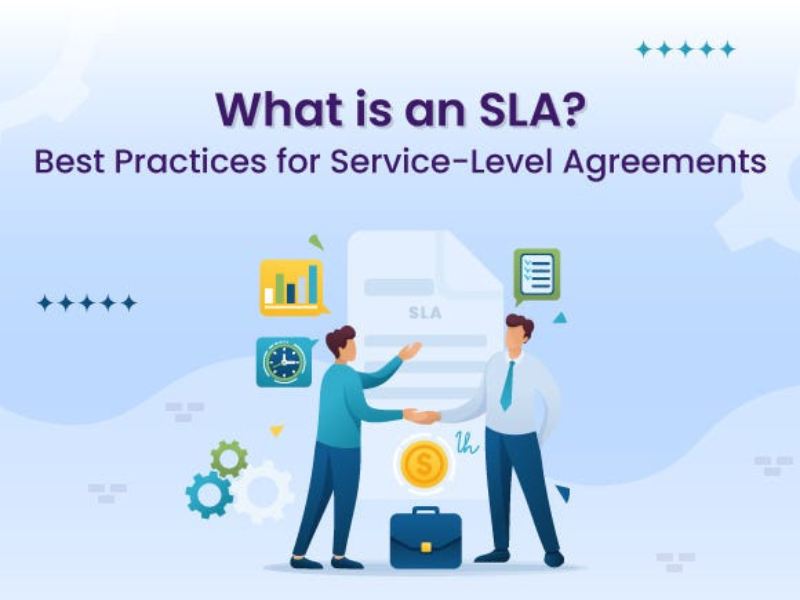
- Start simple and tighten targets over time.
- Align SLA metrics with customer expectations, not vanity goals.
- Involve frontline managers when setting targets.
- Monitor trends, not single‑month results.
- Balance performance pressure with agent well‑being.
Strong SLAs improve CX without burning teams out.
FAQ – Call Center SLA Templates

What is the most important SLA metric for call centers?
ASA and FCR are usually the most impactful for customer experience.
How often should a call center SLA be updated?
At least once a year, or after major operational changes.
Can one SLA work for all channels?
No. Each channel needs channel‑specific targets.
Is this SLA template suitable for BPOs?
Yes. It’s designed for both in‑house and outsourced call centers.
Final Thoughts

A good call center SLA is simple, measurable, and practical. Use the template above, tailor it to your operation, and review it regularly. When done right, an SLA becomes a tool for better performance—not conflict.
Copy the template, customize it for your inbound, outbound, or multichannel setup, and put it to work.
FAQs – Call Center SLA Templates
What is a call center SLA template?
A call center SLA template is a formal document that outlines specific metrics, benchmarks, roles, and service commitments between a call center and its client. It helps ensure accountability, measure performance, and meet customer service goals.
How do I create an SLA document for a call center?
- Define the scope (services covered and excluded).
- Set clear metrics like ASA, CSAT, and FCR.
- Include roles, reporting frequency, and penalties for breaches.
- Use a customizable template as a foundation.
Can this SLA work for both inbound and outbound call centers?
Yes, the template can be tailored for inbound and outbound operations by emphasizing relevant metrics such as ASA for inbound or contact rate and compliance for outbound.
What are the most important metrics in a call center SLA?
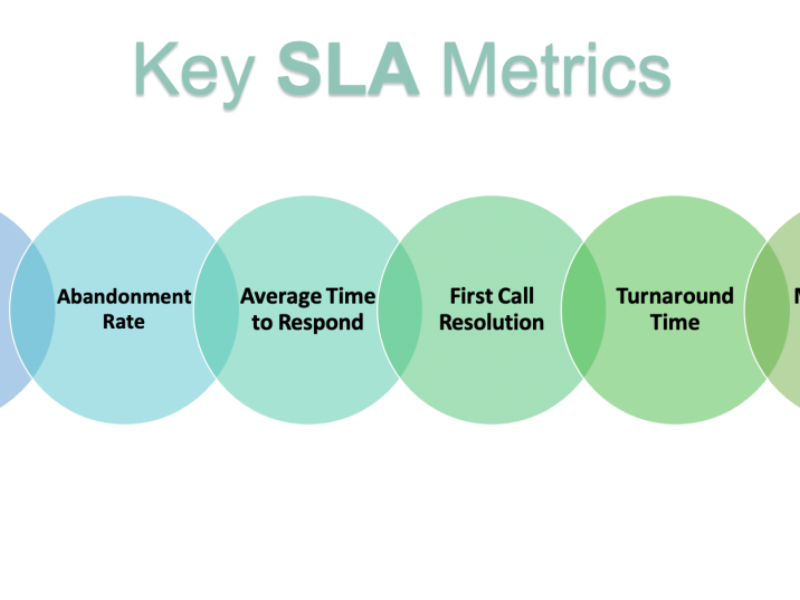
Key metrics include: Average Speed of Answer (ASA), First Contact Resolution (FCR), Abandonment Rate, and Customer Satisfaction (CSAT). These benchmarks are critical for evaluating customer experience and operational efficiency.
What happens if SLA targets are not met?
Penalties like service credits, fee reductions, or escalation procedures can be enforced. Exceptions for breaches due to emergencies or force majeure may also be outlined.
How often should a call center SLA be reviewed?
SLAs should be reviewed at least annually for established businesses, and quarterly for startups or fast-growing companies, to ensure alignment with evolving goals and CX demands.
Can I use SLA templates for an outsourced or BPO call center?
Yes, SLA templates are highly applicable for BPO or outsourced call center partnerships, ensuring clear expectations and transparency between the provider and the client.
Read more:
Call Center Employee Engagement: Smart Ways to Motivate Agents
What is a Cloud Call Center? Benefits, Features, and Setup

 English
  Russian
  Chinese