

Modern customers switch between chat, email, phone, and social media constantly—and they expect their support experience to stay connected across every channel. When it doesn’t, they repeat the same information multiple times, wait longer for answers, and often give up in frustration.
Omnichannel customer service eliminates this friction. It connects every customer interaction—regardless of channel—into one continuous conversation with full context preserved. The result: faster resolutions, less effort, and higher satisfaction.
This guide explains what omnichannel customer service actually means in practice, how it differs from traditional multichannel support, and the measurable benefits businesses gain when they implement it correctly.
Key Takeaways Omnichannel Customer Service

- Omnichannel unifies all support channels into one continuous conversation—no more starting over when customers switch platforms.
- Customers resolve issues faster because agents see full context immediately, eliminating repeated questions.
- Businesses track the complete customer journey across channels, revealing patterns that siloed data misses.
- Unified customer data enables personalized support based on history, preferences, and past interactions.
- Support teams work more efficiently with shared tools and context, reducing time spent searching for information.
- Strong omnichannel strategies increase customer retention by reducing friction at every touchpoint.
What Is Omnichannel Customer Service?

Omnichannel customer service connects all communication channels into one unified system where conversations flow seamlessly from platform to platform without losing context.
When a customer starts a conversation on chat, continues via email, and calls for an update, omnichannel support ensures the agent on the phone already knows the full history—no repetition, no delays, no frustration.
Instead of treating email, chat, phone, and social as separate silos, omnichannel support unifies them around the customer.
Key components include:
- Integrated channels that share conversation history in real time.
- A centralized CRM (customer relationship management system) that stores customer data in one place.
- A 360-degree customer view, giving agents full visibility into past interactions.
- Consistent workflows across channels to ensure uniform service quality.
The result is support that feels simple, personal, and uninterrupted—no matter where it starts or ends.
Omnichannel vs. Multichannel Customer Service
Multichannel Customer Service Explained
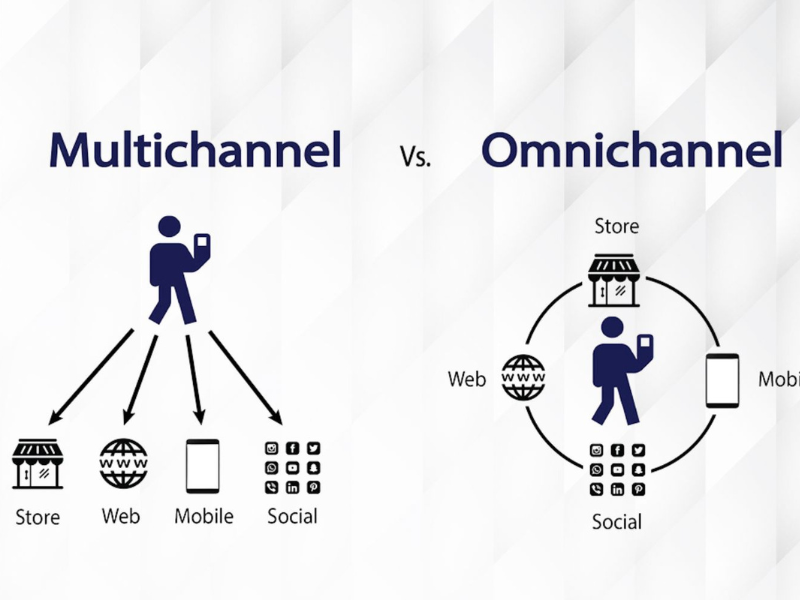
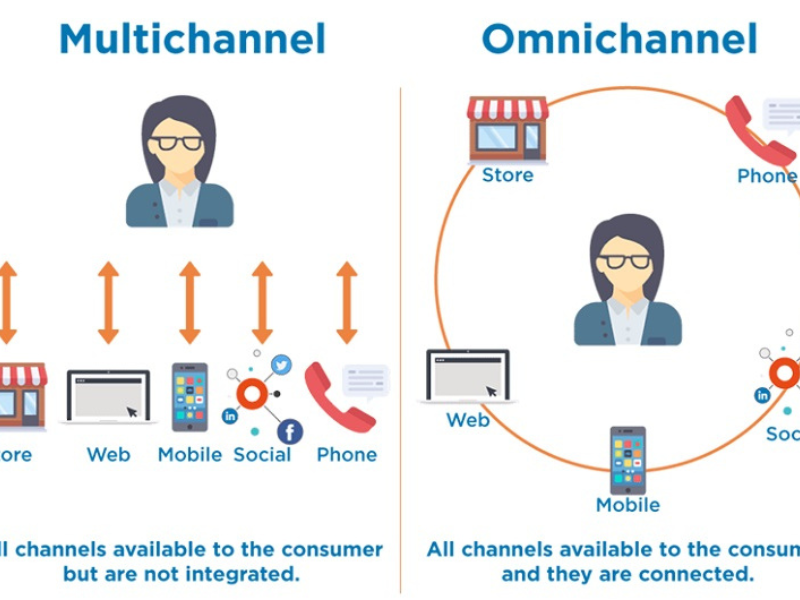
Multichannel customer service provides support on several platforms—phone, email, live chat, social media—but treats each channel as a separate silo. There’s no connection between systems, no shared data, and no conversation history that follows the customer.
Here’s what happens in practice:
A customer emails support about a billing issue on Monday. The email team responds within 24 hours requesting additional information. The customer doesn’t see the reply and calls on Wednesday instead.
The phone agent has no record of the email conversation. The customer must explain the entire issue again—account details, problem description, previous troubleshooting steps—wasting five minutes before the actual problem-solving even begins.
If the customer later reaches out via social media, the cycle repeats. No agent sees the full picture.
Common problems with multichannel support:
- Fragmented customer data: Information scattered across disconnected systems
- No agent visibility: Representatives can’t see previous interactions on other channels
- Repetitive customer effort: Every channel switch requires re-explaining the issue
- Inconsistent experience: Service quality varies dramatically by channel
- Slower resolutions: Time wasted gathering information that already exists elsewhere
Example: A customer emails support about a billing issue. Two days later, they call. The phone agent has no record of the email and asks the customer to explain everything again.
Common drawbacks include:
- Fragmented customer experience.
- Slower resolution times.
- Higher frustration for both customers and agents.
[Image: Disconnected channels with no shared data]
Omnichannel Customer Service Explained
Omnichannel customer service connects every channel into a single shared system. When customers switch platforms, their conversation history, account details, and issue context move with them automatically.
Here’s the same scenario with omnichannel support:
A customer chats with a bot on your website about a billing issue. The bot can’t resolve it, so the conversation escalates to a live chat agent. The agent sees the entire bot conversation and picks up exactly where the bot left off—no need to ask “How can I help you?” or request account details again.
The customer needs to leave their computer, so they continue the conversation via email. The email agent sees the full chat transcript and responds with context. Later that day, the customer calls for an immediate update. The phone agent pulls up their account and instantly sees:
- The original bot conversation
- The live chat transcript
- The email exchange
- Current issue status
The phone agent says: “I see you’ve been working with our team on the billing adjustment—let me check the latest update.” The customer doesn’t repeat anything. The issue resolves in two minutes.
Key advantages:
- Preserved context: Full conversation history available across all channels
- Seamless transitions: Customers switch platforms without starting over
- Unified agent view: Complete customer history visible in one interface
- Consistent experience: Same quality and knowledge regardless of channel
Key advantages include:
- Real-time context sharing across channels.
- Unified customer profiles.
- Smooth channel switching without friction.
[Diagram: Unified channel flow following one customer]
Key Differences That Impact Customer Experience
| Aspect | Multichannel Support | Omnichannel Support |
|---|---|---|
| Channel connection | Channels operate independently | Channels are fully integrated |
| Customer context | Lost between channels | Preserved across all interactions |
| Customer effort | High | Low |
| Agent visibility | Limited | Full customer history |
| Experience quality | Inconsistent | Seamless and consistent |
Top 10 Benefits of Omnichannel Customer Service
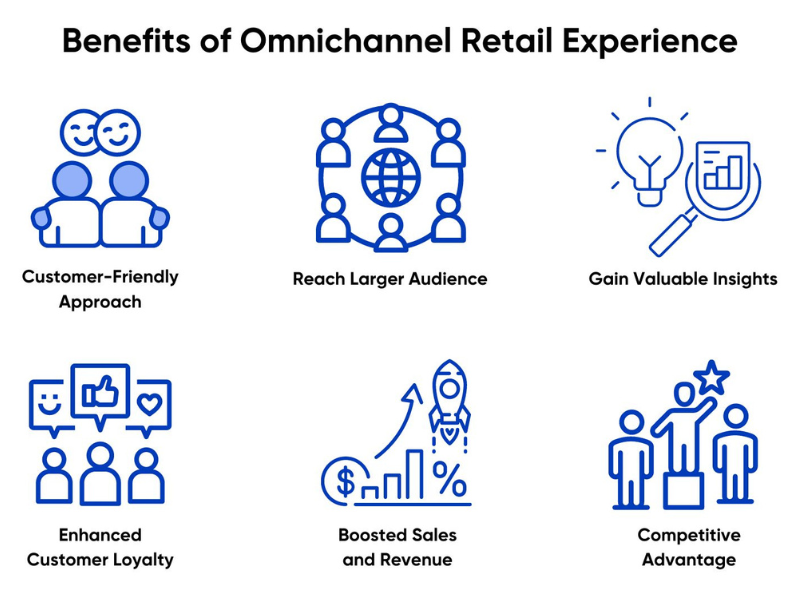
Seamless Customer Experience
Customers hate repeating themselves. When they switch from chat to phone to email, they expect their story to follow them—but multichannel systems force them to start over each time.
Omnichannel support eliminates this frustration. Because all channels connect to the same customer database, conversations continue naturally regardless of platform. A customer who chats on Monday and calls on Wednesday doesn’t spend five minutes re-explaining their issue—the phone agent sees the full chat transcript and picks up where it left off.
Example: A customer contacts support via live chat about a delayed shipment. The chat agent confirms the issue and provides a tracking update. Two days later, the package still hasn’t arrived. The customer calls instead of searching for the chat transcript.
Without omnichannel, the phone agent asks: “Can you provide your order number? What’s the issue?” The customer repeats everything.
With omnichannel, the phone agent says: “I see you chatted with us two days ago about order #12345—let me pull the latest tracking status.” The customer feels heard, not interrogated.
Business impact:
- Fewer customer complaints about repeating information
- Higher satisfaction scores across all channels
- Reduced customer frustration and support abandonment
Faster Issue Resolution
Every minute agents spend gathering information is a minute not spent solving the actual problem. In disconnected multichannel systems, agents waste significant time on:
- Asking customers to verify their identity again
- Requesting the customer re-explain their issue
- Searching through multiple systems for account history
- Transferring to another team that also lacks context
Omnichannel support eliminates this wasted time. When an agent opens a customer conversation, they immediately see:
- Complete interaction timeline across all channels
- Previous troubleshooting steps already attempted
- Current issue status and priority level
- Relevant account details and purchase history
This instant access means agents move directly to problem-solving instead of information-gathering.
Example: A customer emails support about a login issue on Monday. The email team responds with a password reset link, but the customer still can’t log in. On Wednesday, the customer calls for urgent help.
Without omnichannel, the phone agent asks: “What’s your email? What issue are you experiencing? Have you tried resetting your password?” This takes 3-4 minutes before troubleshooting even begins.
With omnichannel, the phone agent sees the email exchange instantly and says: “I see the password reset didn’t work—let me check if your account has a technical lock.” Problem identified in 30 seconds.
Business impact:
- Average handle time drops 20-40% when agents have full context
- First contact resolution improves because agents don’t need to “let me check and get back to you”
- Support backlog shrinks as teams resolve more issues per hour
Consistent Brand Experience
When support channels operate independently, service quality becomes unpredictable. Customers might get fast, helpful service on the phone but generic, delayed responses via email. Or they receive professional support during business hours but poor coverage nights and weekends.
These inconsistencies erode trust. Customers don’t know which version of your support they’ll encounter, leading to frustration and skepticism about your brand’s reliability.
Omnichannel support ensures consistency by centralizing:
- Knowledge bases: All agents access the same information, scripts, and troubleshooting guides regardless of channel
- Quality standards: Service level agreements (response times, resolution expectations) apply uniformly across phone, chat, and email
- Training: New agents learn one system and one set of workflows—not separate procedures for each channel
- Performance monitoring: Supervisors track quality metrics across all channels using unified dashboards
Example: A customer contacts support via chat on Monday and receives excellent help. They email a follow-up question on Friday. With multichannel systems, the email might go to a different team with different standards—resulting in a generic, unhelpful response that contradicts the chat agent’s advice.
With omnichannel, both the chat and email agents follow the same knowledge base and see the previous conversation. The email response builds on the chat discussion with consistent tone, information, and follow-through.
Business impact:
- Brand perception improves when customers receive consistent quality everywhere
- Customer trust grows through predictable, reliable support experiences
- Fewer complaints about service inconsistency between channels
Personalized Customer Support
With full customer history, agents can tailor responses based on preferences, past purchases, and prior issues.
Personalization happens through:
- CRM-driven insights.
- Context-aware responses.
- Relevant recommendations.
Outcomes:
- Customers feel valued.
- Higher engagement rates.
- Improved loyalty over time.
Reduced Customer Effort
Customers choose how and when to reach out. They are not forced into one channel.
Omnichannel support enables:
- Self-service, chat, or human support—on demand.
- Easy channel switching mid-conversation.
- Support that fits the customer’s schedule.
This lowers frustration and increases repeat business.
Improved Agent Productivity
Agents no longer juggle multiple tools or guess customer intent.
Unified platforms provide:
- One inbox for all channels.
- Clear conversation timelines.
- Automated routing and prioritization.
The result:
- Less manual work.
- Faster onboarding for new agents.
- Higher team morale.
Better Customer Retention
Customers stay when service is easy. Omnichannel reduces friction at every stage of the journey.
Retention improves because:
- Issues are resolved faster.
- Interactions feel personal.
- Customers trust the brand more.
Even small improvements in retention can significantly impact revenue.
Actionable Customer Insights
All interactions feed into one data source. This reveals patterns that siloed systems miss.
Businesses gain:
- Visibility into channel preferences.
- Clear pain points across the journey.
- Data to improve products and service.
[Image: Analytics dashboard with unified data]
Lower Support Costs Over Time
While setup requires investment, omnichannel reduces costs long term.
Cost savings come from:
- Fewer repeat contacts.
- Higher self-service adoption.
- More efficient agent workflows.
Support teams handle more volume without growing headcount.
Scalable Customer Service Operations
As businesses expand their omnichannel strategies across regions, maintaining consistency at scale becomes increasingly complex. Understanding these global contact center trends can help organizations align their technology, teams, and processes to deliver seamless customer experiences worldwide.
Omnichannel systems are built to grow with the business.
They allow:
- Easy addition of new channels.
- Consistent service during high-volume periods.
- Centralized management at scale.
This makes omnichannel ideal for fast-growing companies.
Benefits for Customers vs. Businesses

Key Benefits for Customers
- Customers resolve issues faster because agents already know the context.
- They switch channels freely without losing progress.
- Support feels personal instead of transactional.
- Effort is reduced at every interaction.
- Trust grows through consistent experiences.
Key Benefits for Businesses
- Higher retention increases customer lifetime value.
- Teams work faster with shared data and tools.
- Leadership gains visibility into performance metrics.
- Brand reputation improves through consistent service.
- Operations scale without proportional cost increases.
Real-World Examples of Omnichannel Customer Service
-
Starbucks: Mobile App + In-Store Integration
Starbucks connects its mobile app, in-store systems, and loyalty program into one unified experience. Customers order via the app, pay with their stored card, and earn rewards automatically. When they arrive at the store, baristas see the order in real time.
If a customer has an issue with their order or rewards balance, support agents access the complete transaction history—mobile orders, in-store purchases, app activity—in one view. This eliminates the common problem of “I ordered through the app but my rewards didn’t apply” conversations where neither the customer nor the agent can verify what happened.
Lesson: Integrating digital and physical channels creates convenience that keeps customers engaged with the brand.
Disney: Unified Guest Experience
Disney’s My Disney Experience app connects every touchpoint of a park visit: ticket purchases, hotel reservations, FastPass selections, dining reservations, and PhotoPass photos. When guests arrive at the park, cast members scan their MagicBand (linked to their app account) to access the full itinerary.
If a guest has a question about their hotel reservation or needs help with a FastPass issue, any cast member with a tablet can pull up their complete account—no need to “go to Guest Services” or “call this number.” Issues resolve on the spot because information flows across all channels and locations.
Lesson: Omnichannel support isn’t just digital—it includes physical locations and empowers frontline staff with full customer data.
Zappos: Complete Customer History Drives Personalization
Zappos is known for exceptional customer service partly because agents have access to every customer interaction: past orders, returns, support conversations, browsing history, and preferences. When a customer calls about a return, the agent already knows what they ordered, when they received it, and whether they’ve had sizing issues with that brand before.
This context enables agents to offer personalized recommendations (“Based on your previous orders, you might prefer this style…”) and resolve issues faster without asking repetitive questions. Agents can spend time building relationships instead of gathering basic information.
Lesson: Full customer history transforms support from transactional (“I need to return this”) to consultative (“Let me help you find the right fit”).
Each example shows how unified experiences drive loyalty and satisfaction.
Signs Your Business Needs Omnichannel Customer Service
- Customers complain about repeating the same issue.
- CSAT scores are declining.
- Support teams struggle with multiple tools.
- Customer data is fragmented across systems.
- Channel performance is inconsistent.
These signals indicate growing friction in the customer experience.
How Omnichannel Customer Service Improves Key Metrics

- CSAT: Increases through faster, more consistent support.
- First Contact Resolution: Improves with full context at first touch.
- Retention Rate: Grows as friction decreases.
- Average Resolution Time: Drops due to better routing and visibility.
Best Practices for Getting Started

- Start with the channels customers use most.
- Centralize customer data in one CRM.
- Train agents on cross-channel workflows.
- Use automation for simple, repetitive tasks.
- Measure results and expand gradually.
FAQ: Common Questions About Omnichannel Customer Service

What are the main benefits of omnichannel customer service?
Omnichannel customer service improves satisfaction by creating seamless, connected experiences. Customers get faster resolutions, less repetition, and more personalized support across all channels.
Is omnichannel customer service suitable for small businesses?
Yes. Small businesses can start with two or three key channels and scale over time. Even basic omnichannel setups reduce effort and improve customer trust.
How is omnichannel different from multichannel support?
Multichannel offers multiple channels that operate separately. Omnichannel connects those channels so conversations, data, and context move with the customer.
Does omnichannel customer service reduce support costs?
Over time, yes. Fewer repeat contacts, better self-service, and higher agent efficiency lower operational costs.
Conclusion & CTA

Customer expectations have evolved. They no longer tolerate repeating themselves, waiting for responses while you “pull up their account,” or receiving different answers depending on which channel they use. Businesses that continue operating disconnected multichannel support face declining satisfaction, increasing costs, and customer churn.
Omnichannel customer service solves these problems by connecting every channel into one unified system where conversations, data, and context flow seamlessly. The results are measurable: faster resolutions, higher satisfaction scores, improved retention rates, and more efficient support operations.
Next steps:
- Audit your current setup: Map out which channels you offer and whether they share customer data. Identify where customers experience friction (repetition, channel switching delays, inconsistent quality).
- Start with your highest-volume channels: You don’t need to integrate everything at once. Begin by connecting your top two or three channels—typically phone, email, and chat—before expanding to social media and messaging apps.
- Choose a platform that unifies data: Look for customer service software that centralizes interactions across all channels in one interface. Your agents should never need to toggle between multiple systems to see customer history.
- Measure what matters: Track first contact resolution, average handle time, CSAT, and customer effort score. Omnichannel support should improve all four metrics within 60-90 days.
The businesses winning on customer experience aren’t necessarily the ones with the most channels—they’re the ones where all channels work together seamlessly. Start building that unified experience now, before your customers decide to find it somewhere else.
FAQs About Omnichannel Customer Service

What is omnichannel customer service?
Omnichannel customer service is an approach that integrates all communication channels—such as email, social media, chat, and phone—into a unified platform. This strategy ensures seamless transitions between channels while maintaining customer context, enabling personalized and efficient customer experiences.
How does omnichannel customer service differ from multichannel?
Multichannel service provides multiple communication options but works in silos, while omnichannel service unifies channels into a seamless experience. Omnichannel ensures continuity, so customers don’t have to repeat information, and agents have access to a 360-degree history for better support.
What are the key benefits of omnichannel customer service?
The primary benefits include:
- Improved customer retention
- Personalized experiences
- Faster issue resolution
- Enhanced team productivity
- Valuable customer insights
How can my business implement an omnichannel strategy?
- Map customer journeys to identify channel gaps.
- Integrate CRM tools for centralized data.
- Train teams for seamless cross-channel interactions.
- Start with high-priority channels and scale gradually.
- Monitor metrics like CSAT and FCR to optimize performance.
What metrics indicate success with omnichannel customer service?
Key metrics include:
- Customer Satisfaction (CSAT): Measures post-interaction satisfaction.
- First Contact Resolution (FCR): Tracks issues resolved in the first interaction.
- Retention Rates: Gauges customer loyalty over time.
- Average Resolution Time (ART): Measures efficiency in problem-solving.
Is omnichannel customer service suitable for small businesses?
Yes, small businesses can benefit from omnichannel systems by:
- Leveraging affordable unified tools like CRM platforms.
- Prioritizing frequently used channels for customers.
- Gradually scaling their strategy as customer needs evolve.
Can omnichannel support balance automation with human interaction?
Yes, use automation for repetitive tasks like FAQs or order tracking, while reserving human agents for complex or emotional interactions. Regularly analyze customer feedback to maintain this balance effectively.
Why is omnichannel customer service important for customer trust?
It delivers consistent and seamless experiences across platforms, allowing customers to engage effortlessly while maintaining privacy and personalization, which boosts confidence in the brand.
Read more:
- What Does a Customer Service Manager Do? Role & Responsibilities
- What Is Interactive Voice Response (IVR)? A Complete Guide
- What Is Customer Value? Definition, Benefits, and Why It Matters



 English
  Russian
  Chinese