

Evaluating Concentrix alternatives usually means something isn’t aligning with your operations.
Maybe deployment timelines stretch across quarters when you need flexibility measured in weeks. Maybe pricing models lock you into capacity commitments that don’t match seasonal demand. Or perhaps you need specialized capabilities in industries where large BPO providers operate conservatively.
Concentrix sets the standard for enterprise-scale CX outsourcing—proven consistency, global reach, and operational depth across hundreds of thousands of agents. That model works exceptionally well for organizations prioritizing stability and standardized delivery at massive scale.
It becomes less optimal when speed, customization, or operational flexibility take precedence over scale.
This guide compares leading Concentrix competitors across deployment speed, pricing flexibility, technology maturity, and industry specialization—helping you identify the right operational fit based on your actual requirements, not vendor positioning.
📊 Free Download
Concentrix Alternatives Comparison Matrix (DOCX)
Editable side-by-side comparison of 8 top BPO vendors across 12 criteria — pricing, coverage, AI capability, industries, SLA. Share with your team.
⬇ Download Comparison Matrix (.docx)
Microsoft Word format · Editable · No signup
Key Takeaways
-
• Concentrix excels at operational consistency across thousands of agents—competitors differentiate through faster deployment, flexible contracts, or industry-specific expertise.
• Enterprise operations typically prioritize proven stability and global compliance frameworks. Mid-market companies often optimize for deployment speed and contractual flexibility.
• AI and automation capabilities are now baseline requirements—execution quality and integration speed vary significantly across providers.
• Pricing structures differ fundamentally: long-term seat commitments vs. modular scaling vs. outcome-based models. Match pricing to your volume predictability.
• The optimal provider depends on your operational reality: team size, growth trajectory, industry requirements, and speed requirements—not brand recognition alone.
Overview of Concentrix and Its Role in CX Outsourcing
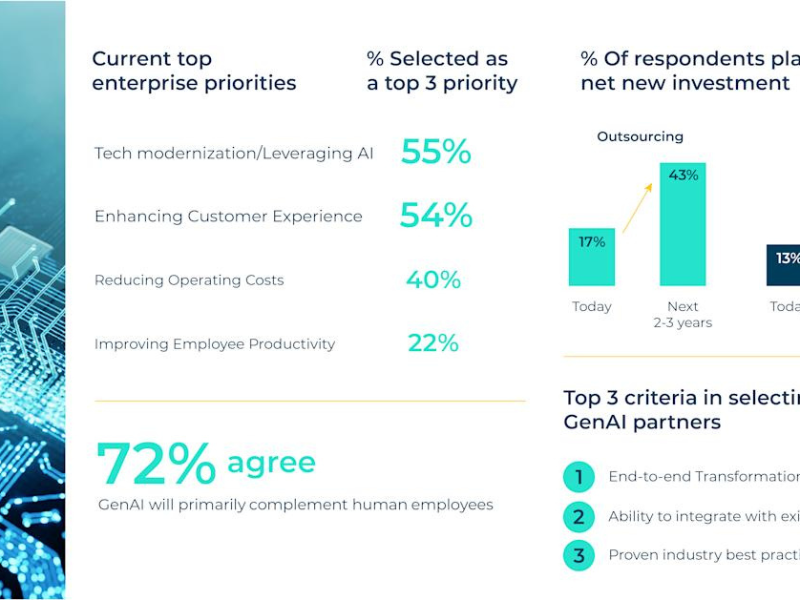
Concentrix Corporation is one of the largest customer experience and business process outsourcing providers globally. It serves enterprise and Fortune 500 clients across technology, retail, healthcare, finance, and telecom.
Concentrix is often used as a benchmark because of its scale and breadth. Core services include:
- Omnichannel customer support across voice, chat, email, and social
- Technical support and helpdesk services
- Back-office operations and process management
- AI-driven engagement tools and analytics
- Global delivery with onshore, nearshore, and offshore teams
Its strength lies in operational consistency and global reach. For many organizations, however, that same scale can introduce trade-offs in speed, customization, and cost—driving interest in Concentrix competitors.
Why Companies Look for Concentrix Competitors
Large BPO providers are built for stability. That works well for mature, predictable operations. It breaks down when businesses need speed, experimentation, or tighter ownership of outcomes.
Common reasons companies explore Concentrix alternatives include:
Scale vs. Agility
Concentrix demonstrates exceptional capability in standardized delivery across thousands of agents—critical for organizations managing predictable, high-volume operations with established processes.
This strength becomes a limitation when operational requirements change faster than large-scale delivery models can adapt.
Operational scenario:
A cryptocurrency exchange experiences an unexpected security event. Customer inquiry volume increases 400% within hours. Existing support scripts don’t address the new issue, and customers need immediate guidance on account security protocols.
Standard enterprise BPO response timeline:
- Script development and approval: 2-3 business days
- Agent training across distributed teams: 3-5 days
- Deployment and quality verification: 1-2 days
- Total response time: 6-10 days
During this period, frustrated customers escalate issues through social media, regulatory bodies, and public forums.
More agile providers with smaller operational footprints typically respond within:
- Script updates: Same day
- Agent briefing: 2-4 hours
- Live deployment: Same day
- Total response time: 4-12 hours
This isn’t a quality issue—it reflects different operating models. Large-scale BPO operations optimize for consistency across hundreds of campaigns. Smaller operations optimize for rapid iteration within focused client portfolios.
Operations where agility creates competitive advantage:
- Seasonal businesses with dramatic volume fluctuations (tax preparation, e-commerce peak periods)
- Regulated industries requiring frequent compliance adaptations (financial services, online gaming platforms)
- Product launches requiring rapid iteration based on customer feedback
- Crisis response scenarios requiring immediate process changes
Operations where scale consistency matters more:
- Utility companies with stable, year-round call patterns
- Insurance claims processing with standardized workflows
- Telecom billing support with minimal process variation
- Banking operations prioritizing regulatory consistency over speed
Pricing and Contract Rigidity
Enterprise BPO contracts optimize for vendor capacity planning and operational stability—structured around long-term commitments with defined seat allocations and annual adjustment periods.
Standard enterprise BPO contract structure:
- Minimum commitment: 50-100 seats (varies by provider and contract tier)
- Contract duration: 2-3 years with annual renewals
- Pricing model: Per-seat hourly rates ($15-28/hour depending on service complexity and geography)
- Scaling mechanisms: Typically require 30-90 day advance notice for capacity changes exceeding 15-20%
- Volume commitments: Minimum utilization requirements (often 80-90% of committed seats)
Why this structure works for certain operations:
Large enterprises managing stable, predictable CX operations benefit from:
- Budget certainty: Locked pricing enables accurate annual forecasting
- Guaranteed capacity: Vendors maintain adequate staffing regardless of minor fluctuations
- Relationship depth: Long-term partnerships enable process optimization and institutional knowledge
Example: A national bank handling credit card support with 800 agents knows its annual volume within 10% accuracy. Multi-year pricing provides stability, and vendor-managed hiring eliminates internal HR burden.
When this structure creates operational friction:
Scenario: Multi-client BPO operation
A specialized BPO serves three clients in high-volatility industries:
- Q1: Client A expands into two new markets → requires 40 additional agents for 90 days
- Q2: Client B runs seasonal promotion → needs 30 agents for 6-week period only
- Q3: Client C faces regulatory review → scales down 25 agents for 120 days
- Q4: All clients increase volume for year-end period → need 60 additional agents for 8 weeks
With traditional seat-based contracts:
- Contracted capacity must cover peak demand (potentially 150+ seats)
- Pay for full allocation even during low-utilization periods
- Advance notice requirements prevent rapid scaling
- Annual cost of unused capacity: $80,000-150,000+
Alternative pricing models offered by some competitors:
- Usage-based: Pay per-minute or per-interaction instead of per-seat
- Modular scaling: Add/remove capacity with shorter notice periods (7-30 days)
- Outcome-based: Payment tied to performance metrics (resolution rates, customer satisfaction)
- Hybrid models: Base capacity + flexible overflow pricing
The fundamental trade-off: Traditional contracts provide stability and vendor accountability for entire operations (hiring, training, management). Flexible models provide cost efficiency and scaling speed but often require more direct client involvement in workforce planning.
Demand for Faster AI Adoption
AI is now core to CX. The challenge is speed of deployment.
- Large providers invest heavily in AI, but rollout can be slow across regions.
- Agile competitors embed automation directly into daily agent workflows faster.
Accountability for CX Outcomes
Many companies want partners to co-own results, not just execution.
- Metrics like CSAT, first contact resolution, and retention require tight feedback loops.
- Smaller or specialized providers often offer clearer ownership and governance.
BPO Pricing Comparison: Concentrix vs 10 Alternatives
Rates below are typical market ranges based on US-based agents handling voice customer support. Actual quotes depend on volume, complexity, language, and contract term. Nearshore (Philippines, Mexico, El Salvador) or offshore rates can run 40-60% lower.
| Vendor | Pricing model | Typical US rate | Minimum commitment | Contract term |
|---|---|---|---|---|
| Concentrix | Per-seat + project-based | $18–$25/hr per agent | 50+ seats typical | 12-month minimum |
| Teleperformance | Per-seat, enterprise scale | $15–$22/hr per agent | 100+ seats | 12–24 months |
| Alorica | Per-seat, mid-market | $14–$20/hr per agent | 20+ seats | 6–12 months |
| Sykes (Sitel / Foundever) | Per-seat | $16–$24/hr per agent | 30+ seats | 12 months |
| TTEC | Premium per-seat + tech stack | $20–$30/hr per agent | Enterprise only | 12–24 months |
| Sutherland | Hybrid (per-seat or per-call) | $17–$26/hr per agent | Mid/enterprise | 12 months |
| Kelly Services | Project / staffing-based | Custom quote | Flexible | Project length |
| TaskUs | Per-seat, digital-native focus | $17–$25/hr per agent | 25+ seats | 12 months |
| FlyFone (platform) | Pay-as-you-go (no seat fees) | $0 platform + per-minute call cost | No minimum | Month-to-month |
Note: Pricing transparency is the biggest frustration in BPO procurement. Most vendors will not disclose rates until after a discovery call. When evaluating, request rate cards, volume discount tiers, and a clear definition of what is included (QA, reporting, training) vs. priced separately.
Key Criteria to Compare Concentrix Alternatives
To compare Concentrix competitors effectively, focus on how they operate—not just what they promise.
- Global Delivery Model
Check the balance of onshore, nearshore, and offshore support. Time zone alignment and cultural fit often matter more than raw headcount. - CX Technology and Omnichannel Maturity
Look for seamless handoffs between channels. Disconnected voice, chat, and email teams create friction customers notice. - AI, Automation, and Analytics
Ask how AI is used day to day. Examples include agent assist (real-time suggestions), automated quality monitoring, and predictive routing. - Flexibility by Company Size
Some providers shine with enterprises but struggle to serve mid-sized clients. Match their operating model to your growth stage. - Industry Compliance and Security
Regulated industries need proven experience with data protection, audits, and certifications—not generic assurances.
Top Concentrix Competitors and Alternatives
Teleperformance
Best for: Large enterprises needing massive scale and multilingual coverage.
Strengths:
- Presence in 90+ countries and hundreds of languages
- Proven delivery consistency at high volume
- Strong compliance and security frameworks
Limitations:
- Less flexible for custom programs
- Higher pricing for tailored solutions
Good fit if: You value global reach and operational stability over speed.
TTEC
Best for: Organizations pursuing digitally driven CX transformation.
Strengths:
- Strong cloud-based and analytics-led CX platforms
- Balanced focus on technology and human interaction
- Consulting-led approach to CX design
Limitations:
- Smaller global footprint than mega-providers
- Advanced solutions may raise short-term costs
Good fit if: You want CX strategy and execution combined.
Accenture
Best for: Enterprises undergoing large-scale digital transformation.
Strengths:
- Deep consulting, AI, and automation expertise
- End-to-end transformation capabilities
- Strong cross-industry experience
Limitations:
- Premium pricing
- Less suited for cost-driven outsourcing
Good fit if: CX is part of a broader enterprise transformation.
Foundever
Best for: Brands prioritizing human-centered CX delivery.
Strengths:
- Strong employee engagement and training focus
- Flexible delivery across regions
- Good balance between scale and personalization
Limitations:
- Less advanced automation than top AI-focused rivals
- Service consistency can vary by location
Good fit if: Brand voice and empathy are critical.
TaskUs
Best for: High-growth, digital-first companies.
Strengths:
- Agile operating models
- Strong culture and employee retention
- Experience with tech, fintech, and online platforms
Limitations:
- Smaller scale than traditional giants
- Not ideal for highly regulated industries
Good fit if: You need speed, flexibility, and modern CX practices.
Alorica
Best for: Stable, high-volume customer care operations.
Strengths:
- Long-standing BPO experience
- Strong workforce management
- Reliable large-scale delivery
Limitations:
- Slower adoption of cutting-edge automation
- Heavier focus on traditional CX models
Good fit if: Predictability and continuity matter most.
Sutherland
Best for: CX programs tied to digital engineering and process redesign.
Strengths:
- Strong analytics and automation integration
- Experience with complex workflows
- Balanced front- and back-office services
Limitations:
- Smaller workforce than top-tier giants
- Less consulting depth than Accenture
Good fit if: You need CX tied closely to process transformation.
TELUS International
Best for: Secure, tech-forward CX delivery.
Strengths:
- Advanced AI and data services
- Strong compliance and security posture
- High employee engagement
Limitations:
- Smaller geographic footprint
- Premium pricing
Good fit if: Data security and AI-enabled CX are top priorities.
iQor
Best for: Mid-market companies that want a flexible, tech-forward BPO without enterprise-tier pricing.
Strengths:
- Strong US nearshore footprint (Mexico, Jamaica, Colombia, Philippines)
- Symphony platform — proprietary unified agent desktop + AI assist
- Competitive pricing for mid-market (typically $14–$22/hr)
- Responsive to custom SLAs and smaller contract sizes (50+ seats)
Limitations:
- Smaller global footprint than Concentrix or Teleperformance
- Less consulting depth for digital transformation projects
Good fit if: You are a mid-market US company that finds Concentrix too rigid on contracts and too pricey per seat.
FlyFone
Best for: Teams that want full control over their CX operations with usage-based pricing instead of BPO per-seat markup.
Strengths:
- Cloud contact center platform — hire and manage agents directly, or plug in your own BPO
- Usage-based pricing from $0.02/min — no per-seat minimums, no long-term commit
- Built-in ACD, IVR, predictive dialer, AI QA, and omnichannel routing
- CRM integrations (Salesforce, HubSpot, Zendesk, Intercom) out of the box
- Deploys in under an hour — no multi-month onboarding like traditional BPOs
Limitations:
- Not a traditional BPO — you still need to source agents (in-house or via a smaller BPO partner)
- Less suited for Fortune-500 programs needing 500+ turnkey agents with full managed service
Good fit if: You want to break away from per-seat BPO markup, keep direct control of agents, and only pay for voice minutes consumed.
Concentrix vs Competitors — Feature Matrix
Use this matrix to shortlist based on your specific requirements. No single vendor dominates every dimension.
| Criterion | Concentrix | Teleperformance | Alorica | TTEC | FlyFone |
|---|---|---|---|---|---|
| Headcount | 440k+ agents | 500k+ agents | 100k+ agents | 62k+ agents | SaaS platform (customer BYO agents) |
| Global coverage | 70+ countries | 100+ countries | 17+ countries | 25+ countries | 110+ countries (platform) |
| Min seats | 50+ | 100+ | 20+ | Enterprise | 1 agent |
| AI / automation maturity | High (iX AI stack) | High (TAP platform) | Medium (ReVoLD) | High (Humanify AI) | High (native AI QA) |
| Industries covered | Broad (all verticals) | Broad (all verticals) | Retail, financial, healthcare | Tech, financial, healthcare, auto | Product-agnostic (any industry) |
| Onboarding time | 8–12 weeks | 8–12 weeks | 4–8 weeks | 8–16 weeks | 24 hours (SaaS) |
| Pricing transparency | Low (RFP-only) | Low (RFP-only) | Medium | Low (enterprise only) | High (public per-minute rates) |
| Best for | Large enterprise, multi-region | Enterprise scale, 100+ seats | Mid-market, flexibility | Premium CX, tech-forward | SMB to mid-market, flexibility, fast launch |
Concentrix vs Competitors — High-Level Comparison
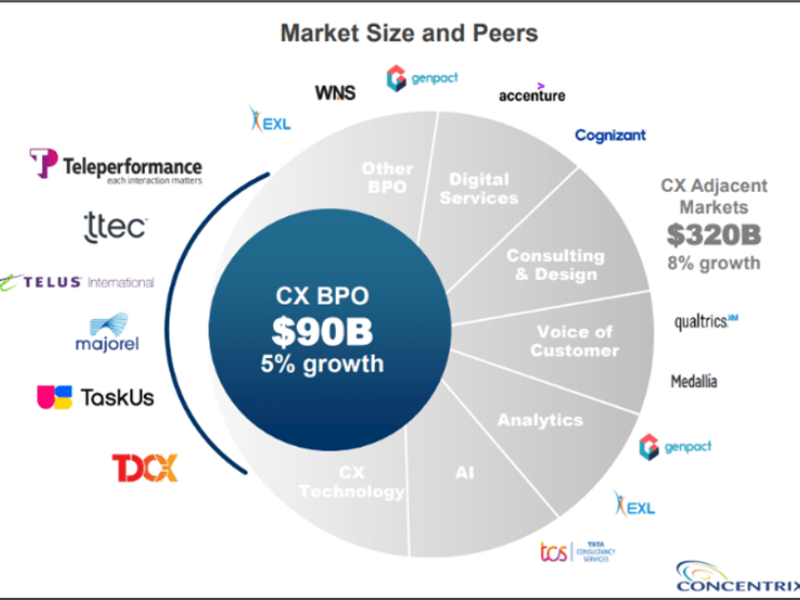
No provider wins across every dimension. The right choice depends on context.
| Provider Type | Key Advantage | Trade-Off |
|---|---|---|
| Concentrix | Global scale and consistency | Less agility |
| Teleperformance | Unmatched reach | Higher cost |
| Accenture | Deep transformation expertise | Premium pricing |
| TaskUs | Speed and flexibility | Limited scale |
| TELUS International | Secure, AI-driven CX | Smaller footprint |
Concentrix Competitors by Industry: Who Wins Each Vertical?
Different industries have different BPO winners. Use this as a shortlist guide based on your vertical’s specific requirements.
Healthcare
Top 3 Concentrix alternatives: TTEC (HIPAA expertise, patient access programs), Sutherland (clinical operations, revenue cycle), Concentrix (large generalist). Key differentiator: HIPAA BAA availability, clinical training depth, and US-based data residency. Avoid pure offshore providers for PHI-handling programs.
Financial Services & Fintech
Top 3 Concentrix alternatives: Teleperformance (scale + PCI maturity), TTEC (premium fraud/disputes), Alorica (mid-market banks and credit unions). Must-haves: PCI DSS Level 1, SOC 2 Type II, and for US banks, GLBA and CCPA/GDPR expertise. Concentrix is solid but rarely the cheapest option.
Retail & E-commerce
Top 3 Concentrix alternatives: Alorica (retail-native, flexible seasonality), TaskUs (digital-native, marketplace customers), Teleperformance (global scale for international brands). Peak-season flexibility (Black Friday 3x capacity) is the key filter. Concentrix handles this well but charges accordingly.
Tech & SaaS
Top 3 Concentrix alternatives: TaskUs (SaaS-specialized, product-savvy agents), TTEC (premium digital CX), Sykes/Foundever (deep technical support). Tech companies benefit from BPOs with product-trained agents and API-first integrations. Concentrix works but is more generalist than these specialists.
Gaming
Top 3 Concentrix alternatives: Keywords Studios (gaming-specialized), PTW (gaming player support), TaskUs (gaming community management). Concentrix has gaming clients but it is not their specialty. Gaming support requires specific knowledge of player psychology, community moderation, and often 24/7 multilingual coverage — specialists outperform generalists here.
Travel & Hospitality
Top 3 Concentrix alternatives: Teleperformance (global travel brands), iQor (hotels, airlines), Sutherland (travel tech). High seasonality, multilingual needs, and peak-season disruptions favor global specialists. Concentrix is top-3 here but Teleperformance typically wins for multi-region brands.
Head-to-Head: Concentrix vs Each Major Competitor
Teleperformance vs Concentrix — which scales outbound sales faster?
Teleperformance wins for pure scale. With 500k+ agents across 100+ countries, Teleperformance can absorb outbound campaigns that would strain Concentrix capacity. Their TAP (Teleperformance Analytics Platform) also has more mature outbound dialing and real-time supervision. However, Concentrix has stronger brand recognition in North America and better integration with Salesforce/HubSpot for outbound SDR teams. If you are running a 100-seat outbound campaign, Teleperformance is faster to stand up. For a 20-seat specialty campaign, Concentrix provides more hands-on account management.
Winner: Teleperformance for 100+ seat outbound campaigns. Concentrix for mid-market branded outbound.
Alorica vs Concentrix — which is better for mid-market budgets?
Alorica is notably cheaper and more flexible. Alorica’s per-seat rate ($14–$20/hr) typically runs 15–20% below Concentrix ($18–$25/hr), and they accept programs starting at 20 seats (vs. 50+ at Concentrix). Quality is comparable for retail, financial services, and healthcare support. Alorica’s weakness: less mature AI automation and fewer global regions. For a US-focused mid-market company with $200k–$1M/yr BPO budget, Alorica usually provides better unit economics. For multi-region enterprise programs, Concentrix wins on consistency.
Winner: Alorica for US mid-market. Concentrix for multi-region enterprise.
TTEC vs Concentrix — which delivers better customer experience quality?
TTEC has the edge on premium CX. TTEC’s Humanify AI platform, digital-first workflow, and agent coaching infrastructure typically result in higher CSAT and NPS scores than Concentrix, particularly in tech and healthcare verticals. The trade-off: TTEC charges a 15–20% premium ($20–$30/hr vs. $18–$25/hr) and is enterprise-only. Concentrix remains stronger for traditional voice-heavy programs and cost-sensitive multinational rollouts. For a SaaS company prioritizing CSAT and willing to pay for it, TTEC is the better pick. For traditional customer service operations at scale, Concentrix delivers predictable quality at a better price.
Winner: TTEC for premium CX verticals. Concentrix for cost-balanced enterprise programs.
Sykes (Foundever) vs Concentrix — which handles complex support best?
Sykes/Foundever has deeper tech support expertise. Originally rooted in technical support for software and electronics companies, Sykes (now part of Foundever, formed via merger with Sitel) retains strength in complex, script-light technical support. Their Tier 2 agent quality exceeds Concentrix for SaaS and hardware companies. Concentrix is stronger for simple, high-volume voice (retail, telco). Foundever’s weakness post-merger: some operational integration issues reported through 2024–2025. For specialty tech support, Sykes/Foundever wins. For volume transactional support, Concentrix is more predictable.
Winner: Sykes/Foundever for complex tech support. Concentrix for high-volume transactional.
Which Concentrix Alternative Is Right for Your Business?
Start with your operating reality, not vendor rankings.
- Global enterprises: Concentrix, Teleperformance, Accenture
- Mid-sized companies: TTEC, Foundever, Sutherland
- High-growth tech brands: TaskUs, TELUS International
- Cost-stable operations: Alorica
Clarity on volume, compliance, growth pace, and CX ownership will narrow the field quickly.
Frequently Asked Questions
Who are Concentrix’s biggest competitors?
Teleperformance, Accenture, TTEC, Foundever, TaskUs, Alorica, Sutherland, and TELUS International are the most commonly compared alternatives in CX and BPO outsourcing.
Are Concentrix alternatives better for mid-sized businesses?
Often, yes. Many competitors offer greater flexibility, faster changes, and pricing models better suited to mid-sized or fast-growing companies.
How do pricing models differ among Concentrix competitors?
Large providers favor long-term, volume-based contracts. Agile competitors more often offer modular, scalable, or outcome-based pricing.
Which Concentrix alternatives focus most on AI and automation?
Accenture, TELUS International, TTEC, and Sutherland are strongest in AI-driven CX execution and analytics.
Is Concentrix still a good choice today?
Yes. Concentrix remains a strong option for large, complex operations. Alternatives may outperform when agility, cost control, or specialization matter more.
Evaluate your needs, shortlist aligned providers, and request tailored proposals to find the best fit.
More in Operations & CX Optimization
View all →
Customer Experience Transformation: Framework and Steps
A telecom customer calls support about a billing error. They explain the problem to the IVR system. Then to the first agent. Then get transferred and explain again. Then escalated—and explain a third time. Forty minutes later, they're exhausted and the problem still isn't solved. This is what broken customer experience looks like. And it's costing you customers. Customer experience…


Web Caller Meaning: JavaScript caller, Calling Tools or Portals
“Web caller” is one of those phrases where the search results and the searcher are frequently talking about different things. Three unrelated audiences use it: developers hitting an error on the legacy JavaScript caller property, buyers evaluating browser-based calling software, and people trying to reach a specific portal or training page whose exact name they cannot recall. That fragmentation is…

Customer Experience Strategy: How to Build One That Works
Customer experience is getting worse, not better. Forrester's 2025 Global CX Index found that 21% of brands declined in CX quality while only 6% improved — and in the US, 25% declined against 7% that improved, the second consecutive year of that pattern. Most of those brands were not neglecting customer experience. They were working on it without a strategy…


 English
  Russian
  Chinese