

Choosing the wrong call center vendor typically costs $150,000–$500,000 in switching costs—including recruitment, retraining, and service disruption over 6–12 months. The root cause? Vague RFPs that generate incomparable proposals, buried fees, and misaligned service expectations.
A structured RFP eliminates guesswork. It forces vendors to respond to identical criteria—scope, volume, SLAs, and pricing—making it possible to compare proposals objectively and select a partner that matches your operational needs and budget constraints.
📄 Free Download
Call Center Outsourcing RFP Template (DOCX)
Ready-to-edit Word document with 8 sections, 40+ vendor questions, and a scoring matrix. Free, no signup required.
⬇ Download RFP Template (.docx)
38 KB · Microsoft Word format · Editable
Key Takeaways
- A structured call center RFP helps you compare vendors fairly and avoid costly mismatches.
- Clear scope, volume, and SLA definitions lead to more accurate pricing and proposals.
- A ready-to-use template saves time and improves vendor response quality.
- A simple scoring model reduces bias and speeds up decision-making.
What Is a Call Center RFP?
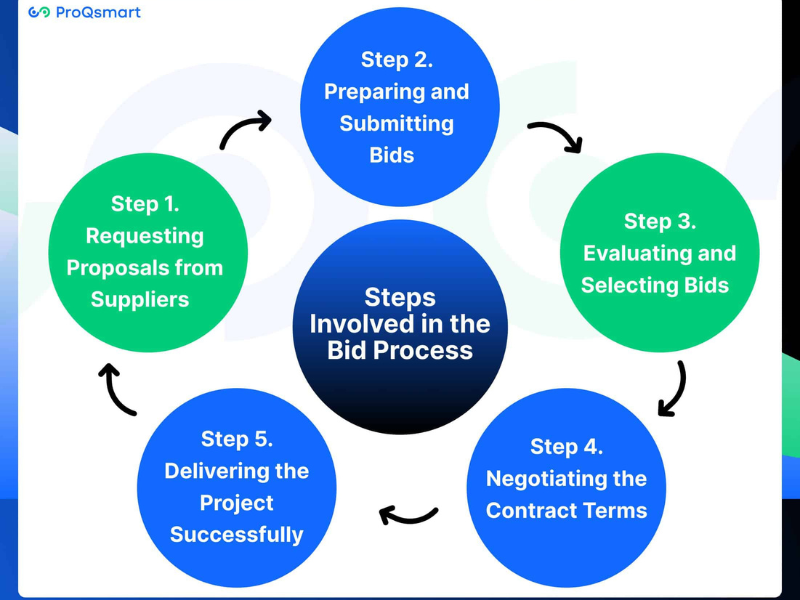
A call center RFP (Request for Proposal) is a structured procurement document that standardizes how vendors present their solutions, pricing, and service commitments. Instead of receiving proposals in different formats—making comparison nearly impossible—an RFP ensures every vendor answers the same questions in the same order.
Why formal RFPs matter:
For contracts under $50,000/year with simple requirements (e.g., 10-agent inbound support), informal quotes may suffice. But for operations involving 50+ agents, multiple channels, or compliance requirements (HIPAA, PCI-DSS), an RFP protects you by creating an auditable selection process and enforceable service commitments.
Call center RFP vs. contact center RFP:
Before finalizing your RFP requirements, it’s helpful to understand the current landscape of enterprise contact center solutions. This will give you a clearer view of available platforms, key capabilities, and how different providers align with your operational needs and scalability goals.
- Call center RFP: Voice-only phone support
- Contact center RFP: Omnichannel (voice + email + chat + social media)
Use “contact center” terminology if you need integrated reporting across channels—critical for tracking customer journeys that start in chat and escalate to phone.
When You Should Use a Call Center RFP Template
Use a structured RFP template in these situations:
1. First-time outsourcing
Without vendor management experience, you’re vulnerable to scope creep and hidden fees. An RFP forces vendors to declare all costs upfront—setup fees, training, management overhead—and commit to service levels before you sign. First-time buyers who skip RFPs typically discover 20–30% cost overruns within 90 days.
2. Vendor underperformance
If your current vendor consistently misses SLAs (e.g.,
3. Multi-vendor comparison
Comparing 3–5 vendors without standardized questions leads to “apples-to-oranges” proposals. One vendor quotes per-hour, another per-minute, a third bundles training costs. An RFP eliminates this chaos by requiring identical response formats—essential when procurement needs defensible selection criteria.
4. Growing complexity
When call volume exceeds 10,000 monthly calls, or you add channels (chat, email), compliance requirements (HIPAA, PCI-DSS), or specialized workflows (technical escalations, fraud verification), informal vendor conversations no longer capture requirements accurately. An RFP scales with complexity.
5. Procurement compliance
Many enterprises require formal competitive bidding for contracts exceeding $100,000/year. An RFP satisfies internal audit requirements and creates a paper trail showing fair evaluation.
What to Include in a Call Center RFP (Quick Overview)
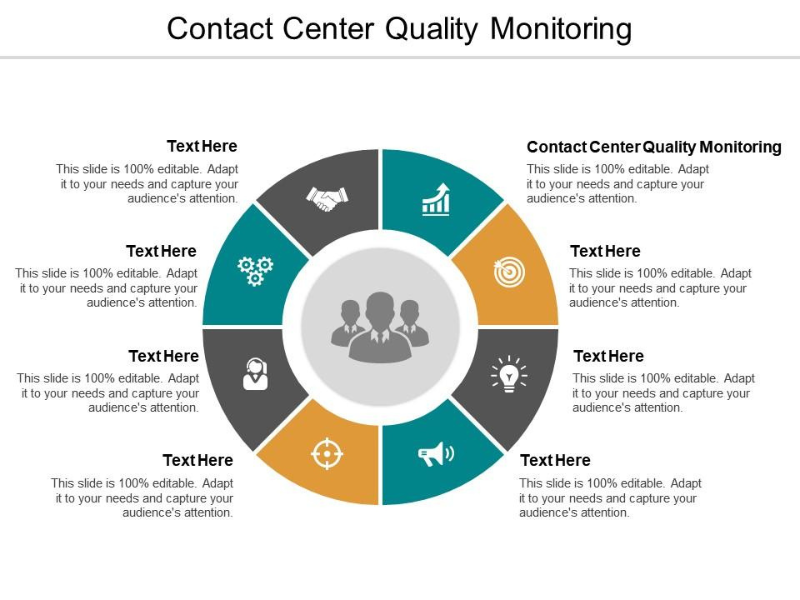
- Company background
Helps vendors understand your business, customers, and goals. - Scope of services
Defines inbound, outbound, and channel requirements to avoid scope creep. - Call volume and staffing
Enables accurate pricing and capacity planning. - Operational and quality standards
Sets expectations for training, QA (quality assurance), and supervision. - Technology and security
Ensures system compatibility and data protection. - Pricing structure
Forces transparency around rates, fees, and assumptions. - SLAs and KPIs
Defines measurable performance standards tied to outcomes. - Proposal instructions
Standardizes vendor responses for easier comparison. - Evaluation process and timeline
Explains how and when decisions will be made.
Ready-to-Use Call Center RFP Template
Section 1 – Company Background
Provide enough context for vendors to tailor their proposal.
Include:
- Industry and business model
- Company size and customer profile
- Reason for outsourcing
- Program objectives (cost reduction, quality improvement, scalability)
Example:
Our company is a US-based eCommerce retailer serving B2C customers.
We are seeking a call center partner to handle inbound customer service
and order support with a focus on first-call resolution and CSAT.
Section 2 – Scope of Call Center Services
Be specific to avoid misunderstandings later.
Cover:
- Inbound services (customer service, billing, technical support)
- Outbound services (sales, renewals, surveys)
- Languages required
- Hours of operation
- Escalation handling
Tip: Clearly state what is out of scope to prevent cost overruns.
| Service Type | Required | Notes |
|---|---|---|
| Inbound support | Yes | Phone only |
| Outbound sales | No | Not in phase 1 |
| Multilingual | Yes | English + Spanish |
Section 3 – Call Volume and Staffing Requirements
Vendors price based on volume accuracy.
Include:
- Average monthly call volume
- Peak vs. off-peak patterns
- Average handle time (AHT)
- Seasonal spikes
- Preferred staffing model
| Metric | Estimate |
|---|---|
| Monthly calls | 25,000 |
| Peak months | Nov–Dec |
| Avg. handle time | 6 minutes |
Location options:
- Onshore: Higher cost, strong cultural alignment.
- Nearshore: Balanced cost and quality.
- Offshore: Lowest cost, requires strong QA controls.
Section 4 – Operational and Quality Requirements
Quality gaps cause churn and brand damage.
Define:
- Training duration and refresh cycles
- QA scoring process
- Call monitoring frequency
- Supervisor-to-agent ratio
- Issue escalation process
From experience: Vendors without structured QA often miss service targets within 90 days.
Section 5 – Technology and Security Requirements
List must-have systems and standards.
Include:
- CRM integration (e.g., Salesforce)
- IVR (interactive voice response) routing
- Call recording and reporting
- Real-time dashboards
- Data encryption and access control
Specify compliance only if relevant:
- HIPAA (healthcare data protection)
- GDPR (EU personal data protection)
Section 6 – Pricing Structure and Commercial Terms
Ask for full transparency.
Common models:
- Per hour
- Per minute
- Per agent (FTE)
Request vendors to itemize:
- Setup fees
- Training costs
- Management fees
- Overtime or surge pricing
| Model | Pros | Cons |
|---|---|---|
| Per hour | Predictable | Less flexible |
| Per minute | Scales well | Harder to forecast |
Section 7 – Service Level Agreements (SLAs) and KPIs
SLAs make performance measurable.
Common benchmarks:
- Service level: 80% calls answered in 20 seconds
- Abandon rate:
- QA score: ≥90%
- CSAT: ≥85%
Tie SLAs to:
- Penalties for underperformance
- Bonuses for exceeding targets
| KPI | Target | Measurement |
|---|---|---|
| Service level | 80/20 | Monthly |
| QA score | ≥90% | Weekly |
Section 8 – Proposal Submission Guidelines
Standardize responses.
Require:
- Company overview
- Relevant case studies
- Proposed solution
- Pricing breakdown
- SLA confirmation
- References
Set:
- Submission format (PDF)
- Deadline
- Contact person for questions
Section 9 – Evaluation Process and Timeline
Explain how decisions are made.
Example scoring model:
| Criteria | Weight |
|---|---|
| Experience & fit | 30% |
| Operations & QA | 25% |
| Technology | 20% |
| Pricing | 25% |
Include:
- Shortlist date
- Vendor presentations
- Final decision date
How to Customize This Call Center RFP Template for Your Business
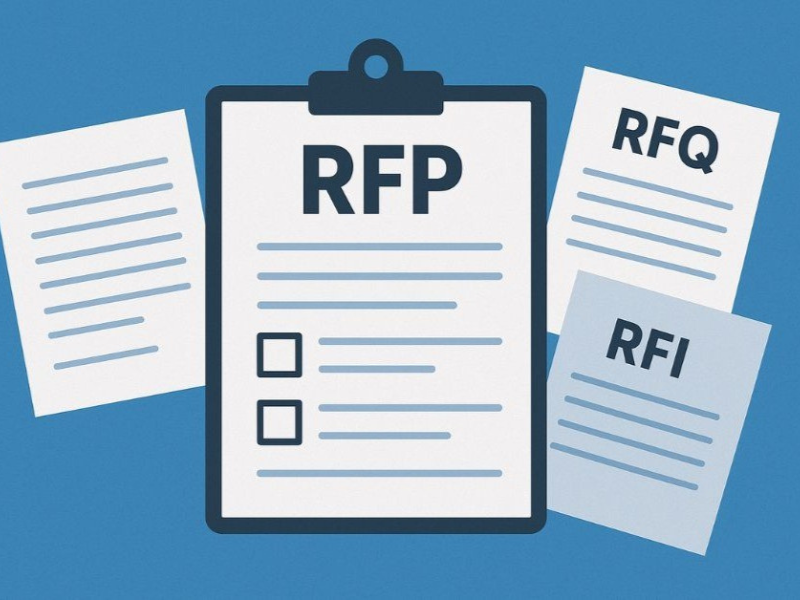
- SMBs should simplify SLAs and focus on flexibility.
- Enterprises should add compliance, governance, and redundancy requirements.
- Regulated industries must expand security and audit sections.
How to Evaluate Call Center RFP Responses Fairly
RFP Response Scoring Matrix
Score each criterion 1-5 (5 = excellent). Multiply by weight to get final score. The highest-scoring vendor wins — but if any vendor scores 1 or 2 on compliance or security, they fail automatically regardless of total.
| Criterion | Weight | Why it matters |
|---|---|---|
| Compliance & security | 20% | PCI DSS, HIPAA, SOC 2, GDPR — non-negotiables. Fail here = disqualify. |
| Technical capability | 15% | CRM integrations, API access, reporting depth, omnichannel support. |
| Agent quality & training | 15% | Hiring process, language proficiency, ongoing training, attrition rate. |
| SLA commitment | 15% | Uptime ≥99.9%, AHT, FCR, CSAT targets — written penalties for miss. |
| Pricing transparency | 15% | Clear model (per-min / per-seat / hybrid), no hidden fees, volume tiers. |
| Scalability | 10% | Can scale up 3x in 30 days? Seasonal flex? Minimum contract term. |
| Geography / data residency | 5% | Regions available, time zone coverage, data stays in-region for compliance. |
| Cultural / language fit | 3% | Accent neutrality, local market understanding, holidays handled. |
| References & case studies | 2% | 3+ similar-size customers willing to take a call. |
Total weights = 100%. A vendor scoring 4.2/5 weighted is solid. Below 3.5 = reject.
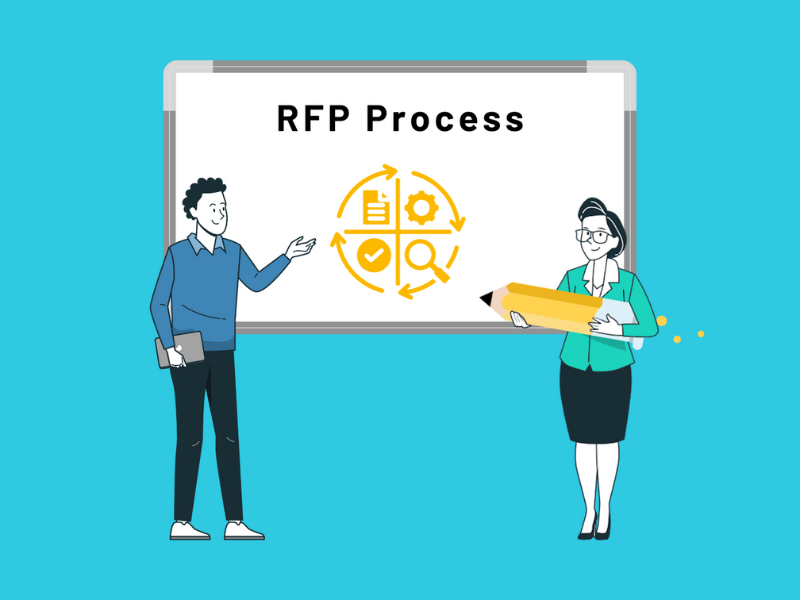
Use a weighted scoring approach.
Steps:
- Score each section independently.
- Normalize pricing assumptions.
- Validate claims with references.
- Avoid choosing based on price alone.
Why cheapest isn’t best: In a 2023 COPC study of 200 outsourced call center contracts, buyers who selected the lowest-priced vendor experienced 35% higher total cost of ownership due to change orders and remediation, 18% lower CSAT scores in months 6–12, and 2.3x higher churn rate (vendor replacement within 24 months).
| Vendor | Total Score |
|---|---|
| Vendor A | 82 |
| Vendor B | 76 |
50+ Sample RFP Questions to Copy Into Your Template
Below are the most critical questions to include — grouped by category. Copy the ones relevant to your scope.
Technical Capability (10 questions)
- What call center platform or CCaaS do you operate on?
- Do you support omnichannel routing (voice, chat, email, SMS, social)?
- Which CRMs do you integrate with natively? (Salesforce, HubSpot, Zoho, Pipedrive, Zendesk)
- Do you provide REST API access to call data, recordings, and dispositions?
- What is your average platform uptime over the last 12 months? Provide incident reports.
- How is disaster recovery handled — RPO and RTO targets?
- What agent desktop software do agents use? Does it have a dialer, screen pop, disposition tracking?
- Do you provide real-time reporting dashboards? Who can access them?
- What languages do your agents speak natively? Can you provide proficiency test results?
- How do you manage local presence caller ID and dynamic DID rotation?
Compliance & Security (10 questions)
- Are you PCI DSS compliant? Provide latest Attestation of Compliance (AOC).
- Are you HIPAA compliant? Provide your standard BAA template for review.
- Are you GDPR compliant? What data residency options do you offer?
- Do you hold a SOC 2 Type II certification? Provide the full report.
- For outbound campaigns: do you comply with TCPA (US), PECR (UK), and equivalent regulations?
- What is your data breach notification SLA and policy?
- How are PII and PCI data masked in call recordings?
- Do agents undergo background checks? What level?
- Describe physical security controls at your agent facilities.
- Do you allow customer-conducted security audits or penetration tests?
Pricing & Contract (10 questions)
- What is your pricing model — per-minute, per-seat, per-transaction, or hybrid?
- Are there any onboarding or setup fees? What do they cover?
- What is the minimum contract term and cancellation notice period?
- Do you offer volume discount tiers? At what thresholds?
- Is there a price escalation clause? Annual increase cap?
- Which currencies do you invoice in?
- What fees apply for out-of-scope work (e.g., agents trained on new skills, custom integrations)?
- Is the pricing all-inclusive, or are monitoring / QA / reporting priced separately?
- Do you offer a pilot or short-term contract (30-90 days) before committing?
- What are your standard payment terms (Net 30, Net 45, etc.)?
Service Quality & SLA (10 questions)
- What is your commitment to uptime SLA? Penalties for breach?
- What is your average speed of answer (ASA) target? Current performance?
- What is your first-call resolution (FCR) target and current baseline?
- How do you measure customer satisfaction (CSAT, NPS, CES)? Share recent scores.
- What is your agent attrition rate over 12 months?
- How are agent performance and quality monitored? Manual QA, AI scoring, or both?
- Do you record 100% of calls? Retention period?
- What is your escalation path for critical incidents?
- How quickly can you provide a replacement agent if someone is terminated?
- Do you perform regular calibration sessions with our team?
Operations & Scalability (10 questions)
- How quickly can you ramp up 20, 50, or 100 additional agents?
- Can you handle 3x volume spikes during seasonal peaks? How?
- What is your typical ramp time to hit SLA for new campaigns?
- Do you support 24/7 operations? Across how many time zones?
- How do you handle public holidays in agent locations vs. customer locations?
- What redundancy exists across your agent sites?
- Who is assigned as our account manager? Single point of contact or team?
- Do you assign dedicated agents or shared pool? Trade-offs for our volume.
- What training curriculum do new agents go through before taking live calls?
- Can we interview and approve agents before they join our program?
Common Mistakes to Avoid When Writing a Call Center RFP
- Common Mistakes to Avoid When Writing a Call Center RFPMistake #1: Vague volume forecasts
Example: An eCommerce company estimated “around 20,000 monthly calls” without breaking down peak vs. off-peak patterns. During Q4 holiday surge, actual volume hit 45,000 calls—125% over estimate. The vendor invoked surge pricing (+40% per-minute rate) and still missed SLAs due to understaffing.
Fix: Provide monthly volume ranges (minimum/average/maximum) plus hourly distribution patterns. If historical data is limited, build in a 20–30% buffer for unpredictable growth.
Mistake #2: Ignoring quality assurance and training
Example: A SaaS company focused RFP requirements on pricing and technology, spending just two sentences on QA. The winning vendor provided minimal training (3 days vs. industry standard 2 weeks) and no ongoing QA program. Within 60 days, CSAT dropped from 82% to 64%, forcing a costly remediation program.
Fix: Dedicate an entire RFP section to training duration, QA methodology, supervisor ratios, and ongoing coaching. Require vendors to specify:
- Initial training hours per agent
- QA scoring framework (how many calls monitored, scoring criteria)
- Supervisor-to-agent ratio (1:10 to 1:15 is standard)
- Remedial training process for underperformers
Mistake #3: Selecting based on price alone
Why it backfires: In a 2023 industry study of 200 outsourced call center contracts, buyers who selected the lowest-priced vendor experienced:
- 35% higher total cost of ownership due to change orders and remediation
- 18% lower CSAT scores in months 6–12
- 2.3x higher churn rate (vendor replacement within 24 months)
The pattern: Low-bid vendors underprice to win contracts, then recover margins through scope creep charges ($5,000–$15,000 per change request), minimal training (driving up AHT and errors), and high agent turnover (60–80% annually vs. 40–50% industry standard).
Fix: Use weighted scoring (see Section 9). Allocate only 25–30% of total score to pricing. Prioritize operational track record, QA processes, and cultural fit.
Mistake #4: Skipping reference checks
What to ask references:
- “Did the vendor meet SLA commitments consistently?” (not just “were you satisfied”)
- “What were the top 3 operational challenges in months 3–6?”
- “How did they handle volume spikes or scope changes?”
- “Would you renew with them, and why or why not?”
Red flag: If a vendor provides only 1–2 references for a 100+ agent operation, they likely have limited successful deployments in your industry.
Mistake #5: Compressed evaluation timelines
Realistic timeline:
- RFP distribution: Week 1
- Vendor Q&A period: Weeks 2–3
- Proposal submission: Week 4
- Internal scoring: Week 5
- Finalist presentations: Week 6
- Reference checks: Week 7
- Contract negotiation: Weeks 8–9
Rushing this process (e.g., selecting a vendor in 2–3 weeks) leads to overlooked red flags and poor contract terms.
FAQ

What is a call center RFP template?
A call center RFP template is a standardized document that helps you request proposals from call center vendors using consistent criteria.
How long should a call center RFP be?
Most effective RFPs are 10–20 pages, depending on complexity.
Can I use the same RFP for all vendors?
Yes, but minor customization improves proposal quality.
How many vendors should receive the RFP?
Three to five vendors is ideal for meaningful comparison.
Start Your RFP Today

A clear call center RFP saves time, reduces risk, and leads to better vendor outcomes. This template gives you everything needed to define requirements, compare proposals, and choose the right partner with confidence.
Use this call center RFP template as-is or customize it to fit your business. Start vendor outreach today and take control of your call center sourcing process.
Frequently Asked Questions

What is a call center RFP template?
A call center RFP template is a structured document businesses use to request proposals from call center vendors. It includes sections like company background, service requirements, pricing, SLAs, and evaluation criteria to help select the best vendor.
Why should I use a call center RFP?
Using a call center RFP ensures clarity in communication, defines expectations, and helps compare vendors based on measurable criteria. It minimizes misunderstandings and streamlines the vendor selection process, ultimately saving time and resources.
What are the key components of a call center RFP?
A call center RFP should include:
- Company overview
- Scope of services
- Call volume and staffing needs
- Technology and compliance requirements
- Pricing structure
- SLAs and KPIs
- Proposal instructions
- Evaluation process
How do I evaluate call center RFP responses?
Evaluate responses using a weighted scoring system based on key factors like vendor experience, pricing, compliance, scalability, and SLA guarantees. Consider real-world references and conduct follow-up interviews with top candidates.
Can I customize a call center RFP template?
Yes, you can and should customize an RFP template to align with your organization’s unique needs. Tailor sections for your scope of work, call volumes, budget, and performance metrics to ensure it reflects your business goals.
What mistakes should I avoid when creating an RFP?
Avoid these common mistakes:
- Being vague about requirements.
- Relying on generic templates without customization.
- Overlooking critical factors like compliance or security.
- Focusing solely on cost rather than value.
- Rushing the evaluation process without proper vetting.
How do SLAs impact vendor performance?
SLAs (Service Level Agreements) set measurable performance benchmarks (e.g., response times, resolution rates) and hold vendors accountable. Well-defined SLAs improve service consistency and allow for penalties or bonuses based on performance.
Is it necessary to include pricing structure details in the RFP?
Yes. Detailed pricing structures in your RFP ensure transparency. Request itemized costs, such as agent fees, setup costs, and hidden charges, to avoid surprises later in the partnership.
Where can I find vendors that respond to call center RFPs?
You can find qualified call center vendors through industry directories, professional networking platforms like LinkedIn, or by consulting BPO advisory firms. It’s also helpful to ask for recommendations within your professional network.
How do I ensure compliance with regulations like GDPR or HIPAA in my RFP?
Specify industry-specific compliance requirements in your RFP, such as GDPR for data protection or HIPAA for healthcare. Evaluate vendor certifications, security protocols, and audit procedures to ensure regulatory alignment.
Read more
- Call Center Compliance Checklist 2026: TCPA, PCI, HIPAA, DNC
- Call Center Forecasting: Methods, Metrics, Best Practices
- Top 10 Enterprise Contact Center Solutions for 2026
- Best Outsourced Customer Support: Top 23 Providers Compared
More in Operations & CX Optimization
View all →
Customer Experience Transformation: Framework and Steps
A telecom customer calls support about a billing error. They explain the problem to the IVR system. Then to the first agent. Then get transferred and explain again. Then escalated—and explain a third time. Forty minutes later, they're exhausted and the problem still isn't solved. This is what broken customer experience looks like. And it's costing you customers. Customer experience…


Web Caller Meaning: JavaScript caller, Calling Tools or Portals
“Web caller” is one of those phrases where the search results and the searcher are frequently talking about different things. Three unrelated audiences use it: developers hitting an error on the legacy JavaScript caller property, buyers evaluating browser-based calling software, and people trying to reach a specific portal or training page whose exact name they cannot recall. That fragmentation is…

Customer Experience Strategy: How to Build One That Works
Customer experience is getting worse, not better. Forrester's 2025 Global CX Index found that 21% of brands declined in CX quality while only 6% improved — and in the US, 25% declined against 7% that improved, the second consecutive year of that pattern. Most of those brands were not neglecting customer experience. They were working on it without a strategy…


 English
  Russian
  Chinese