
If you lead CX or operations in the US, you’re under pressure to reduce costs without hurting customer experience. Call center outsourcing in El Salvador offers a nearshore model that balances cost efficiency, bilingual support, and real-time collaboration. This guide helps you evaluate whether Call Center Outsourcing El Salvador fits your CX strategy and how to choose the right provider.
Key Takeaways at a Glance

- Call center outsourcing in El Salvador combines nearshore time zone alignment with meaningful cost savings.
- Bilingual English–Spanish agents support both US customers and the Hispanic market.
- The ecosystem is mature enough for CX, tech support, and back-office functions, but provider quality varies.
- El Salvador works best for US companies that value collaboration, oversight, and predictable scaling.
Why Call Center Outsourcing in El Salvador Is Gaining Attention

Over the past 5-7 years, El Salvador has evolved from handling primarily back-office tasks to managing complex customer experience operations for US enterprises. The country now hosts an estimated 50+ contact center providers, with major US brands running operations ranging from 50-agent teams to multi-hundred-agent centers in San Salvador.
US companies are reconsidering offshore-heavy strategies for three specific reasons:
Time zone alignment eliminates coordination delays. When a SaaS platform’s payment processing fails at 2 p.m. Eastern, El Salvador agents (working Central Time) can escalate to US engineering teams immediately—not 12 hours later when overnight offshore shifts finally overlap with US business hours. This cuts mean time to resolution from 18+ hours to 4-6 hours for critical issues.
Labor costs run 50-65% below US onshore rates. A fully-loaded US customer support agent costs $35-45/hour including wages, benefits, facilities, and management overhead. Comparable El Salvador agents cost $15-22/hour—meaningful savings without the communication gaps typical of distant offshore locations.
Bilingual talent density has reached critical mass. An estimated 25-35% of San Salvador’s contact center workforce now speaks business-level English, up significantly from a decade ago. For US companies serving Hispanic customers, this means one agent team can handle both English and Spanish interactions instead of maintaining separate departments.
For leaders focused on operational control and speed, El Salvador fills a gap between high-cost onshore teams and distant offshore centers.
What Is Call Center Outsourcing in El Salvador?

Call center outsourcing in El Salvador means contracting a local BPO provider to handle customer-facing or CX support functions for US companies.
These services are typically delivered from San Salvador and nearby hubs. Most providers operate on a nearshore model, aligned to Central Standard Time.
Engagements range from small pilot teams to multi-hundred-agent programs across voice and non-voice channels.
Why US Companies Outsource Call Centers to El Salvador

Nearshore Advantage and Central Time Zone Alignment
El Salvador operates on Central Standard Time (CST), the same or adjacent to most US business hours. This is the core nearshore advantage.
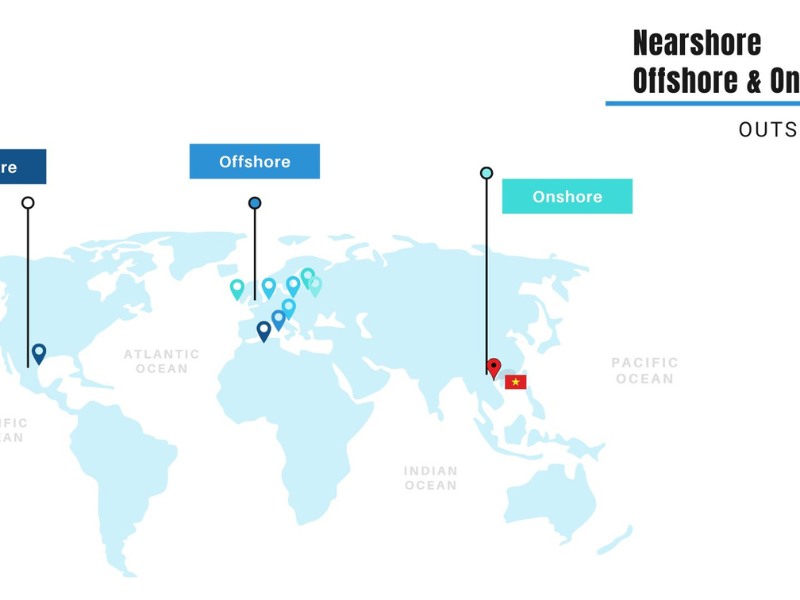
Nearshore outsourcing means teams work in overlapping hours with your US staff. Offshore models often run 10–12 hours ahead.
Direct CX impact of CST alignment:
- Escalations happen in real time, not overnight.
- QA feedback loops close the same day.
- US leaders can join live coaching and team huddles.
In practice, this changes how CX operations run. Issues get resolved faster. Agents receive immediate guidance. Performance gaps don’t linger for days.
Example:
Real-world scenario: Subscription billing emergency
A cloud software platform processes a $50,000 annual contract renewal for a law firm client, but the payment fails due to an expired credit card. The customer needs immediate resolution before their system access expires at midnight—losing access would halt their entire practice management system.
With El Salvador nearshore team (Central Time):
- 10:00 a.m. CT: Agent identifies payment failure during routine account review
10:15 a.m. CT: Escalates to US billing operations team (also working Central hours)
10:45 a.m. CT: Billing team approves 72-hour extension while customer updates payment
11:30 a.m. CT: Agent contacts customer, walks through card update process
2:00 p.m. CT: Customer updates card information, renewal processes successfully
Total resolution time: 4 hours | Churn risk: eliminated
With offshore team (Philippines, UTC+8, 13 hours ahead of CT):
10:00 a.m. CT (11:00 p.m. Manila): Agent logs ticket at end of shift, waits for US team
Next day 9:00 a.m. CT: US billing team arrives, reviews escalation queue
Next day 2:00 p.m. CT: Approves extension, sends email to customer (after hours in Manila)
Following day 10:00 a.m. CT: Customer responds with updated card details
Following day 11:00 p.m. Manila: Manila agent processes update
Total resolution time: 36-48 hours | Access interrupted for 1 business day
The nearshore advantage isn’t just speed—it’s preventing a $50K annual contract from churning due to a solvable payment issue that became an access crisis.
Nearshore vs Offshore Snapshot
| Factor | El Salvador (Nearshore) | Philippines / India (Offshore) |
|---|---|---|
| Time zone overlap | Full or near-full | Minimal |
| Escalation speed | Same-day | Next-day or longer |
| Leadership oversight | High | Limited |
| Agent schedules | Day shifts | Night shifts |
Bilingual Workforce for English and Spanish Support
El Salvador offers a strong English–Spanish bilingual workforce. This is a practical advantage, not a marketing claim.
Many agents are trained specifically for US customer interactions. Accent neutrality and cultural familiarity are prioritized during hiring and onboarding.
Local workforce development initiatives and private training centers have expanded English proficiency programs over the past decade, creating a talent pool specifically trained for US customer interactions.
Why this matters for US companies:
- One team can support English and Spanish queues.
- Cultural alignment improves empathy and call handling.
- Hispanic US customers receive native-language support.
Common use cases:
- SaaS customer support with bilingual onboarding.
- eCommerce order support and returns.
- Subscription services serving diverse US regions.
Case study: Fashion eCommerce bilingual routing
A US-based online fashion retailer serves 35% Hispanic customers, concentrated in California, Texas, and Florida. Before implementing bilingual routing:
Original setup (English-only US team):
Spanish-speaking callers reached English-only agents first
68% of Spanish-language calls required transfer to a separate Spanish queue
Average handle time: 8.5 minutes per call (includes transfer wait time)
Customer satisfaction for Spanish calls: 3.2/5
Monthly transfer-related cost: ~600 hours of agent time
After deploying El Salvador bilingual team with intelligent routing:
Caller ID and IVR detect language preference automatically
Spanish calls route directly to bilingual El Salvador agents
Transfer rate dropped to 12% (only highly complex cases requiring specialist teams)
Average handle time: 4.2 minutes per call (50% reduction)
Customer satisfaction for Spanish calls: 4.6/5 (44% improvement)
Quantified business impact:
Efficiency gain: 400+ agent hours saved monthly from eliminated transfers = $8,000/month in labor cost savings
Experience improvement: Hispanic customer retention increased 18% quarter-over-quarter
Revenue impact: Prevented ~$120K in annual churn from frustrated Spanish-speaking customers
The bilingual advantage isn’t just language access—it’s creating a seamless experience that drives retention in a high-value customer segment.
Cost Efficiency Compared to US Onshore Teams
El Salvador is not the cheapest option globally. That’s not the goal.
The value lies in predictable cost savings paired with service quality and oversight.
Compared to US onshore teams, companies typically reduce labor and overhead costs while maintaining CX standards.
Relative cost positioning:
| Location | Cost Level | CX Oversight |
|---|---|---|
| US Onshore | High | Very high |
| El Salvador | Medium | High |
| Mexico | Medium | Medium–high |
El Salvador often competes closely with Mexico on cost, but some buyers prefer El Salvador for English proficiency and smaller-market focus.
The key benefit is predictability. Fewer hidden costs from attrition, rework, or communication breakdowns.
Note on cost ranges: US onshore fully-loaded agent costs typically run $35-45/hour including wages, benefits, and overhead. El Salvador nearshore agents cost $15-22/hour for comparable roles. Exact rates vary by provider, service complexity, and required skill level. These estimates reflect 2024-2025 market conditions for bilingual customer support roles.
The key benefit is predictability. Fewer hidden costs from attrition, rework, or communication breakdowns.
This cost stability is backed by infrastructure maturity. El Salvador’s BPO ecosystem has evolved significantly over the past decade, creating the foundation for reliable, long-term CX partnerships.
El Salvador’s BPO industry has expanded steadily, with San Salvador as the primary hub…
Growing BPO Ecosystem and Government Support
El Salvador’s BPO industry has expanded steadily, with San Salvador as the primary hub.
The government actively supports foreign investment through tax incentives, workforce programs, and infrastructure development.
What this signals for buyers:
- Long-term viability of the sector.
- Continued investment in talent and facilities.
- Stability for multi-year CX programs.
Most mature providers now offer secure facilities, redundant connectivity, and compliance frameworks aligned to US client expectations.
Call Center Services Commonly Outsourced to El Salvador

Inbound Customer Support
Inbound support is the most common service.
El Salvador providers handle omnichannel support across multiple channels, with varying maturity and agent productivity by channel type:
Voice (60-70% of typical volume): The dominant channel for complex issues. El Salvador agents handle 30-80 calls per day depending on complexity—simple order status inquiries run 60-80 calls/day, while technical troubleshooting averages 30-40 calls/day. Accent-neutral English training is standard at established providers, with customers typically unable to distinguish from US-based agents.
Email (20-30% of volume): Agents manage 40-60 emails per shift depending on response complexity. Standard response time SLAs run 4-24 hours. Email works particularly well for detailed troubleshooting, account research, or situations requiring documentation review that doesn’t benefit from real-time interaction.
Live chat (10-15% of volume, growing): Agents handle 3-5 concurrent chat sessions. Average handle time runs 8-12 minutes per chat. This channel requires strong typing skills (50+ WPM) and deep product knowledge—not all El Salvador providers excel here. Ask for chat-specific metrics during vendor evaluation.
Messaging platforms (WhatsApp, SMS—emerging channel): Asynchronous messaging allows agents to manage 8-10 conversations simultaneously throughout their shift. Particularly effective for order updates, appointment reminders, shipping notifications, and simple FAQ responses. Growing rapidly in industries serving Hispanic customers who prefer WhatsApp.
Use cases focus on account support, order issues, and general inquiries. Many providers operate omnichannel CX models.
Technical Support Services
El Salvador is well-suited for Tier 1 and Tier 2 technical support.
Common industries include:
- SaaS platforms
- Telecom services
- Consumer technology
Agents handle troubleshooting, configuration guidance, and issue triage. Tier 3 engineering and advanced development usually remain onshore.
Outbound Sales and Lead Generation
Outbound services cover both B2B and B2C models.
Examples include:
- Lead qualification
- Appointment setting
- Retention and win-back campaigns
Providers typically train agents on compliance basics, including TCPA (Telephone Consumer Protection Act—US federal law restricting unsolicited calls, requiring prior consent for autodialed/prerecorded calls, and mandating Do Not Call list compliance) awareness. However, TCPA regulations change frequently and carry significant penalties ($500-1,500 per violation), so US companies must maintain direct oversight of dialing practices, consent management, and call recording disclosures rather than delegating compliance entirely to the provider.
Back-Office and CX Support Functions
Non-voice roles add significant value.
Frequently outsourced functions include:
- CRM data management
- Quality assurance review
- Customer onboarding support
These roles reduce load on onshore teams and improve CX consistency.
Key Benefits for CX and Operations Leaders
Faster Collaboration and Operational Agility
Nearshore time zone alignment creates measurable operational agility. Here’s the specific difference in response time:
Real scenario: High call abandonment spike
Day 1, 9:00 a.m. CT:
US CX director reviews overnight reports
Notices call abandonment jumped from 5% baseline to 18%
Joins El Salvador team’s daily standup at 9:30 a.m. CT (both teams working same hours)
Identifies root cause: IVR menu confusing customers, causing excessive transfers
Day 1, 11:00 a.m. CT:
US director and El Salvador operations manager collaboratively revise IVR script
New script goes live immediately (no overnight delay)
Agents briefed on changes during lunch huddle
Day 2:
Abandonment rate drops to 9%
Day 3:
Abandonment stabilizes at 6% (near baseline)
Total resolution time: 48-72 hours
Same scenario with offshore team (12-hour time difference):
Day 1: US director identifies issue, sends email to offshore ops manager (already end of offshore workday)
Day 2: Offshore team reviews issue, proposes solution, waits for US approval
Day 3: US approves changes, offshore implements overnight
Day 4: Changes go live, monitoring begins
Day 5-7: Data collection to validate impact
Total resolution time: 6-8 days
The agility advantage compounds over time. An operation making 2-3 process adjustments weekly (typical for mature CX teams) saves 20-30 days annually in implementation lag compared to offshore-only models.”
Improved Customer Experience Outcomes
Time zone alignment and cultural fit directly affect CX metrics.
Companies typically see measurable improvements in core CX metrics:
CSAT (Customer Satisfaction Score) improves 8-15 percentage points through clearer communication and cultural alignment. Industry benchmark for contact centers averages 78-82% satisfied customers (rating 4-5 on 5-point scale); well-run El Salvador operations often achieve 85-90%.
FCR (First Contact Resolution) increases due to faster escalation paths. When agents can reach US subject matter experts during the same business day rather than overnight, more issues get resolved in the initial interaction. Typical improvement: 65% FCR baseline → 72-78% after nearshore implementation.
QA scores improve through real-time coaching rather than next-day feedback loops. Supervisors monitoring live calls can immediately correct agent behavior—the same day, sometimes within minutes—rather than waiting 24 hours for offshore shift overlap.
Results depend on provider maturity, but the structural advantage is clear.
Workforce Scalability and Flexibility
El Salvador supports flexible scaling.
Seasonal spikes, product launches, and pilot programs are easier to manage when teams work US hours.
Providers can add or reduce headcount without the long ramp times typical of onshore hiring.
AI-Enabled and Omnichannel Capabilities
Most established providers now support practical AI use.
Common applications include:
- Automated QA scoring
- Intelligent call routing
- CX analytics dashboards
AI augments agents rather than replacing them, improving consistency without removing the human layer.
AI augments agents rather than replacing them, improving consistency without removing the human layer.
These advantages are real—but not automatic. El Salvador’s benefits only materialize when you select the right provider and structure the engagement properly. CX leaders evaluating El Salvador must understand the critical challenges and how to mitigate them.
Potential Challenges and Risks to Consider
Data Security and Compliance Requirements…
Potential Challenges and Risks to Consider
Data Security and Compliance Requirements
Security standards vary by provider.
Buyers should confirm alignment with frameworks like SOC 2, ISO 27001, or HIPAA when relevant.
Vendor audits, access controls, and encryption practices are essential parts of due diligence.
Variability in Provider Maturity
Not all providers operate at the same level.
Some excel in CX governance and reporting. Others focus mainly on staffing.
Tier differences show up quickly in QA processes, leadership depth, and scalability.
Infrastructure Reliability and Redundancy
Power and internet reliability have improved, but redundancy matters.
Strong providers maintain:
- Backup power systems
- Multiple internet carriers
- Disaster recovery plans
These should be reviewed during vendor selection.
Talent Retention and Training Consistency
Attrition exists, as in any BPO market.
Best-in-class providers invest in:
- Structured onboarding
- Ongoing training programs
- Career progression paths
These practices directly affect CX stability.
Common Mistakes That Undermine El Salvador Outsourcing Programs
Even strong providers can’t overcome structural mistakes in how companies approach nearshore partnerships. Avoid these costly errors:
1. Treating Nearshore Like Offshore (Hands-Off Management)
The mistake: Assuming that because El Salvador is “closer,” the operation will self-manage with minimal US oversight.
Why it fails: Nearshore’s advantage is collaboration, not autonomy. Providers execute your CX strategy—they don’t create it.
What happens: Drift from brand standards, inconsistent customer experience, misalignment on priorities.
Fix:
- Schedule daily 15-minute sync calls between US and El Salvador team leads
- Conduct weekly QA calibration sessions (US + El Salvador QA teams score same calls together)
- Plan monthly on-site visits (US leadership to El Salvador facility)
- Maintain active Slack/Teams channel for real-time questions
2. Selecting Based on Lowest Cost Per Agent Hour
The mistake: Choosing the provider with the cheapest hourly rate without analyzing total cost of ownership.
Why it fails: Cheap providers cut corners on recruiting, training, and retention—driving hidden costs through attrition, rework, and quality issues.
Example cost breakdown:
- Provider A: $12/hour, 45% annual attrition, 72% QA scores
- Provider B: $16/hour, 22% annual attrition, 88% QA scores
Total cost including rework/replacement:
- Provider A effective cost: $18/hour
- Provider B effective cost: $17/hour
Fix: Calculate cost per quality contact, not cost per agent hour. Factor in attrition replacement costs, training time, and QA failure rates.
3. Skipping Pilot Phase to “Maximize Savings Immediately”
The mistake: Launching 100+ agents on Day 1 to achieve target cost savings in first quarter.
Why it fails: Cultural fit, process alignment, and system integration take 60-90 days to validate. Scaling prematurely amplifies problems across large team.
Real cost: One company launched 150 agents without pilot, discovered workflow misalignment after 30 days, spent 6 months fixing processes while maintaining 35% attrition. Lost $400K in wasted training costs.
Fix:
- Always start with 10-20 agent pilot
- Run for 90 days minimum
- Validate quality metrics match US baseline
- Scale only after proving the model works
4. Weak Knowledge Transfer (“Here’s the PDF Manual”)
The mistake: Sending standard operating procedures via email and assuming El Salvador agents will learn complex products independently.
Why it fails: Nuanced products (especially SaaS, fintech, complex services) require hands-on training and context that PDFs can’t provide.
Example impact: Healthcare software company sent 200-page manual to El Salvador team. Agents averaged 12-minute handle time vs 7-minute US baseline. After 2-week immersive US training, El Salvador AHT dropped to 7.5 minutes.
Fix:
- Plan 2-week intensive training with US product experts (live sessions, not recorded)
- Include 3-5 days of call shadowing (El Salvador agents listen to US agents live)
- Create living knowledge base that updates weekly, not static PDF
- Assign US “buddy agents” for first 30 days
5. No Defined Governance Model
The mistake: Assuming the provider will “manage everything” without clear ownership boundaries.
Why it fails: Gray areas lead to finger-pointing when problems arise. Critical functions fall through cracks.
Questions that reveal governance gaps:
- Who owns QA scorecard design—you or the provider?
- Who approves schedule changes when volume spikes?
- Who updates training curriculum when product features change?
- Who decides when to escalate a customer issue to US team?
Fix: Document clear RACI matrix (Responsible, Accountable, Consulted, Informed) for every operational function before launch.
How to Evaluate Call Center Providers in El Salvador
Key Questions to Ask Potential Vendors
Ask questions that reveal operational maturity.
- How do you manage QA and performance improvement?
- What security certifications do you maintain?
- How do you handle attrition and knowledge transfer?
- What reporting cadence do you provide to US clients?
Each question tests readiness, not marketing claims.
Operational and CX Readiness Indicators
Operational maturity reveals itself in specific, verifiable practices. Look for evidence during vendor evaluation:
KPI transparency and benchmarking:
Strong providers show you exactly how they calculate CSAT, FCR, and AHT—including survey methodology, sample sizes, and calculation formulas
They benchmark current performance against industry standards (e.g., ‘Our current CSAT average is 86% vs 78% industry benchmark for eCommerce support’)
Red flag: Providers who say ‘we track all KPIs’ but won’t share actual performance data from similar current clients
What to ask: ‘Can you show me last month’s KPI dashboard from a client in [your industry] with volume similar to ours?’ (privacy-protected, but real data)
Dashboard access and refresh cadence:
You should see real-time or near-real-time data refreshed every 15-30 minutes, not end-of-day summary reports
Dashboard should include: live agent status (available/on call/in after-call work), current queue depth, service level adherence %, individual agent metrics
During vendor calls, request: ‘Can you screen-share your actual operations dashboard right now with live data?’ Weak providers will deflect (‘we’ll send screenshots’). Strong ones will show you immediately.
Account management structure:
Who is your day-to-day operational contact? Do they have CX operations background (5+ years managing contact centers) or just sales/account management experience?
How quickly can they escalate urgent issues? (Best answer: ‘Your ops manager has direct access to our VP of Operations with Red Flags to Watch During Vendor Selection
- Vague answers about security or compliance.
- No client references in similar industries.
- Limited escalation or governance structure.
- Overpromising cost savings without trade-offs.
These signals often predict future friction.
Top Call Center Outsourcing Providers in El Salvador (2026)
El Salvador now hosts 50+ contact center providers — from global BPOs with delivery hubs in San Salvador to homegrown bilingual specialists. These are the providers most commonly shortlisted by US companies in 2026.
- Fusion CX — 900+ trained agents across a high-performing nearshore delivery center in San Salvador since 2014. Strong bilingual capacity and vertical experience in retail, financial services, and healthcare.
- SkyCom — 800-seat Class-A facility in San Salvador with native bilingual excellence. Focus on scalable customer service and sales for US mid-market and enterprise.
- The Office Gurus — award-winning BPO with US-aligned business practices, advanced infrastructure, and bilingual talent. Popular with US clients that need hands-on account management.
- RCC BPO — nearshore provider with a strong BFSI practice. Good fit for banking, insurance, and financial-services clients needing compliance-ready agents.
- ContactPoint360 — North America-focused BPO with El Salvador delivery. Mid-market friendly with flexible contracts and omnichannel coverage.
- TDS Global Solutions — long-standing US-client-focused BPO with both Philippine and El Salvador delivery. Good option when you want a provider that can later scale to dual-site redundancy.
- CustomerServ — broker-and-delivery model; helps US companies match the right El Salvador provider to their use case. Useful for first-time nearshore buyers who want curated shortlists.
- FlyFone — usage-based cloud platform for building your own El Salvador team without BPO markup. Good fit for startups and SMBs that want direct control with nearshore agents at per-minute pricing.
When to shortlist which type of provider:
- Enterprise scale (200+ seats): Fusion CX, SkyCom, TDS, The Office Gurus — established delivery centers with redundancy.
- Regulated industries (BFSI, healthcare): RCC BPO, Fusion CX, TDS — look for SOC 2, PCI-DSS, HIPAA documentation.
- SMB or pilot (10–50 seats): ContactPoint360, The Office Gurus, FlyFone — flexible contracts and smaller ramp sizes.
- Direct control, no BPO markup: FlyFone cloud platform if you prefer to hire and manage agents directly while the platform handles voice infrastructure.
2026 market snapshot: ~30,000 bilingual contact-center workers, 25–35% of the San Salvador workforce at business-level English, fully-loaded per-agent cost of $15–22/hour versus $35–45/hour in the US (50–65% savings). Central Standard Time alignment keeps real-time coordination with US teams frictionless.
El Salvador vs Other Nearshore and Offshore Locations

El Salvador vs Mexico and Colombia
| Factor | El Salvador | Mexico | Colombia |
|---|---|---|---|
| Time zone alignment | Strong | Strong | Moderate |
| English proficiency | High | Medium–high | Medium |
| Market size | Smaller | Large | Large |
How to interpret these comparisons:
Time zone alignment: El Salvador and Mexico both operate primarily in Central Time, matching most US business hours. Colombia operates on Eastern Time year-round (no DST), creating 1-hour offset during parts of the year but still offering strong overlap.
English proficiency: Based on typical agent screening results and client feedback patterns. El Salvador providers often emphasize accent-neutral training for US markets. Mexico has larger bilingual talent pools in major cities (Monterrey, Guadalajara, Mexico City) but quality varies significantly by region. Colombia’s English proficiency is growing but generally requires more intensive training for US-facing roles.
Market size: Mexico and Colombia have larger BPO industries with hundreds of providers and tens of thousands of agents. El Salvador has an estimated 50-70 providers with more concentrated operations around San Salvador. Smaller market size can mean more personalized service but less redundancy if your provider exits the market.
Practical implication: Mexico offers the most provider choices and scalability options. El Salvador offers specialized focus on US clients with strong time zone/language fit. Colombia provides cost advantages but may require more training investment.
El Salvador vs Philippines and India
- El Salvador offers real-time collaboration; offshore locations do not.
- Offshore models may be cheaper but require heavier management.
- Nearshore CX prioritizes control and speed over lowest cost.
Is Call Center Outsourcing in El Salvador Right for Your Business?

El Salvador is a strong fit if:
- You need US-hour collaboration.
- Bilingual support is critical.
- CX quality matters as much as cost.
It may not fit if your priority is the lowest possible labor rate with minimal oversight.
Decision checklist:
- Do you require same-day escalations?
- Do US leaders need visibility into daily operations?
- Is bilingual CX a growth driver?
If most answers are yes, El Salvador deserves serious consideration.
Conclusion: Key Takeaways for CX Decision-Makers
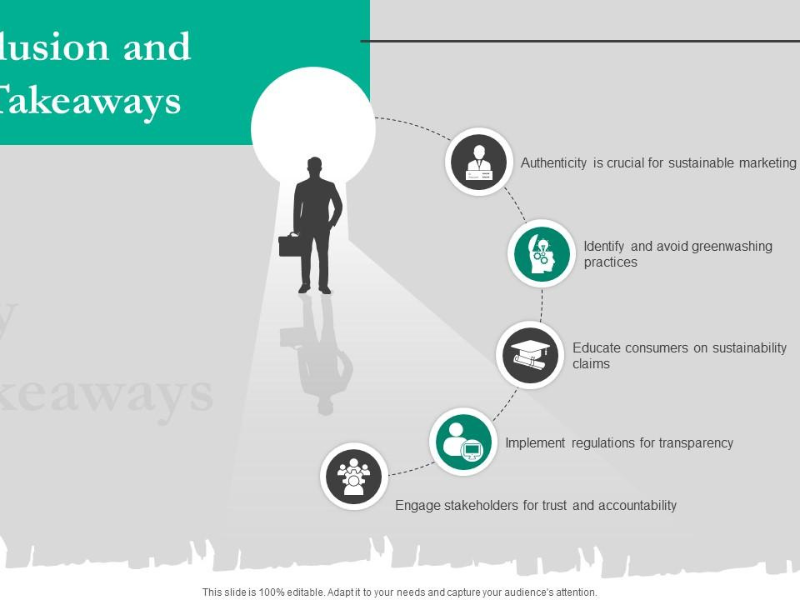
- Call center outsourcing in El Salvador balances cost, quality, and control.
- Nearshore time zones improve CX agility and governance.
- Provider selection matters more than location alone.
- Pilot programs reduce risk and validate fit quickly.
Your 30-day evaluation roadmap:
Week 1: Define requirements and baseline metrics
Document current CX performance (CSAT, FCR, AHT baselines from existing operation)
Calculate fully-loaded cost per contact (onshore vs target nearshore cost)
List must-have integrations (CRM platform, phone system, workforce management, QA tools)
Draft pilot success criteria (what metrics must match or exceed US baseline?)
Week 2: Shortlist and initial provider diligence
Research 4-6 El Salvador providers with experience in your industry
Request current client references (ask for contacts at similar-sized companies)
Review security certifications (verify completion dates, not just logos on website)
Schedule demo of provider’s reporting dashboard (request live data, not sales slides)
If possible, arrange site visit or detailed virtual facility tour
Week 3: Detailed RFP and reference calls
Submit RFP with specific volume projections, service level requirements, integration needs
Conduct reference calls with 2-3 current clients per finalist (ask specifically about first 90 days and how provider handled problems)
Review standard contract terms (pay attention to termination clauses, SLA penalties, data security provisions)
Test provider responsiveness (how quickly do they answer technical questions? Are answers vague or specific?)
Week 4: Finalist selection and pilot design
Narrow to 1-2 finalists based on price, capability fit, and reference feedback
Negotiate 90-day pilot with 10-20 agents (ensure contract includes easy scale-up path if successful)
Define weekly check-in cadence (daily for first 2 weeks, then weekly)
Plan knowledge transfer approach (who from US team will train? How many weeks onsite/virtual?)
Set pilot launch date
Cost of delay: Every month you spend in extended evaluation costs your company the delta between current onshore costs and potential nearshore savings. For a 100-agent operation, that’s $150K-200K in monthly opportunity cost. Move quickly but deliberately—pilots validate fit faster than endless diligence.
Frequently Asked Questions

What is call center outsourcing in El Salvador?
Call center outsourcing in El Salvador refers to hiring a third-party provider in the country to manage customer service, technical support, sales, or back-office tasks. It leverages El Salvador’s bilingual workforce, cost efficiency, and time zone alignment with the U.S.
Why do companies choose call center outsourcing in El Salvador?
Companies choose El Salvador for its cost-effective solutions, skilled bilingual workforce fluent in English and Spanish, proximity to the U.S. (Central Standard Time Zone), strong cultural alignment, and government incentives that promote the BPO sector.
Is the workforce in El Salvador bilingual?
Yes, El Salvador’s workforce is highly bilingual, fluent in both English and Spanish. This makes it ideal for companies serving diverse markets, including U.S. customers and Hispanic segments.
What types of services can be outsourced to El Salvador’s call centers?
You can outsource inbound customer support, technical support, outbound sales and lead generation, and back-office functions like CRM management, QA, and analytics. Many providers also offer AI-integrated solutions.
How cost-efficient is call center outsourcing in El Salvador?
El Salvador offers significant cost savings compared to U.S. onshore teams while maintaining high service quality. Labor rates are competitive but not the cheapest, making it a predictable and sustainable outsourcing option.
Are call centers in El Salvador reliable in terms of infrastructure and security?
Yes, El Salvador has modern infrastructure, including fiber-optic internet connections and advanced security measures like GDPR-aligned data protection policies, end-to-end encryption, and regular audits.
How does El Salvador compare to other outsourcing destinations like Mexico or the Philippines?
El Salvador provides nearshore benefits, such as real-time collaboration due to time zone alignment with the U.S., while also offering bilingual agents for English-Spanish support. It may lack the scale of major offshore hubs like the Philippines but excels in cultural alignment and CX efficiency.
How can businesses evaluate call center providers in El Salvador?
Businesses should assess providers based on their CX metrics, operational scalability, data security compliance, bilingual workforce quality, and ability to integrate AI solutions. Asking the right questions during vendor selection is crucial.
Is call center outsourcing in El Salvador suitable for small and medium-sized businesses?
Yes, El Salvador offers scalable solutions for businesses of all sizes, allowing SMBs to optimize customer service operations without the financial strain of onshore teams.
Where can I find reliable call centers in El Salvador?
Reliable call centers in El Salvador are often located in San Salvador, the hub for BPO services. It’s recommended to research providers online, request client references, and conduct thorough due diligence before partnering.
Read more:
Call Center Gaming Solutions to Elevate Player Experience
Best Practices for Excellent Customer Service in Call Centers
More in Industry
View all →
Customer Experience Trends 2026: What Changed and What to Do
Customer experience in 2026 is being reshaped by three converging forces: persistent economic uncertainty, widespread AI adoption, and fundamentally different customer expectations. Today's customers are more price-conscious than previous years, less attached to brands they once trusted, and willing to switch providers the moment value becomes unclear. For businesses, this means customer experience is no longer a differentiator—it's a survival…


Customer Experience Analytics: Metrics, Data and Tools
Most companies do not have a customer data problem. They have a customer data connection problem: marketing measures ad clicks, support measures resolution time, product measures feature adoption, and nobody can answer whether the customer who abandoned checkout on Tuesday is the same one who called about pricing on Thursday. Customer experience analytics is the practice that closes that gap…
What Is Customer Experience Management? A Practical Guide
Customer experience management (CXM) is the practice of designing, measuring, and improving every interaction a customer has with your company — treated as one connected journey rather than as separate departmental touchpoints. It is what turns a collection of well-meaning teams into an experience a customer can recognise as coming from a single organisation. The distinction that matters is between…


 English
  Russian
  Chinese